“They were the men of the generation of the October Revolution, the generation of the Civil War, the generation of the Five-Year Plans.”
— Describing the background of the accused, highlighting their shared history with the revolution.

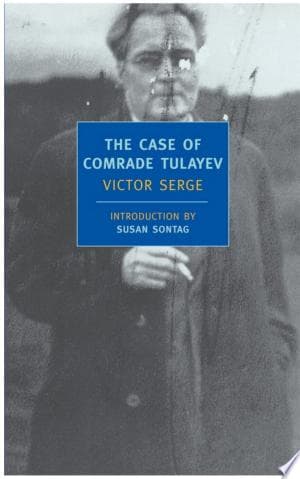
Victor Serge (2011)
Genre
Fiction
Reading Time
9-10 hours
Key Themes
See below
Sign in to track this book
Stalin's Great Terror takes hold after a high-ranking official's assassination, leading to a global investigation that traps innocent people and reveals the brutal, yet sometimes noble, aspects of a totalitarian regime.
On a cold Moscow night, Comrade Tulayev, a high-ranking Central Committee member, is killed near his apartment. The murder shocks the Soviet leadership, especially 'The Chief' (Stalin), who sees it as a direct challenge. The first investigation is quick and brutal, focused on finding a scapegoat rather than the actual killer. The GPU, the political police, immediately arrest anyone with even a slight connection to Tulayev or past dissent. This begins a series of arrests based on weak excuses and fake evidence. This event starts the wider purges that will consume the nation.
After Tulayev's murder, the GPU, under pressure from the Chief, arrests many people. These include Oparenko, an old Bolshevik with a history of opposition, and his son-in-law, Rublev, a loyal party member. Even simple workers like Ryzhik are caught. Interrogators use physical and psychological torture, sleep deprivation, and threats against families to get confessions. The goal is not to find the truth, but to create a story of a large anti-Soviet conspiracy. The accused, though innocent of Tulayev's death, are forced to implicate others, starting a chain reaction of arrests and accusations.
The Chief, paranoid and obsessed with control, directs the investigation himself. He sees Tulayev's death as a chance to remove real and imagined enemies within the Party, especially the old guard who remember Lenin. He insists on uncovering a widespread conspiracy involving 'Trotskyites,' 'saboteurs,' and 'foreign agents.' The GPU must invent a network of plotters, making sure confessions match the Chief's story. This turns the murder investigation into a political weapon, setting the stage for public show trials meant to terrorize the population and remove any opposition.
The arrests lead to a series of public show trials. Oparenko, Rublev, and many others are presented as leaders of a vast conspiracy. Under great pressure, both physical and psychological, they give rehearsed confessions, implicating themselves and others in plots against the state, including Tulayev's assassination. The trials are carefully staged, with prosecutors giving emotional denunciations and the accused reciting pre-written lines of guilt and repentance. Despite the clear absurdity of many accusations, the court's verdict is decided: guilty. These trials are a chilling show, demonstrating the Party's absolute power and the uselessness of resistance.
The purges reach far beyond Moscow. Characters like the exiled revolutionary, Erchov, living in Paris, become targets. The Soviet secret police try to kidnap or assassinate perceived enemies abroad, often using ideological pressure or blackmail. Erchov, despite his distance from Soviet politics, is under surveillance and constant threat. The international communist movement is also divided and affected, with many foreign communists struggling to accept the official Soviet story alongside growing evidence of repression and injustice. The purges become a global event, isolating the Soviet Union and betraying the ideals of international solidarity.
The novel shows how terror eventually consumes those who enforce it. Artyomov, a ruthless GPU interrogator, is zealous in his search for 'enemies.' However, as the purges grow and the Chief's paranoia increases, Artyomov himself is suspected of disloyalty. He is arrested, interrogated by his former colleagues, and subjected to the same brutal methods he once used. His fate shows the arbitrary and self-destructive nature of the totalitarian system, where no one, regardless of loyalty or service, is safe from suspicion and elimination.
Intellectual and artistic communities are not spared from the purges. Characters like the writer, Kondratiev, struggle with the demands of socialist realism and the fear of independent thought. They are forced to praise the regime and denounce 'enemies of the people,' often at the cost of their artistic integrity. Creativity is stifled, replaced by propaganda and self-censorship. Those who resist, even subtly, face imprisonment, execution, or forced silence. The novel shows the tragic loss of cultural life and critical thought under the weight of the totalitarian state.
Despite the widespread fear and lies, some characters hold onto truth and justice. Varvara, Rublev's wife, struggles to understand her husband's confession and the absurdity of the accusations. She and others, like the old Bolshevik Ryzhik, represent a quiet resistance, holding onto their memories of the revolution's original ideals. Their internal struggles highlight the human spirit's need for meaning and integrity, even when facing overwhelming injustice and the systematic distortion of reality. These characters symbolize the hope that truth, however suppressed, might eventually emerge.
Eventually, the novel reveals the true story of Tulayev's death. He was not killed by a vast conspiracy, but by a lone, disillusioned worker named Ryzhik. Ryzhik acted out of despair and anger, believing Tulayev represented the revolution's betrayal. After the act, Ryzhik disappears into the Soviet Union, eventually dying in a labor camp years later, not for Tulayev's murder, but for unrelated 'crimes' invented by the state. This revelation shows the irony and tragedy of the purges: while countless innocent lives were destroyed to find Tulayev's killer, the actual perpetrator's motive and identity remained unknown to the state, lost in the very system designed to uncover 'enemies.'
The novel ends not with a solution, but with a reflection on the Great Terror's lasting impact. The Chief continues his rule, but the human cost of his purges is immense, leaving a society scarred by fear, suspicion, and the loss of a generation of revolutionaries and intellectuals. The narrative suggests that while the physical violence may stop, the psychological scars and the loss of trust will last for decades. The individual fates of the characters, whether executed, imprisoned, or living in constant dread, paint a bleak picture of a revolution consumed by its own excesses, leaving a legacy of betrayal and human suffering.
The Antagonist
The Chief's arc is one of escalating paranoia and consolidation of power, as he systematically eliminates all opposition, both real and imagined.
The Mentioned/Catalyst
Tulayev's arc is brief and tragic, serving as the initial spark for the widespread terror, his death becoming a pretext for the Chief's purges.
The Supporting
Oparenko's arc is one of a once-respected revolutionary brought down by the very system he helped create, culminating in a forced confession and execution.
The Supporting
Rublev's arc is a descent from loyal party member to a broken man forced to betray himself and others, illustrating the terror's pervasive reach.
The Supporting
Varvara's arc is one of enduring personal tragedy and a quiet, internal quest for truth amidst pervasive lies and fear.
The Supporting/True Killer
Ryzhik's arc is one of a lone, desperate act of rebellion, followed by anonymity and an ironic death in the very system that sought his 'accomplices'.
The Supporting
Artyomov's arc is a chilling demonstration of the terror's cyclical nature, as the perpetrator becomes a victim, experiencing the same injustices he inflicted.
The Supporting
Erchov's arc is one of a principled exile, constantly under threat, symbolizing the international reach of Soviet repression.
The novel shows how the Soviet revolution, which began with ideals of equality, became a totalitarian state built on terror. Characters like Oparenko and Erchov, original revolutionaries, see their dreams systematically destroyed, replaced by a dictatorship under 'The Chief.' The purges are not just about removing rivals but about removing independent thought and revolutionary ideals. The arbitrary arrests and fake confessions, as seen in the trials of Rublev and Oparenko, show how the state consumed its own members, turning the revolution's promise into a nightmare of state control.
“History, comrade, is a nightmare from which I am trying to awake.”
Victor Serge closely examines how a totalitarian state works, showing how fear, propaganda, and the distortion of truth become tools of control. The Chief's paranoia drives the entire system, where justice is replaced by political convenience, and innocence does not matter. The interrogations of Oparenko and Rublev show the psychological manipulation and physical torture used to get false confessions, creating a reality dictated by the state. The novel shows how this system not only crushes individuals but also corrupts society, forcing everyone to live in constant fear and self-censorship, as seen with writers like Kondratiev.
“Under a totalitarian regime, to be innocent is not to be safe; it is merely to be available for accusation.”
Amidst the widespread lies and terror, some characters try to keep their moral integrity and search for truth. Varvara's constant questioning of her husband's guilt, despite his confession, shows this theme. Even simple people like Ryzhik, the actual killer, act on a personal, though misguided, sense of justice, highlighting an individual's ability to act even in the most oppressive environments. The novel suggests that while the state can control stories and bodies, it cannot completely extinguish the human spirit's need for truth and moral clarity. These internal struggles offer a glimmer of humanity against the state's barbarity.
“Truth, like a stubborn weed, would always find a way to grow, even in the cracks of granite.”
The novel shows how those who enforce oppression eventually become its victims. The fate of Artyomov, the ruthless GPU interrogator who is caught by the system he enforced, clearly illustrates this theme. The purges, started by the Chief to gain power, spiral out of control, creating an endless demand for 'enemies' that spares no one, regardless of their loyalty or service. This cycle of violence shows the instability and self-destructive nature of a regime built on terror, where power is kept through constant accusation and elimination.
“The revolution devours its own children, but sometimes, it devours its executioners too.”
Stalin's pervasive, often indirect, influence drives the entire narrative.
The Chief, a thinly veiled representation of Joseph Stalin, is the central antagonist whose paranoia and desire for absolute power orchestrate the entire series of purges. His decisions, often communicated indirectly through his subordinates, set the tone and direction of the investigation and trials. This device highlights the insidious nature of totalitarian leadership, where a single individual's will can dictate the fate of millions, often without direct public appearance. His omnipresent but often unseen influence creates a constant atmosphere of dread and uncertainty for all characters, demonstrating the pervasive reach of state power.
The narrative shifts between various characters, offering a panoramic view of the terror.
The novel employs a shifting point of view, moving between the perspectives of the victims (Oparenko, Rublev, Varvara), the perpetrators (Artyomov, the Chief), and those indirectly affected (Erchov, Kondratiev). This panoramic approach allows Serge to illustrate the widespread impact of the purges across different social strata and geographical locations. It prevents the reader from becoming solely focused on one storyline, instead presenting a mosaic of interconnected tragedies and moral dilemmas, thereby emphasizing the systemic nature of the terror and its devastating reach throughout Soviet society and beyond its borders.
The reader knows the true killer, while the state pursues a fabricated conspiracy.
A significant plot device is the dramatic irony surrounding Tulayev's assassination. The reader is eventually privy to the fact that Tulayev was killed by Ryzhik, a lone, disillusioned worker acting on impulse, entirely unconnected to the vast 'conspiracy' the state fabricates. Meanwhile, the Soviet state expends immense resources and destroys countless innocent lives in its pursuit of a non-existent 'Trotskyite-Zinovievite bloc.' This irony underscores the absurdity and tragic injustice of the purges, revealing how the state's narrative is entirely detached from reality, serving only to justify its own repressive agenda.
Forced confessions are not about truth, but about reinforcing state power.
The repeated scenes of forced confessions, particularly those of Oparenko and Rublev, function as a crucial plot device. These confessions are not genuine admissions of guilt but rather elaborate, coerced performances designed to serve the state's propaganda machine. They are meticulously crafted narratives that reinforce the Chief's version of reality, legitimizing the purges and demonizing imagined enemies. This device highlights how truth is subverted and replaced by political expediency, turning the legal process into a theatrical ritual of submission and public humiliation, essential for maintaining the illusion of a just and vigilant state.
“They were the men of the generation of the October Revolution, the generation of the Civil War, the generation of the Five-Year Plans.”
— Describing the background of the accused, highlighting their shared history with the revolution.
“The lie, once started, must be pursued to its ultimate consequences, even to the death of the innocent.”
— Reflecting on the nature of the fabricated charges and the inexorable logic of the purges.
“A revolution devours its own children. It is a terrible but often necessary process.”
— A character's grim assessment of the purges, echoing a historical sentiment.
“In the cell, a man discovers the true dimensions of his solitude, and the true dimensions of his courage.”
— Reflecting on the experience of imprisonment and the internal struggles of the accused.
“The past was being rewritten, not just in books, but in the minds of men.”
— Observation about the systematic manipulation of history and memory under totalitarianism.
“He understood that the Party was no longer a living organism, but a machine, devouring its own parts.”
— A character's disillusionment with the Communist Party as it becomes an instrument of terror.
“To die for nothing, that was the ultimate absurdity. To die for an idea, that was a different matter.”
— A prisoner contemplating his impending execution and the meaning of his life and death.
“The silence of the masses was more terrifying than their cries.”
— Reflecting on the passivity and fear that allowed the purges to continue unchecked.
“Every man carries within him the seeds of his own destruction, and of his own salvation.”
— A philosophical reflection on human nature and the choices made under extreme pressure.
“They were building a new world, but they were destroying themselves in the process.”
— A character's critical view of the Soviet project, recognizing its destructive elements alongside its grand ambitions.
“The revolution had promised liberation, but it had delivered a new form of servitude.”
— A bitter realization from one of the characters about the outcome of the revolution.
“There was no logic in terror, only its own terrible momentum.”
— An observation on the arbitrary and self-perpetuating nature of the political purges.
“The only true victory was to remain human in the face of inhumanity.”
— A character's internal struggle to maintain his dignity and moral compass amidst his suffering.
“He felt like a man walking through a dream, or rather, a nightmare from which there was no awakening.”
— Describing the surreal and oppressive atmosphere experienced by those caught in the purges.
Ready to see how well you understood this book? Take our interactive quiz with 10 questions.
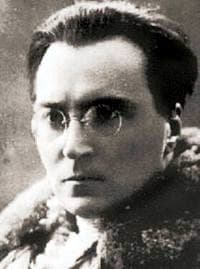
Victor Serge, born Victor Lvovich Kibalchich, was a Russian revolutionary Marxist, novelist, poet and historian. Originally an anarchist, he joined the Bolsheviks five months after arriving in Petrograd in January 1919 and later worked for the Comintern as a journalist, editor and translator. He was critical of the Stalinist regime and remained a revolutionary Marxist until his death. He is best remembered for his Memoirs of a Revolutionary and series of seven "witness-novels" chronicling the lives of Soviet people and revolutionaries and of the first half of the 20th century.

Ashley Antoinette
4.6

Mark McDonald
4.4
Luo Guanzhong
4.4
Mia McKenzie
4.3
Dorothy Parker
4.3

Joaquim Maria Machado de Assis
4.3
James Thurber
4.2

Terry Kay
4.2