“Make it new.”
— A recurring theme and a translation of a phrase attributed to Emperor Cheng Tang of Shang, reflecting Pound's call for innovation in art and thought.

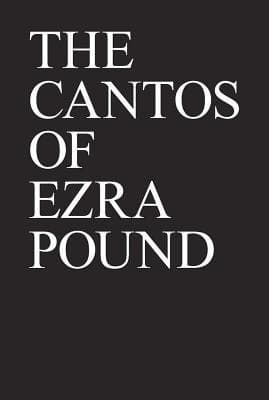
Ezra Pound (1858)
Genre
Fiction
Reading Time
1500 min (minimum, likely much more for study)
Key Themes
See below
Sign in to track this book
Ezra Pound's 'The Cantos' is a vast epic that brings history to life through its language, combining cultures, economies, and myths into a single, demanding poetic work.
The poem starts with a translation and change of the Nekyia (Book XI of Homer's *Odyssey*), where Odysseus goes to the underworld to talk to the prophet Tiresias. Pound, as the narrator, tells about the ritual to call the dead: digging a pit, pouring honey, milk, wine, water, and barley meal, and sacrificing a ram and a ewe. The spirits of the dead gather, including Elpenor, a friend who died falling from Circe's roof, and Tiresias, who tells Odysseus about his journey and future. This first canto sets up the epic's quest idea and its deep connection to classical literature, preparing for the mix of historical and mythological stories throughout the work.
Canto II has a series of fragmented stories, most notably a retelling of Dionysus meeting pirates from Ovid's *Metamorphoses*. The pirates try to tie up Dionysus and are turned into dolphins, showing the god's power and the idea of divine help and change. This is mixed with images of sailors, the sea, and mentions of figures like Actaeon, who became a stag. The canto also brings in historical figures and places, such as Robert Browning and Venice, creating a work where old myths and more recent history meet. This quick change of scenes and subjects becomes a key part of Pound's experimental style, meant to show a sense of constant change and connection across time.
These cantos show Pound's idea of a modern hell, filled with people he considers morally corrupt, especially those linked to usury and artistic decay. He criticizes bankers, politicians, journalists, and artists who, in his view, have ruined culture and society. The language is often harsh and strong, using vivid, unpleasant images to show the suffering and badness of these inhabitants. The cantos are a strong criticism of the modern world's spiritual decline, showing Pound's growing concern with economic fairness and the honesty of art. He uses these parts to express his dislike for what he sees as the destructive forces of his time.
Pound then focuses on figures from early American history, especially Thomas Jefferson and John Adams. He sees them as representing good principles of government and economic policy, contrasting them with the 'hell' of modern usury. He praises their foresight and their efforts to create a fair society. These historical thoughts are mixed with descriptions of Renaissance Italy, celebrating the beauty of art and architecture, and the support that helped it. Venice, especially the work of painters like Giorgione and Bellini, is described with admiration. This side-by-side placement highlights Pound's search for historical examples of societal health and artistic success, offering a contrast to his criticisms of modern times.
These cantos move between lively descriptions of the Mediterranean world—its myths, places, and classical figures—and a growing focus on Chinese history and philosophy. Pound introduces figures like Confucius and early Chinese emperors, especially from the T'ang Dynasty, finding similarities between their rule and his own political ideals. He explores the idea of 'the just ruler' and the importance of ethical leadership, often showing Chinese history as a model of order and tradition. This section deepens Pound's study of different cultures as sources of wisdom, suggesting a universal pattern in human experience and government, while keeping his usual fragmented and associative style.
These cantos are very documentary, using many letters and writings from Thomas Jefferson and John Adams. Pound presents their ideas on economics, government, and the dangers of central banking and usury. He uses their words to explain his own political and economic theories, supporting a decentralized system and a return to farming values. The cantos are a strong argument against the modern financial system, using the wisdom of the Founding Fathers as a moral and intellectual guide. This section is a clear example of Pound's belief that history offers important lessons for today's society, especially regarding economic fairness.
These cantos are a focused attack on usury (lending money at very high interest), which Pound says is the main cause of societal and artistic decline throughout history. He argues that usury corrupts art, debases craftsmanship, stops creativity, and leads to war and poverty. The language is often stark and repetitive, stressing the damaging effects of this economic practice. He contrasts the 'sin' of usury with times of artistic success and fair government, often referring to Italian Renaissance cities and Chinese ethical systems. This section represents a main idea of Pound's economic philosophy and his moral criticism of the modern world.
Pound uses these cantos to describe Chinese dynastic history, focusing on the reigns of emperors and how they followed or strayed from Confucian principles. He stresses the importance of good government, ethical leadership, and the emperor's role as a moral example. Drawing heavily from the Jesuit historian Père Joseph-Anne-Marie de Moyriac de Mailla's *Histoire générale de la Chine*, Pound presents a story of order and decline, showing how following Confucian values leads to wealth and peace, while abandoning them causes chaos and suffering. This section serves as a large historical example supporting Pound's political and economic theories.
These cantos are a full and detailed look at John Adams's life, thoughts, and political career, using almost only his letters, diaries, and political writings. Pound shows Adams as an example of intellectual rigor, honesty, and principled statesmanship, especially his warnings against the dangers of uncontrolled power and financial corruption. He highlights Adams's efforts to create a balanced government and his deep understanding of human nature and political economy. This section is a powerful sign of Pound's admiration for Adams, whom he saw as a key figure in American history whose wisdom was often overlooked.
These two cantos, written in Italian while Pound was in Italy during WWII, directly show his support for Mussolini and the Italian Fascist government. Canto LXXII is a dramatic speech by a spirit, often seen as a figure like Ezzelino III da Romano, a 13th-century Ghibelline warlord, praising the current government and condemning its enemies. Canto LXXIII is a more direct tribute to Italian Fascist soldiers and a celebration of their ideals. These cantos are very controversial because of their clear political content and are often seen as the most troubling parts of *The Cantos*, showing Pound's strong, and ultimately mistaken, political beliefs.
Written while Pound was held in the Disciplinary Training Center (DTC) in Pisa, Italy, after WWII, these cantos show a big change in tone and subject. Confined in a cage, Pound thinks about his past, his literary and political efforts, and the natural world around him. The Pisan Cantos are known for deep self-reflection, regret, and a new appreciation for nature's beauty, often contrasting with the harsh reality of his captivity. He revisits figures from his past, both literary and personal, and deals with the results of his actions and beliefs. These cantos are widely considered among the most touching and beautiful parts of the whole work, earning him the Bollingen Prize for Poetry in 1949.
After his release from Pisa and his time at St. Elizabeths Hospital, Pound returns to a more teaching and philosophical style. These cantos, called 'Rock-Drill' (after the Chinese character for 'true' or 'sincere'), deeply explore Confucian philosophy, especially the idea of the 'Great Learning' and 'making it new' (開物/K'ai Wu). He stresses the importance of exact language, ethical governance, and seeking inner order as a base for societal harmony. These cantos are less about his life than the Pisan Cantos and more focused on abstract principles, showing Pound's continued intellectual engagement with Eastern philosophy as a source of universal truth and order.
These cantos, called 'Thrones,' continue Pound's study of justice, law, and the principles of good government, using many sources including Byzantine law, Confucian texts, and medieval European legal traditions. He looks at the idea of the just ruler and the creation of ethical systems that help society. The cantos explore various historical examples of 'thrones' and their occupants, both good and bad, showing Pound's ongoing search for an ideal social and political order. There is a strong focus on the divine or natural law that supports true justice, mixing spiritual and political concerns.
The later cantos, published as 'Drafts & Fragments,' are increasingly fragmented and thoughtful, often showing Pound's awareness of the poem's incompleteness and his own failures. There is a sense of summarizing, of trying to bring together the vast array of historical, mythological, and personal material. He revisits earlier themes, often with a more humble and self-reflective tone, admitting the difficulty of his ambitious project. Lines like 'I cannot make it cohere' and 'Many errors, many errors' show deep self-criticism. These final sections offer a poignant and often beautiful ending to a lifetime's work, finishing not with a grand summary, but with a recognition of human limits and the lasting pursuit of beauty and truth.
The Protagonist
From an ambitious, confident young poet to a disillusioned, imprisoned, and finally humbled elder, grappling with his own errors and the poem's incompleteness.
The Supporting/Archetype
Remains largely consistent as a mythological figure, serving as a symbolic starting point for the poem's epic scope.
The Supporting/Archetype
A static figure of ancient wisdom, his role is to impart knowledge.
The Supporting/Historical Figure
His historical significance is consistently valorized as a source of enduring wisdom.
The Supporting/Historical Figure
His historical significance is consistently valorized as a source of enduring wisdom.
The Supporting/Philosophical Figure
A consistent philosophical touchstone whose wisdom is presented as timeless and universally applicable.
The Supporting/Mythological Figure
A static mythological figure, representing the power of transformation.
The Supporting/Historical Figure
His historical significance is consistently valorized as a figure of Renaissance vitality and patronage.
The Mentioned/Historical Figure
A figure initially presented as a potential savior, later implicitly critiqued through Pound's subsequent reflection and humility.
The Antagonist
A static, ever-present force of corruption throughout the poem.
A main theme is Pound's lifelong search for an ideal social, political, and economic order, which he often calls 'Paideuma'—the total cultural heritage. He looks for this order by using different historical and philosophical sources: the good rule of early Chinese emperors, the economic wisdom of Jefferson and Adams, the artistic support of the Italian Renaissance (e.g., Sigismundo Malatesta), and the ethical principles of Confucius. The poem's fragmented structure tries to combine these different parts into a clear idea of what makes a healthy civilization, contrasting it with the perceived chaos and decay of the modern world. Even in the Pisan Cantos, amidst personal disarray, he finds order in nature.
“To make cosmos— / To achieve the pentagram—”
Pound's strong criticism of usury (lending money at interest) is perhaps the most consistent and powerful theme in *The Cantos*. He blames usury for the decline of art, architecture, craftsmanship, honest work, and even moral character. Cantos XLII-LI, known as the 'Usura Cantos,' clearly explain how 'with usura hath no man a house of good stone... with usura no picture is made to endure.' He contrasts this destructive force with times of artistic success and economic stability, often citing historical examples from the Renaissance or ancient China where usury was either absent or controlled. This economic theory supports much of his criticism of modern society.
“With usura hath no man a house of good stone / each block cut smooth and well fitting / that design might cover their face, / with usura hath no man a painted paradise on his church wall / Harpes et luthes / or where virgin receiveth message / and halo of light is wrought.”
Pound believed that the past holds important lessons for the present, and *The Cantos* clearly shows this belief. He explores ancient Greek myths (Canto I), the Italian Renaissance (Malatesta Cantos), early American history (Jefferson/Adams Cantos), and extensive Chinese dynastic history (Chinese Cantos) to find examples of both success and failure in human government, art, and ethics. History is not just a record of events but a living store of 'Paideuma' and 'virtù' (moral excellence). By putting historical figures and events side by side, Pound aims to show repeating patterns and timeless principles, urging readers to learn from tradition instead of forgetting history.
“A man's paradise is his good nature... / And the true order of things, / the order of the mind, / is what makes the world go round.”
For Pound, art is not just for pleasure but a vital force for societal health and a reflection of truth. He supports precise language, clear images, and a craftsman's dedication. He regrets how usury and corruption degrade art, turning it into a product. Conversely, he celebrates times of great artistic support and creation, such as the Renaissance, as signs of a healthy society. The artist, in Pound's view, has a duty to preserve cultural memory, expose corruption, and express a vision of beauty and order. The poem itself tries to 'make it new' (開物/K'ai Wu) by refreshing language and form, thus helping the cultural well-being of civilization.
“Make it new”
Drawing heavily from Ovid's *Metamorphoses*, this theme appears early in Canto II with Dionysus turning pirates into dolphins. It shows a basic belief in the fluidity of existence and the possibility of change, both physical and spiritual. This idea goes beyond literal transformations to include the constant flow of history, the evolution of ideas, and the changing forms of cultural expression. It also applies to Pound's own intellectual journey and his attempt to turn raw historical data into poetic insight, much like the alchemical process of turning common metals into gold. The Pisan Cantos also show a change in the poet's perspective under hardship.
“And the waves were as of hyacinths, / And the sea dark as indigo, / And the ships were as of bronze, / And the sails of purple.”
Juxtaposition of concrete particulars to suggest abstract ideas.
Pound's ideogrammic method, inspired by Ernest Fenollosa's essay 'The Chinese Written Character as a Medium for Poetry,' involves placing seemingly disparate historical facts, mythological allusions, and personal observations side-by-side without explicit logical connectors. The meaning or abstract concept is meant to emerge from the reader's perception of the relationships between these concrete particulars, much like how Chinese characters combine simpler elements to form complex ideas. This device allows Pound to create dense, multi-layered meanings and to draw connections across vast stretches of time and culture, requiring active participation from the reader to synthesize the presented material.
Extensive referencing and direct citation from diverse literary and historical sources.
*The Cantos* is saturated with allusions to classical literature, myths, historical documents, and philosophical texts, often presented in their original languages (Greek, Latin, Chinese, Italian, French, German). This polyglotism is not merely decorative; it serves to immerse the reader in the vast 'Paideuma' (cultural heritage) that Pound is attempting to synthesize. By directly quoting historical figures like Jefferson, Adams, and Confucius, Pound lends authority to his arguments and emphasizes the continuity of ideas across centuries. This device requires a highly engaged and knowledgeable reader to fully grasp the poem's intricate web of references and arguments.
Fragmented, non-linear arrangement of diverse textual and historical elements.
Similar to the ideogrammic method but broader in scope, the montage technique involves cutting and pasting together disparate textual fragments, historical anecdotes, personal memories, and mythological narratives in a non-sequential, associational manner. This creates a sense of simultaneity across time and space, reflecting Pound's belief that history is not a linear progression but a complex interplay of recurring patterns and timeless truths. The constant shifts in subject, tone, and language mirror the chaotic richness of human experience, challenging conventional narrative expectations and demanding that the reader actively construct meaning from the presented fragments.
Recurrence of specific phrases, images, and names throughout the poem.
Pound frequently employs repetition of key phrases, images, and names (e.g., 'Usura,' 'Make it new,' specific classical figures or Chinese emperors) as leitmotifs. These recurring elements serve to unify the vast and fragmented work, acting as thematic anchors that underscore Pound's core concerns. The repetition helps to reinforce his arguments, particularly against usury, and to highlight the enduring significance of certain ideals or figures. It also creates a cumulative effect, imprinting certain concepts deeply into the reader's consciousness and demonstrating the cyclical nature of history and human behavior as Pound perceives it.
“Make it new.”
— A recurring theme and a translation of a phrase attributed to Emperor Cheng Tang of Shang, reflecting Pound's call for innovation in art and thought.
“And the days are not long enough for a man to accomplish anything.”
— Reflecting Pound's sense of the vastness of history and the limited time an individual has to make an impact, often tied to his ambition for the Cantos.
“Pull down thy vanity, it is not man Made courage, or made order, or made grace.”
— From Canto LXXXI (The Pisan Cantos), a moment of self-reflection and humility, often seen as a turning point in Pound's personal and poetic journey.
“What thou lovest well remains, the rest is dross.”
— Also from Canto LXXXI, emphasizing the enduring power of genuine affection and value over superficiality.
“With usura hath no man a house of good stone / Each block cut smooth and well fitting / That design might cover their face.”
— A central theme throughout the Cantos, particularly the 'Usura Cantos,' where Pound condemns usury as a destroyer of art, culture, and honest labor.
“Le Paradis n'est pas artificiel.”
— From Canto XCII, a rejection of artificial or drug-induced paradises, suggesting that true paradise is found in natural order and aesthetic experience.
“And the great stone beasts / From Babylon / And all the gold cats of Ur.”
— Illustrates Pound's method of juxtaposing historical and cultural references from diverse civilizations to create a mosaic of human history.
“To build the city of Dioce whose terraces are the mountains of the sun.”
— Refers to the legendary city of Ecbatana, built by King Deioces, symbolizing the ideal, well-ordered city and Pound's quest for an ideal social order.
“The wind is part of the process.”
— A seemingly simple phrase that encapsulates Pound's understanding of natural forces and their inevitable role in shaping events, both physical and historical.
“And the sun is a fount, not a drain.”
— From Canto LXXIV, a metaphorical statement about the generative power of nature and perhaps a counterpoint to the draining effects of usury.
“A man's paradise is his good nature.”
— From Canto XC, suggesting that true contentment and a state of grace come from one's own inherent moral and ethical character.
“There is no substitute for a lifetime of work.”
— Reflects Pound's deep commitment to his craft and the immense effort required to create a work of the scale and ambition of The Cantos.
“I have tried to write Paradise.”
— From Canto CXX, the final lines of The Cantos, a poignant and humble admission of his life's poetic endeavor, acknowledging both the ambition and the potential shortcomings.
“The age demanded an image / Of its accelerated grimace.”
— From Canto II, an early statement on the necessity for art to reflect the contemporary world, even its ugliness and rapid change.
“Light, sound, and the image, / And the dance of the mind.”
— From Canto XCIX, highlighting the multi-sensory and intellectual experience Pound aimed to evoke through his poetry.
Ready to see how well you understood this book? Take our interactive quiz with 10 questions.
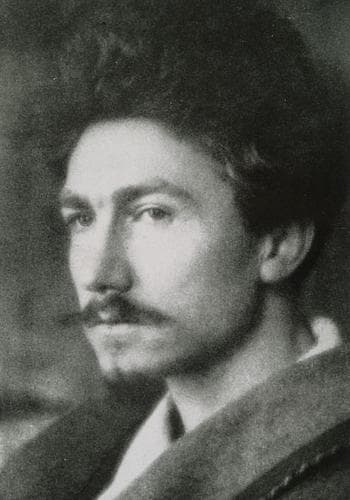
Biography coming soon.
Ashley Antoinette
4.6

Mark McDonald
4.4
Luo Guanzhong
4.4
Mia McKenzie
4.3
Dorothy Parker
4.3
Joaquim Maria Machado de Assis
4.3
James Thurber
4.2
Terry Kay
4.2