“We are all the children of our own stories.”
— A reflection on identity and personal narrative.

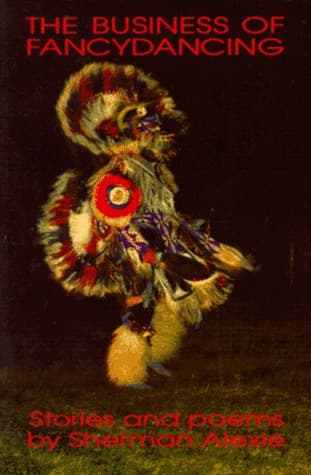
Sherman Alexie (1991)
Genre
Fiction
Reading Time
90 min
Key Themes
See below
Sign in to track this book
Before he captivated audiences on screen, Sherman Alexie laid bare the beautiful brutality of contemporary Spokane Indian life through elegiac poems and raw stories in this foundational collection.
The collection introduces Seymour Polatkin, a Spokane Indian poet and writer who has left the reservation for a literary career. He often feels like an outsider in both worlds. On the reservation, he is seen as having 'made it' but also criticized for potentially exploiting his heritage. In the white literary world, he is often tokenized, expected to perform a certain 'Indianness' that feels inauthentic. This initial tension sets the stage for Seymour's internal conflict, as he tries to reconcile his past with his present and future, constantly questioning where he truly belongs and what it means to be an 'authentic' Indian writer.
Seymour often revisits his childhood memories on the Spokane Indian Reservation. These recollections paint a vivid picture of life there: the poverty, the struggles with alcoholism among adults, and the strong, often complicated, bonds within families and the community. He remembers specific incidents, like his grandmother's stories, communal gatherings, and the sense of both belonging and entrapment he felt. These memories are raw and honest, highlighting both the beauty and the brutality of his early life, and deeply influencing his current perspective and writing.
As a published Spokane Indian writer, Seymour carries the burden of speaking for all Native Americans. This pressure comes from his family, his community, and especially his white readership and critics. He grapples with the responsibility of portraying 'authentic' Indian experiences, fearing misrepresentation or betrayal. This often leads to creative paralysis, as he struggles to find his own voice amidst external expectations. He questions whether his personal stories are 'Indian enough' or if he is merely performing a role for an audience that wants a specific narrative.
Seymour's relationships, both romantic and platonic, are often difficult. His internal struggles with identity and purpose create a barrier between him and others. He feels misunderstood by those outside his culture and, at times, alienated from those within it who do not share his experiences as a writer. This isolation is a recurring theme, as he navigates his personal life feeling like an observer rather than a full participant, constantly analyzing his interactions through the lens of his cultural background and his writer's sensibility.
The titular 'business of fancydancing' is a central metaphor. Seymour sees his writing and public appearances as a form of 'fancydancing' – a performance of his Indian identity for an audience that expects a certain spectacle. He resents this need to perform, feeling it compromises his authenticity and reduces his complex heritage to a marketable commodity. He struggles with the ethics of this 'business,' questioning whether he is truly sharing his stories or merely playing into stereotypes for personal gain and artistic recognition, creating an internal moral dilemma.
Alcoholism is a dark shadow throughout Seymour's life, echoing his childhood experiences on the reservation. He recounts the destructive impact it had on family members and the community, leading to violence, despair, and lost potential. While Seymour himself may not be an active alcoholic, its legacy profoundly affects his worldview and his relationships. He carries the trauma and understanding of its grip, often reflecting on how it has shaped the lives of those he loves and his own journey away from that environment.
Seymour understands that storytelling is central to his Spokane heritage, a means of preserving history, culture, and identity. He feels a deep responsibility to tell the stories of his people, even the painful ones. However, this responsibility is also a burden. He grapples with how to translate complex oral traditions into written form, how to convey the nuances of his culture to an external audience, and how to avoid perpetuating harmful stereotypes. He seeks to use his voice to honor his ancestors and community, but often feels the weight of this task.
Seymour frequently encounters academics, editors, and fellow writers in the predominantly white literary world. These interactions are often fraught with cultural misunderstandings. He is sometimes praised for his 'exotic' background or expected to provide simplistic explanations of complex Native American issues. He experiences tokenism, where his identity is valued more than his artistic merit. These encounters reinforce his feelings of otherness and fuel his cynicism about the mainstream's ability to truly understand or appreciate his work on its own terms, beyond its 'Indianness'.
Throughout the collection, Seymour searches for authenticity. He longs to be true to himself, his heritage, and his art, without having to perform a version of 'Indianness' for others. He questions what it truly means to be an authentic Spokane Indian in the modern world, especially when living between two cultures. This search involves sifting through his memories, confronting his fears, and trying to reconcile his past with his present, hoping to find a space where his identity is self-defined rather than externally imposed or commercially exploited.
While much of Seymour's journey is marked by struggle and isolation, there are moments where he experiences genuine connection – with a kindred spirit, a supportive family member, or through a shared laugh. These moments, though sometimes brief, offer glimmers of hope and remind him of the strength and resilience within his community and himself. They suggest that despite the challenges of his identity and career, there is still potential for understanding, belonging, and the creation of meaningful art that transcends the 'business' of performance.
The Protagonist
Seymour's arc involves a continuous struggle to reconcile his past and present, moving towards a more nuanced understanding of his identity as a Spokane Indian artist, even if true resolution remains elusive.
The Supporting
Her arc is static in the present narrative, serving as a foundational influence from Seymour's past, symbolizing tradition and resilience.
The Supporting/Mentioned
Their collective arc is a reflection of the ongoing challenges and resilience of the Spokane community, seen through Seymour's eyes.
The Antagonist/Mentioned
Their 'arc' is largely static, representing the societal barriers and misunderstandings Seymour must contend with.
The central theme explores Seymour's struggle to define his identity as a Spokane Indian in a world that pulls him between his reservation roots and the expectations of mainstream society. He feels like an outsider in both worlds, constantly questioning where he truly belongs. This manifests in his internal monologues about 'authenticity' and the pressure to perform a certain 'Indianness' for his audience, as seen in his reflections on the 'business of fancydancing' where he feels compelled to act out stereotypes for commercial success, rather than simply being himself.
“What is an Indian, anyway? A story told again and again until it becomes the truth.”
As a published Native American writer, Seymour grapples with the pressure to represent his entire community and culture accurately. He fears misrepresentation, betrayal, and the perpetuation of stereotypes, which often leads to creative paralysis. This burden is heightened by the expectations of white audiences and critics who seek a specific, often simplified, narrative of 'Indian experience.' His poetry and prose frequently return to this ethical dilemma, questioning whether his personal stories are 'Indian enough' or if he is merely fulfilling a role.
“I am trying to save my people, not by leading them to water, but by teaching them how to swim.”
Storytelling is a vital act of cultural preservation and a tool for individual and collective survival against historical trauma and erasure. Seymour recognizes the power of his grandmother's oral traditions and his own written words to keep his heritage alive. However, he also struggles with the commercialization of these stories in the literary marketplace. His act of writing is both a tribute to his ancestors and a form of resistance against the dominant narratives that seek to define or diminish Native American experiences, as he tries to tell the 'truth' rather than what is expected.
“We are all born with a story. It's our job to tell it.”
The theme of colonialism is subtly woven throughout the collection. It appears in the socio-economic disparities on the reservation, the issue of alcoholism, and the cultural misunderstandings Seymour faces in the white world. The legacy of historical oppression impacts the present-day lives of the Spokane people, affecting their opportunities, health, and sense of self. Seymour's internal conflict is a direct result of living in the aftermath of colonization, where his identity is constantly being scrutinized and commodified by the dominant culture, highlighting the ongoing struggle for self-determination.
“They want us to be noble savages, and we are just savages.”
Provides direct access to Seymour's internal thoughts and struggles.
The entire collection is presented through Seymour Polatkin's first-person perspective. This device allows readers direct access to his complex internal monologues, his anxieties about identity, his memories of the reservation, and his cynical observations of the white literary world. It creates an intimate and immediate connection with his emotional and intellectual journey, making his struggles with authenticity and representation deeply personal and resonant. The reader experiences his alienation and his search for meaning directly through his own voice.
Symbolizes the performance of identity for external consumption.
The 'business of fancydancing' is a central, extended metaphor throughout the book. Fancydancing, a traditional Native American dance, is recontextualized by Seymour to represent the act of performing his 'Indianness' for a predominantly white audience. It encapsulates his feelings of inauthenticity, commercial exploitation, and the pressure to conform to stereotypes for artistic and financial gain. This metaphor highlights his internal conflict between genuine self-expression and the demands of the literary marketplace, emphasizing the painful compromises he feels he must make.
Reveals Seymour's past and the lasting impact of his upbringing.
The narrative frequently shifts between Seymour's present experiences and vivid flashbacks to his childhood on the Spokane Indian Reservation. These memories are not linear but appear as fragments, dreams, and recurring motifs, revealing the lasting impact of poverty, alcoholism, and strong communal bonds on his psyche. This device provides crucial context for his current struggles with identity and belonging, showing how his past continuously informs his present perspective and his art, creating a layered understanding of his character.
Used to critique cultural misunderstandings and literary tokenism.
Alexie employs irony and satire, particularly through Seymour's voice, to critique the often-superficial understanding of Native American culture by the mainstream. Seymour's observations about white literary figures, their expectations, and their 'appreciation' of his work are often laced with a biting, sardonic wit. This device serves to expose the absurdity of cultural stereotypes and the tokenism experienced by Native American artists, providing a sharp commentary on the power dynamics within the literary world and society at large.
“We are all the children of our own stories.”
— A reflection on identity and personal narrative.
“Survival is a beautiful and brutal thing.”
— Contemplating the harsh realities and inherent beauty of perseverance.
“Every time I write a poem, I am trying to save somebody's life, maybe my own.”
— The author's personal philosophy on the redemptive power of poetry and art.
“There are things you can't outrun, no matter how fast you are.”
— A realization about the inescapable nature of certain truths or past events.
“We dance because we are still alive.”
— A powerful statement on the act of dancing as an affirmation of life and defiance.
“Memory is a kind of ghost, you know? It follows you everywhere.”
— Reflecting on the persistent and sometimes haunting nature of memories.
“Sometimes the best way to get over someone is to write them into a poem and then burn it.”
— A poetic and somewhat cathartic approach to dealing with heartbreak.
“The reservation is a place where everybody knows your business and still doesn't understand it.”
— A commentary on the paradox of community and individual experience on the reservation.
“Every Indian story begins and ends with the land.”
— Highlighting the profound connection between Indigenous identity and ancestral land.
“What do you do when your history is a wound?”
— A poignant question about grappling with a painful and traumatic past.
“We are all trying to be heroes in our own small, messed-up ways.”
— A relatable observation about the universal human desire for significance despite imperfections.
“Words are just words, until you give them power.”
— A statement on the transformative potential of language and the agency of the speaker/writer.
“The world is full of ghosts if you know how to look for them.”
— A metaphorical reflection on the presence of past influences and unseen forces.
“Sometimes, the only way to hold on is to let go.”
— A paradoxical insight into the nature of attachment and acceptance.
Ready to see how well you understood this book? Take our interactive quiz with 10 questions.
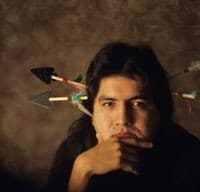
Biography coming soon.

Ashley Antoinette
4.6

Mark McDonald
4.4
Luo Guanzhong
4.4
Mia McKenzie
4.3
Dorothy Parker
4.3

Joaquim Maria Machado de Assis
4.3
James Thurber
4.2
Terry Kay
4.2