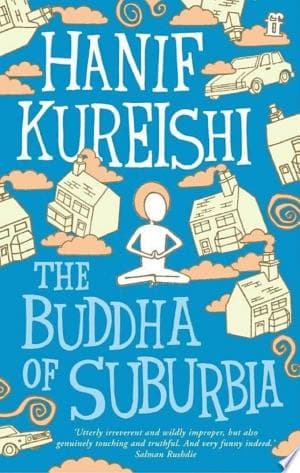
“I am an Englishman born and bred, almost a Cockney; I could have been a milkman, a postman, an ordinary person. Instead, I am a mystic.”
— Karim Amir reflecting on his identity and his father's transformation.

Hanif Kureishi (2009)
Genre
Fiction
Reading Time
450 min
Key Themes
See below
Sign in to track this book
In 1970s suburban London, a mixed-race teenager named Karim escapes his humdrum life and navigates his identity through the chaotic, often hilarious, world of experimental theater and burgeoning self-discovery.
Karim Amir, a half-English, half-Pakistani teenager, lives a restless existence in a South London suburb, feeling out of place with his family and surroundings. His father, Haroon, a mild-mannered civil servant, begins to explore Eastern mysticism, leading to a transformation. Haroon's spiritual charisma attracts a small but devoted following, including Eva Kay, a glamorous and unconventional artist, and her son, Charlie. Karim observes these developments with a mixture of bemusement and fascination, feeling increasingly drawn into the orbit of Eva and Charlie, who represent a more exciting, bohemian world than his own suburban reality. This marks the initial shift in the family dynamic and Karim's growing awareness of the world beyond his immediate environment.
Haroon's relationship with Eva deepens, leading them to move to a house in central London, leaving Karim and his mother, Margaret, behind in the suburbs. Feeling stifled and eager for new experiences, Karim soon follows, moving in with Haroon and Eva. In London, Karim encounters a permissive counter-culture. He meets Eva's circle of friends, including the eccentric director Matthew Pyke, who offers Karim a chance to audition for a play. This opportunity excites Karim, who sees acting as a potential escape and a way to define himself, marking his first significant step towards a professional and independent life in the city.
Karim starts rehearsals for Matthew Pyke's avant-garde play, an experience that is both exhilarating and bewildering. He struggles with the abstract nature of the production and Pyke's demanding, often bizarre, direction. During this time, Karim begins to explore his sexuality, engaging in a physical relationship with Pyke, which adds another layer of complexity to his personal and professional life. He also grapples with his mixed-race identity, as Pyke often casts him in roles that exploit or exaggerate his 'otherness.' Karim's initial acting experiences are a messy but formative period, forcing him to confront uncomfortable truths about himself and the industry.
Charlie Kay, initially a quiet and observant figure, becomes a rebellious punk musician, forming a band and embracing the punk scene. He expresses disdain for his mother Eva's artistic pretensions and Haroon's spiritualism, seeking his own form of authenticity through music. Meanwhile, Karim's relationship with Pyke cools, and he develops a complex, often turbulent, romantic and sexual relationship with Charlie. Their bond is marked by shared experiences of identity exploration and a mutual desire to break free from conventional expectations. This period shows how young people navigate their identities in the changing cultural landscape of the 1970s.
Karim goes on tour with Pyke's play, traveling to various provincial towns. This experience exposes him to a different side of the theatre world—one of dingy lodgings, indifferent audiences, and his fellow actors' eccentricities. He continues his on-again, off-again relationship with Pyke, and also has a brief affair with an older actress, Helen. Karim observes the absurdities and compromises in seeking fame and artistic recognition, reflecting on the performative aspects of not just his acting roles, but also his own identity. The tour shapes his understanding of himself and the world.
Upon returning to London, Karim finds new opportunities. He successfully auditions for a recurring role in a popular television show, a move that brings him public recognition and financial stability, albeit in a more commercial and less 'artistic' medium than Pyke's theatre. This new visibility forces him to confront aspects of his past and present identity in a more public way. His relationship with Charlie continues to evolve, marked by periods of intense connection and painful detachment, as both young men navigate their careers and personal lives.
Karim tries to reconnect with his mother, Margaret, who is still living in the suburbs and navigating her own feelings of abandonment and loneliness. He also spends time with Haroon and Eva, observing their unconventional family unit, which now includes a young daughter, Jamila. While Haroon seems content in his new life, Karim still feels a certain distance from him, and struggles to understand his father's transformation. These interactions show the lasting impact of family ties and the challenges of forging new connections amidst shifting loyalties and evolving identities.
Charlie's punk band gains traction, achieving fame and commercial success that surpasses Karim's own. Charlie becomes a celebrated figure in the music scene, embodying a raw, rebellious energy that resonates with youth culture. Karim, while proud of Charlie, also grapples with feelings of envy and inadequacy, questioning his own path and achievements. This period forces Karim to reflect on his motivations, his definition of success, and the challenges of maintaining a sense of self amidst public life's pressures and his closest relationships' contrasting trajectories.
As Karim's acting career progresses, he increasingly encounters roles that touch upon his mixed-race heritage. He is often cast in parts that require him to play 'exotic' or 'foreign' characters, sometimes embracing the stereotypes for work, other times attempting to subvert them. This experience forces him to confront the complexities of his identity as a half-Pakistani, half-English actor in a predominantly white industry. He reflects on how others perceive him and how he wishes to be seen, navigating the tension between authenticity and commercial viability in his craft.
Seeking a change of scenery and new acting opportunities, Karim travels to New York. This experience offers him a fresh perspective on his life and career, away from London's familiar confines. He explores the city's cultural scene, meeting new people and engaging in different artistic ventures. The American experience allows him a temporary escape from his relationships' complexities and identity struggles in England, providing a space for introspection and a renewed sense of possibility as he contemplates his future path as an actor and as a person.
Returning to London, Karim has a more mature understanding of himself, his family, and his career. He has navigated adolescence and early adulthood, experiencing love, loss, success, and disappointment. While not all his relationships are perfectly resolved, he has learned to accept the complexities of his identity – his mixed heritage, his sexuality, and his chosen profession. The novel concludes with Karim having found self-acceptance and a readiness to embrace his life's multifaceted nature, no longer desperately seeking escape but rather finding peace within his own skin.
The Protagonist
Karim evolves from a confused, alienated teenager into a more self-aware and accepting young man, learning to embrace his complex identity and the messy realities of life and relationships.
The Supporting
Haroon transforms from a suburban conformist into a confident, if somewhat naive, spiritual figure, finding a new identity and purpose outside his traditional family structure.
The Supporting
Eva maintains her bohemian independence, forming a new family with Haroon and influencing Karim's journey into adulthood, while remaining true to her unconventional nature.
The Supporting
Charlie evolves from a quiet observer to a successful punk rock star, finding his voice and identity through music, while navigating a complex relationship with Karim.
The Supporting
Margaret endures the pain of her husband's departure and gradually rebuilds her life, finding a quiet strength and independence.
The Supporting
Pyke remains a significant, if sometimes problematic, artistic and personal influence on Karim, representing the experimental and sometimes exploitative side of the arts.
The Supporting
Helen serves as a temporary companion and teacher for Karim, offering him a glimpse into a more jaded but also more grounded perspective on life and art.
The Mentioned
Jamila's character remains a child, serving as a symbol of the new family Haroon and Eva create.
The novel explores Karim's struggle to define his identity as a mixed-race individual in 1970s Britain. He feels an 'alienation' from both his Pakistani heritage, represented by his father's initial conventionality and later spiritualism, and the restrictive 'suburban' English life. His journey to London and into the theatre world is a quest to find a place where he truly belongs, where his 'otherness' can be an asset rather than a burden. This is evident in his relationships with Charlie and Eva, who offer him a sense of belonging outside traditional norms, and his acting roles, which force him to confront and perform aspects of his racial and sexual identity.
“Perhaps it is a part of being a half-caste to be for ever looking for signs of belonging, for a place where you can truly relax.”
Karim's adolescence is marked by an uninhibited exploration of his sexuality. He engages in relationships with both men (Matthew Pyke, Charlie Kay) and women (Eva Kay, Helen), reflecting the fluid sexual mores of the 1970s and his own search for connection and self-discovery. These encounters are often messy, confusing, and sometimes painful, but they are crucial to his understanding of himself and his desires. The novel portrays sex not just as physical intimacy, but as a means of exploring power dynamics, emotional connection, and personal freedom.
“I was an explorer, and my own body was the last unexplored territory.”
The world of theatre and acting is a central metaphor for the novel's exploration of performance and authenticity. Karim, as an aspiring actor, constantly grapples with the line between his true self and the roles he plays, both on stage and in life. His father's transformation into a spiritual guru is another form of performance, raising questions about the sincerity of his newfound spirituality. The characters, especially in London's bohemian circles, often 'perform' their identities, leading Karim to question what is real and what is an act. This theme is highlighted by Pyke's experimental theatre, which blurs the lines between reality and art.
“We were all acting, all the time, in our lives, in our families, in our work. It was a play that never ended.”
Set against 1970s Britain, the novel captures a period of cultural upheaval. Karim's desire to escape suburbia, Haroon's embrace of Eastern mysticism, and Charlie's immersion in the punk scene all represent different forms of rebellion against established norms. The book explores the clash between traditional values and the emerging counter-culture, with its emphasis on freedom, experimentation, and a questioning of authority. This theme is strong in the contrast between Karim's suburban upbringing and the liberated, often chaotic, world of London's artists and musicians.
“It was the seventies, and the world was opening up, or so we thought.”
The novel examines the complex and often painful disintegration and reformation of family units. Haroon's decision to leave Margaret for Eva shatters Karim's conventional family, forcing him to adapt to a new, unconventional step-family. Karim's relationships with his parents are central to his emotional journey, as he navigates feelings of loyalty, abandonment, and love. The book shows how individuals' quests for personal fulfillment can have lasting impacts on their loved ones, and how families can be redefined in unexpected ways, often leading to both pain and new forms of connection.
“Families, I was beginning to learn, were always performing, a kind of play with ever-changing parts.”
The story is told entirely through Karim's subjective voice, offering intimate access to his thoughts and feelings.
The use of first-person narration by Karim Amir allows the reader to experience his coming-of-age journey with raw immediacy and honesty. This perspective provides deep insight into his internal struggles with identity, sexuality, and belonging. His voice is often humorous, self-deprecating, and observant, shaping the tone of the novel. The subjectivity of his narration highlights his youthful confusion and evolving understanding of the world, making his personal growth more impactful as we witness events unfold through his developing consciousness.
The novel charts the psychological and moral growth of Karim from adolescence to young adulthood.
The Buddha of Suburbia is a classic bildungsroman, focusing on Karim Amir's journey of self-discovery from his restless teenage years in the suburbs to his experiences in London's bohemian and theatrical scenes. The narrative traces his intellectual, emotional, and sexual development as he grapples with his mixed heritage, explores his sexuality, and pursues an acting career. His encounters with various characters and lifestyles contribute to his education and eventual understanding of his place in the world, culminating in a more mature and self-accepting identity.
The novel uses humor and sharp observation to critique British society, class, race, and the counter-culture of the 1970s.
Kureishi employs cultural commentary and satire to expose the hypocrisies and absurdities of 1970s Britain. Through Karim's observations, the novel critiques suburban conformity, the pretentiousness of the artistic elite, the commodification of spirituality, and the complexities of race relations. The satirical elements are often directed at the superficiality of some aspects of the counter-culture, as well as the inherent biases within the theatrical world. This device adds depth to the narrative, making it not just a personal story but also a social critique of a specific era.
The contrast between the dull, conventional suburbs and the vibrant, chaotic city represents opposing lifestyles and Karim's internal conflict.
The geographical divide between suburban South London and central London serves as a powerful symbolic device. Suburbia represents the mundane, restrictive, and conventional life that Karim desperately wants to escape, embodying his feelings of alienation. London, on the other hand, symbolizes freedom, excitement, artistic expression, and sexual liberation. Karim's physical journey from the suburbs to the city mirrors his internal journey of self-discovery and his quest for a more authentic and fulfilling existence, highlighting the choices and transformations he undergoes.
“I am an Englishman born and bred, almost a Cockney; I could have been a milkman, a postman, an ordinary person. Instead, I am a mystic.”
— Karim Amir reflecting on his identity and his father's transformation.
“All my life I'd been looking for a father, for a home, for some place where I belonged.”
— Karim's ongoing search for identity and a sense of belonging.
“Perhaps I was a bit of a colonial boy, a bit of a wog, as people said, but I was also a Londoner, for ever and ever, amen.”
— Karim grappling with his dual heritage and sense of place.
“Life was elsewhere, and I wanted to be there.”
— Karim expressing his desire for adventure and escape from his suburban life.
“My father was a Buddha, or so people said. He was a funny kind of Buddha, though, with his English wife and his suburban house and his taste for gin.”
— Karim's humorous and slightly cynical view of his father's spiritual persona.
“We were all trying to be someone else, someone better, someone more interesting.”
— Observation about the characters' collective desire for self-reinvention.
“The past was a foreign country; they did things differently there. No, that was someone else's line. The past was just the past, and I was in the present, and I wanted to be in the future.”
— Karim's dismissive attitude towards nostalgia and his focus on moving forward.
“Sex was like a foreign language I was slowly learning to speak.”
— Karim's youthful exploration and understanding of sexuality.
“It was all a bit of a game, a performance, and I was learning to play my part.”
— Karim realizing the performative nature of life, especially in his acting career.
“England was a place where people were always trying to escape from something, or become someone else.”
— A broader commentary on English society and the desire for change.
“I was at home in England, but I was also an alien. I was a Londoner, but I was also a foreigner.”
— Further reflection on Karim's sense of being both insider and outsider.
“Perhaps that was what being an adult was about: learning to live with the mess.”
— Karim's growing understanding of adulthood and its complexities.
“The world was full of possibilities, and I intended to grab as many as I could.”
— Karim's optimistic and ambitious outlook on his future.
“We were all just making it up as we went along, weren't we?”
— A candid observation on the improvisational nature of life and self-discovery.
Ready to see how well you understood this book? Take our interactive quiz with 10 questions.
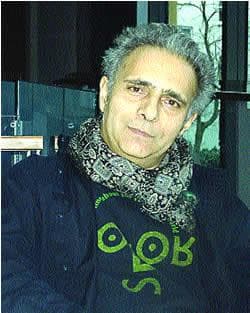
Hanif Kureishi is a British playwright, screenwriter, filmmaker and novelist of South Asian and English descent. In 2008, The Times included Kureishi in its list of the 50 greatest British writers since 1945.

Ashley Antoinette
4.6

Mark McDonald
4.4
Luo Guanzhong
4.4
Mia McKenzie
4.3
Dorothy Parker
4.3

Joaquim Maria Machado de Assis
4.3
James Thurber
4.2
Terry Kay
4.2