“A girl was like a banana; you cut it at the root to get the stem and the fruit. You could not stop it from growing, you could only cut it when it was ripe.”
— Reflecting on Aku-nna's growth and eventual marriage.


Buchi Emecheta (1995)
Genre
Fiction
Reading Time
240 min
Key Themes
See below
Sign in to track this book
In a society that treats women as property, Aku-nna, a young Nigerian woman, defies her uncle's greed and tradition, choosing love over the high bride price he demands.
The story begins with the death of Aku-nna's father, Ezekiel Odia, in Lagos. Following Igbo custom, his widow, Ma Blackie (Agnes), and their two children, Aku-nna and Nna-nna, must return to Ezekiel's village, Ibuza, to be inherited by his younger brother, Okonkwo. Aku-nna, still grieving, dislikes moving from the busy city of Lagos to the more traditional village life. She is a good student, and the idea of leaving her education distresses her. The family arrives in Ibuza, and Aku-nna immediately feels the weight of traditional expectations placed on her as a young woman.
When they arrive in Ibuza, Ma Blackie and her children join Okonkwo's household. Okonkwo, a strict and traditional man, immediately sees Aku-nna's beauty and intelligence not as personal qualities, but as traits that will bring a large bride price. He begins to limit her movements and interactions, especially with young men, to protect her 'value.' Aku-nna, at first compliant, feels increasingly restricted by the village's rigid customs and her uncle's possessive gaze. Her education continues off and on, but her main role is now seen as a future wife who will bring wealth to her family.
During her time in Ibuza, Aku-nna meets Chike, a young teacher studying to become a doctor. Chike is smart, kind, and respectful, and Aku-nna is drawn to him. However, Chike belongs to the 'Osu' caste, a group descended from former slaves, making him an outcast in traditional Ibuza society. Marriage between an 'Osu' and a free-born person like Aku-nna is forbidden and a serious taboo. Despite social barriers, Aku-nna and Chike develop a secret affection, exchanging glances and stolen conversations. Their love grows against a harsh social structure, directly challenging Ibuza tradition.
Okonkwo, determined to get a high bride price, finds a wealthy, older man named Okoboshi as a suitor for Aku-nna. Okoboshi is known for his wealth and would pay a large sum, raising Okonkwo's status. Aku-nna is horrified by the thought of marrying a man she does not love, especially since her heart belongs to Chike. She openly refuses Okonkwo, stating she will not marry Okoboshi. This act of rebellion is unheard of and shames Okonkwo and the family. Her defiance is met with anger and threats, but Aku-nna remains firm, unwilling to be a mere possession.
Facing an unavoidable forced marriage to Okoboshi, Aku-nna decides to elope with Chike. This act greatly violates tradition, as it means Aku-nna's family will not receive a bride price, denying Okonkwo the wealth and prestige he wanted. The elopement is a desperate move for love and freedom, but it comes at a huge cost. By running away, Aku-nna cuts ties with her family and community, becoming an outcast. Chike, also defying tradition, commits to Aku-nna and takes her to live with him in a nearby town, away from Ibuza's immediate anger.
Aku-nna and Chike start a new life together, away from Ibuza. Chike continues his studies, and Aku-nna, despite being ostracized, finds happiness in their love and freedom. They have a daughter, strengthening their bond. However, the lack of a bride price, a foundation of Igbo marriage, casts a long shadow. In Ibuza society, Aku-nna is not truly married, and her children are considered illegitimate, belonging to Chike's family but not fully recognized by her own lineage. This social judgment, though distant, constantly worries Aku-nna.
Aku-nna falls seriously ill after her daughter's birth. Her condition worsens, and traditional beliefs emerge. Villagers, including Chike's family and Aku-nna herself, start blaming her illness on a curse from the unpaid bride price. The belief is that by denying her family the traditional payment, Aku-nna has offended ancestors and brought misfortune upon herself. This ingrained cultural superstition creates immense psychological pressure on Aku-nna, making her feel responsible for her suffering and further isolating her from her traditional roots.
Desperate to save Aku-nna, Chike tries to pay the bride price to her family. He gathers what money he can, hoping that fulfilling this tradition, even late, will appease the spirits and save Aku-nna's life. However, Okonkwo and Aku-nna's family, still shamed by her elopement and the 'Osu' taboo, reject the payment. They refuse to acknowledge the marriage or accept Chike's offer, symbolizing their complete disinheritance of Aku-nna. This rejection is a devastating blow, confirming tradition's unyielding power and leaving Aku-nna and Chike without options.
Tragically, Aku-nna's health continues to decline, and she eventually dies. Many, including herself in her final moments, attribute her death to the curse of the unpaid bride price. The novel shows how cultural beliefs deeply affect individual fate. Aku-nna's death illustrates the destructive power of rigid traditions and societal expectations. Despite her love for Chike and her defiance, she cannot escape the psychological and physical toll of being an outcast who broke her people's sacred customs.
Chike is left a widower with their young daughter, whom he names after Aku-nna. Her death leaves a deep void and a lasting impact on Chike. The tragedy highlights the novel's main theme: the devastating results when individual love and autonomy conflict with deeply established societal norms. Chike, though heartbroken, remains devoted to their daughter, ensuring she knows her mother's story of courage and sacrifice. Aku-nna's story reminds us of the struggles women face in traditional societies when they defy expectations, especially regarding their worth and marriage.
The Protagonist
Aku-nna transforms from a dutiful daughter into a defiant young woman who chooses love over tradition, ultimately paying the ultimate price for her autonomy.
The Love Interest / Supporting Protagonist
Chike remains steadfast in his love for Aku-nna, challenging societal norms and facing the consequences, ultimately becoming a single father burdened by the tragedy.
The Supporting Character
Ma Blackie struggles to reconcile her daughter's choices with traditional expectations, ultimately succumbing to the shame and fear brought by Aku-nna's defiance.
The Antagonist
Okonkwo remains unyielding in his traditional beliefs, rejecting Aku-nna's defiance and Chike's attempts at reconciliation, thus contributing to Aku-nna's tragic fate.
The Mentioned Character
His death marks the end of Aku-nna's protected childhood and the beginning of her struggle against tradition.
The Supporting Character
Okoboshi remains a static figure, representing the traditional suitor and the societal pressures Aku-nna rebels against.
The Supporting Character
Nna-nna's character remains largely in the background, witnessing the unfolding tragedy of his sister's life.
The novel examines how traditions, especially the bride-price and the 'Osu' caste system, oppress individuals, particularly women. Aku-nna's life is controlled by these customs, from being inherited by her uncle to her value being a monetary sum. The forced marriage, the ostracism of Chike, and the belief that Aku-nna's death results from an unpaid bride price all show how these traditions can stifle individual freedom and lead to tragedy. The novel suggests that while tradition can provide structure, it can also be suffocating.
“A woman's place was to produce children, to work herself to death for them and her husband, and to be a good wife.”
This theme is central to Aku-nna's struggle. She wants personal freedom, education, and the right to choose her partner, directly clashing with the societal expectation that she conform to traditional roles and allow her family to arrange her marriage for money. Her elopement with Chike is her ultimate act of asserting freedom, but it costs her family and social standing. The tragic outcome suggests how difficult it is to escape deeply embedded societal expectations in such a context.
“She was not a cow, nor a goat, nor a piece of land to be sold.”
The novel shows the bride-price system not as a celebration but as a way to reduce women to property. Okonkwo's focus on Aku-nna's potential bride price blinds him to her humanity, desires, and intelligence. Her worth is measured in money, not in her character or love. This commodification of women is highlighted by Aku-nna's resistance to being 'sold' and the societal punishment for choosing to marry without this transaction. The bride price, meant to solidify marriage, instead becomes a tool of oppression and a symbol of Aku-nna's lack of agency.
“She was a price, a thing to be sold, a thing to be paid for.”
Despite harsh realities, the novel explores the powerful, though tragic, love between Aku-nna and Chike. Their love defies social norms, caste systems, and arranged marriages. Both make sacrifices for their relationship: Aku-nna sacrifices her family and social standing, and Chike sacrifices his ease of acceptance. Their enduring affection under immense pressure shows the strength of human connection. However, the novel also shows that even deep love may not overcome the entrenched power of tradition, leading to Aku-nna's ultimate sacrifice of her life.
“Their love was like a tree growing in a forbidden garden.”
Hints and warnings about Aku-nna's tragic fate.
The novel employs foreshadowing through various cultural beliefs and anxieties expressed by characters, particularly Ma Blackie. The constant talk about the importance of the bride-price and the dire consequences of marrying an 'Osu' or eloping without payment subtly prepares the reader for Aku-nna's eventual suffering and death. The early emphasis on Aku-nna's beauty being a 'curse' or a source of trouble also hints at the challenges she will face, creating a sense of impending doom that permeates the narrative.
Represents women's commodification and the weight of tradition.
The bride-price is not merely a custom but a powerful symbol throughout the novel. It symbolizes the monetary value placed on women, their lack of autonomy, and the patriarchal control over their lives. It also represents the unbreakable hold of tradition and community expectations. Aku-nna's refusal to have one paid for her is an act of rebellion, and its absence is later blamed for her illness and death, making it a symbol of both oppression and the tragic consequences of defying an entrenched system.
A social barrier symbolizing ingrained prejudice and societal division.
The 'Osu' caste system serves as a significant plot device, creating the fundamental barrier to Aku-nna and Chike's love. It symbolizes the deeply ingrained prejudice and rigid social stratification within traditional Igbo society. Chike's 'Osu' status makes him an unacceptable match regardless of his personal qualities, highlighting how inherited social standing can override individual merit and happiness. This system is an immovable obstacle, demonstrating the unforgiving nature of certain traditions and contributing directly to the tragic outcome of the story.
Highlights the clash between modernity and tradition.
The novel uses the geographical contrast between Lagos and Ibuza to underscore the thematic conflict between modernity and tradition. Lagos represents a more progressive, individualistic, and educated way of life, where Aku-nna's father was more open-minded. Ibuza, on the other hand, embodies strict adherence to custom, patriarchy, and the bride-price system. Aku-nna's forced relocation from Lagos to Ibuza immediately thrusts her into this conflict, setting the stage for her struggle against the restrictive cultural norms of the village.
“A girl was like a banana; you cut it at the root to get the stem and the fruit. You could not stop it from growing, you could only cut it when it was ripe.”
— Reflecting on Aku-nna's growth and eventual marriage.
“To be a woman was to be a slave to the whims of men.”
— Aku-nna's internal thoughts on her societal position.
“The bride price was a woman's worth, her market value. It was how much her family thought she was worth.”
— Explaining the cultural significance of the bride price.
“No matter how rich a family was, a daughter was still a burden until she was married off.”
— The family's perspective on having daughters.
“She was a woman, and that was her destiny: to bear children and look after her husband.”
— Aku-nna's resigned acceptance of her role.
“Love was not enough to feed a family, or to pay the bride price.”
— The harsh realities contrasting with romantic notions.
“A woman's place was in her husband's house, not her father's, once she was married.”
— The traditional view of a woman's relocation after marriage.
“The gods had decided her fate, and there was nothing she could do to change it.”
— Aku-nna's feeling of powerlessness against fate.
“It was not enough to be beautiful; a woman also had to be fertile.”
— The emphasis on fertility for women in the society.
“The dead were never truly gone, they were just in another world, watching over their living relatives.”
— Reflecting on the role of ancestors in their culture.
“To run away with a man was a disgrace, an abomination, but sometimes it was the only way.”
— Aku-nna contemplating her drastic actions.
“A woman who did not have a son was like a man who had no head.”
— The intense pressure on women to bear male children.
“Her life was not her own, it belonged to her family, and then to her husband.”
— Aku-nna's understanding of her lack of autonomy.
“The world was changing, but some things, like the bride price, remained stubbornly the same.”
— Observation on the persistence of tradition amidst change.
Ready to see how well you understood this book? Take our interactive quiz with 10 questions.
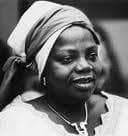
Buchi Emecheta was a prolific Nigerian novelist andонер known for her unflinching portrayal of the experiences of African women. Her seminal works, including 'The Joys of Motherhood,' 'The Bride Price,' and 'Second Class Citizen,' explore themes of female independence, cultural conflict, and post-colonial identity. Emecheta's powerful narrative voice and realistic depiction of societal pressures cemented her status as a significant voice in post-colonial literature.

Ashley Antoinette
4.6

Mark McDonald
4.4
Luo Guanzhong
4.4

Mia McKenzie
4.3
Dorothy Parker
4.3

Joaquim Maria Machado de Assis
4.3

James Thurber
4.2
Terry Kay
4.2