“I'm a man who's born for the small things, for the things that don't need to be, but simply are.”
— Pessoa reflecting on his own nature and destiny.

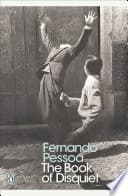
Fernando Pessoa (2002)
Genre
Fiction
Reading Time
900+ min (highly variable)
Key Themes
See below
Sign in to track this book
Explore the mind of a Lisbon clerk as everyday life turns into a maze of existential dread, dreams, and personal discovery.
Bernardo Soares, an assistant bookkeeper in Lisbon, begins his fragmented story by describing his ordinary life. He works in a textile firm, a job he finds meaningless, and lives in a rented room. Soares presents himself as a chronicler of his inner life, a man who observes the world from a great distance, often feeling like a spectator rather than a participant. His first entries establish his sad and introspective nature, his separation from society, and his deep sense of being 'disquieted' by simply existing. He often thinks about reality, dreams, and the pointlessness of human effort, setting the tone for the entire work.
A recurring idea in Soares's writings is his contemplation of the world from his window. From this spot, he watches the busy street life of Lisbon – pedestrians, carts, the changing light – turning these everyday events into deep philosophical thoughts. He sees in the passersby not individuals but types, symbols of humanity's shared struggle and brief existence. These observations often lead to reflections on identity, the illusion of connection, and the arbitrary line between his inner world and external reality. The window becomes a metaphorical barrier, highlighting his chosen isolation and his unique view of life.
Soares often blurs the lines between his dreams, his waking thoughts, and his creative work. He sees his dreams as a richer, more real existence than his mundane daily life, often regretting the need to wake up. He describes his wish to live entirely within imagination, creating elaborate inner worlds that go beyond the limits of the physical world. His writing, the act of composing 'The Book of Disquiet,' becomes a form of dreaming while awake, a way to escape the boredom and meaninglessness of his life as a bookkeeper. He struggles with the contradiction of needing to experience life to write about it, yet finding life itself an obstacle to true expression.
A main theme is Soares's deep identity crisis. He often feels he is not one person but many selves, an 'orchestra' of different beings living within him. He struggles with the idea of a stable self, observing his own thoughts and emotions as if they belonged to someone else. This fragmentation extends to his sense of authorship, as he sometimes credits his writings to other 'heteronyms' or fictional personas. He views identity as a performance, a series of masks adopted and discarded, leading him to conclude that the true self is elusive, perhaps non-existent. This internal multiplicity adds to his constant sense of unease.
Lisbon is more than just a setting; it is a character intertwined with Soares's inner world. He observes the city's streets, cafes, shops, and people with a careful eye, finding both beauty and deep sadness in its daily rhythms. The city's light, sounds, and atmosphere are often described, reflecting Soares's own mood. He sees Lisbon as a stage for human dramas, a place where lives meet and diverge, yet he always remains a detached observer. The city is a source of brief aesthetic pleasure but also a constant reminder of the superficiality and fleeting nature of human existence.
For Bernardo Soares, writing is not just a hobby but a necessity. He sees his 'Book of Disquiet' as his only true legacy, the only way he can leave a mark on the world, however small. He thinks about the craft of writing, the precision of language, and the challenge of putting inner experience into words. He often expresses frustration with language's inability to fully capture the complexity of his thoughts and feelings. Despite these challenges, writing remains his refuge, his form of prayer, and his way of imposing order on the chaos of his inner life. He believes that by writing, he truly lives, even if his external life is barren.
A widespread theme is Soares's belief that all human action, ambition, and effort are ultimately pointless. He sees the pursuit of wealth, fame, or even love as temporary distractions from existence's inherent emptiness. He often scorns those who are active and involved with the world, viewing their efforts as naive or misguided. For Soares, the only honest response to life's absurdity is a quiet withdrawal, a passive observation, and a complete lack of involvement. He finds a strange comfort in this resignation, believing that by expecting nothing, he cannot be disappointed, and by doing nothing, he avoids the pain of failure.
Soares is burdened by his intense awareness and constant self-analysis. He sees too much, feels too much, and thinks too much, making him acutely sensitive to the world's flaws and his own. This heightened awareness prevents him from experiencing simple joys or finding contentment. He often wishes he could be less aware, less intelligent, less burdened by his own thoughts. His introspection, while the source of his deep insights, is also the root of his 'disquiet,' preventing him from ever truly living in the moment or finding peace. He is trapped within the maze of his own mind.
Oddly, Soares often finds beauty in sadness, decay, and the fleeting nature of existence. He is drawn to the beauty of things that are passing, unfinished, or slightly worn. A faded memory, a forgotten street, the twilight hours – these evoke a deep sense of beauty in him. He believes that true art and deep understanding can only come from sadness and a strong awareness of life's inherent limits. His own writing often reflects this aesthetic, dwelling on the subtle nuances of emotion and observation, raising the ordinary to the sublime through his sad gaze. He finds comfort in the very things that cause him pain.
At its heart, 'The Book of Disquiet' is a long, open-ended search for meaning in a world that offers none. Soares constantly questions the 'why' of existence, the purpose of human life, and the reason for his own being. He considers various philosophical views, from stoicism to nihilism, but ultimately finds no satisfying answers. His lack of a definitive conclusion is central to the work's nature; it is a journey of inquiry, not a destination of truth. He embraces the uncertainty and discomfort of living without a clear purpose, finding a strange authenticity in this constant state of questioning and unease.
The Protagonist
Soares's 'arc' is not one of traditional development but rather a deepening and reiteration of his initial state of disquiet, exploring its myriad facets without resolution.
The Author/Implied Narrator
Pessoa's 'arc' is embodied in the collective work of his heteronyms, showcasing a lifelong exploration of identity and literary creation rather than a single character's development.
The Mentioned/Symbolic
Not applicable as a character, but serves as a historical reference point for Soares's reflections.
The Supporting/Mentioned
No specific arc; remains a static representation of the conventional world.
The Mentioned/Supporting
No individual arc; they are a static representation of the ordinary world.
The Mentioned/Symbolic
No arc; they are a constant, changing backdrop for Soares's internal world.
Soares often struggles with the idea that he is not a single, consistent self but many different personalities, often calling himself an 'orchestra' of beings. This theme is central to the book's structure, written by a 'semi-heteronym' of Pessoa. Soares questions the truth of any single identity, suggesting that the self is an illusion, a collection of masks. He observes his own thoughts and feelings as if they belong to someone else, creating a deep sense of detachment even from himself. This fragmentation leads to a deep sense of unease, as he can never fully 'be' any one person.
“I am the sum of an infinity of selves, a circle of reflections in a thousand mirrors.”
Soares lives a life of deep solitude, not just physically but emotionally and intellectually. He consciously chooses to withdraw from social interaction, finding the company of others superficial and tiring. His detachment allows him to observe the world and his own inner workings with a unique, almost clinical, perspective. This theme appears in his frequent observations from his window, his preference for dreams over reality, and his consistent refusal to participate in 'normal' life activities. While he sometimes regrets his loneliness, he ultimately embraces solitude as the only path to true introspection and intellectual freedom.
“I was born to be alone, to be a spectator of myself.”
A pervasive nihilistic undercurrent runs through Soares's thoughts. He consistently questions the purpose of human life, ambition, and achievement, concluding that all efforts are ultimately pointless and lack inherent meaning. He views the bustling activity of Lisbon, the pursuit of wealth, and even artistic creation as temporary distractions from existence's fundamental emptiness. This theme leads him to a state of passive resignation, where action is seen as useless and the only honest response is a quiet withdrawal and observation. His 'disquiet' comes from this confrontation with life's ultimate lack of purpose.
“I have no ambition, no desire. I am a spectator of my own life, and the show is boring.”
For Soares, imagination and dreams offer a richer, more real existence than the ordinary physical world. He often escapes into elaborate inner worlds, creating scenarios and sensations that far surpass the dullness of his daily life as a bookkeeper. He sees writing as a form of dreaming while awake, a way to build a meaningful existence through pure thought and language. However, he also recognizes the limits of this escape, as he is always eventually pulled back to the inescapable reality of his physical existence, highlighting the tension between his inner and outer worlds. This theme emphasizes his belief that true living happens within the mind.
“My dreams are my only reality, my only freedom.”
Soares finds a unique beauty and artistic value in sadness, impermanence, and decay. He is drawn to the subtle nuances of melancholy, seeing it not as a flaw but as a deep state that allows for deeper understanding and aesthetic appreciation. He often describes the beauty of fading light, forgotten objects, or the quiet resignation of the world. This theme suggests that true art and deep insight come from accepting life's inherent sorrow and impermanence, transforming suffering into a source of aesthetic pleasure and philosophical contemplation. His writing often reflects this, focusing on the delicate details of fleeting moments.
“There is a certain sadness which is like a sunset, beautiful and full of promise, even in its ending.”
The book is composed of thousands of short, unconnected entries, mirroring the protagonist's fragmented mind.
The entire book is structured as a collection of disjointed fragments, ranging from a single sentence to several paragraphs, without a traditional linear plot or character development. This device directly reflects Bernardo Soares's own fragmented identity and his perception of reality as a series of disconnected observations and internal monologues. The lack of continuity forces the reader to engage with each thought as an independent entity, mirroring Soares's own intellectual isolation and his constant re-examination of themes from different angles. It emphasizes the subjective and incomplete nature of truth.
Bernardo Soares is a 'semi-heteronym' of Fernando Pessoa, a distinct literary persona.
Bernardo Soares is not simply a pseudonym but a 'semi-heteronym' – a literary persona created by Fernando Pessoa with his own distinct biography, personality, and writing style, though less fully developed than Pessoa's other heteronyms. This device allows Pessoa to explore different facets of his own psyche and philosophical ideas through multiple voices, blurring the line between author and character. Soares's existence as a heteronym reinforces the book's central theme of fragmented identity, as the author himself is presented as a collection of selves, with Soares being one of them. It adds a meta-fictional layer, questioning the very nature of authorship and self.
The narrative flows as a direct transcription of Soares's thoughts, observations, and philosophical musings.
The book employs a stream of consciousness technique, presenting Soares's unfiltered thoughts, memories, and reflections as they occur. There is little external plot; the 'action' takes place almost entirely within Soares's mind. This device immerses the reader directly into his subjective experience, showcasing his intense introspection, his melancholic worldview, and his constant philosophical inquiry. It allows for the exploration of complex ideas and emotions without the constraints of conventional narrative structure, highlighting the chaotic yet profound nature of human thought.
Soares's frequent observations from his window symbolize his detached perspective and internal world.
Soares's recurring act of gazing from his window, observing the street life of Lisbon, serves as a powerful metaphor. The window represents a boundary between his internal, contemplative world and the external, active world he refuses to fully engage with. It symbolizes his chosen role as a detached spectator, an observer rather than a participant in life. From this vantage point, the mundane activities outside are transformed into profound philosophical meditations, illustrating how his inner life imbues external reality with meaning. The window emphasizes his isolation and his unique, often melancholic, lens through which he perceives existence.
“I'm a man who's born for the small things, for the things that don't need to be, but simply are.”
— Pessoa reflecting on his own nature and destiny.
“My soul is a secret orchestra; I do not know what instruments, what strings, what drums and harps, are playing and sounding themselves in me.”
— A contemplation on the complexity and mystery of his inner self.
“To pretend is to know yourself.”
— A paradoxical statement about the nature of identity and self-discovery through artifice.
“I've always been an observer of myself, even when I was doing things, I was not doing them, I was seeing them done.”
— Describing his detached, introspective mode of experiencing life.
“To live is to be another. To feel is to think without an object.”
— A profound philosophical musing on the nature of existence and feeling.
“I carry within me all the dreams that have ever been dreamt.”
— Expressing a sense of universal connection to human experience and imagination.
“My past is everything I failed to be.”
— A melancholic reflection on missed opportunities and unfulfilled potential.
“The only way to be happy is to be sad, because if you're sad, you're not trying to be happy, and if you're not trying to be happy, you're not trying to be anything.”
— A paradoxical take on happiness and the futility of actively pursuing it.
“I am merely a stage on which various plays are performed.”
— Describing his sense of being a vessel for multiple personalities and experiences.
“Life is a dream, and I am the dream of a dream.”
— A deeply existential statement on the nature of reality and consciousness.
“There are metaphors that are more real than the people who walk in the street.”
— Emphasizing the power and reality of imagination and language over mundane existence.
“I've always lived on the fringes of life, not inside it.”
— A description of his perpetual state of being an outsider and observer.
“To think is to be sick.”
— A statement reflecting the burden and often painful nature of excessive introspection.
“I create myself and I destroy myself, and it's all the same to me.”
— Expressing a profound detachment and acceptance of his own fluctuating identity.
Ready to see how well you understood this book? Take our interactive quiz with 10 questions.
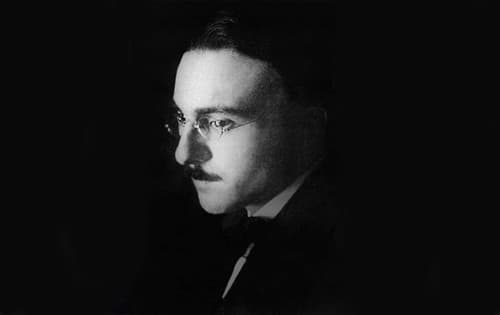
Fernando António Nogueira Pessoa was a Portuguese poet, writer, literary critic, translator, publisher, and philosopher, described as one of the most significant literary figures of the 20th century and one of the greatest poets in the Portuguese language. He also wrote in and translated from English and French.

Ashley Antoinette
4.6

Mark McDonald
4.4
Luo Guanzhong
4.4

Mia McKenzie
4.3
Dorothy Parker
4.3
Joaquim Maria Machado de Assis
4.3

James Thurber
4.2

Terry Kay
4.2