“The young people of today are so careless. They have no sense of responsibility.”
— Colonel Bantry expresses his frustration about the younger generation after a body is found in his library.

Agatha Christie (1942)
Genre
Mystery
Reading Time
190 min
Key Themes
See below
Sign in to track this book
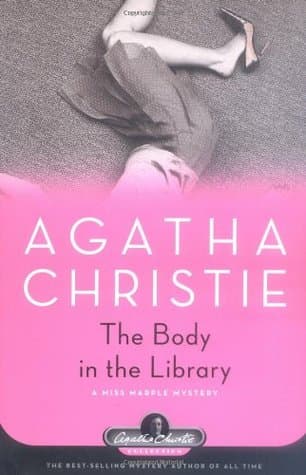
When a glamorous, unknown corpse appears in their library, the respectable Bantry couple must rely on Miss Marple's sharp wit to unravel a web of deceit and prevent village gossip from unraveling their lives.
At 7 AM, Colonel Arthur Bantry's housemaid, Mary, tells him there is a dead young woman in their library at Gossington Hall. The woman is blonde, heavily made-up, wearing an evening dress, and unknown to the Bantrys. His wife, Dolly Bantry, is at first doubtful but quickly gets involved, seeing the scandal and mystery their quiet village of St. Mary Mead faces. Dolly Bantry contacts her old friend, Miss Jane Marple, knowing her insight into people will be helpful. Local police, led by Inspector Slack, arrive to investigate the victim's identity and how she ended up in the Bantrys' home.
Chief Constable Melchett and Inspector Slack quickly identify the body as Ruby Keene, an eighteen-year-old dancer from the Majestic Hotel in Milchester. Ruby had been working there and was last seen alive the previous night. Her cousin, Josie Turner, also a dancer at the Majestic, confirms the identification. The police interview staff and guests at the Majestic Hotel, focusing on anyone connected to Ruby. Suspects include Basil Blake, a film producer living nearby, and George Bartlett, a wealthy man who liked Ruby. Questions arise about Ruby's relationship with the much older millionaire, Conway Jefferson, who had taken a paternal interest in her.
The investigation changes when a second body is found in an abandoned quarry, inside Basil Blake's burned-out car. The body is so badly burned that identification is hard, but dental records show it is Pamela Reeve, a fifteen-year-old Guide from a nearby troop who had gone missing. Pamela's disappearance and her body found with the Ruby Keene case suggest a deliberate body swap. Miss Marple, observing, notices the difference between the two victims and starts to consider how their identities might have been exchanged to mislead the police and hide the real murder victim.
Conway Jefferson, a wealthy invalid who lost his wife and daughter in a plane crash, had grown fond of Ruby Keene, seeing her as a daughter. He tells the police he planned to legally adopt Ruby and leave her his large fortune, removing his son-in-law, Mark Gaskell, and daughter-in-law, Adelaide Jefferson, from his will. This immediately gives a strong reason for those who would lose their inheritance. Jefferson's family members, especially Mark and Adelaide, become main suspects, though they claim not to care about the will change, which makes Miss Marple suspicious.
While the police focus on usual leads, Miss Marple watches everyone involved, from the Bantrys' staff to the Majestic guests. She notes the mismatched clothing of the body in the library, especially the cheap evening dress and expensive shoes. She also pays close attention to the reactions of Josie Turner, Ruby's cousin, and Adelaide Jefferson, Conway's daughter-in-law. Miss Marple's understanding of human vanity and deceit leads her to question the first identification of the body in the library, believing the real victim was someone else, and that Ruby Keene was a part of a larger plan.
The police investigate Pamela Reeve's disappearance, finding she was last seen heading towards Basil Blake's property after being promised a film audition. This connects her directly to the film studio and Basil Blake, who is now a main suspect in both murders. It becomes clear that Pamela was deliberately killed, not as the main victim, but to be swapped. The reason for killing Pamela is to provide a body to be identified as Ruby Keene, allowing the real Ruby Keene to disappear or be killed without immediate detection. This plan suggests a careful and ruthless killer.
Josie Turner, Ruby's cousin, has an alibi for the murder night, saying she was asleep in her room at the Majestic Hotel. However, Miss Marple finds Josie's calm and lack of real sadness over Ruby's death unsettling. Josie is ambitious and seems more worried about her own career. Miss Marple also notices Josie's subtle attempts to shift suspicion and control the story about Ruby's life and death. Her calm manner, even when discussing her cousin's murder, makes Miss Marple suspect that Josie knows more than she admits and might be involved in the crime.
Through observation and deduction, Miss Marple realizes the body in the library, first identified as Ruby Keene, is Pamela Reeve. The killer had dressed Pamela in Ruby's clothes and used heavy makeup to hide her true identity, knowing the Bantrys would not know Ruby. The real Ruby Keene was murdered earlier, and her body was then put in Basil Blake's car and burned, meant to be identified as Pamela Reeve, who was supposedly missing. This swap was designed to create confusion and buy time for the killer, directing suspicion away from the real victim and killer.
Miss Marple, with Colonel Melchett and Inspector Slack, identifies Josie Turner as the killer. Josie, knowing Conway Jefferson's plans to adopt Ruby and make her his heir, secretly killed Ruby Keene and then placed Pamela Reeve's body, dressed in Ruby's clothes, in the Bantry library. Her reason was to get rid of Ruby and become Jefferson's adopted daughter and heir, or at least get part of the inheritance as the 'grieving' cousin. Josie manipulated the situation, using her resemblance to Ruby to help her plan, and then killed Pamela to create a false trail. Her reason was pure greed.
Josie Turner's plan is fully revealed. She had prepared Pamela Reeve, a young girl hoping for a film career, then killed her, dressed her in Ruby's clothes, and placed her in the Bantry library. She then killed Ruby Keene, put her body in Basil Blake's car, and set it on fire to destroy evidence and mislead the police into believing the burned body was Pamela. Josie's reason was financial, aiming to inherit Conway Jefferson's fortune, either directly or by pretending to be the upset relative. With Miss Marple's insights, the police gather enough evidence to confront Josie, leading to her arrest and a resolution to the double murder at Gossington Hall and the quarry.
The Consulting Detective
Miss Marple's arc is less about personal change and more about demonstrating her consistent brilliance and moral compass as she systematically deconstructs a seemingly impossible crime.
The Supporting Character
Dolly Bantry experiences the shock and disruption of a murder in her home, moving from initial horror to active participation in the investigation, ultimately finding relief and satisfaction in the truth.
The Supporting Character
Colonel Bantry endures the disruption of his peaceful retirement, grappling with the scandal and providing a steady, if sometimes exasperated, presence throughout the investigation.
The Victim
Ruby is a victim whose true fate and identity are obscured by a cunning plot, eventually revealed through Miss Marple's deductions.
The Antagonist
Josie maintains a facade of an innocent, grieving relative, but her true greedy and murderous nature is systematically exposed by Miss Marple.
The Supporting Character
Conway Jefferson's initial grief over Ruby's supposed death turns to bewilderment and then relief as the truth of the identity swap and the killer's motive are revealed.
The Supporting Character
Inspector Slack's initial skepticism towards Miss Marple transforms into grudging respect and eventually collaboration as he witnesses her effectiveness.
The Supporting Character
Melchett remains a steady, authoritative figure, facilitating the investigation and trusting Miss Marple's judgment throughout.
The Victim
Pamela is an innocent victim whose true identity and role in the plot are slowly uncovered, revealing the depth of the killer's deception.
This theme is central to the plot, dealing with mistaken identities and deliberate deception. The initial confusion over Ruby Keene's body in the library, and the later discovery of Pamela Reeve's burned body, are key examples. The killer carefully changes appearances—dressing Pamela to look like Ruby, burning Ruby's body to hide who she is—to create a false story. Miss Marple succeeds because she can see past these surface appearances and find the truth, often by noticing small differences in clothing or behavior.
“''It's so much easier to believe the obvious,' said Miss Marple, 'and so much more dangerous.'”
The main reason for the double murder is Conway Jefferson's large fortune. His decision to adopt Ruby Keene and make her his only heir gives a strong reason for those who would lose their inheritance. The killer's plan is driven by the wish to eliminate Ruby and either claim the inheritance directly or through someone else. This theme shows how extreme wealth can corrupt people and lead to desperate, violent acts, even among seemingly respectable individuals.
“''Money,' said Miss Marple, 'is the root of all evil, and a very strong root it is.'”
The novel explores social class and its effect on how people are seen and how justice is applied. The 'respectable' Bantrys are shocked by a 'common' dancer's body in their library, showing societal judgments. The police, too, initially focus on certain people based on their background or job, like the film producer Basil Blake. Miss Marple, however, goes beyond these class lines in her observations, understanding that human nature is universal, regardless of social standing, allowing her to see motives others miss.
“''There's a lot of human nature in a small village,' said Miss Marple, 'and it's much the same as human nature anywhere else.'”
The book examines the nature of planned evil, especially in the killer's character. The careful planning, the cold-blooded murder of two innocent young women, and the calculated manipulation of appearances show a lack of empathy and a ruthless pursuit of self-interest. Miss Marple, with her understanding of human wickedness, recognizes that evil can exist beneath a normal exterior, and that bad crimes often come from ordinary reasons like greed.
“''Evil is not something that happens in books, dear. It happens everywhere.'”
Misleading clues and characters designed to divert suspicion.
Agatha Christie masterfully employs several red herrings to keep the reader guessing. The initial identification of the body in the library as Ruby Keene, the focus on Basil Blake's suspicious behavior, and the various alibis presented by other suspects (like Mark Gaskell and Adelaide Jefferson) all serve to distract from the true killer. These false leads force the reader to consider multiple possibilities, making the ultimate revelation more surprising and satisfying. Miss Marple's unique ability to see through these misdirections is key to solving the case.
The central deception where one victim's body is disguised as another.
The 'body swap' is the core plot device of the novel. The killer murders Pamela Reeve, dresses her in Ruby Keene's clothes and makeup, and places her in the Bantry library. Simultaneously, the real Ruby Keene is murdered, and her body is burned in a car wreck, to be identified as Pamela. This elaborate deception is designed to create utter confusion, misdirect the police about the identity of the primary victim, and buy time for the killer to consolidate their position regarding the inheritance. Unraveling this swap is Miss Marple's crucial insight.
The fallibility of initial witness accounts and identifications.
The novel highlights how easily witnesses can be mistaken, especially under pressure or when presented with manipulated evidence. The Bantrys' inability to identify the body in their own library, and Josie Turner's 'confirmation' of Ruby's identity, are crucial to the plot. The heavy makeup and the unusual context contribute to these misidentifications. This device underscores that what people see, or think they see, isn't always the truth, and that careful, objective investigation is needed to overcome these human errors and deliberate deceptions.
The juxtaposition of a heinous crime with a seemingly peaceful, respectable village.
The setting of St. Mary Mead, a quintessential English village, is a classic Christie device. The shock of finding a murdered 'glamour girl' in the library of the highly respectable Bantrys immediately creates a powerful sense of disruption and scandal. This contrast between the idyllic, seemingly innocent village life and the brutal, sophisticated crime highlights the idea that evil can permeate any environment, and that appearances of respectability can be deeply misleading. It also allows Miss Marple to use her intimate knowledge of human nature, honed in such a setting, to understand the broader criminal world.
“The young people of today are so careless. They have no sense of responsibility.”
— Colonel Bantry expresses his frustration about the younger generation after a body is found in his library.
“One must always look for the simplest explanation first.”
— Miss Marple advises the police on her approach to solving mysteries.
“It's always the quiet ones you have to watch.”
— Miss Marple reflects on human nature and suspects in the case.
“A library is a very good place to find a body. So quiet and respectable.”
— Miss Marple comments on the irony of the murder location.
“People are so much alike everywhere. The same things happen to them.”
— Miss Marple draws parallels between village life and the crime.
“The truth is always there, if you know where to look.”
— Miss Marple encourages persistence in the investigation.
“It is not the obvious person who is always guilty.”
— Miss Marple warns against jumping to conclusions about suspects.
“Money is a great motive for murder.”
— A character discusses possible reasons for the crime.
“In a village, nothing remains a secret for long.”
— Miss Marple explains how gossip helps her solve cases.
“The dead tell no tales, but the living sometimes do.”
— Reflection on how survivors' actions reveal clues.
“Appearances are often deceptive.”
— Miss Marple cautions against trusting surface impressions.
“Jealousy is a powerful emotion. It can drive people to do terrible things.”
— Discussion of potential motives behind the murder.
“The past has a way of catching up with people.”
— Miss Marple notes how old secrets influence the present crime.
“Everyone has something to hide, even the most innocent-seeming person.”
— Miss Marple observes human behavior during the investigation.
Ready to see how well you understood this book? Take our interactive quiz with 10 questions.
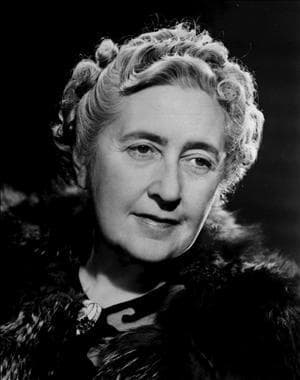
Dame Agatha Mary Clarissa Christie, Lady Mallowan, was an English writer known for her 66 detective novels and 14 short story collections, particularly those revolving around fictional detectives Hercule Poirot and Miss Marple. She also wrote the world's longest-running play, the murder mystery The Mousetrap, which has been performed in the West End since 1952. A writer during the "Golden Age of Detective Fiction", Christie has been called the "Queen of Crime". She also wrote six novels under the pseudonym Mary Westmacott. In 1971, she was made a Dame (DBE) by Queen Elizabeth II for her contributions to literature. Guinness World Records lists Christie as the best-selling fiction writer of all time, her novels having sold more than two billion copies.