“Art is a way of creating a world in the face of the world.”
— Bradley contemplating the nature of his own writing and artistic endeavor.

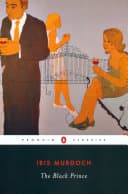
Iris Murdoch (2003)
Genre
Fiction
Reading Time
540 min
Key Themes
See below
Sign in to track this book
A middle-aged writer's memoir reveals a life stifled by artistic failure, bad relationships, and self-delusion, as he fights for love, truth, and meaning.
Bradley Pearson, a 58-year-old unsuccessful novelist, plans to leave London and his stifling life to pursue his art alone. He prepares carefully, even writing a farewell note. However, his sister, Priscilla, calls him distressed, saying she has left her husband, Roger Cavandish, and is suicidal. Reluctantly, Bradley returns to London, canceling his escape. He finds Priscilla in a desperate state, requiring his immediate help. This initial interruption sets the stage for his carefully constructed world to fall apart, forcing him back into the very emotional entanglements he wanted to avoid, particularly his difficult relationship with his former brother-in-law and closest friend, Arnold Baffin.
Upon returning to London, Bradley stays at the home of his successful novelist friend, Arnold Baffin, and Arnold's wife, Christian. He quickly becomes involved in their complex household. Christian, with whom Bradley has a long and complicated history, is flirtatious and manipulative. Their daughter, Julian Baffin, a young art student, is also present and soon catches Bradley's attention. The Baffin home, meant as a temporary refuge, quickly becomes a new source of emotional and intellectual trouble for Bradley, as he observes and participates in the power dynamics and unspoken desires that run through their relationships, especially his own unresolved feelings for Christian and his growing interest in Julian.
Julian Baffin approaches Bradley, expressing her deep frustration with her art and her desire to improve. She asks him to critique her work and offer guidance, seeing him as a true artist despite his lack of commercial success. Bradley, flattered by her sincerity and captivated by her youthful intensity, agrees to help. This interaction deepens their connection, moving beyond that of a family friend and his goddaughter. Bradley feels increasingly drawn to Julian's innocence, vulnerability, and artistic passion, seeing in her a reflection of his own youthful ideals. Their shared intellectual and artistic pursuits begin to create an intense, unspoken attraction that will soon become central to the unfolding drama.
The intellectual and emotional closeness between Bradley and Julian grows quickly. During a private tutoring session for her art, their conversations become deeply personal, revealing their mutual admiration and affection. Julian confesses her love for Bradley, and he, despite his age and the scandalous implications, returns her feelings. They begin a secret affair, marked by intense passion and intellectual connection. Bradley sees Julian as his muse and his salvation, a chance for genuine love and artistic renewal. This secret relationship, however, is dangerous and ethically complex, threatening to shatter the already fragile relationships within their intertwined families and the wider literary circle.
While Bradley is involved with Julian, his estranged brother-in-law, Roger Cavandish, reappears. Roger, a literary critic and a former lover of Bradley, confesses his lasting love and desire for Bradley. This revelation adds another layer of emotional complexity to Bradley's already chaotic life. Bradley is repulsed by Roger's advances, yet the confession forces him to confront his past and the nature of his own sexuality. Roger's presence also complicates the already strained family dynamics surrounding Priscilla, further entangling Bradley in a web of personal obligations he desperately wants to escape, while also showing the many sides of love and desire.
Christian Baffin, Arnold's wife and Julian's mother, becomes suspicious of Bradley and Julian's close relationship. Her possessive nature and long-standing emotional ties to Bradley lead her to investigate. She eventually discovers their affair, leading to a furious confrontation with Bradley. During this heated exchange, Christian not only expresses her outrage but also reveals her own persistent and unrequited love for Bradley, confessing that she has always desired him. This revelation further complicates Bradley's emotional state, exposing the deep web of unspoken desires and jealousies that have permeated their interconnected lives for years, and solidifying the destructive potential of his affair with Julian.
The truth about Bradley and Julian's affair inevitably reaches Arnold Baffin, Julian's father and Bradley's closest friend. Arnold, a man who prides himself on his moral integrity and his seemingly stable family life, is devastated and enraged by the betrayal. He confronts Bradley in a violent outburst, feeling both personally betrayed by his friend and deeply hurt by the violation of his family. The confrontation is a turning point, destroying the illusion of their long friendship and exposing the raw pain and anger beneath their literary and personal rivalry. This event marks the irreversible breakdown of their relationship and the start of the tragic climax.
Following the intense confrontation and the revelation of the affair, Arnold Baffin is found dead. The circumstances surrounding his death are initially unclear, but Bradley Pearson is immediately suspected due to his recent argument with Arnold and his illicit relationship with Julian. The police investigation begins, putting Bradley under intense scrutiny. This event plunges Bradley into a nightmare of legal and moral consequences, forcing him to face the ultimate results of his actions and desires. The murder is the tragic culmination of the emotional turmoil and betrayals that have plagued his life, turning his personal drama into a public scandal and a criminal investigation.
Despite Bradley's claims of innocence and his complex attempts to explain Arnold's death, he is eventually tried and convicted of Arnold Baffin's murder. The evidence, though perhaps circumstantial, points strongly against him, especially considering his motive and the volatile nature of their last encounter. Bradley is sentenced to prison, a harsh end to his aspirations for artistic freedom and personal fulfillment. His imprisonment marks a major shift in his life, forcing him into a solitary existence where he can only reflect on the events that led him there, and where he writes the narrative that makes up 'The Black Prince'.
After Bradley's main narrative ends, the novel includes a series of postscripts from other characters involved in the story: Christian, Julian, Roger, and a psychiatrist, P. Loxias. Each provides their own view of the events, particularly Arnold's death and Bradley's character. These different accounts contradict Bradley's version of events in important ways, challenging his reliability as a narrator and creating ambiguity about the true murderer and the motivations of all characters. The postscripts highlight how subjective truth and memory are, leaving the reader to question what truly happened and who, if anyone, is telling the complete story.
The Protagonist
Bradley begins as a frustrated, self-deluded artist seeking escape and validation, and ends imprisoned, forced to confront the tragic consequences of his actions while still clinging to his artistic self-image.
The Supporting
Julian transforms from an insecure art student seeking guidance to a young woman embroiled in a scandalous affair, ultimately left to grapple with the fallout and her own version of the truth.
The Supporting
Arnold moves from a seemingly stable and successful family man to a betrayed and enraged husband and father, ultimately leading to his violent death.
The Supporting
Christian is revealed as a woman secretly desiring Bradley, whose jealousy and eventual discovery of the affair drive much of the plot's conflict.
The Supporting
Priscilla remains largely static in her emotional fragility, serving primarily as a catalyst for Bradley's actions and a representation of his familial burdens.
The Supporting
Roger resurfaces to confess his enduring love for Bradley, serving as a reminder of Bradley's past and offering an alternative perspective on events.
The Mentioned
N/A (functions as an analytical voice)
The novel carefully explores the many and often conflicting aspects of love and desire. Bradley's 'love' for Julian is presented as an idealized, purifying force, a 'black prince' that elevates him, yet it is also deeply selfish and ultimately harmful. Conversely, Christian's persistent desire for Bradley is possessive and jealous, while Roger's love for Bradley is unrequited and pathetic. The novel asks whether love is a spiritual experience or simply a complex mix of ego, power, and physical attraction. The affair between Bradley and Julian, meant to be an artistic and spiritual union, ultimately leads to betrayal and tragedy, showing love's capacity for both inspiration and destruction.
“Love is the extremely difficult realisation that something other than oneself is real.”
Murdoch skillfully blurs the lines between artistic creation and real life. Bradley, as a novelist, constantly frames his life as a story, seeing himself as an artist suffering for his work. He intellectualizes his desires and justifies his actions through an artistic lens, believing his affair with Julian is a necessary artistic awakening. The novel itself is presented as Bradley's prison memoir, a work of art created from his suffering. However, the conflicting postscripts from other characters challenge Bradley's 'artistic' truth, suggesting that his reality is a highly subjective, self-serving construction. This theme questions whether art can truly capture reality, or if it merely serves as a sophisticated form of self-deception.
“Art is a lonely thing. It is not always possible to be a good artist and a good man.”
A main concern of 'The Black Prince' is how hard it is to find truth. Bradley's narrative, presented as his definitive account, is systematically undermined by the postscripts of Christian, Julian, Roger, and P. Loxias. Each character offers a different interpretation of events, motives, and even the murder itself, showing that 'truth' is deeply subjective and depends on individual perspective and self-interest. The reader is left without a clear, objective understanding of what 'really' happened, particularly concerning Arnold's death. This structural device forces the reader to confront the impossibility of a single, authoritative truth, highlighting how personal biases and desires shape our understanding of reality.
“There are no facts, only interpretations.”
Bradley Pearson is a clear example of deep ego and self-deception. He sees himself as a misunderstood genius, a 'black prince' of art, despite his lack of success. He rationalizes his illicit affair with Julian as a quest for artistic purity and true love, rather than acknowledging it as a manifestation of his own desires and insecurities. His elaborate philosophical thoughts often serve to justify his morally questionable behavior. The novel shows how the ego can build complex stories to protect itself from uncomfortable truths, leading to a skewed perception of oneself and others. Bradley's journey, even in prison, is largely a battle to maintain his self-image against the harsh realities of his actions.
“I am a man of honour, a man of truth, a man of love. I am an artist.”
The novel looks at the challenges of the artistic life, contrasting Bradley's perceived artistic purity with Arnold's commercial success. Bradley believes in the sacred, solitary nature of art, viewing his own failures as a sign of his integrity. He constantly struggles with the demands of his 'vocation,' which he feels is constantly threatened by the messy realities of human relationships. His affair with Julian is presented as an artistic necessity, a source of inspiration. The book questions what it truly means to be an artist, whether it requires isolation, suffering, or a willingness to disregard conventional morality in pursuit of a higher truth. The tragic outcome suggests the severe costs of such a single-minded artistic pursuit.
“The artist is a sort of priest. He has a vocation. He is chosen.”
Bradley Pearson's first-person account is highly biased and self-serving.
The entire novel is presented as Bradley Pearson's memoir, written from prison. His narrative is deeply subjective, filled with philosophical digressions and justifications for his actions. He idealizes himself and his motivations, often presenting others in a negative light. The unreliability of his narration is explicitly highlighted by the subsequent 'postscripts' from other characters, which contradict his version of events and offer alternative interpretations. This device forces the reader to critically evaluate Bradley's account and question the very nature of truth in storytelling.
Multiple character accounts appended to the main narrative.
Following Bradley's extensive first-person narrative, the novel includes a series of short, distinct postscripts written by Christian, Julian, Roger, and P. Loxias. These additional accounts offer alternative perspectives on the events, character motivations, and especially the circumstances of Arnold Baffin's death. This device fragments the narrative truth, challenging Bradley's authority and forcing the reader to synthesize conflicting information. It serves to underscore the novel's themes of subjectivity and the elusive nature of truth, making the reader an active participant in discerning what might have truly occurred.
The reader perceives truths and motivations that Bradley Pearson is blind to.
Dramatic irony is prevalent throughout the novel, often stemming from Bradley Pearson's self-deception. The reader is frequently aware of Bradley's flaws, his manipulative tendencies, and the true nature of his relationships, even as Bradley himself remains oblivious or rationalizes his behavior. For example, Bradley views his affair with Julian as a pure, artistic union, while the reader can see the inherent selfishness and destructive potential. This device creates tension and adds layers of meaning, allowing the reader to observe the tragic trajectory of events with a clearer understanding than the protagonist himself possesses.
A multifaceted symbol representing an idealized, dark, or destructive love/artistic force.
The title 'The Black Prince' is a central and ambiguous symbol. For Bradley, it represents an idealized, dark, and powerful form of love or artistic inspiration – a transcendent force that elevates him and justifies his actions. It can also be interpreted as a symbol of the destructive, amoral aspect of passion or art, a 'dark' force that leads to chaos and tragedy. The symbol is open to multiple interpretations, reflecting the novel's exploration of good and evil, creation and destruction, within the context of intense human relationships and artistic ambition. It encapsulates the complex, often contradictory, nature of Bradley's inner world and his pursuits.
“Art is a way of creating a world in the face of the world.”
— Bradley contemplating the nature of his own writing and artistic endeavor.
“Love is the extremely difficult realisation that something other than oneself is real.”
— Bradley's reflection on his complex relationships, particularly with Julian and Rachel.
“The artist is a sort of God, and like God is invisible, and remains, if he is a good artist, in his work, like the paring of a fingernail.”
— Bradley thinking about the artist's role and presence within their creation.
“Freedom is the recognition of necessity.”
— A philosophical statement that resonates with Bradley's struggles for control and understanding.
“We are all in the art of living, and the art of living is love.”
— Bradley's musings on the ultimate purpose and challenge of human existence.
“To be good is to be a part of the world, to be real, to be able to see what is real.”
— A reflection on morality and perception, central to Bradley's journey.
“The only thing one can do with love is to be in it.”
— Bradley's acceptance of the overwhelming nature of his romantic attachments.
“Reality is a system of interlocking forms.”
— A philosophical observation that underscores the novel's intricate structure and character interactions.
“One must be careful with one's freedom, it is a very dangerous thing.”
— Bradley's contemplation of the consequences and responsibilities that come with personal liberty.
“The greatest difficulty is to see the human being as a human being.”
— Bradley's struggle to truly understand and empathize with those around him, particularly his ex-wife and sister-in-law.
“All art is the struggle to make the accidental seem necessary.”
— Another insight into the creative process, as Bradley reflects on his own work and the nature of fiction.
“The only thing one can learn from experience is that one learns nothing from experience.”
— Bradley's cynical yet profound take on the repetitive nature of human error and learning.
“We are all condemned to be free.”
— A Sartrean echo that reflects Bradley's sense of burden from his own choices and existence.
“Truth is a mobile and various thing.”
— Bradley's awareness of the subjective and shifting nature of truth, especially in the context of the differing accounts of events.
Ready to see how well you understood this book? Take our interactive quiz with 10 questions.
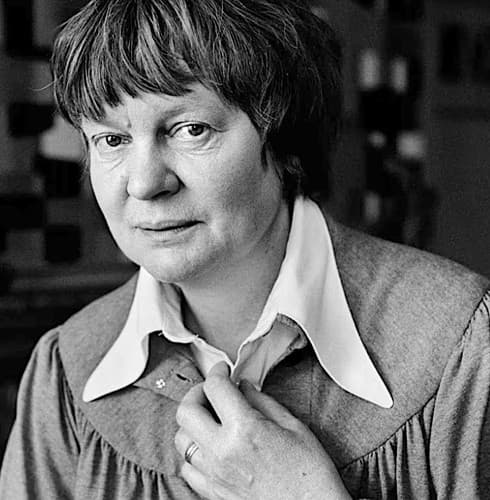
Dame Jean Iris Murdoch was an Irish and British novelist and philosopher. Murdoch is best known for her novels about good and evil, sexual relationships, morality, and the power of the unconscious. Her first published novel, Under the Net (1954), was selected in 1998 as one of Modern Library's 100 best English-language novels of the 20th century. Her 1978 novel The Sea, the Sea won the Booker Prize. In 1987, she was made a Dame by Queen Elizabeth II for services to literature. In 2008, The Times ranked Murdoch twelfth on a list of "The 50 greatest British writers since 1945".

Ashley Antoinette
4.6

Mark McDonald
4.4
Luo Guanzhong
4.4
Mia McKenzie
4.3
Dorothy Parker
4.3
Joaquim Maria Machado de Assis
4.3
James Thurber
4.2

Terry Kay
4.2