“I grew, day by day, more moody, more irritable, more regardless of the feelings of others.”
— The narrator describes his descent into alcoholism and cruelty.

Edgar Allan Poe (1914)
Genre
Mystery
Reading Time
24 min
Key Themes
See below
Sign in to track this book
A man's descent into madness is shown through his increasing cruelty towards his once-loved black cat, leading to a terrible end.
The unnamed narrator, writing from a prison cell, begins his confession by describing his early life. He was known for his calm and humane nature and, from a young age, loved animals. Many pets returned this love, but his favorite was a large, entirely black cat named Pluto. Pluto was an intelligent and loyal companion, following him everywhere. The narrator's wife, a kind woman, often mentioned the old belief that black cats were witches in disguise, a comment the narrator at first found amusing.
As years passed, the narrator fell into alcoholism. His once gentle nature turned to irritability, and he became more abusive towards his wife and pets. He started to lash out, first verbally, then physically. While his other pets suffered his drunken rages, Pluto, for a time, was spared. However, the narrator's decline eventually included Pluto, marking a key point in his moral breakdown. The affection he once had for the cat was replaced by a morbid perverseness fueled by drink.
One night, returning home very drunk, the narrator believed Pluto was avoiding him. Seized by a sudden, angry fury, he grabbed the cat. Pluto, frightened, bit his hand. Enraged by this perceived defiance, the narrator took a pen-knife from his pocket and, with deliberate cruelty, gouged out one of the cat's eyes. The act filled him with brief shame and regret when sober, but this feeling was soon replaced by growing perverseness and a desire to do more wrong.
Despite initial pangs of remorse and even tears, the narrator's shame quickly turned into a deep sense of perverseness. He knew his actions were sinful, yet this knowledge only strengthened his desire to do evil. One morning, he took Pluto, who had somewhat recovered from his injury, and hung him from a tree branch in the garden. He did this fully understanding the gravity of his crime, stating he hung him 'with tears streaming from my eyes, and with the bitterest remorse at my heart'—yet he still did it. This was the ultimate betrayal of his beloved pet and a complete surrender to his darker impulses.
On the same night the narrator killed Pluto, his house mysteriously caught fire. The flames destroyed the entire structure, leaving him and his wife with nothing. The only remaining wall was an inner partition. Inspecting the ruins the next day, a crowd gathered around this wall, amazed by a clear impression. To the narrator's horror, etched into the plaster was the giant figure of a cat, with a rope around its neck. He struggled to explain this, finally deciding someone must have thrown Pluto's body through an open window onto the fresh plaster, and the fire had preserved its form.
Some months after the fire, while at a tavern, the narrator noticed a large black cat sitting on a barrel of gin. The cat was very similar to Pluto in size and color, though it had a distinct, uneven patch of white fur on its chest. Feeling a mix of shame and a faint glimmer of remorse, the narrator took the cat home. His wife immediately liked it, but the narrator soon developed a strong hatred for the creature. Its devotion, which mirrored Pluto's, became a source of deep irritation and dread for him. He could not bring himself to harm it physically due to lingering guilt and a superstitious fear, yet his dislike deepened.
As time passed, the narrator's hate for the new cat grew stronger. He noticed with increasing terror that the white patch of fur on the cat's chest was slowly changing shape. What was once an unclear blotch gradually took the precise and horrifying form of the gallows—the instrument of execution. This transformation was a constant, tormenting reminder of his crime against Pluto and a chilling warning of his own coming doom. The cat's constant presence and this grotesque symbol drove him to the edge of madness, fueling his hatred and fear.
One day, while going down into the cellar of his new, run-down home with his wife, the new black cat tripped him, sending him tumbling down the stairs. Enraged, the narrator grabbed an axe, intending to strike the cat. His wife, trying to protect the animal, stepped between him and the cat. Blinded by fury and frustration, the narrator redirected the blow, striking his wife directly on the head with the axe. She died instantly, a tragic victim of his uncontrolled rage and the perverseness that had consumed him.
After killing his wife, the narrator immediately focused on hiding the crime. Driven by a twisted sense of cunning, he decided to wall up her body in the cellar. He carefully removed bricks from a false chimney breast, placed the corpse inside, and then meticulously rebuilt the wall, plastering it over so skillfully that no one would suspect a freshly disturbed surface. He felt a sense of triumph and relief, believing he had successfully avoided detection. The new black cat, which had seen the murder, was nowhere to be found, adding to his temporary sense of security.
Four days after the murder, police arrived at the narrator's home, alerted by concerned neighbors about his wife's disappearance. The narrator, confident in his concealment, at first acted nonchalant, even cheerful, during their search. As the officers prepared to leave, having found nothing, the narrator, in a moment of perverse arrogance, tapped the very wall where his wife's body was hidden, boasting about the solid construction of his home. From behind the wall, a low, mournful cry, followed by a series of terrible screams, erupted, revealing his secret. The police immediately tore down the wall, discovering his wife's decomposed body, and, to his utter horror, the black cat sitting on her head, its one fiery eye fixed upon him.
The Protagonist/Antagonist
Transforms from a kind-hearted animal lover into a remorseless murderer, driven by alcohol and a destructive perversity, leading to his own downfall.
The Supporting
Serves as a catalyst for the narrator's descent into evil, his death marking a point of no return for the narrator's soul.
The Supporting
Appears as a haunting reminder of the narrator's crimes, relentlessly tormenting him and ultimately leading to his capture.
The Supporting
Remains a compassionate figure throughout, enduring abuse and ultimately sacrificing her life in an attempt to protect an animal.
Alcoholism is the main cause of the narrator's moral decline. It changes a gentle, humane person into a violent, irrational monster. Poe clearly shows how alcohol destroys empathy, fuels irrational rage, and distorts perception, leading the narrator to commit increasingly terrible acts, from animal cruelty to murder. The narrator directly links his 'fiend intemperance' to his character change and his 'growing hate of all things.'
“But my disease grew upon me—for what disease is like Alcohol!—and at length even Pluto, who was now becoming old, and consequently somewhat peevish—even Pluto began to experience the effects of my ill temper.”
Poe explores the dark psychological idea of perverseness, the human urge to do wrong just for the sake of it. The narrator repeatedly admits to doing evil acts precisely because he knows they are evil. This perversity is not just a result of alcoholism but an inherent, destructive impulse within him. It drives him to hang Pluto and, later, to boast about the solid wall hiding his wife, ultimately leading to his own downfall. It is an internal force that pushes him towards self-destruction.
“I hung it because I knew that it had loved me, and because I felt it had given me no reason of offence;—I hung it because I knew that in so doing I was committing a sin—a deadly sin that would so jeopardise my immortal soul as to place it—if such a thing were possible—even beyond the reach of the infinite mercy of the Most Merciful and Most Terrible God.”
The story strongly illustrates the unavoidable nature of guilt and the idea of divine or karmic justice. After Pluto's murder, the narrator is haunted by the image of the cat, both in the fire-etched wall and in the form of the second black cat. The second cat, with its missing eye and the gallows-shaped white patch, is a constant, tormenting reminder of his crimes. Its final appearance on his wife's body in the cellar wall signifies the unavoidable return of his past deeds to condemn him, suggesting that justice, even if supernatural, will always find its way.
“I had walled the monster up within the tomb!”
While based in psychological realism, the story subtly introduces supernatural elements, creating an atmosphere of unsettling dread. The unexplained image of Pluto on the wall after the fire, and especially the second cat's sudden appearance, its missing eye, and the strange change of its white mark into a gallows, all suggest a force beyond human understanding at work. These elements increase the sense of coming doom and suggest that the narrator's crimes have disturbed a natural or spiritual order, leading to a supernatural form of justice.
“I was to be haunted by an apparition of the animal which I had so cruelly and so causelessly murdered.”
The story is told from the perspective of a man whose sanity and objectivity are compromised by alcoholism and perversity.
The narrator confesses his story from a prison cell, claiming he is about to die and wishes to unburden his soul. However, his justifications, his shifting emotional states, and his attempts to rationalize the supernatural events (like the cat's image on the wall) reveal a mind warped by alcohol and guilt. This unreliability forces the reader to question his perceptions and interpretations, adding to the psychological horror and ambiguity of the story.
The black cat represents innocence, loyalty, and later, supernatural retribution and guilt.
Pluto initially symbolizes the narrator's gentle nature and his capacity for love. His transformation into a victim of cruelty marks the narrator's moral decline. The second black cat, a doppelgänger of Pluto, symbolizes the narrator's inescapable guilt and the supernatural forces of retribution. Its missing eye and the gallows mark are direct visual representations of his crimes and impending doom, functioning as a constant, tormenting reminder of his perversity and ultimate fate.
Hints and clues throughout the story predict future tragic events.
Poe uses various instances of foreshadowing. The wife's early remark about black cats being witches subtly hints at the supernatural element that will later emerge. The first act of violence against Pluto (gouging out his eye) foreshadows the narrator's escalating cruelty. Most significantly, the image of the cat with a rope around its neck on the burned wall directly foreshadows the narrator's own eventual execution by hanging, a fate sealed by the second cat's revelation of his final crime.
Situational and dramatic irony underscore the narrator's self-deception and ultimate downfall.
Irony is prevalent throughout the story. The narrator, who once loved animals, becomes their tormentor and murderer. He attempts to conceal his wife's body with meticulous care, only for his own perverse boastfulness to lead to its discovery. The very creature he hates and fears the most, the second black cat, becomes the instrument of his exposure and eventual death, appearing atop his wife's corpse. This dramatic irony highlights the narrator's inability to escape the consequences of his actions.
“I grew, day by day, more moody, more irritable, more regardless of the feelings of others.”
— The narrator describes his descent into alcoholism and cruelty.
“Pluto—this was the cat’s name—was my favorite pet and playmate.”
— Introducing the first black cat, a beloved companion.
“I knew myself no longer.”
— The narrator reflects on how much he has changed due to his addiction.
“I was possessed with a spirit of perverseness.”
— Explaining the irrational impulse that drives him to commit violent acts.
“I hung it because I knew that it had loved me, and because I felt it had given me no reason of offence.”
— The narrator's chilling justification for hanging Pluto.
“I blush, I burn, I shudder, while I pen the damnable atrocity!”
— The narrator expresses a moment of shame while recalling his actions.
“From my infancy I was noted for the docility and humanity of my disposition.”
— The narrator contrasts his past gentle nature with his current depravity.
“The fury of a demon instantly possessed me.”
— Describing the sudden onset of rage that leads to the murder of his wife.
“I had walled the monster up within the tomb!”
— The narrator's realization of having inadvertently trapped the second cat with his wife's body.
“My wife, hearing the screams, rushed to my assistance.”
— The immediate prelude to the narrator murdering his wife.
“It was this spirit of perverseness, I say, which urged me on to an even more fatal triumph of crime.”
— Reiterating the theme of perverseness as a motivator for further evil.
“The cat uttered a loud, long, and continuous wail, as if in agony or in triumph.”
— The cat's cry from within the wall, leading to the discovery of the body.
“Upon its head, with red extended mouth and solitary eye of fire, sat the hideous beast whose craft had seduced me into murder, and whose informing voice had consigned me to the hangman.”
— The narrator's final, dramatic description of the cat as his undoing.
“I had not, at first, any intention of murder.”
— The narrator's claim about his initial intentions before his rage takes over.
Ready to see how well you understood this book? Take our interactive quiz with 10 questions.
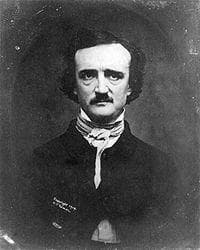
Edgar Allan Poe was an American writer, poet, editor, and literary critic who is best known for his poetry and short stories, particularly his tales of mystery and the macabre. He is widely regarded as a central figure of Romanticism in the United States, and of American literature. He was one of the country's earliest practitioners of the short story, and is considered the inventor of the detective fiction genre, as well as a significant contributor to the emerging genre of science fiction. He is the first well-known American writer to earn a living through writing alone, resulting in a financially difficult life and career.