“I can't say how delicious I found it, this sense of being for the first time in my life, in a house that was a house, and not a mere habitation.”
— The narrator's initial impression of the Misses Bordereau's Venetian palazzo.

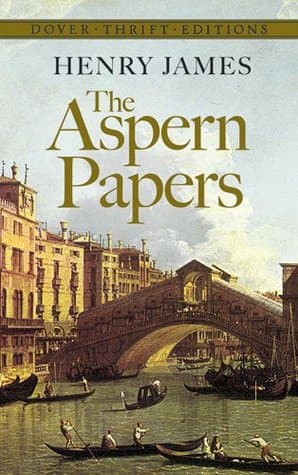
Henry James (1890)
Genre
Mystery
Reading Time
180 min
Key Themes
See below
Sign in to track this book
A literary scholar goes to Venice, trying to get a dead poet's private letters. He gets into a psychological fight with two reclusive women, learning the high cost of his obsession.
The unnamed narrator, a scholar of the Romantic poet Jeffrey Aspern, arrives in Venice with one goal: to get the 'Aspern Papers.' These papers, rumored to include intimate letters and manuscripts, are thought to be with Juliana Bordereau, Aspern's former mistress, an old, reclusive woman living in a crumbling palazzo. The narrator's colleague, John Cumnor, failed to get access, but the narrator believes he can succeed. He sees these papers as a key part of Aspern's literary legacy, and his desire to have them borders on fanaticism, leading him to think of increasingly deceptive plans.
Driven by his search, the narrator learns that Juliana Bordereau lives with her equally reclusive, middle-aged niece, Tina Bordereau. He plans to rent rooms in their run-down palazzo, pretending to be a gentleman looking for a quiet place to write. He offers a very high rent, which, despite the ladies' hesitation and Juliana's clear suspicion, they accept because they are poor. This puts him in the house where the papers are supposedly hidden, close to his goal.
After moving into the palazzo, the narrator finds himself in a place of faded luxury and deep secrecy. Juliana Bordereau is rarely seen, a shadowy figure whose presence is felt more than observed. He gets only brief glimpses of her, often with her face hidden, adding to her mystery and his frustration. His main contact is Tina Bordereau, a plain, shy woman who seems to live in her aunt's shadow. The narrator tries to build a relationship with Tina, hoping she will lead him to the papers, though he struggles with her reserved nature and her aunt's watchful eye.
The narrator spends his days in the palazzo's overgrown, neglected garden, which reflects the decaying life inside. His impatience grows as weeks pass without progress. He tries to talk to Tina about her aunt and Aspern, but she avoids the topic. One day, he sees Juliana in the garden, wearing a green shade over her eyes. During this brief, unsettling meeting, he notices a small portrait of Aspern, which Juliana quickly hides. This confirms his belief that the papers, or at least relics of Aspern, are with her, increasing his resolve and urgency.
Through careful maneuvering, the narrator eventually sees Juliana's face more clearly, noting its ancient, almost mummified look, yet still seeing traces of the beauty that captivated Aspern. He continues trying to charm Tina, hoping she will eventually betray her aunt's trust. However, Juliana's health seems to worsen, making her even harder to reach. The narrator faces more waiting and uncertainty, his initial hope fading as the difficulty of his task becomes clearer. He realizes Juliana is a strong opponent, fully aware of his intentions.
Suddenly, Juliana Bordereau invites the narrator to dinner. This is an unusual gesture, breaking her long reclusiveness and offering the narrator a direct, though possibly dangerous, chance to talk with her. He is both excited and nervous, understanding that this meeting could either bring him closer to his goal or expose his true motives. He prepares for dinner with anticipation and strategy, knowing that every word and gesture will be watched by the sharp old woman, despite her age.
During dinner, Juliana subtly hints that she knows the narrator's true purpose, showing a shrewdness that belies her age. The narrator, feeling trapped, tries to deflect, but Juliana's sharp mind sees through his pretense. The tension builds to a confrontation where Juliana, despite her weakness, directly challenges him about his search for the papers. The emotional stress of this meeting is too much for her, and she collapses, leaving the narrator shocked and guilty, realizing the impact of his actions.
After Juliana's collapse, she is confined to her bed, seemingly dying. The narrator, desperate to get the papers before they are lost, becomes bolder. Tina, now caring for her aunt and facing loss, becomes more open with the narrator. She confirms the existence of the Aspern papers, saying Juliana had kept them hidden, guarding Aspern's memory. Tina's revelation gives the narrator renewed, frantic hope, pushing him to consider even bolder plans to get the documents.
As Juliana's condition worsens, Tina, facing a lonely future, makes a surprising offer to the narrator. She implies that after her aunt's death, she would give him the Aspern papers, but only if he marries her. This unexpected condition presents the narrator with a difficult moral choice. His obsession with the papers clashes with his unwillingness to marry a woman he does not love, showing the extreme personal cost of his literary ambition. He must face the true price of his desire, which he finds too high.
Shocked and disgusted by Tina's proposal, the narrator leaves Venice, unable to reconcile his ambition with a loveless marriage. He tries to distance himself from the palazzo, hoping the city's charm will distract him. However, the pull of the Aspern Papers is too strong. His obsession continues, and after a short absence, he feels drawn back to Venice and the palazzo, convinced he must find another way to get the papers, unwilling to accept Tina's terms, yet unable to give up his goal.
Upon his return, the narrator learns that Juliana Bordereau has died. With the papers' guardian gone, the narrator's hope rises again. Tina, now alone, again presents her offer: the papers in exchange for marriage. She makes it clear this is her final condition, the only way she will give them up. The narrator again faces the high price of his ambition, the choice between his literary obsession and a life with Tina, a choice that makes him confront his own moral limits.
Unable to marry Tina, the narrator rejects her offer. The idea of such a union repels him, even with the papers within reach. Tina, heartbroken and perhaps seeking revenge, then reveals she has destroyed the Aspern Papers, burning them one by one. She later sends him a small portrait of Aspern, the only thing left. The narrator is left with the crushing realization that his obsessive and manipulative search led to the permanent loss of the very treasures he wanted, a deep and ironic defeat.
The Protagonist
He begins as a self-assured, manipulative scholar and ends as a defeated, empty-handed figure, having sacrificed his integrity for a goal he ultimately failed to attain.
The Antagonist
She remains steadfast in her guardianship of Aspern's legacy until her death, never fully yielding to the narrator's machinations.
The Supporting
She evolves from a timid, dependent figure to a woman capable of making a desperate bid for a future, and ultimately, a destructive act of defiance.
The Mentioned
As a deceased character, he has no personal arc, but his posthumous influence drives the living characters' actions and fates.
The Mentioned
As a mentioned character, he has no arc, but his prior failure sets the stage for the narrator's ambition.
The narrator's relentless pursuit of the Aspern Papers shows how intense desire can break down moral boundaries. His goal, though academic, quickly turns into deception and exploitation. He justifies his manipulative actions toward Juliana and Tina, believing the literary world's gain outweighs the personal cost. This theme is central to the confrontation where Juliana, despite her age, exposes his true intentions, highlighting his ethical compromises. Ultimately, his moral blindness leads to the destruction of the very objects he wanted, a clear consequence of unchecked ambition.
“I had caught the fever, and I was not to be cured till I had got into the house.”
The novella explores the high cost, both personal and ethical, of preserving or getting artistic legacies. The Aspern Papers are shown as valuable treasures, yet the narrator's attempt to get them causes Tina's emotional suffering and Juliana's final collapse. The story asks if the pursuit of art justifies exploiting human relationships and invading privacy. Tina's act of burning the papers comments on this theme, suggesting some legacies are best left alone, or that the human cost of getting them can be too great, making them worthless.
“I was prepared to be bold, to be ingenious, to be patient, to be clever.”
The contrast between youth and age, and the sad beauty of faded glory, fills the story. Juliana and Tina represent lives past their prime, living in a decaying Venetian palazzo that mirrors their own decline. Juliana, once a lively figure in Aspern's life, is now a reclusive shadow, holding onto the last bits of her past. The narrator, in his search, tries to bring back a past era, but his actions only show the irreversible passage of time and the futility of clinging to the past. The palazzo itself, with its overgrown garden and crumbling facade, symbolizes the inevitable decay of all things, including lives and memories.
“The place was a kind of old palace, a 'palazzo' as they say, and it was in a state of advanced decay.”
The story subtly examines power dynamics between genders, especially how the male narrator tries to control the two women. The narrator, representing male intellectual authority, sees Juliana and Tina mainly as obstacles or tools. He tries to charm, manipulate, and exploit Tina's vulnerability, assuming she will be easily swayed. However, Juliana, despite her age and physical weakness, proves to be a strong opponent, with a sharp mind that sees through his deceptions. Tina, too, ultimately uses destructive power, asserting herself by destroying the papers, denying the narrator his prize and undermining his control.
“She was a person whom nature had not formed to make a figure in the world.”
The story is told from the perspective of a biased, self-serving narrator.
The entire story is filtered through the consciousness of the unnamed narrator, who is deeply biased and morally compromised. His account often rationalizes his manipulative behavior and downplays the ethical implications of his actions. This unreliability forces the reader to question his motives, interpretations, and even the accuracy of his observations, particularly regarding Juliana and Tina. The device enhances the psychological depth of the novella, making the reader an active participant in discerning the truth and judging the narrator's character, rather than simply accepting his version of events.
The decaying Venetian villa symbolizes faded glory, isolation, and the passage of time.
The dilapidated Venetian palazzo where Juliana and Tina live serves as a powerful symbol. Its faded grandeur, crumbling architecture, and overgrown garden reflect the past glory of Aspern's era and the present decay of the Bordereau women's lives. It symbolizes the isolation of the two women, cut off from the modern world, and the slow, inevitable march of time that erodes both physical structures and human lives. The palazzo also represents the locked-away secrets and the resistance to external intrusion, mirroring Juliana's own guarded nature.
The papers themselves are the central object of desire, driving the plot.
The Aspern Papers function as a classic MacGuffin: they are the central object of desire that drives the entire plot and motivates the narrator's actions, yet their actual content is never revealed. Their specific importance lies not in what they contain, but in the narrator's obsessive belief in their value and the lengths he will go to acquire them. This device allows the focus to remain on the psychological drama and the moral dilemmas of the characters, rather than on the papers themselves, highlighting the destructive nature of unchecked ambition.
The gradual revelation of information creates tension and keeps the reader engaged.
James masterfully employs suspense and mystery throughout the narrative. The narrator's slow, cautious infiltration of the palazzo, the elusive nature of Juliana, and the tantalizing hints about the papers' existence all contribute to a mounting sense of tension. The reader is kept guessing about the contents of the papers, Juliana's true intentions, and whether the narrator will succeed in his quest. This slow-burn approach, characterized by subtle psychological maneuvering and delayed gratification, builds anticipation and draws the reader deeper into the narrator's obsessive world.
“I can't say how delicious I found it, this sense of being for the first time in my life, in a house that was a house, and not a mere habitation.”
— The narrator's initial impression of the Misses Bordereau's Venetian palazzo.
“She was a perfectly preserved ruin, a masterpiece of decay, a monument to the ravages of time and the triumphs of art.”
— The narrator's description of Miss Bordereau's physical appearance.
“The papers were there, I was sure of it; I could smell them, almost, as I could smell the old books.”
— The narrator's growing conviction that the Aspern papers are hidden in the house.
“She was a woman of a certain age, as they say, but of no age at all, if you looked at her eyes.”
— Another observation about Miss Bordereau's contradictory appearance.
“I was living in the house with the treasure, and I must get at it. I must get at it.”
— The narrator's internal monologue, revealing his intense desire for the papers.
“There was a kind of solemnity in her silence, as if she were guarding a secret that was too sacred to be spoken.”
— Reflecting on Miss Bordereau's taciturn nature.
“I was a man of letters, and I had come to Venice to find the letters of another man of letters.”
— The narrator's self-identification and purpose in Venice.
“It was a house of secrets, of whispers, of hidden things, and I was a part of it now.”
— The narrator's feeling of being drawn into the house's mysterious atmosphere.
“The past was alive in that house, a tangible presence, a breath on the air.”
— Reflecting on the pervasive sense of history within the palazzo.
“She had a way of looking at me that made me feel as if I were transparent, as if she could see right through me.”
— The narrator's discomfort under Miss Bordereau's scrutiny.
“I had to be patient, to be subtle, to be a serpent in the garden of her old age.”
— The narrator's strategizing to gain access to the papers.
“It was not a question of my wanting to possess them, but of my needing to know them.”
— The narrator attempts to rationalize his obsession, framing it as a scholarly need.
“The old woman was a fortress, and I was laying siege to her, day by day, hour by hour.”
— The narrator's perception of his prolonged efforts to outwit Miss Bordereau.
“I was caught in a web, a silken, ancient web, spun by the past and stretched across the present.”
— The narrator's feeling of being entangled in the history and secrets of the house and its inhabitants.
Ready to see how well you understood this book? Take our interactive quiz with 10 questions.
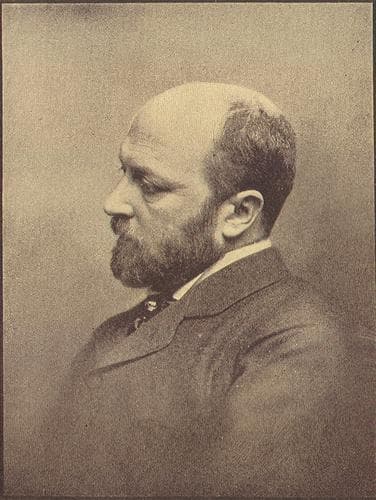
Henry James was an American-British author. He is regarded as a key transitional figure between literary realism and literary modernism, and is considered by many to be among the greatest novelists in the English language. He was the son of Henry James Sr. and the brother of philosopher and psychologist William James and diarist Alice James.