“The past is a place where you can always find yourself, but you can never stay.”
— Early in the novel, Dr. Kreizler reflects on the nature of history and memory.


Caleb Carr (2006)
Genre
Fiction
Reading Time
10-12 hours
Key Themes
See below
Sign in to track this book
In Gilded Age New York, an early psychologist and a newspaper reporter hunt a serial killer preying on adolescent boys, challenging social norms and risking their lives in a city of stark contrasts.
The year is 1896. Newspaper reporter John Schuyler Moore receives a message from his old friend, Dr. Laszlo Kreizler, an 'alienist' (psychologist). He is called to the unfinished Williamsburg Bridge, where the mutilated body of a young male prostitute, Georgie Carr, has been discovered. Dr. Kreizler, along with Police Commissioner Theodore Roosevelt, is already on the scene, observing the killer's meticulous work. The boy's eyes have been gouged out, and his genitals removed, suggesting a ritual. This murder starts a secret investigation, as Kreizler believes a new type of killer, driven by deep psychological motivations, is at work in New York City.
Recognizing the limits of conventional police methods, Dr. Kreizler forms his own team to investigate the murder. He enlists John Moore to document their findings and provide an outside perspective. Sara Howard, the ambitious and intelligent first female employee of the NYPD, joins to assist with research and interviews. The brilliant but socially awkward Isaacson brothers, Marcus and Lucius, forensic specialists from the police department, are brought in for their scientific expertise in fingerprinting and autopsy. Together, this unusual group begins to analyze the crime scene and the victim, attempting to construct a psychological profile of the unknown murderer, a new concept for their time.
The team investigates the victims' backgrounds, focusing on young male prostitutes and their connections to the city's darker side. Dr. Kreizler, using his knowledge of mental illness and criminal psychology, begins to form a profile of the killer: a man likely abused as a child, possibly by a woman, who projects his rage onto effeminate young boys. Their theories are soon confirmed when another boy, Benjamin Weaver, is found murdered with similar mutilations. This second murder makes their hunt more urgent and shows the brutal nature of their target.
The team's unusual methods and their pursuit of a killer who targets marginalized youth anger corrupt elements within the NYPD, particularly Chief Thomas Byrnes. Byrnes, eager to maintain his authority and avoid scandal, actively obstructs their investigation, planting false leads and threatening their associates. Commissioner Roosevelt provides a crucial, though precarious, shield, but his own position is vulnerable. The alienist's team must operate largely in secret, often making discreet inquiries and using their unique skills to get around the official channels that seek to stop their progress.
As the investigation continues, the team explores the grim realities of Gilded Age New York. Sara Howard visits various brothels and orphanages, interviewing children and staff, piecing together the lives of the victims. John Moore uses his journalistic skills to uncover social connections and rumors. Dr. Kreizler, through his psychological insights, begins to connect the mutilations to a deep hatred, possibly from a traumatic childhood experience involving a domineering or abusive female figure. The team identifies a pattern of victims being effeminate boys who often cross-dressed or presented as girls, further refining their profile of the killer's specific pathology.
A breakthrough occurs when the team discovers a connection to a specific type of 'female' clothing found near one of the victims. This leads them to investigate the history of Mary Palmer, a notorious madam who ran a brothel catering to specific desires, and who had a history of adopting and raising effeminate boys. The team hypothesizes that the killer may have been one of these boys, or someone deeply connected to Palmer's establishment and its unique clientele. This discovery provides a crucial link to the killer's potential past environment and the origins of his psychological trauma.
Through diligent research and the tireless efforts of the Isaacson brothers, the team eventually identifies the killer as John Beecham, a former resident of an orphanage with ties to Mary Palmer. Beecham, who was psychologically tormented and abused in his youth, developed a deep hatred for women and those he saw as feminine. His victims, the effeminate boy prostitutes, are projections of his own unresolved trauma and rage. The team learns of Beecham's history of violence and his ability to blend into society, making him an even more dangerous and elusive target.
The team tracks Beecham to his hideout, leading to a tense chase through the city. They corner him near a reservoir, resulting in a dramatic confrontation. During the pursuit, the team members face danger, with Dr. Kreizler using his psychological understanding to try and reason with the killer, while John Moore and the Isaacson brothers attempt to apprehend him. Beecham, driven by his deranged compulsions, fights fiercely, showing his desperation and the depth of his psychosis. The struggle is violent and precarious, with the lives of the investigators at risk.
In the struggle, Beecham is killed, ending his reign of terror. The team, though physically and emotionally scarred, has solved the case using new methods. The official report attributes the capture to conventional police work to avoid public scandal and protect the careers of those involved, particularly Commissioner Roosevelt. Despite the lack of public recognition, the members of Kreizler's team understand the importance of their achievement, having pioneered criminal psychology and shown the power of understanding the 'alienated' mind to solve even the most heinous crimes. The experience changes each of them.
After the resolution, the team disperses. Dr. Kreizler continues his work as an alienist, changed by the direct confrontation with such evil. John Moore returns to his journalism, changed by the horrors he witnessed and the intellectual stimulation of the investigation. Sara Howard pursues her career, empowered by her role in the case and her determination to break barriers for women in law enforcement. The Isaacson brothers continue their forensic work, their expertise now more valued. Though their methods remain largely unacknowledged by the public, their collaborative efforts set the stage for modern criminal profiling and forensic science, changing crime detection.
The Protagonist
Kreizler's arc sees him validate his controversial theories through practical application, proving the efficacy of criminal psychology while confronting the personal toll of delving into profound evil.
The Protagonist/Narrator
Moore evolves from a detached observer to an active, emotionally invested participant, confronting his own fears and finding a new purpose in the pursuit of justice.
The Supporting
Sara proves her capabilities and earns respect in a male-dominated field, solidifying her place as a competent and essential investigator.
The Supporting
Roosevelt's character remains largely consistent, serving as a powerful ally who risks his career for the cause of justice and progress.
The Supporting
Marcus, alongside his brother, demonstrates the power of scientific method in criminal investigation, gaining recognition for his groundbreaking work.
The Supporting
Lucius, through his diligent forensic work, provides essential evidence, proving the scientific basis for their investigation.
The Supporting
Cyrus remains a steadfast and loyal protector, his strength and devotion unwavering throughout the dangerous investigation.
The Supporting
Stevie contributes significantly with his street knowledge, proving his worth and loyalty to Dr. Kreizler and the team.
The Antagonist
Byrnes's attempts to thwart the investigation ultimately fail, highlighting the triumph of progressive methods over corruption.
The Antagonist
Beecham remains a figure of pure, unyielding psychosis, his arc culminating in his capture and death, but never truly revealing a path to redemption or understanding beyond his pathology.
The novel explores early criminal psychology, contrasting it with the basic police methods of the late 19th century. Dr. Kreizler's idea that criminals are 'made' by their environment and past experiences, rather than simply 'born evil,' is central to the investigation. The team's methodical approach to profiling the killer, analyzing his motives and patterns, represents a shift in understanding crime. This theme is clear in the detailed discussions of the killer's potential childhood trauma and its manifestation in his ritualistic murders, a direct application of psychological theory to police work.
““We are all, each of us, a product of the forces that shaped us. That includes the criminal.””
The Alienist shows the social inequalities and the plight of the marginalized in Gilded Age New York. The serial killer's victims are young male prostitutes, often runaways or orphans, whose lives are deemed unimportant by much of society and the corrupt police force. The novel highlights how their vulnerability makes them easy targets and how their deaths are initially dismissed. The investigation, therefore, is not just a hunt for a killer, but a quest for justice for those society has forgotten, emphasizing the moral responsibility to protect the most vulnerable, regardless of their social standing. Sara Howard's empathy for these boys is particularly moving.
““The city’s wealth and power are built on the backs of the invisible, the forgotten, the damned.””
The novel shows the widespread corruption within the NYPD and the broader political scene of 1896 New York. Chief Thomas Byrnes and his cronies obstruct Dr. Kreizler's investigation, not only due to ignorance but also to protect their own power, reputations, and illicit dealings. This resistance to change and modern methods forces Kreizler's team to operate covertly, relying on the tenuous protection of Commissioner Theodore Roosevelt. This theme highlights the difficulty of implementing new ideas when faced with established power structures and a society unwilling to confront its uncomfortable truths.
““The greatest enemy of truth is not the lie, but the myth of progress in the face of ingrained corruption.””
A central theme is how trauma can lead to evil. Dr. Kreizler's core belief is that the killer's actions are not random acts of depravity but the twisted manifestations of deep psychological wounds from his past. The detailed analysis of the killer's methods and choice of victims reveals a pattern rooted in childhood abuse, particularly involving a dominant female figure. This theme forces the characters, and the reader, to confront the uncomfortable truth that horrific acts often stem from horrific experiences, blurring the lines between perpetrator and victim in a complex psychological situation. The novel investigates the 'why' behind the 'what'.
““The evil we face is not born of a demon, but of a damaged soul. And that makes it all the more terrifying.””
The novel explores the restrictive roles of women in late 19th-century society through Sara Howard. As the first female employee of the NYPD, Sara faces constant sexism, condescension, and skepticism from her male colleagues, particularly Chief Byrnes. Despite these obstacles, she proves herself an invaluable member of Kreizler's team, showing intelligence, resourcefulness, and courage. Her struggle highlights the societal barriers women faced in pursuing professional careers and the quiet strength required to challenge traditional gender norms, paving the way for future generations.
““I will not be dismissed because of my sex. My mind is as capable as any man’s.””
John Moore's personal biases and emotional state color the narrative.
While John Moore is generally a trustworthy narrator, his melancholic disposition, romantic leanings, and personal connection to the events subtly color the reader's perception. His descriptions of characters, particularly Sara Howard and Dr. Kreizler, are imbued with his subjective feelings. He often reflects on his own past and emotional state, occasionally diverting from a purely objective account of the investigation. This device adds a layer of intimacy and human frailty to the scientific pursuit of the killer, reminding the reader that the story is filtered through a deeply personal lens.
Early psychological insights predict future events and the killer's nature.
Dr. Kreizler's initial psychological profiles of the killer, based on the first murder, subtly foreshadow the nature of subsequent crimes and the killer's eventual identity. His theories about the killer's childhood trauma, obsession with effeminacy, and ritualistic mutilations are gradually confirmed as the investigation progresses and more evidence emerges. This device builds suspense and validates the revolutionary nature of criminal psychology, demonstrating how understanding the 'why' can predict the 'what' and 'who' of a serial killer, even when specific details are still unknown.
Integrating actual historical figures and events grounds the fiction in reality.
The novel extensively uses historical allusions and features real-life figures such as Theodore Roosevelt, Chief Thomas Byrnes, and even mentions of J.P. Morgan and other Gilded Age personalities. This device immerses the reader in a meticulously recreated 1896 New York, lending authenticity and gravitas to the fictional narrative. The inclusion of these figures, particularly Roosevelt, allows for realistic depictions of political machinations and social attitudes of the era, while also creating a sense of urgency and importance around the fictional events, making the story feel deeply intertwined with actual history.
The killer's mind is the 'locked room' that needs to be unlocked.
While not a traditional locked-room mystery in the physical sense, the killer's mind functions as a psychological 'locked room.' The team's challenge is to 'unlock' the motivations, patterns, and identity of a killer who leaves few conventional clues. The 'key' is Dr. Kreizler's psychological profiling, which attempts to deduce the unseen internal mechanisms driving the external violence. This device transforms the investigation from a mere hunt for physical evidence into a profound journey into the depths of human pathology, making the unraveling of the killer's psyche the central puzzle.
“The past is a place where you can always find yourself, but you can never stay.”
— Early in the novel, Dr. Kreizler reflects on the nature of history and memory.
“Every man has his own demons. The trick is to know them, and to fight them.”
— Kreizler often speaks of internal struggles, hinting at his own.
“We are what we pretend to be, so we must be careful about what we pretend to be.”
— John Moore considers the masks people wear and their impact on identity.
“The human mind, you see, is not a simple mechanism. It is a labyrinth.”
— Dr. Kreizler explaining the complexities of the mind to his team.
“Sometimes, the only way to understand a monster is to become one, if only in your mind.”
— Kreizler's approach to criminal profiling, emphasizing empathy with the perpetrator.
“Justice, my dear Mr. Moore, is not always about what is right. It is about what can be proven.”
— Sara Howard's pragmatic view on the legal system and its limitations.
“To truly see, one must often close one's eyes to the obvious.”
— Kreizler encouraging his team to look beyond superficial evidence.
“Fear, gentlemen, is a powerful motivator. But so is curiosity.”
— Kreizler discusses the drives behind human actions, both good and ill.
“The city itself is a living organism, with its own pulse, its own diseases.”
— A description of late 19th-century New York, highlighting its vibrant yet dark nature.
“We are all, in a sense, prisoners of our own making.”
— A reflection on the constraints and choices that shape individual lives.
“The human heart, Mr. Moore, can endure a great deal. More than you might imagine.”
— Kreizler commenting on human resilience in the face of suffering.
“It is not the darkness itself that frightens us, but what we imagine hides within it.”
— A philosophical musing on the nature of fear and the unknown.
“Truth, like beauty, is often in the eye of the beholder, but some truths are undeniable.”
— The team grapples with subjective interpretations versus objective facts.
“There are no monsters, only men who do monstrous things.”
— A core tenet of Kreizler's alienist philosophy, emphasizing human culpability.
Ready to see how well you understood this book? Take our interactive quiz with 10 questions.
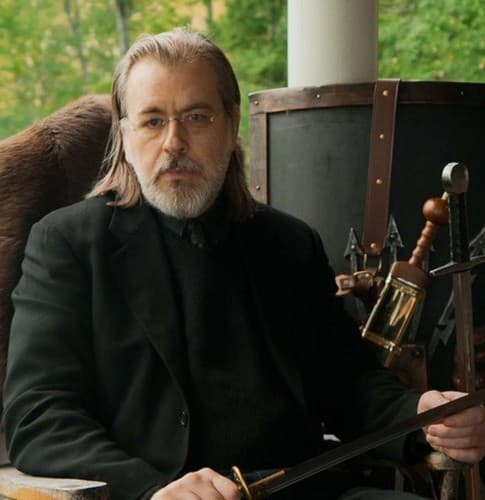
Caleb Carr is an American military historian and author. Carr is the second of three sons born to Lucien Carr and Francesca Von Hartz.

Ashley Antoinette
4.6

Mark McDonald
4.4
Luo Guanzhong
4.4

Mia McKenzie
4.3

Dorothy Parker
4.3

Joaquim Maria Machado de Assis
4.3

James Thurber
4.2

Terry Kay
4.2