“It's the possibility of having a dream come true that makes life interesting.”
— The boy Santiago is reflecting on his recurring dream and the desire to pursue it.

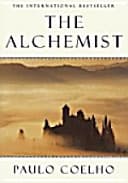
Paulo Coelho (1970)
Genre
Fiction
Reading Time
150 min
Key Themes
See below
Sign in to track this book
A young Andalusian shepherd, guided by omens and an alchemist, journeys across the desert to the Egyptian pyramids, seeking treasure and his unique purpose.
Santiago, a shepherd boy from Andalusia, Spain, has a recurring dream while sleeping with his flock in an abandoned church. In this dream, a child tells him to seek treasure at the Egyptian Pyramids. He first dismisses it, then consults a Gypsy woman in Tarifa about its meaning. She confirms it is a prophecy of treasure but asks for one-tenth of it if he finds it. He also meets an old man, Melchizedek, the King of Salem, who encourages him to pursue his unique purpose. Melchizedek explains 'omens' and the 'Soul of the World,' giving Santiago two magical stones, Urim and Thummim, to help him make choices.
Inspired by Melchizedek, Santiago sells his flock, using the money to travel across the Strait of Gibraltar to Tangier, Morocco. He feels optimistic and adventurous, eager to start his quest. However, soon after arriving, a young man who speaks Spanish befriends him and offers to help him navigate the city and find a way to the Pyramids. While Santiago is distracted by a beautiful sword, the young man steals all his money, leaving Santiago penniless and despairing in a foreign land. This betrayal breaks his initial idealism and forces him to face the harsh realities of the world outside his familiar pastures.
After being robbed, a sad Santiago finds work with a kind, but cautious, crystal merchant who owns a shop on a hill in Tangier. Santiago suggests improvements, like building a display case and selling tea in crystal glasses, which greatly increase sales. He works for nearly a year, saving enough money to return to Spain and buy a new flock, or to continue his journey. During this time, he learns about patience, persistence, and taking chances. He also observes the crystal merchant's regret for not pursuing his own dreams, strengthening Santiago's resolve to continue his own path.
With new determination and much money, Santiago decides to continue his journey to the Pyramids. He joins a large caravan crossing the vast Sahara Desert, a dangerous and difficult trip. During the journey, he meets an Englishman who is also on a quest – to find an alchemist and learn how to turn base metals into gold, believing true wisdom comes from old texts. Santiago and the Englishman discuss their different ways of learning and understanding the world, with Santiago focusing on observation and omens, and the Englishman on books and science. This meeting broadens Santiago's view on different paths to knowledge.
The caravan arrives at the lush oasis of Al-Fayoum, a neutral place amidst tribal wars, where they must wait for the conflicts to end. Here, Santiago meets Fatima, a beautiful desert woman, by a well. He is instantly drawn to her, seeing her as the woman he is meant to be with. Their love grows quickly, and Santiago feels a deep bond with her, believing she is part of his destiny. He struggles with the desire to stay with Fatima in the oasis versus continuing his journey to the Pyramids, facing the first major test of his commitment to his dream.
One afternoon, Santiago has a vision of an army attacking the peaceful oasis. He reports this to the tribal chiefs, who at first dismiss his warning. However, they decide to arm themselves, promising Santiago a piece of gold for every ten dead men if his prophecy comes true, and his life if it does not. His vision is correct, and the oasis successfully defends itself against the invaders, saving many lives. This event establishes Santiago's reputation as a seer. Soon after, the legendary Alchemist, who has been observing him and recognizes his potential, seeks him out. The Alchemist takes Santiago under his wing, ready to guide him further.
Santiago leaves Fatima and the oasis, choosing to continue his quest with the Alchemist. The Alchemist teaches him about the Soul of the World, the importance of listening to his heart, and how everything connects. They travel through dangerous, war-torn areas, with the Alchemist showing his mystical powers and deep understanding of nature. He helps Santiago understand that the treasure is not just gold, but the spiritual journey itself and the wisdom gained. The Alchemist stresses that true wisdom comes from experiencing the world and understanding its language, not just from books.
As they approach a military camp, warring tribesmen capture Santiago and the Alchemist. The Alchemist, to save their lives, tells the chieftain that Santiago is a powerful alchemist who can turn himself into the wind. Santiago is given three days to do this. Initially scared and unsure, Santiago consults the desert, the wind, the sun, and finally the Soul of the World, showing his understanding of the universal language. Through intense focus and belief, he successfully transforms into the wind, astonishing the tribesmen and earning their freedom. This experience is a key moment, affirming his connection to the universe and his own spiritual power.
The Alchemist leaves Santiago at the edge of a Coptic monastery, giving him a piece of gold he transmuted and advising him to continue alone. Santiago finally reaches the Egyptian Pyramids, the destination of his recurring dream. Filled with anticipation, he begins to dig at the spot where he feels the treasure lies. He digs tirelessly through the night but finds nothing. Exhausted and disheartened, he is suddenly attacked by a group of refugees fleeing tribal wars. They beat him and demand his money, taking his gold.
After beating Santiago and taking his gold, one of the refugees mocks him for digging for treasure based on a dream. The refugee then tells his own recurring dream: a dream of finding treasure in an abandoned church in Spain where shepherds and their sheep often sleep, specifically under a sycamore tree growing from the sacristy. Santiago immediately recognizes this description as the church where he had his first dream, realizing with great irony and wonder that the treasure was always back home, where his journey began. This discovery brings his quest full circle.
With new understanding and a light heart, Santiago uses his last money to return to Andalusia, Spain. He travels back to the dilapidated church where his journey began, the same church where he had his recurring dream under the sycamore tree. He begins to dig at the roots of the sycamore tree in the sacristy, just as the refugee described. After some effort, he uncovers a chest filled with ancient Spanish gold coins, precious jewels, and other valuable items, confirming his dream's prophecy and the guidance of the Alchemist and Melchizedek. He has found his material treasure.
Having found his treasure, Santiago thinks about his incredible journey. The material wealth is important, but he understands that the true treasure was the journey itself, the wisdom he gained, the people he met, and the deep connection he made with the Soul of the World. He takes one gold coin from the chest, planning to give it to the Gypsy woman as promised. His heart, however, is now set on returning to the oasis of Al-Fayoum to reunite with Fatima. He knows that his unique purpose is not just about finding gold, but about living a life of meaning and love, and he is ready to claim his happiness with her.
The Protagonist
Santiago transforms from a simple shepherd into a wise and self-aware individual who understands the language of the universe and fulfills his Personal Legend.
The Supporting
The Alchemist serves as a catalyst for Santiago's final transformation, guiding him to understand his own inherent power and connection to the universe.
The Supporting
Melchizedek acts as Santiago's initial guide, providing the foundational philosophy for his journey.
The Supporting
Fatima remains a constant source of love and inspiration, representing the reward Santiago seeks upon completing his journey.
The Supporting
The Crystal Merchant serves as a static character whose unfulfilled dreams reinforce Santiago's determination.
The Supporting
The Englishman's perspective broadens slightly through his interactions with Santiago, recognizing the value of direct observation.
The Supporting
The Gypsy Woman serves as a minor catalyst, validating Santiago's dream and initiating his journey.
The Mentioned
The thief's actions trigger a significant challenge for Santiago, forcing him to develop resourcefulness.
The central theme of 'The Alchemist' is finding and following one's unique path – the specific destiny each person is meant to fulfill. The book says the universe helps those committed to their dreams. Santiago's journey, from shepherd to treasure seeker, shows this. Despite problems like being robbed or the temptation to stay with Fatima, he consistently chooses to follow his heart, guided by omens and mentors like Melchizedek and the Alchemist. The story shows that the journey itself, with its lessons and changes, is as important as the destination.
“To realize one's destiny is a person's only obligation.”
This theme explores the idea that all things in the universe connect and share a common spiritual essence, called the 'Soul of the World.' Santiago learns to understand this universal language through omens, intuition, and talking directly with nature. His ability to read signs, from flying hawks to the desert wind, helps him on his journey and even lets him perform miracles, like turning into the wind. This theme suggests that by listening to one's heart and observing the world, people can access deeper wisdom and align with the universe, helping them fulfill their unique purpose.
“When you want something, all the universe conspires in helping you to achieve it.”
The book consistently highlights the importance of recognizing and interpreting omens as guidance from the universe. Melchizedek encourages Santiago to notice these signs, and the Alchemist further improves his ability to read them. From the child in his dream to the flight of hawks, omens guide Santiago's path, warn him of danger, and confirm his choices. This theme suggests that rational thought alone is not enough for life's journey; intuition and a spiritual connection to the world are equally, if not more, important. It teaches readers to trust their gut feelings and the subtle messages the world sends.
“There is a language that doesn't depend on words... It is the language of the world.”
This theme compares the paralysis caused by fear of failure with the fulfillment found in embracing the journey, no matter the outcome. The Crystal Merchant shows someone who lets fear stop him from pursuing his dream of visiting Mecca. In contrast, Santiago repeatedly overcomes his fears – of being robbed, of leaving Fatima, of failing to turn into the wind – to continue his quest. The story says that true happiness and wisdom come from pursuing one's dreams and the lessons learned, not just from reaching a specific goal. The treasure itself is ultimately a symbol of the spiritual wealth gained.
“The fear of suffering is worse than the suffering itself.”
The theme of love is explored through Santiago's relationship with Fatima. Their strong connection presents a major test: whether to give up his unique purpose for the comfort of love, or to trust that true love will last through the pursuit of one's destiny. Fatima's strength and understanding allow Santiago to continue his journey, showing that true love supports individual growth rather than hindering it. The book suggests that choosing long-term purpose over immediate pleasure ultimately strengthens love and leads to greater happiness, implying that love is connected to, but not a replacement for, one's unique purpose.
“When we love, we always strive to become better than we are.”
The unique destiny or dream that each individual is meant to fulfill.
The Personal Legend is a foundational concept in the novel, introduced by Melchizedek. It serves as Santiago's primary motivation and the overarching goal of his journey. It's not merely a desire but a spiritual calling, and the book posits that the entire universe conspires to help individuals achieve it. This device provides a clear narrative arc and philosophical framework, guiding Santiago's decisions and allowing the author to explore themes of destiny, purpose, and self-discovery. It acts as both a destination and the journey itself, emphasizing the transformative power of pursuing one's true calling.
Symbolic events or observations that guide Santiago on his journey.
Omens are crucial plot devices that serve as a form of divine communication and guidance for Santiago. From the recurring dream itself to the flight of hawks, the appearance of scarab beetles, or the Urim and Thummim stones, these signs direct Santiago's actions and confirm his path. They allow the narrative to progress through intuition and faith rather than purely rational decision-making. This device reinforces the theme of the 'Soul of the World' and the idea that the universe provides subtle clues to those who are open to perceiving them, adding a mystical and spiritual dimension to the plot.
Wise figures who provide guidance and insight to Santiago.
The novel employs a series of mentors – Melchizedek, the Crystal Merchant, and especially the Alchemist – to guide Santiago's journey and impart crucial life lessons. Each mentor appears at a critical juncture, offering different forms of wisdom. Melchizedek provides the initial philosophical framework, the Crystal Merchant serves as a cautionary tale, and the Alchemist offers profound spiritual and practical guidance. These characters are vital for Santiago's development, providing him with knowledge, tools, and the encouragement needed to overcome challenges and understand the deeper meaning of his quest.
The physical and spiritual travel as a metaphor for self-discovery.
The entire narrative is structured as a literal journey across continents and deserts, which functions as a powerful metaphor for Santiago's internal journey of self-discovery and spiritual growth. Each location (Andalusia, Tangier, the Sahara, the oasis, the Pyramids) and each encounter along the way contributes to his education and transformation. The 'treasure' ultimately being found back at the starting point emphasizes that the value lies not just in the destination, but in the experiences, lessons, and wisdom gained during the quest. This device allows the author to explore themes of perseverance, transformation, and the interconnectedness of all life.
The revelation that the treasure is located at the journey's origin.
The ultimate revelation that Santiago's treasure is buried under the sycamore tree at the abandoned church in Andalusia, where his journey began, is a significant plot device. This twist serves to underscore the novel's central message: that the true value of pursuing one's Personal Legend lies in the journey and the transformation it brings, rather than solely the material reward. It creates a full-circle narrative structure, highlighting the irony and deeper wisdom that sometimes what we seek abroad is found at home, but only after embarking on the necessary quest to gain the understanding to recognize it.
“It's the possibility of having a dream come true that makes life interesting.”
— The boy Santiago is reflecting on his recurring dream and the desire to pursue it.
“When you want something, all the universe conspires in helping you to achieve it.”
— The old king Melchizedek is explaining the concept of a Personal Legend to Santiago.
“There is only one way to learn. It's through action. Everything you need to know you have learned through your journey.”
— The Alchemist is teaching Santiago about the importance of experience over mere knowledge.
“And, when you can't go back, you have to worry only about the best way of moving forward.”
— Santiago finds himself in a difficult situation in Tangier, having lost his money.
“The secret of happiness is to see all the marvels of the world, and never to forget the drops of oil on the spoon.”
— The wise man tells the boy a story about a king and a spoon of oil, advising him to enjoy life while being mindful of his responsibilities.
“To realize one's Personal Legend is a person's only real obligation.”
— Melchizedek emphasizes the importance of pursuing one's true calling.
“No matter what he does, every person on earth plays a central role in the history of the world. And normally he doesn't know it.”
— Santiago reflects on the interconnectedness of all things and the significance of individual lives.
“Tell your heart that the fear of suffering is worse than suffering itself. And that no heart has ever suffered when it goes in search of its dreams, because every second of the search is a second in the encounter with God and with eternity.”
— The Alchemist advises Santiago on overcoming fear and listening to his heart.
“If you start by promising what you don't even have yet, you'll lose your desire to work toward getting it.”
— Santiago is working for the crystal merchant and learns a lesson about future promises.
“When we love, we always strive to become better than we are. When we strive to become better than we are, everything around us becomes better too.”
— Santiago thinks about the transformative power of love, particularly for Fatima.
“Every blessing ignored becomes a curse.”
— Santiago is reminded to appreciate what he has, even amidst challenges.
“There is only one thing that makes a dream impossible to achieve: the fear of failure.”
— The Alchemist imparts a crucial lesson about the primary obstacle to achieving one's goals.
“The boy had learned that the secret of life was to fall seven times, and to get up eight.”
— Santiago reflects on the persistence required to pursue his journey and overcome setbacks.
Ready to see how well you understood this book? Take our interactive quiz with 10 questions.

Paulo Coelho de Souza is a Brazilian lyricist and novelist and a member of the Brazilian Academy of Letters since 2002. His novel The Alchemist became an international best-seller and he has published 30 more books since then.

Ashley Antoinette
4.6

Mark McDonald
4.4
Luo Guanzhong
4.4

Mia McKenzie
4.3

Dorothy Parker
4.3
Joaquim Maria Machado de Assis
4.3

James Thurber
4.2

Terry Kay
4.2