“I was returning from a case in the university town of Cambridge, and my train was delayed there for several hours.”
— Watson explains the setting for the story, placing Holmes in a university town.

Genre
Mystery
Reading Time
25 min
Key Themes
See below
Sign in to track this book
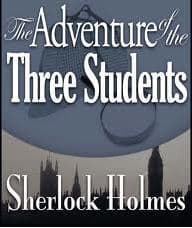
When a Greek exam paper is stolen and partially copied just before the test, Sherlock Holmes must deduce which of three brilliant students, each with a motive and opportunity, committed the academic theft before their futures are irrevocably ruined.
Professor Rushton, a lecturer, is getting ready for a Greek exam. The exam paper, with secret questions, is on his desk. After he leaves his study for a short time, he comes back to find the paper disturbed. A pencil is left, a small piece of black clay is on the desk, and a new cut is on the desk's surface. Upset that the exam's fairness is at risk, Professor Rushton calls Sherlock Holmes, who is staying nearby with Dr. Watson. Holmes finds the case interesting, seeing how urgent it is and the chance of a scandal at the university.
When they arrive at Professor Rushton's study, Sherlock Holmes carefully examines the scene. He notes the pencil, the clay, and the fresh cut on the desk. He figures out that the person copied the paper and was interrupted, causing a quick exit. Professor Rushton tells Holmes that only three students are taking this advanced Greek exam: Gilchrist, Daulat Ras, and Miles McLaren. All three live on the same floor as Professor Rushton and can use the common stairs, making them the main suspects. Holmes decides to talk to each student, starting with their rooms and general reputations.
Holmes and Watson first visit Mr. Gilchrist's rooms. Gilchrist is a tall, athletic young man, a long-jump champion, and a good student. He has money problems, having lost his inheritance, and needs a scholarship to keep studying. His room looks tidy, but Holmes notices a dark spot on the windowsill. During their talk, Gilchrist says he was out for a long walk when the incident happened. Holmes watches Gilchrist closely, noting his nervousness and how he avoids looking directly, which makes Holmes suspicious despite Gilchrist's good alibi and reputation.
Next, Holmes and Watson visit Daulat Ras, a quiet and hardworking Indian student. His room is tidy and has many books, showing his dedication to studying. Daulat Ras seems calm during the interview, saying he is surprised by the incident and denies being involved. He states he was in his room studying when the paper was tampered with. Holmes finds no immediate evidence in Daulat Ras's room, nor any unusual behavior during their short talk. However, Holmes keeps watching for any small clues that might link him to the crime, but for now, Daulat Ras seems less likely than Gilchrist.
The last suspect is Miles McLaren, a student known for his intelligence but also for being unsociable and difficult. He has few friends and is temperamental and withdrawn. When Holmes and Watson try to talk to him, McLaren reacts with hostility, refusing them entry and slamming the door. This aggressive behavior, while not direct proof of guilt, certainly makes Holmes more suspicious. Refusing to cooperate suggests he has something to hide, or at least wants to avoid scrutiny. Holmes notes the difference between McLaren's academic skill and his social isolation, a common trait among some criminals.
Holmes returns to Professor Rushton's study to look at the evidence again. He identifies the piece of black clay as modeling clay, the kind used in art classes. He then remembers the dark spot on Gilchrist's windowsill. Holmes also carefully measures the height of Professor Rushton's desk and the distance from the windowsill to the ground. He figures out that the person must have been tall enough to reach the paper from the window while standing on something. The specific type of pencil, a 'J. H. M.' lead pencil, becomes another important piece of the puzzle, suggesting a particular owner or source. Holmes starts to form a theory that connects one suspect's athletic ability with the physical act of tampering.
Following his thoughts, Holmes and Watson go back to Gilchrist's room. Holmes asks to see Gilchrist's running shoes, especially those for long jumping. Gilchrist reluctantly gets a pair of spiked shoes. Holmes examines them closely and finds a small, dark piece of modeling clay stuck in one of the spikes, perfectly matching the clay on Professor Rushton's desk. This physical evidence is undeniable. Holmes confronts Gilchrist with the evidence, and the young man, seeing he is caught, breaks down. The clay directly links Gilchrist to the crime scene, confirming Holmes's earlier suspicions about his involvement.
Overwhelmed by the evidence, Gilchrist confesses to Holmes, Watson, and Professor Rushton. He explains he had been out practicing long jump and, on returning, saw Professor Rushton's window open and the exam paper clearly visible on the desk. Driven by desperate money problems and the great need for a scholarship, the temptation was too strong. He had a piece of modeling clay from an art class in his pocket, which he used to make an impression of the paper. He was interrupted by the professor's return, making him flee quickly, leaving the pencil and the clay. His confession confirms Holmes's reconstruction of the events.
After confessing, Gilchrist shows deep regret for what he did. Professor Rushton, though shocked at first, feels some pity for the young man's desperate situation. Instead of charging him or shaming him publicly, a kinder path is chosen. Gilchrist writes a full confession, withdrawing from the exam and the university. He decides to give up his academic plans and instead joins the Rhodesian police force, looking for a new start far from his old life's temptations and pressures. The scandal is avoided, the exam's fairness is kept, and justice is done without public shame, thanks to Holmes's quiet handling of the case.
The Protagonist
Holmes's arc in this story reinforces his established character as an unparalleled detective, showcasing his method from initial observation to conclusive proof.
The Supporting
Watson remains a steadfast observer and chronicler, his character providing continuity and reliability.
The Supporting
Professor Rushton experiences initial alarm and distress, which resolves into a tempered sense of justice and compassion.
The Antagonist (initially), Supporting
Gilchrist falls from grace due to a desperate act but finds a path to redemption through confession and a change of career.
The Supporting
Daulat Ras remains consistent in his studious and unassuming character throughout the investigation.
The Supporting
McLaren remains consistently aloof and temperamental, his character serving as a contrast to the other students.
This theme is central to Gilchrist's story. His severe money problems and the need for a scholarship create a desperate situation. When he sees the exam paper through Professor Rushton's open window, the urge to cheat becomes too strong. The story shows how even a good person can be pushed to do wrong things under extreme pressure, showing the human side of the crime. Gilchrist's regret after his confession shows the inner struggle he felt.
“A man in my position, with all my hopes and ambitions, could not resist such a chance.”
The whole idea of the story involves breaking academic rules. Professor Rushton's immediate worry comes from his exam paper being copied, which threatens the fairness of the academic system. Holmes's investigation is not just about solving a crime, but about bringing back the institution's honesty. The solution, where Gilchrist withdraws instead of being publicly exposed, is a way to uphold academic honesty without ruining a young man's future, balancing justice with careful handling.
“The honour of the University, Professor, is at stake.”
This is a classic Sherlock Holmes theme. The story carefully describes Holmes's way of observing, from the type of pencil and the modeling clay to the cut on the desk and the window's height. Each small detail is an important part of the puzzle that Holmes figures out and connects. His ability to piece together events just from physical evidence and subtle behavior is what drives the story, showing the power of logical thought.
“You see, my dear Watson... one observes. One then deduces.”
The story looks at different sides of justice. While Gilchrist clearly did wrong, the outcome is handled with care rather than harsh public punishment. Professor Rushton and Holmes agree that Gilchrist's confession and withdrawal from the university, along with his decision to go to Rhodesia, is enough of a consequence. This approach prevents a scandal that could hurt the university and gives Gilchrist a chance to make amends, showing that justice does not always need open retribution, but can also include mercy and a way to a new beginning.
“Let him go, Professor... He has learned his lesson.”
Misleading clues or suspects designed to divert the reader's attention.
The characters of Daulat Ras and Miles McLaren serve as red herrings. Daulat Ras's quiet demeanor and McLaren's hostile one both create initial suspicion, but neither is ultimately connected to the crime. McLaren's rudeness, in particular, is a strong misdirection, making him seem like a likely culprit due to his anti-social behavior. Holmes systematically investigates and dismisses them, keeping the reader guessing about the true identity of the perpetrator until the final reveal.
A crime committed in a seemingly impossible or highly restricted environment.
While not a literal locked room, the crime occurs within the highly restricted and academic environment of a university, with only three known students having the motive and opportunity. The limited number of suspects living on the same floor as Professor Rushton creates a 'closed circle' of potential culprits. This device focuses the investigation and allows Holmes to meticulously examine each possibility within a confined setting, making the solution more impactful when the unexpected culprit is revealed from within the small group.
A seemingly innocuous object that proves to be the key piece of evidence.
The small lump of black modeling clay found on Professor Rushton's desk is the most significant incriminating object. Its unique nature allows Holmes to connect it directly to Gilchrist, who had been in an art class and carried the clay. The subsequent discovery of the matching clay in Gilchrist's spiked shoe provides irrefutable physical evidence. This seemingly minor detail becomes the linchpin of Holmes's case, demonstrating his ability to extract profound meaning from the smallest clues.
The perpetrator's actions are cut short, leaving behind crucial evidence.
The fact that Gilchrist was interrupted during his attempt to copy the exam paper is a critical plot device. His hasty departure led him to leave behind the pencil, the lump of clay, and the fresh cut on the desk. Had he completed his task undisturbed, the evidence would have been much scarcer. The interruption provides Holmes with the very clues he needs to reconstruct the event and identify the culprit, making the crime's incompletion an advantage for the detective.
“I was returning from a case in the university town of Cambridge, and my train was delayed there for several hours.”
— Watson explains the setting for the story, placing Holmes in a university town.
“He was a man of forty, and a scholar of some distinction.”
— Holmes describes Mr. Hilton Soames, the victim of the crime.
“I have been the victim of a most audacious and impudent fraud.”
— Hilton Soames explains the nature of the crime to Holmes.
“Someone has broken into my study and copied, or attempted to copy, the examination papers for the Fortescue Scholarship.”
— Soames details the specific act of the crime.
“The papers are to be set in three days' time.”
— Soames emphasizes the urgency of the situation.
“The only possible culprits are the three students who live on the same stair as myself.”
— Soames narrows down the suspects for Holmes.
“It is a most intricate problem, Watson, and one which promises to tax our powers to the uttermost.”
— Holmes expresses his enjoyment and challenge in the case.
“Observe the little heap of sawdust on the carpet.”
— Holmes points out a crucial piece of evidence to Watson.
“This is a case, Watson, in which the minuter details are of the highest importance.”
— Holmes stresses the significance of small clues in his investigation.
“The game is afoot, Watson, and we must not lose a moment.”
— Holmes uses his famous catchphrase to spur on the investigation.
“It is a dangerous thing to play with fire, Mr. Gilchrist.”
— Holmes confronts the culprit, revealing his knowledge of the crime.
“He had hoped to gain the scholarship by unfair means.”
— Holmes explains the motive behind Gilchrist's actions.
“It was the height of the man, Watson, which gave me the clue.”
— Holmes reveals the key deduction that led him to the culprit.
“A man's character may be read in his handwriting, as his life's history may be read in his face.”
— Holmes makes a general observation about character and appearance.
Ready to see how well you understood this book? Take our interactive quiz with 10 questions.
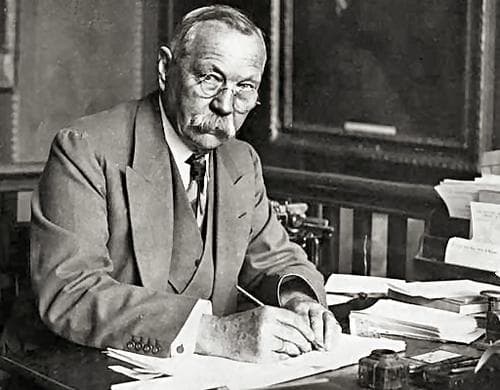
Sir Arthur Ignatius Conan Doyle was a British writer and physician. He created the character Sherlock Holmes in 1887 for A Study in Scarlet, the first of four novels and fifty-six short stories about Holmes and Dr. Watson. The Sherlock Holmes stories are milestones in the field of crime fiction.