“It is always by way of pain one arrives at pleasure.”
— A philosophical musing on the nature of gratification.


Marquis de Sade (2016)
Genre
Fiction
Reading Time
900 min
Key Themes
See below
Sign in to track this book
Four wealthy libertines imprison 16 victims in an isolated castle for 120 days, unleashing an escalating orgy of meticulously cataloged and unspeakable depravity to plumb the darkest depths of human cruelty and sexual excess.
In the winter of 1782, four immensely wealthy and powerful French noblemen – the Duke de Blangis, the Bishop de ***, the President de Curval, and Durcet the Financier – gather in a remote, impenetrable castle in the Black Forest. They have formed a pact to engage in four months of unprecedented sexual depravity, free from societal constraints and legal repercussions. To facilitate this, they bring with them 42 victims: four wives (their own daughters, kidnapped and forced into marriage), eight young girls (aged 12-15), eight young boys (aged 12-15), and 16 'f***ers' (men and women of varying ages used for sexual acts). They also employ four elderly female Storytellers, four male cooks, and four male guards. The castle is meticulously prepared, and their isolation ensures complete secrecy for their horrific project.
The libertines establish a strict daily routine within the castle. Each evening, after a luxurious dinner, one of the four Storytellers (Madame Duclos, Madame Champville, Madame Martaine, and Madame Desgranges) recounts tales of 'simple passions' – a catalogue of common sexual perversions, often involving incest, sodomy, and blasphemy, but still within a relatively 'mild' range compared to what is to come. As the Storyteller narrates, the libertines select victims from their captives to immediately re-enact the described scenes. The victims, already terrified and completely subjugated, are forced to participate in these acts, enduring humiliation and physical abuse. This month serves as an introduction to the escalating cruelty and a testing ground for the libertines' control over their human chattel.
As the second month commences, the Storytellers move on to 'complex passions.' These narratives describe more elaborate and violent sexual acts, incorporating elements of torture, mutilation, and extreme degradation. The acts performed by the libertines become increasingly sadistic, and the suffering of the victims intensifies. The young girls and boys, in particular, are subjected to horrifying abuses, their innocence systematically destroyed. The wives are also not spared, enduring profound humiliation and physical torment, often at the hands of their own fathers. The castle becomes a chamber of horrors, where the libertines' desires know no bounds, and the victims' despair deepens with each passing day. The focus shifts from mere sexual gratification to the infliction of pain and the assertion of absolute power.
The third month marks a significant escalation into 'criminal passions.' The Storytellers now recount tales involving murder, extreme torture, and cannibalism, and these acts are immediately put into practice. The libertines begin to murder their victims, often in agonizing and drawn-out ways, incorporating their deaths into their sexual rituals. The bodies are sometimes mutilated, and the libertines derive perverse pleasure from the terror and agony of their dying captives. The 'f***ers' are frequently among the first to be killed, but the young girls and boys are also targeted, their lives extinguished with callous disregard. The atmosphere in the castle becomes even more oppressive, filled with screams and the stench of blood, as the libertines fully embrace their most monstrous desires, celebrating death as the ultimate act of power.
The final month, dedicated to 'murderous passions,' sees the libertines reaching the zenith of their sadism. The remaining victims are systematically tortured and murdered in the most gruesome ways imaginable. The novel describes acts of dismemberment, evisceration, and other unspeakable atrocities. The Storytellers continue to provide a framework for these horrors, detailing increasingly inventive methods of destruction. However, the manuscript abruptly ends during this month, with Sade having only cataloged a fraction of the planned 'passions.' It is implied that by the end of the four months, all the victims, including the wives, girls, boys, and 'f***ers,' would have been systematically eliminated, leaving only the four libertines, the Storytellers, cooks, and guards. The unfinished nature of the text leaves the full extent of the final month's horrors to the reader's imagination, underscoring the boundless nature of the libertines' evil.
The Protagonist/Libertine
He begins as a powerful, corrupt nobleman and ends as a perpetrator of unimaginable atrocities, his depravity growing exponentially throughout the four months.
The Protagonist/Libertine
Starting as a corrupt religious figure, he descends into ever-greater sacrilege and cruelty, proving that even the church is not immune to ultimate depravity.
The Protagonist/Libertine
From a seemingly respectable background, he becomes a master of philosophical perversion, using reason to rationalize unimaginable cruelty.
The Protagonist/Libertine
His financial power enables his descent into the most physically grotesque and degrading forms of sadism, showing the corrupting influence of wealth.
The Supporting/Storyteller
She remains a detached chronicler of depravity, her character unchanged, serving as a conduit for the libertines' desires.
The Supporting/Storyteller
Her character remains static, a necessary instrument in the libertines' depraved project.
The Victim
They begin as coerced wives and descend into utter despair, physical ruin, and eventual death.
The Victim
Their innocence is brutally destroyed, leading to their agonizing deaths.
The Victim
Their innocence is brutally destroyed, leading to their agonizing deaths.
The Victim
They are used, abused, and systematically eliminated as the libertines' depravity intensifies.
The novel explicitly explores how unchecked wealth and social standing grant the libertines absolute power, which they use to commit atrocities with complete impunity. The remote castle symbolizes their self-imposed kingdom where laws, morality, and human rights are entirely suspended. The libertines' ability to kidnap, torture, and murder their victims without fear of reprisal demonstrates the corrupting influence of ultimate power, turning them into tyrannical gods within their domain. This theme is central to understanding the novel's critique of aristocratic privilege and the potential for human depravity when all external constraints are removed, as seen in the Duke de Blangis's unfettered cruelty.
“''It is not the crime that is shameful, but the scaffold.''”
Sade meticulously catalogues the darkest aspects of human nature, presenting a relentless exploration of sadism, sexual perversion, and cruelty. The novel argues that evil is an inherent part of humanity, not merely an aberration. The libertines' philosophical justifications for their actions, particularly those of President de Curval, suggest that their desires are 'natural' and that societal prohibitions are artificial. The escalating acts of torture, mutilation, and murder throughout the four months demonstrate a limitless capacity for depravity, challenging conventional notions of morality and human compassion. The book forces the reader to confront the most extreme forms of human malevolence.
“''All crimes are excusable when they lead to pleasure.''”
A core theme is the deliberate transgression of all societal, moral, and religious boundaries. The libertines actively seek to violate every taboo: incest, sodomy, murder, and cannibalism are not just committed but celebrated as acts of defiance against God and man. The presence of the Bishop de ***, a high-ranking cleric, engaging in the most sacrilegious acts, highlights this theme of blasphemy. The novel argues that true freedom lies in the absolute rejection of all external authority and the embrace of one's darkest desires, regardless of the suffering caused. Each 'passion' described by the Storytellers is a step further into this realm of ultimate transgression.
“''What is crime, after all, but a transgression of the law? And what is the law but a human convention?''”
Throughout the novel, the victims' bodies are systematically reduced to mere objects for the libertines' gratification. They are stripped of their humanity, their identities, and their rights, becoming interchangeable instruments for sexual and sadistic pleasure. The detailed descriptions of anatomical abuse and the casual disposal of bodies underscore this theme. The victims are not seen as individuals but as resources to be exploited until their utility is exhausted, at which point they are discarded or destroyed. This objectification is crucial to enabling the extreme violence, as it allows the perpetrators to detach themselves from the suffering they inflict, turning living beings into inert matter for their perverse experiments.
“''These creatures are nothing but flesh for our desires, instruments for our pleasures.''”
A systematic classification of sexual perversions and atrocities.
This is the central structural device of the novel. The 'Catalogue of Passions' is a meticulously organized list of sexual acts, tortures, and murders, divided into four escalating categories (simple, complex, criminal, murderous). Narrated by the four Storytellers, these detailed descriptions serve as both a blueprint and a justification for the libertines' actions. The catalogue is not merely descriptive; it is prescriptive, dictating the daily atrocities. This device allows Sade to explore the full spectrum of human depravity in an almost scientific, exhaustive manner, stripping away narrative conventionality to focus solely on the systematic exploration of vice.
Narrators who detail and categorize perversions for the libertines' enactment.
The four elderly female Storytellers (Duclos, Champville, Martaine, Desgranges) are crucial to the novel's structure. They are not merely passive observers but active facilitators, responsible for providing the daily 'menu' of perversions from their vast knowledge and experience. Their role is to systematically recount the 'passions' from the catalogue, which the libertines then immediately put into practice with their victims. This device creates a meta-narrative layer, as the Storytellers' narratives within the novel drive the actual plot. They represent the intellectual and historical justification for depravity, serving as living libraries of human vice.
A fortified, remote setting symbolizing total impunity and a world unto itself.
The castle of Silling in the Black Forest serves as a crucial plot device by providing a completely isolated and impenetrable environment. This physical isolation ensures the libertines' absolute impunity from societal laws and moral judgment, allowing them to enact their most extreme fantasies without fear of discovery or punishment. The castle functions as a microcosm of their desired world, a closed system where they are the sole authorities, and their desires are the only law. Its remote nature reinforces the idea that their actions exist outside the bounds of civilized society, creating a space for ultimate transgression.
The libertines' lengthy monologues rationalizing their atrocities.
Throughout the novel, particularly from President de Curval, the libertines engage in extensive philosophical monologues. These are not just casual remarks but detailed arguments that rationalize their extreme sadism and perversions as natural, even virtuous, acts. They challenge conventional morality, religion, and social order, arguing for the supremacy of individual pleasure and the 'naturalness' of vice. This device transforms the novel from a mere catalogue of obscenities into a philosophical treatise on human nature, freedom, and evil, forcing the reader to confront the intellectual underpinnings of extreme depravity and Sade's radical worldview.
“It is always by way of pain one arrives at pleasure.”
— A philosophical musing on the nature of gratification.
“The only way to acquire a taste for evil is to practice it.”
— Reflecting on the desensitization and escalation of depravity.
“Cruelty, far from being a vice, is the first sentiment nature injects in us.”
— A controversial assertion about innate human tendencies.
“To be happy, one must be free from all prejudices and all moral constraints.”
— Outlining a path to unrestrained happiness through transgression.
“The greatest pleasure is to conquer the will of others.”
— Describing the ultimate satisfaction derived from dominance.
“There are no crimes, only pleasures.”
— A radical redefinition of human actions from a hedonistic perspective.
“Everything is permitted to those who know how to take it.”
— A justification for absolute liberty and the pursuit of desires.
“The more atrocious the crime, the more delicious the sensation.”
— Exploring the perverse relationship between atrocity and enjoyment.
“Nature has no laws, only instincts.”
— Arguing against moral laws imposed on natural impulses.
“The true philosopher is he who, having nothing, has everything.”
— A paradoxical statement about the nature of true fulfillment.
“It is not enough to be wicked, one must also be intelligent.”
— Emphasizing the intellectual component required for refined depravity.
“The only real sin is that which one regrets.”
— A relativistic view on sin, tied to personal remorse rather than absolute morality.
“All passions are good when one is master of them; all are bad when one is their slave.”
— A nuanced perspective on the control and submission to one's desires.
“Nothing is more delightful than to excite the passions of others and then to betray them.”
— A reflection on the pleasure derived from manipulation and deceit.
Ready to see how well you understood this book? Take our interactive quiz with 10 questions.
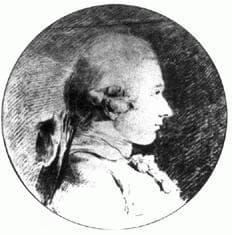
Donatien Alphonse François, Marquis de Sade, was a French nobleman, revolutionary politician, philosopher and writer famous for his literary depictions of a libertine sexuality as well as numerous accusations of sex crimes. His works include novels, short stories, plays, dialogues, and political tracts. In his lifetime some of these were published under his own name while others, which Sade denied having written, appeared anonymously.

Ashley Antoinette
4.6

Mark McDonald
4.4
Luo Guanzhong
4.4

Mia McKenzie
4.3

Dorothy Parker
4.3

Joaquim Maria Machado de Assis
4.3

James Thurber
4.2

Terry Kay
4.2