“The greatest miracle is the simple fact of living.”
— A recurring philosophical observation by Pedro Archanjo.

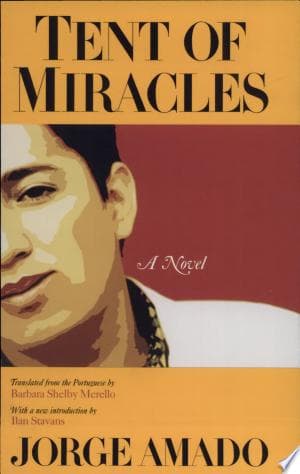
Jorge Amado (2003)
Genre
Fiction
Reading Time
9-10 hours
Key Themes
See below
Sign in to track this book
In 1930s Bahia, Pedro Archanjo, a charismatic mulatto poet and scholar, champions Afro-Brazilian culture and fights systemic racism, leaving a legacy that echoes through time.
The novel begins with the arrival of James Levenson, an American anthropologist, in Salvador, Bahia. He comes to research the life and work of Pedro Archanjo, a largely forgotten local poet, philosopher, and self-taught ethnographer. Levenson is interested in Archanjo's studies of Afro-Brazilian culture and his fight against racial prejudice. His arrival sparks new interest in Archanjo among local intellectuals, journalists, and some of Archanjo's old friends, many of whom begin to share their memories of the man. Levenson's presence prompts a collective look back at Archanjo's life and legacy, which unfolds through various stories and recollections.
Pedro Archanjo was born poor in Salvador's Pelourinho district, a mulatto orphan who learned to read and write through his own efforts and the help of strangers. He never went to formal school, but his curiosity led him to read books from various places, including the Benevolent Society library and discarded volumes from the wealthy. His early life involved a deep immersion in the Afro-Brazilian culture of his neighborhood, including candomblé rituals, capoeira, and street festivals. These experiences, with his reading, formed his unique view on race, class, and culture, shaping him into the unconventional intellectual he would become.
As a young man, Pedro Archanjo finds work at a printing press, a job that helps his intellectual growth. Surrounded by type and paper, he learns printing and gains access to many texts. This environment allows him to improve his writing and begin to express his observations and theories about Bahia's culture. He starts to publish small, self-financed pamphlets and broadsides, often using false names, where he supports the poor and marginalized, and celebrates Afro-Brazilian traditions. These early writings show his growing social awareness and his commitment to challenging the racial hierarchies of his time.
Pedro Archanjo establishes his 'Tent of Miracles,' a small shack in the Pelourinho that becomes a center for intellectual and cultural exchange. It serves as a meeting place for artists, poets, mystics, and ordinary people, where ideas are debated, stories are shared, and Afro-Brazilian culture is celebrated. Pedro, with his knowledge and personality, becomes a central figure, guiding discussions and inspiring others. The Tent of Miracles is not just a physical space; it symbolizes his philosophy of open dialogue and his belief in the wisdom of common people, offering an alternative to the rigid academic institutions of the day.
Pedro Archanjo experiences a lasting love with Rosa, a mulatto woman who shares his passion for life and culture. Their relationship is shown as a source of joy and mutual respect, a testament to love in a society often marked by prejudice. However, their happiness is cut short when Rosa falls ill and dies, leaving Pedro heartbroken. This loss affects Pedro deeply, but he channels his grief into his work, dedicating himself to understanding and preserving the cultural heritage he and Rosa cherished. Her memory becomes a driving force behind his continued efforts for justice and celebration of life.
Pedro Archanjo's ideas and his critique of racial inequality often put him in conflict with the authorities and academic elite of Salvador. His embrace of Afro-Brazilian religions, his challenge to Eurocentric history, and his support for the marginalized are seen as radical. He is often dismissed as uneducated or a troublemaker. Despite the scorn and attempts to silence him, Pedro continues his work, using his writings and his 'Tent of Miracles' to spread his ideas and empower the community. These conflicts highlight the prejudices he fought against throughout his life.
Pedro Archanjo's main work, 'The Mulatto from Bahia,' is eventually published, though with difficulty and limited reach. In this book, he documents the cultural contributions of Afro-Brazilians and argues for their central role in shaping Brazilian identity. He challenges the idea of racial purity and celebrates the richness of miscegenation, presenting a vision of Brazil that embraces its diverse heritage. Though initially met with indifference or hostility from the mainstream, the book slowly gains readers, becoming a testament to his intellectual foresight and his commitment to social justice.
In his later years, Pedro Archanjo, despite his contributions, fades into obscurity. His radical ideas and lack of formal academic credentials prevent him from gaining widespread recognition during his lifetime. He continues to live a humble life in the Pelourinho, surrounded by his books and memories, but his work remains largely unacknowledged by the academic and literary establishment. This period shows the irony of a visionary whose insights were ahead of his time, rediscovered only much later. His obscurity highlights the systemic biases he battled against, even in his own intellectual legacy.
James Levenson's arrival in Salvador helps bring Pedro Archanjo's life and work back into public view. Levenson's research, combined with the memories of those who knew Pedro, revives his forgotten contributions. Journalists publish articles, intellectuals revisit his writings, and a new generation begins to appreciate his spirit. This renewed interest turns Pedro from a forgotten local eccentric into a significant cultural figure, showing how history can be reshaped and how the value of an individual's work can be recognized over time and across cultures, finally giving Pedro the recognition he deserved.
The novel ends with a festival in Salvador, celebrating Pedro Archanjo's life and legacy. This event, reflecting the city's spirit, brings together people from all walks of life—academics, artists, street vendors, and citizens—to honor the mulatto intellectual. Speeches are given, music plays, and the streets of Pelourinho fill with dancing and joyous remembrance. The festival symbolizes the triumph of Pedro's ideas and the power of his message of cultural pride and racial equality. It shows that despite his struggles, Pedro Archanjo's vision resonated with his people, securing his place as a hero of Bahia.
The Protagonist
From an obscure, self-taught intellectual, Pedro is posthumously recognized as a visionary and cultural hero.
The Supporting
Levenson begins as a detached academic and becomes a passionate advocate for Archanjo's legacy.
The Supporting
Her brief but impactful life serves as a catalyst and inspiration for Pedro's enduring work.
The Supporting
Maintains his steadfast loyalty and appreciation for Pedro throughout his life.
The Supporting
Remains a guardian of Afro-Brazilian traditions and a loyal friend to Pedro's memory.
The Mentioned
His legacy is celebrated and preserved through Pedro's work and the collective memory.
The Supporting
Serves as a living repository of the community's history and Pedro's personal life.
The Antagonist/Supporting
Initially dismissive, they are eventually forced to confront and, to some extent, acknowledge Pedro's significant contributions.
The novel explores racial identity in Brazil, especially the mulatto. Pedro Archanjo promotes miscegenation not as a weakness, but as the strength of Brazilian culture. He fights against racist ideas that devalued Black and mixed-race people, arguing instead for the beauty and richness from the blending of African, Indigenous, and European influences. His work, 'The Mulatto from Bahia,' celebrates this, stating that the mulatto is the true heart of Brazilian identity, challenging the European-centric stories of his time. This theme is central to Pedro's life's work and his constant struggle.
“What is Bahia? A miracle of miscegenation, a tent of miracles, where races mix and souls intertwine.”
Amado shows the value of oral traditions, folklore, and popular culture as valid forms of knowledge and expression, often surpassing formal academic discourse. Pedro Archanjo, a self-taught ethnographer, gets his insights directly from the streets, capoeira, candomblé, and the daily lives of Pelourinho's people. His 'Tent of Miracles' is a place for this exchange. The novel itself uses memories and anecdotes from various characters, showing how collective memory and storytelling preserve history and identity, contrasting with the often sterile views of academia.
“The wisdom of the people, that's where the truth lies, not in dusty books or pompous speeches.”
The novel shows the intellectual's role, especially in an unequal society. Pedro Archanjo is an 'organic intellectual'—one whose knowledge comes from and serves his community, not confined to academia. He uses his intellect to challenge oppression, celebrate marginalized cultures, and empower his people. His struggle against the academic elite, who dismiss him due to his lack of formal credentials, highlights the tension between institutional knowledge and community wisdom. Levenson's arrival validates Pedro's intellectual contributions, forcing the establishment to reconsider its narrow definitions of scholarship and acknowledge the impact of a self-made scholar.
“An intellectual is not just someone who reads books, but someone who reads the world and speaks for those who cannot.”
The structure of 'Tent of Miracles' uses memory and history. Professor Levenson's effort to reconstruct Pedro Archanjo's life relies on the subjective, often contradictory, memories of those who knew him. This fragmented story technique emphasizes that history is not a single truth but a complex whole woven from individual experiences and perspectives. The novel explores how collective memory can both preserve and distort, and how the past is constantly reinterpreted in the present. It suggests that a true understanding of history requires embracing its multifaceted nature, including the voices of the marginalized often left out of official records.
“History is not written in stone, but in the hearts and memories of men and women.”
Professor Levenson's research provides the narrative structure.
The arrival of Professor James Levenson in Salvador serves as the primary framing device for the entire novel. His academic quest to research Pedro Archanjo's life acts as the narrative's central spine. Through Levenson's interviews, discoveries, and interactions, the story of Pedro Archanjo is gradually pieced together from various perspectives. This device allows Amado to present a fragmented, multi-voiced account of Pedro's life, reflecting the subjective nature of memory and history. It also provides an external, 'objective' lens through which the local community's memories are brought to light and validated, ultimately sparking a posthumous re-evaluation of Pedro's legacy.
Pedro's life is revealed through the memories of many characters.
Rather than a linear narrative, Pedro Archanjo's life is unveiled through a mosaic of recollections, anecdotes, and opinions from a diverse cast of characters who knew him: friends, lovers, rivals, academics, and ordinary citizens. Each perspective adds a layer to his complex character, sometimes contradicting, sometimes complementing, the others. This device emphasizes the multifaceted nature of truth and identity, especially for a figure as enigmatic and influential as Pedro. It allows the reader to experience Pedro not as a singular, authorial voice, but as a living legend shaped by the collective memory of his community, showcasing the richness of oral tradition.
A physical space that symbolizes Pedro's philosophy of cultural exchange.
The 'Tent of Miracles' is both a literal setting—Pedro Archanjo's humble dwelling and meeting place—and a powerful metaphor. As a physical space, it is a vibrant hub for intellectual discourse, cultural celebration, and community gathering, contrasting with the formal, often prejudiced, institutions of Salvador. Metaphorically, it represents Pedro's philosophy of embracing the 'miracle' of miscegenation and the richness of Afro-Brazilian culture. It symbolizes open dialogue, the blending of ideas, and the inherent wisdom found within the common people, embodying the novel's central themes of identity, culture, and resistance against prejudice. It is a space where all are welcome and all knowledge is valued.
The contrast between Pedro's obscurity in life and his posthumous fame.
A significant use of irony lies in the stark contrast between Pedro Archanjo's life of relative obscurity and struggle against academic dismissal, and his eventual posthumous recognition as a cultural hero. During his lifetime, his groundbreaking work was largely ignored or ridiculed by the establishment due to his lack of formal education and his radical ideas. It is only through the intervention of an outside academic, Professor Levenson, that his true genius is acknowledged and celebrated. This irony highlights the societal prejudices that prevented his recognition earlier and underscores the novel's critique of rigid academic structures versus genuine intellectual contribution and popular wisdom.
“The greatest miracle is the simple fact of living.”
— A recurring philosophical observation by Pedro Archanjo.
“There are no ugly women, only women badly loved.”
— Pedro Archanjo's take on beauty and affection.
“A man without a story is a man without a soul.”
— Emphasizing the importance of personal history and narrative.
“The people's wisdom is a river that never dries up.”
— Highlighting the enduring knowledge and culture of the common folk.
“Every man has a bit of a saint and a bit of a scoundrel in him.”
— Reflecting on the complex nature of human character.
“To be truly free, one must first be free in one's mind.”
— Pedro Archanjo's belief about intellectual and spiritual liberation.
“The past is not dead; it is not even past.”
— A reflection on how history continually influences the present.
“Poetry is the bread of the soul, and music its wine.”
— Pedro Archanjo's appreciation for artistic expression.
“The truth is like a cat; it always finds its way home.”
— A proverb about the inevitable revelation of truth.
“No one owns the wind, no one owns the sea, no one owns the people's heart.”
— A statement about the untamable nature of certain elements and human spirit.
“The world is a tent of miracles, if only you know how to look.”
— The central metaphor of the book, suggesting wonder in everyday life.
“Even the smallest gesture of kindness can change a life.”
— Emphasizing the impact of compassion and human connection.
“Books are silent companions that speak volumes to those who listen.”
— Pedro Archanjo's reverence for literature and learning.
“What is life but a series of goodbyes and hellos?”
— A poignant reflection on the transient nature of human relationships.
Ready to see how well you understood this book? Take our interactive quiz with 10 questions.
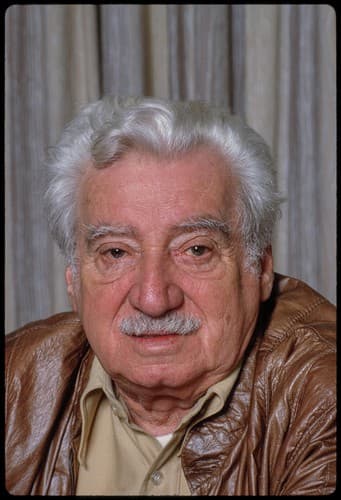
Jorge Leal Amado de Faria was a Brazilian writer of the modernist school. He remains the best known of modern Brazilian writers, with his work having been translated into some 49 languages and popularized in film, including Dona Flor and Her Two Husbands in 1976. His work reflects the image of a Mestiço Brazil and is marked by religious syncretism. He depicted a cheerful and optimistic country that was beset, at the same time, with deep social and economic differences.

Ashley Antoinette
4.6

Mark McDonald
4.4
Luo Guanzhong
4.4

Mia McKenzie
4.3
Dorothy Parker
4.3
Joaquim Maria Machado de Assis
4.3

James Thurber
4.2

Terry Kay
4.2