“Freedom, like a mushroom, may spring up overnight in the most unexpected places.”
— Sophia reflects on the nature of freedom and revolution.


Sylvia Townsend Warner (2021)
Genre
Fiction
Reading Time
320 min
Key Themes
See below
Sign in to track this book
A Victorian matriarch, seeking her errant husband in revolutionary Paris, instead finds herself drawn into an intense, chaotic affair with his bohemian mistress.
Sophia Willoughby, mistress of Blandamer House in Dorset, is a woman of strict principles and a meticulously ordered life. She is married to Frederick, a man she views with a mixture of duty and mild disdain. The novel opens with Sophia receiving news that Frederick has left for Paris, not alone, but with a Jewish mistress named Minna Lemuel. Sophia, though initially shocked, processes this information with a surprising degree of detachment, viewing it as an inconvenience rather than a personal tragedy. Her primary concern is maintaining the decorum and reputation of Blandamer House, and she resolves to handle the situation with a calm, rational approach, characteristic of her formidable will and self-possession. She even contemplates the practicalities of a separation, weighing the social implications.
Sophia's carefully constructed world shatters with the sudden death of her two young children, Fanny and Edward, from smallpox. This devastating loss leaves her reeling, stripping away the very foundation of her existence and her purpose as a mother. The children's deaths plunge her into a deep grief that transcends her usual stoicism. In her overwhelming sorrow, Sophia feels an urgent need to find Frederick, believing his presence might offer some solace or at least a shared burden in her unbearable pain. She packs her bags and, against her usual cautious nature, sets off for Paris, a city she has always viewed with suspicion, driven by a raw, emotional imperative.
Sophia arrives in Paris in the spring of 1848, a city on the brink of revolution. The streets are alive with political fervor, barricades, and the tension of social upheaval, a stark contrast to the quiet order of Blandamer House. She finds the city disorienting and somewhat alarming, her English sensibilities clashing with the chaotic French atmosphere. Her initial attempts to locate Frederick prove fruitless, as he seems to have vanished into the city's labyrinthine streets. Sophia, despite her discomfort, is forced to navigate this unfamiliar environment, her mission to find Frederick becoming increasingly complicated by the volatile political landscape and the anonymity of the bustling metropolis.
During her search, Sophia discovers a letter from Frederick, which leads her to a Jewish quarter of Paris. There, she unexpectedly encounters Minna Lemuel, not with Frederick, but alone and deeply involved in radical political activities. Minna is an unconventional woman, a stark contrast to Sophia's reserved demeanor. She is passionate, intellectual, and unconcerned with social niceties, actively participating in revolutionary circles. Sophia, initially intending to confront Minna about Frederick, finds herself drawn to the younger woman's charisma and intensity. The meeting is not the dramatic confrontation Sophia might have anticipated, but rather an intriguing, almost magnetic, introduction to a world entirely alien to her.
Minna, after the initial surprise, takes Sophia under her wing, inviting her into her bohemian flat and introducing her to her circle of radical thinkers, poets, and revolutionaries. Sophia, still grieving and somewhat adrift, finds herself an unlikely observer, and then participant, in their fervent discussions and clandestine activities. She is exposed to new ideas of communism, social justice, and artistic freedom, all of which challenge her deeply ingrained Victorian values. Despite her initial reservations, Sophia finds herself increasingly captivated by Minna's intellect and the energy of her community, a world that offers a stark contrast to the rigid constraints of her former life. She begins to see Minna not just as 'the other woman,' but as a fascinating individual.
Frederick eventually reappears, looking haggard and somewhat disillusioned by his Parisian escapades. He is surprised to find Sophia living with Minna and her radical friends. His return is brief and anticlimactic. He confesses his weariness with Minna's intensity and the revolutionary fervor, expressing a desire for a more conventional life. He offers to return to Blandamer House with Sophia, but she, having experienced a shift in her perspective, declines. Frederick, sensing her detachment and perhaps relieved by it, eventually departs again, leaving Sophia free to continue her unconventional life with Minna. His exit marks a definitive break from Sophia's past, and a deeper commitment to her new, radical present.
The political tensions in Paris erupt into the violent June Days Uprising. Sophia and Minna are thrust into the heart of the conflict, witnessing firsthand the brutal reality of revolution. Minna, with her fiery passion, actively participates, tending to the wounded and advocating for the cause. Sophia, initially a reluctant observer, finds herself drawn into the struggle, assisting Minna and observing the suffering of the common people. This experience impacts her, stripping away her class prejudices and exposing her to the human cost of social inequality. The violence and chaos solidify her bond with Minna, as they face danger and hardship together, forging a powerful emotional connection amidst the turmoil.
As they navigate the dangers of the revolution and the complexities of their shared life, Sophia and Minna's relationship evolves beyond friendship and shared political ideals. Sophia, who had always lived a life devoid of passionate love, finds herself intensely attracted to Minna's intellect, spirit, and unconventional beauty. Minna, in turn, is drawn to Sophia's strength, integrity, and the unexpected depth of her character. Their bond blossoms into a deep, tender, and intensely physical love affair, defying the social conventions of their time. This forbidden romance becomes the central emotional core of Sophia's transformation, challenging all her previously held notions of love, duty, and identity.
The June Days Uprising is brutally suppressed by the government, resulting in widespread arrests, executions, and a sense of disillusionment among the revolutionaries. Minna, once so full of fervent hope, becomes withdrawn and despondent, her spirit dampened by the failure of their cause and the suffering she has witnessed. Sophia, though equally affected by the tragedy, retains her practical resilience. The failure of the revolution strains their relationship, as Minna grapples with her ideological defeat and Sophia struggles to understand Minna's resulting apathy. The initial revolutionary fervor that brought them together begins to wane, replaced by the harsh realities of defeat and the complexities of their personal bond.
As the political climate in Paris becomes increasingly oppressive and dangerous for former revolutionaries, Minna decides to leave the city, seeking a new path and perhaps a new cause elsewhere. Her departure is not an abandonment of Sophia, but a reflection of her restless spirit and her inability to remain in a place of defeat. Sophia is left to confront her future alone. She considers returning to Blandamer House and her former life, but realizes that she has been irrevocably changed by her experiences and her love for Minna. The novel ends with Sophia making a decisive choice to forge a new, independent life for herself, embracing the freedom and unconventionality she has discovered in Paris, even without Minna by her side.
The Protagonist
Sophia transforms from a rigid, emotionally repressed Victorian lady into an independent, passionate woman who embraces unconventional love and radical ideas.
The Supporting/Love Interest
Minna remains true to her radical ideals but experiences the disillusionment of revolutionary failure, leading to a more subdued and introspective existence.
The Supporting
Frederick remains largely unchanged, returning to a life of conventional comfort after his brief foray into bohemianism.
The Supporting
Her character remains consistent, providing a historical and pragmatic perspective on the revolutionary events.
The Supporting
His arc is cut short by the revolution's violence, symbolizing the crushing of youthful idealism.
The novel explores the multifaceted nature of love, moving beyond conventional marital affection to embrace passionate, unconventional, and queer desire. Sophia's journey from a duty-bound wife to a woman deeply in love with Minna challenges Victorian norms of romance and sexuality. Her love for Minna is intellectual, emotional, and physical, demonstrating that love can arise in unexpected places and defy societal expectations. The contrast between her cold marriage to Frederick and her fervent passion for Minna highlights the transformative power of genuine desire, showing that love can be a radical act in itself, as seen in the intimacy they share amidst the chaos of the revolution.
“She was my husband's mistress - and here am I, taking her out to dinner.”
The 1848 Parisian Revolution serves as a dramatic backdrop and a metaphor for personal transformation. The external chaos and upheaval mirror Sophia's internal revolution against her own rigid upbringing and societal expectations. The novel examines the ideals and brutal realities of revolutionary movements, exploring themes of class struggle, social justice, and the disillusionment that follows failed uprisings. Minna's fervent commitment to communism and Sophia's gradual awakening to the plight of the working class illustrate how political events can shape individual consciousness and force a re-evaluation of one's place in the world, as Sophia witnesses the barricades and the suffering in the streets.
“The people were on the march, and not only the people of Paris, but the people of all the world.”
Sophia's journey is one of self-discovery. Stripped of her children and her conventional life, she is forced to confront who she is outside of her prescribed roles as wife and mother. Her immersion in Minna's bohemian and radical world challenges every aspect of her identity, from her class prejudices to her sexual orientation. Through her grief, her exposure to new ideas, and her love for Minna, Sophia sheds her 'Victorian matriarch' persona and uncovers a more authentic, independent, and passionate self. This process of shedding old identities and forging new ones is central to her character arc, culminating in her decision to forge a new path for herself.
“It was as though she had been living in a house of glass, and suddenly it had shattered.”
The novel critiques patriarchal structures and expectations placed upon women in the Victorian era. Sophia's initial life is one of confinement within a male-dominated society, where her agency is limited to managing a household. Her rebellion against her husband, her embrace of Minna, and her eventual decision to live independently are powerful acts of feminist defiance. Minna, as a self-sufficient, intellectual woman engaged in politics, represents an alternative to traditional female roles. Their relationship itself, a lesbian love affair, is a rejection of the patriarchal imperative for women to marry and reproduce, asserting female autonomy and desire.
“She had always been a woman of her own mind, but now that mind was free to range.”
The sudden death of Sophia's children is the initial catalyst for her journey, and the novel explores the impact of grief. Sophia's reaction to this loss is not one of conventional mourning, but a shattering experience that paradoxically liberates her from her rigid self. Her ability to survive such immense sorrow and, in its wake, embrace an entirely new life, speaks to the resilience of the human spirit. Grief, in this context, is not merely a period of suffering but a transformative force that opens Sophia to deeper emotional truths and enables her to forge a new existence, highlighting how trauma can sometimes lead to personal growth.
“The children were dead. And with them, all that had been Sophia Willoughby.”
Historical setting serving as a backdrop and metaphor for personal upheaval.
The historical context of the June Days Uprising in Paris is not merely a setting but a crucial plot device. It provides the chaotic, volatile environment that allows Sophia to shed her Victorian inhibitions and embrace a radical new life. The external revolution mirrors her internal transformation, creating a sense of urgency and danger that pushes her to make unconventional choices. It also introduces her to Minna's world of radical politics and provides the circumstances for their bond to deepen amidst shared danger and idealism.
A tragic event serving as the primary catalyst for Sophia's journey and transformation.
The sudden and devastating death of Fanny and Edward is the inciting incident that propels Sophia from her ordered life at Blandamer House to the chaos of Paris. This profound grief shatters her emotional defenses and detaches her from her previous existence, making her receptive to new experiences and relationships. Without this tragic loss, Sophia would likely never have left England or encountered Minna, thus making it the essential emotional and narrative trigger for the entire plot.
A foil and catalyst for Sophia's awakening.
Minna functions as a powerful catalyst for Sophia's transformation. As Frederick's mistress, she initially represents everything Sophia disdains, but through their interactions, Minna's charisma, intellect, and radical spirit challenge Sophia's prejudices and draw her into a new world. Minna acts as a foil to Sophia's conservative nature, embodying freedom, passion, and unconventionality, thereby enabling Sophia to discover these qualities within herself. Their relationship is the central driver of Sophia's emotional and sexual awakening.
A symbolic representation of Sophia's former life and Victorian constraints.
Blandamer House is more than just a home; it is a symbol of Sophia's rigid, ordered, and emotionally repressed Victorian life. Its meticulously managed gardens and strict routines reflect her internal world and the societal expectations she embodies. Leaving Blandamer House signifies her deliberate break from this past, while the possibility of returning to it represents the constant pull of convention and the choice she must make about her future. It serves as a stark contrast to the chaotic freedom of Paris.
“Freedom, like a mushroom, may spring up overnight in the most unexpected places.”
— Sophia reflects on the nature of freedom and revolution.
“One does not choose one's passions; they choose one.”
— Sophia contemplates her growing feelings and allegiances.
“The past is a foreign country; they do things differently there.”
— A general observation on historical perspective, though not explicitly stated in the book, the sentiment is present in Sophia's grappling with historical events and personal past.
“To be truly alive, one must be willing to risk everything.”
— Sophia's transformation and immersion in the revolutionary cause.
“There are some truths that only silence can speak.”
— Referring to unspoken understandings and profound emotional states.
“Love is not a gentle thing, but a consuming fire.”
— Sophia's intense and often tumultuous relationships.
“The world is always ending, and always beginning again.”
— Reflecting on the cyclical nature of historical change and personal upheaval.
“It is not what we endure, but how we endure, that defines us.”
— Sophia's resilience in the face of hardship and loss.
“One cannot truly know another until one has shared their hunger.”
— Sophia's immersion with the poor and revolutionaries in Paris.
“Memory is a kind of haunting, a ghost that follows us through life.”
— Sophia's struggle with her past and the specter of her former life.
“The greatest prison is a mind that refuses to open.”
— Sophia's initial provincial mindset contrasting with her later awakening.
“Revolutions are not made with rosewater.”
— A stark observation on the brutal realities of political uprising.
“To be without illusion is to be truly free.”
— Sophia shedding her romanticized notions and facing harsh truths.
“The heart has its own reasons, which reason knows nothing of.”
— Sophia's inexplicable attraction and loyalty to Minna.
Ready to see how well you understood this book? Take our interactive quiz with 10 questions.
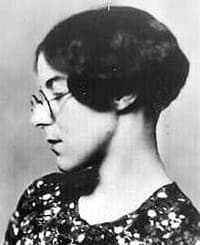
Sylvia Nora Townsend Warner was an English novelist, poet and musicologist, known for works such as Lolly Willowes, The Corner That Held Them, and Kingdoms of Elfin.

Ashley Antoinette
4.6

Mark McDonald
4.4
Luo Guanzhong
4.4

Mia McKenzie
4.3
Dorothy Parker
4.3

Joaquim Maria Machado de Assis
4.3

James Thurber
4.2

Terry Kay
4.2