“Life is nothing but a battle fought with the weapon of time.”
— Reflecting on the passage of time and life's struggles.

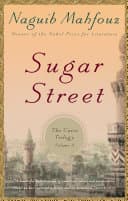
Naguib Mahfouz (2011)
Genre
Fiction
Reading Time
Variable (part of a trilogy)
Key Themes
See below
Sign in to track this book
As Egypt moves toward an uncertain future, the aging al-Sayyid Ahmad Abd al-Jawad watches his grandsons embrace communism, fundamentalism, and political intrigue, shattering his traditions.
The story begins in 1944, years after the events of 'Palace of Desire'. Al-Sayyid Ahmad Abd al-Jawad is an old man, and his children have grown. Kamal, still single, focuses on literature and philosophy, dealing with big questions. Yasin, Al-Sayyid Ahmad's eldest son, is a government employee, still given to his indulgent habits. Khadija's son, Abd al-Muni'm, has joined the Muslim Brotherhood, becoming a passionate fundamentalist. Aisha's son, Ahmad, is a student leader drawn to socialist and communist ideas. The family meets for weekly dinners at the old house on Bayn al-Qasrayn, where the patriarch's influence, though less, still has an impact. Egypt's political mood is unstable, with British occupation and rising nationalism fueling different ideas among the young.
Abd al-Muni'm becomes more religious, following Islamic rules strictly and trying to make his family, especially his wife, Sania, do the same. He criticizes his relatives' modern ways, their enjoyment of music, alcohol, and unveiled women. His mother, Khadija, at first proud of his faith, worries about his extreme views. His arguments with his cousin, Ahmad, about politics and religion become frequent, showing the larger divisions in Egyptian society. Abd al-Muni'm's involvement with the Muslim Brotherhood leads him to protests and political actions, often clashing with authorities and his more secular family members.
Ahmad, named after his grandfather, becomes a passionate student leader. He is drawn to the communist movement, supporting workers' rights, social equality, and an end to British rule. His activism leads him to street protests and clashes with police. His mother, Aisha, constantly worries about his safety and future. His grandfather, Al-Sayyid Ahmad, views his politics with confusion and disapproval, unable to connect Ahmad's radicalism with the family's traditional values. Ahmad's curiosity also makes him question old social norms and religious beliefs, further widening the generation and idea gap in the family.
Kamal, now an older single man, continues his intellectual pursuits, reading, writing, and discussing philosophy. He finds comfort in literature and art but feels lonely and unfulfilled, especially his lasting affection for Aida, his unattainable love from youth. He observes the changing world with sadness, often feeling out of place. His bond with his nephew, Ahmad, is strong; Kamal sees his own intellectual spirit in Ahmad, though directed to different political paths. Kamal often helps bridge the generations, trying to understand his nephews' opposing views.
Yasin, Al-Sayyid Ahmad's eldest son, continues to seek pleasure, visiting cafes and enjoying alcohol and women. He marries again, to Karima, but their relationship is difficult due to his infidelity and her sharp words. His children, especially Ridwan, see his reckless behavior. Despite his faults, Yasin remains at family gatherings, often providing humor or a contrast to the more serious political and religious talks. His life differs from his nephews' strong beliefs, showing a more traditional, though wild, form of Egyptian masculinity that modern ideas are starting to challenge.
Al-Sayyid Ahmad Abd al-Jawad, once the strict patriarch, is now frail and ill. His memory fades, and he often mixes up past and present. Despite his physical decline, his psychological influence on the family remains large. The weekly family dinners at the old house continue, a tradition he started, and his children and grandchildren still respect him, even as they live lives he barely understands. His wife, Amina, cares for him devotedly, showing her loyalty. His decline represents the end of an era and the weakening of traditional authority in modern times.
The novel takes place during King Farouk's reign, a time of political instability, corruption, and growing nationalist feeling. Ahmad Abd al-Jawad Jr. becomes involved with a powerful politician, Ibrahim Farhat, serving as his secretary and, later, his lover. This relationship gives Ahmad a look into the political elite, showing their hypocrisy and self-interest. Farhat, a symbol of the corrupt ruling class, uses the political system for his own gain. This part of the story highlights the widespread corruption and moral compromises in Egyptian politics, contrasting sharply with the idealism of Ahmad and his communist friends.
As political tensions grow, the government, under King Farouk, starts to crack down on both communist and Muslim Brotherhood activists. Ahmad Abd al-Jawad Jr. is arrested for his communist activities, causing great distress to his mother, Aisha, and the whole family. At the same time, Abd al-Muni'm is also arrested for his involvement with the Muslim Brotherhood. These arrests bring Egypt's political realities directly into the family, forcing them to face the dangers their children endure and showing how fragile freedom is in a repressive society. The family supports their imprisoned members, showing their lasting bonds despite different ideas.
Amina, Al-Sayyid Ahmad's devoted wife, dies peacefully. Her death is a great loss for the family, especially for Kamal, who valued her quiet strength and love. Soon after, Al-Sayyid Ahmad Abd al-Jawad himself dies in his sleep, ending the life of the family's powerful patriarch. His death, though expected, means the definite end of an era and the full shift of power to the younger generations. The old house on Bayn al-Qasrayn, once the active center of their lives, now feels emptier, its traditions fading with the passing of its founders. The family mourns, thinking about their complex relationships with their parents.
The novel ends around the 1956 Suez Crisis, a key moment in Egyptian history. The family, now without its patriarch and matriarch, deals with the ongoing political unrest. Ahmad Abd al-Jawad Jr. is released from prison, and Abd al-Muni'm also returns, both changed by their experiences. The younger generation, including Ridwan (Yasin's son), represents the future, navigating a quickly changing Egypt. Al-Sayyid Ahmad's old world is gone, replaced by a nation dealing with post-colonial identity, socialism, and religious fundamentalism. The ending suggests that the struggle for Egypt's identity, reflected in the family's arguments, will continue.
The Patriarch/Former Protagonist
From a powerful and feared patriarch, he declines into a frail, forgetful old man, symbolizing the erosion of traditional authority.
The Matriarch/Supporting
She remains consistently devout and loving, providing a stable emotional core until her peaceful death.
The Protagonist/Philosopher
From a passionate intellectual, he ages into a more resigned and solitary philosopher, still seeking truth but accepting his loneliness.
The Supporting/Hedonist
His character remains largely static, continuing his cycle of indulgence and marital troubles.
The Supporting/Traditionalist
From a traditionalist mother, she grapples with her son's increasingly radical religious path.
The Supporting/Doting Mother
Her character remains consistently loving and concerned, particularly for her politically active son.
The Antagonist/Religious Fundamentalist
He becomes increasingly devout and politically active, facing imprisonment for his beliefs.
The Protagonist/Communist Activist
From an idealistic student activist, he endures imprisonment and gains a deeper, more cynical understanding of politics.
The Supporting/Politician
His character remains static, representing the entrenched corruption of the political elite.
The novel shows the gap between the old generation, Al-Sayyid Ahmad and Amina, and the new, their grandchildren. This clash is mainly about ideas, with Abd al-Muni'm embracing religious fundamentalism (Muslim Brotherhood) and Ahmad Jr. moving toward communism and socialism. Kamal, the intellectual, tries to connect these worlds, but even he struggles to fully grasp the radical changes. The weekly family dinners, once ruled by the patriarch, become places for political and religious debate, reflecting the wider societal upset in Egypt as it deals with colonialism, modern life, and its own identity (e.g., the heated arguments between Ahmad Jr. and Abd al-Muni'm about Egypt's future).
““The world had changed, and with it, the minds of men. The old certainties were crumbling, replaced by a bewildering array of new ideas.””
The physical and mental decline of Al-Sayyid Ahmad Abd al-Jawad directly shows the weakening of traditional male authority and the values he once enforced. His inability to understand his grandchildren's political and social choices highlights that his old-world power is no longer relevant in a modernizing Egypt. The shift from his control to the varied, often clashing, voices of the younger generation illustrates how traditional family structures and social norms are breaking down. The respect he once commanded is replaced by polite, often annoyed, tolerance, signaling the end of an era (e.g., the family's secret lives and changing beliefs despite the patriarch's presence).
““The old man was like a relic, revered but no longer truly understood by the generation that followed him.””
'Sugar Street' explores the many ways Egyptians search for identity in a post-colonial, pre-revolutionary time. The characters deal with what it means to be Egyptian with British occupation, Western influence, and the rise of local political and religious movements. Ahmad Jr. seeks a socialist, independent Egypt, while Abd al-Muni'm envisions an Islamic state. Kamal searches for identity through philosophy and art. This theme is central to the family's conflicts, as each character believes their chosen path is the right one for their nation, reflecting the broader national struggle for self-definition (e.g., Ahmad Jr.'s communist activism and Abd al-Muni'm's Muslim Brotherhood involvement).
““What was Egypt to become? A land of the faithful, or a land of the free? Perhaps both, perhaps neither.””
The theme of love and loss, often tied to unfulfilled desires, runs through the characters' personal lives. Kamal's lasting, unreturned love for Aida continues to shape his solitary life, representing a life of emotional longing and intellectual pursuit over typical happiness. Yasin's difficult marriages and indulgent habits show a surface search for fulfillment. The worries of mothers like Aisha about their children's dangerous political paths highlight the pain of possible loss. These personal stories of love, both found and lost, offer a moving contrast to the large political and social changes, reminding the reader of the human need for connection (e.g., Kamal's thoughts on his past loves and his current loneliness).
““Love, like a ghost, haunted the corridors of memory, a beautiful, painful reminder of what might have been.””
The novel shows Egypt's oppressive political mood under King Farouk, where personal freedoms are limited, and disagreement is met with harsh punishment. The arrests of both Ahmad Jr. (for communism) and Abd al-Muni'm (for his Muslim Brotherhood activities) show the government's crackdown on any opposition, regardless of ideology. This theme highlights the constant tension between an individual's desire for freedom and expression and the state's power to control. The characters' struggles for political change come at a high personal cost, forcing the family to face the dangers of challenging the current system (e.g., the family's distress and efforts to get their imprisoned sons released).
““Freedom was a word whispered in secret, a dream often paid for with chains.””
A multi-generational saga spanning decades, showing the evolution of a family and a nation.
As the final installment of the Cairo Trilogy, 'Sugar Street' uses the overarching structure of a multi-generational family saga to trace the profound transformations in Egyptian society. By focusing on the grandchildren of Al-Sayyid Ahmad, the novel effectively demonstrates the passage of time and the dramatic shifts in ideology, politics, and social norms from the early 20th century to the mid-1950s. This device allows Mahfouz to present a panoramic view of Egypt's journey towards modernity and independence, with the family serving as a microcosm of the nation's struggles and aspirations.
The physical and symbolic center of the family, representing tradition and continuity amidst change.
The old house on Bayn al-Qasrayn continues to function as the central gathering place for the Abd al-Jawad family. It symbolizes tradition, memory, and the enduring bonds of kinship, even as the world outside its walls undergoes radical change. Despite the patriarch's decline and the ideological clashes among the younger generations, the weekly dinners at the house persist, acting as an anchor. Its eventual emptiness after the deaths of Amina and Al-Sayyid Ahmad signifies the definitive end of an era and the dispersal of the family's traditional core.
The contrasting beliefs of the grandchildren highlight the ideological divisions in Egyptian society.
The stark ideological opposition between Abd al-Muni'm (Muslim Brotherhood fundamentalist) and Ahmad Jr. (communist/socialist) serves as a powerful plot device. Their frequent arguments and contrasting life paths are not merely personal conflicts but represent the major political and religious currents vying for dominance in mid-20th century Egypt. This device allows Mahfouz to explore the complexities and tensions of a nation torn between tradition, religious revivalism, and modern, secular ideologies, reflecting the broader societal debates within a family setting.
Kamal's character acts as an intellectual lens through which to view and interpret the unfolding events.
Kamal, the intellectual and philosophical bachelor, functions as a detached yet deeply insightful observer and commentator on the family's dynamics and the wider societal changes. His internal monologues and conversations with others provide a sophisticated intellectual framework for understanding the novel's themes. He offers a nuanced perspective on the ideological clashes, the passing of old traditions, and the search for meaning in a rapidly changing world. His presence allows for moments of introspection and philosophical reflection that enrich the narrative beyond mere plot progression.
“Life is nothing but a battle fought with the weapon of time.”
— Reflecting on the passage of time and life's struggles.
“The past is a phantom, the future a dream, and all that remains is the present moment.”
— Discussing the transient nature of time and the importance of the present.
“There is no escape from destiny, whether one accepts it or not.”
— A contemplation on fate and free will.
“The world changes, but the hearts of men remain the same, full of desires and fears.”
— Observing the unchanging human nature amidst societal shifts.
“Every generation believes it holds the key to a better future, only to find itself repeating the mistakes of the past.”
— A cynical view on generational progress and recurring human errors.
“Love is a madness that makes one both blind and clairvoyant.”
— Exploring the paradoxical effects of love on perception.
“The greatest prison is the one we build for ourselves within our own minds.”
— Reflecting on self-imposed limitations and mental confinement.
“Cairo is not just a city; it is a story, endlessly told and retold by its inhabitants.”
— Describing Cairo's identity as a living narrative.
“A man's true character is revealed not in his moments of triumph, but in his moments of despair.”
— Insight into the testing of character through adversity.
“Happiness is a fleeting guest, often visiting when least expected and departing without a trace.”
— Meditating on the ephemeral nature of happiness.
“The revolution devours its children, but also gives birth to new hopes.”
— A commentary on the destructive and reconstructive aspects of revolution.
“To live is to suffer, to survive is to find some meaning in the suffering.”
— A philosophical take on existence, suffering, and meaning.
“The whispers of the past are louder than the shouts of the present, for they echo in the soul.”
— Highlighting the enduring influence of history and memory.
“Even in the darkest alleyways, a flicker of light can be found, if one only chooses to see it.”
— A message of hope and resilience in challenging circumstances.
Ready to see how well you understood this book? Take our interactive quiz with 10 questions.

Naguib Mahfouz Abdelaziz Ibrahim Ahmed Al-Basha was an Egyptian writer who won the 1988 Nobel Prize in Literature. Mahfouz is regarded as one of the first contemporary writers in Arabic literature, along with Taha Hussein, to explore themes of existentialism. He is the only Egyptian to win the Nobel Prize in Literature. He published 35 novels, over 350 short stories, 26 screenplays, hundreds of op-ed columns for Egyptian newspapers, and seven plays over a 70-year career, from the 1930s until 2004. All of his novels take place in Egypt, and always mentions the lane, which equals the world. His most famous works include The Cairo Trilogy and Children of Gebelawi. Many of Mahfouz's works have been made into Egyptian and foreign films; no Arab writer exceeds Mahfouz in number of works that have been adapted for cinema and television. While Mahfouz's literature is classified as realist literature, existential themes appear in it.

Ashley Antoinette
4.6

Mark McDonald
4.4
Luo Guanzhong
4.4

Mia McKenzie
4.3

Dorothy Parker
4.3

Joaquim Maria Machado de Assis
4.3

James Thurber
4.2

Terry Kay
4.2