“The mind is a lake, and every passer-by drops a stone in it.”
— Reflecting on the impact of observing others in the city.

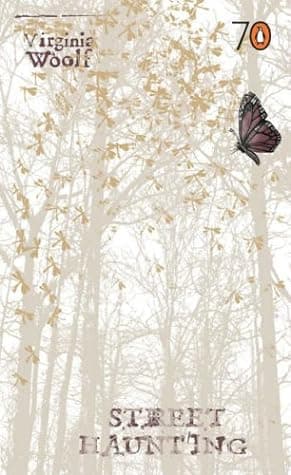
Virginia Woolf (2022)
Genre
Fiction
Reading Time
45 min
Key Themes
See below
Sign in to track this book
A solitary woman wanders London's streets, each encounter a brief look into a human life, each observation a detail in the urban scene.
The unnamed female narrator, feeling a sudden urge to leave her room, decides she needs a new pencil. This small errand becomes her reason for going out into the busy London night. She sheds her personal identity, becoming a detached observer, a 'street haunter.' As she steps out, she feels the changing power of anonymity, becoming part of the city's shared awareness. Going out is not about the pencil itself, but about the experience of observing and the freedom it offers from her individual self.
As the narrator walks, she meets various Londoners. She sees a young shopgirl, perhaps going home, with a thoughtful look. She observes a 'magnificent lady' leaving a taxi, her furs and jewels suggesting a life of luxury. Later, she sees a working-class couple, their interaction hinting at a shared past and quiet happiness. Each meeting is brief, a moment when lives cross, and the narrator projects her own ideas and stories onto these strangers, imagining their inner worlds without truly knowing them.
Despite her brief observations, the narrator feels a strong connection to the people she passes. She feels a shared pulse, a common humanity that links everyone in the city, from the grand lady to the humble shop assistant. This connection is not based on direct talk, but on a sympathetic understanding, a recognition of shared experiences that go beyond social differences. She imagines herself 'inside' their lives, experiencing their joys and sorrows, becoming a channel for their unspoken stories, even as she remains an outside observer.
London is not just a background but an active part of the narrator's journey. Its streets, shops, and lights have a dynamic quality, reflecting and influencing her mood. The changing shadows and the glow of streetlights create an atmospheric setting for her observations. The city's energy, its constant movement and sound, add to her sense of freedom and anonymity. She sees London as a living thing, always changing, showing different sides of itself depending on the time of day and the people who fill its spaces.
The narrator stops before a pawnbroker's shop window, a place that interests her. Inside, a mix of discarded items – a faded dress, a broken clock, a tarnished ring – each tells a silent story of its former owner. These objects, once valued, now await a new fate, holding echoes of past lives. The window acts as a small example of human experience, a place of lost dreams and forgotten memories, further fueling the narrator's imagined stories about strangers' lives.
A particularly clear observation happens when the narrator sees a hunchbacked man, his physical difference making him seem an outsider. Soon after, she meets a strikingly beautiful woman, whose looks seem to embody grace. The strong contrast between these two figures highlights the random nature of human luck and physical form. The narrator thinks about the different experiences and views their appearances must bring, further showing her theme of diverse individual lives within the collective urban space.
Her journey ends at the stationery shop, the original reason for her outing. Inside, she finds an old woman behind the counter, her face showing age and experience. The narrator watches the woman's movements, her quiet manner, and imagines the many years she has spent in this small shop. The old woman represents a different kind of life, perhaps less dramatic but equally rich in its own way. Buying the pencil becomes secondary to her deep observation of the shopkeeper.
With the pencil bought, the narrator starts her walk home. As she retraces her steps, the anonymity and shared awareness she felt earlier begin to fade. Her individual self, with its memories, worries, and personal thoughts, slowly returns. The 'street haunter' persona disappears, and she becomes the singular woman who left her room. This change marks the end of her freeing trip into the public world and the return to the private world of her own mind.
Upon returning home, the narrator feels the familiar weight of her own identity return. The freedom she felt as a detached observer is replaced by the specifics of her own life – her past experiences, her future concerns, her individual joys and sorrows. The impersonal 'I' of the street haunter gives way to the personal 'I' with all its complexities. This change shows how temporary her escape was and the inescapable reality of individual existence.
The new pencil, the small object that started her night adventure, now holds symbolic meaning. It represents her return to her private world, to writing, and to looking inward. The experiences and observations from her 'street haunting' will now be processed and perhaps put into words, letting her explore themes of identity, anonymity, and the rich human life she met.
The Protagonist
She begins by shedding her identity for a liberating experience, and ends by reclaiming it, enriched by her observations.
The Mentioned
Serves as a static observation, contributing to the narrator's understanding of urban lives.
The Mentioned
A static observation, representing a particular social class.
The Mentioned
A static observation, highlighting the diversity of human experience.
The Mentioned
A static observation, creating a thematic contrast.
The Supporting
Serves as a final, tangible observation, bringing the narrator's journey to its practical conclusion.
The main theme explores the conflict between individual identity and the freedom found in anonymity within a busy city. The narrator actively sheds her 'self' to become a 'street haunter,' finding freedom and a wider connection to humanity when free from personal history. This is clear as she steps out, feeling 'no longer myself but a part of something,' and again when her individual identity 'settles back' on her at the end of her journey, showing how temporary this escape is.
“One can shed the self, the daily grind, the personal history, and become for a time a disembodied eye, a wandering spirit.”
The essay focuses on the narrator's sharp observations and her imagined stories about strangers' lives. She doesn't just see; she creates detailed narratives and emotional lives for the shopgirl, the grand lady, or the old woman in the pencil shop. This highlights how subjective perception is and how our minds fill in gaps, turning simple sightings into rich, imagined stories, as seen when she guesses at the 'secret life' of a window display.
“To look is to be possessed, to be possessed is to be transformed.”
London is shown not just as a setting but as a lively character that affects the narrator's experience. Its streets, lights, sounds, and changing moods add to her feeling of freedom and connection. The city helps her change from an individual to an observer, offering a constant flow of stimuli and a sense of shared energy. The city's atmosphere, from its 'dark, shining streets' to its 'many lights,' is key to the essay's mood.
“The city is a kaleidoscope, constantly shifting, constantly revealing new facets of itself.”
The story quietly explores how little we truly know about others, despite our observations and imaginative efforts. The narrator projects her own ideas onto strangers, admitting that these are her own creations. The brief, quick meetings with figures like the hunchback and the beautiful woman show how superficial what can be learned is, suggesting that the real 'truth' of another's life remains mostly hidden, a private space.
“Each life is a novel, full of unwritten pages, untold stories.”
The narrator's thoughts and observations flow freely, often without strict logical progression.
Woolf employs a stream of consciousness technique, allowing the narrator's thoughts, feelings, and sensory perceptions to unfold in a fluid, associative manner. This mirrors the subjective experience of walking through a city, where one's attention drifts from one detail to another, and internal musings intertwine with external observations. This device immerses the reader directly into the narrator's mind and her unique way of perceiving the world.
The pencil represents the narrator's purpose, both mundane and artistic.
The pencil serves as a seemingly mundane object that instigates the entire journey, providing a practical pretext for the narrator's desire to wander. However, it quickly transcends its literal function to become symbolic of her artistic and introspective nature. It represents her return to the act of writing and the processing of her observations, linking her external adventure to her internal creative world.
The narrator embodies the figure of the aimless, observant urban wanderer.
The narrator functions as a 'flâneuse,' a female counterpart to the 19th-century 'flâneur.' This archetype describes an observer of urban life, someone who wanders the city streets with no particular destination, soaking in the sights and sounds, and reflecting on the human condition. Her deliberate shedding of identity and her focus on detached observation perfectly align with this literary figure, allowing for a comprehensive exploration of urban experience.
The juxtaposition of differing elements to highlight themes.
Woolf frequently uses contrast to emphasize her themes. This is evident in the stark juxtaposition of the 'magnificent lady' with the 'shopgirl,' or the 'hunchback' with the 'beautiful woman.' These contrasts highlight the diverse social strata, physical forms, and implied life experiences within the city, prompting the narrator (and reader) to reflect on the arbitrary nature of fortune and the varied tapestry of human existence.
“The mind is a lake, and every passer-by drops a stone in it.”
— Reflecting on the impact of observing others in the city.
“And now, as if to prove the worth of these wanderings, a sudden light breaks over the faces of the people.”
— Describing a moment of clarity and beauty amidst the mundane street scene.
“It is a fact, that in the street, the most important things are happening, and we are missing them.”
— Musing on the overlooked significance of everyday street life.
“What a light, what a vision, what a world, what a truth, what a lie!”
— A rapid succession of thoughts while observing the varied facades of city life.
“To be a street haunter, then, is to be a ghost in the machine, a spirit in the dust.”
— Defining the essence of the 'street haunter' and their detached observation.
“The shop window, then, is a stage; the passers-by are the actors.”
— Viewing the street and its commercial displays as a form of theater.
“One goes out to buy a pencil, and one buys a world.”
— Illustrating how a simple errand can lead to profound observations and experiences.
“And the great city, with its immense crowds, its endless traffic, its perpetual murmur, is a vast phonograph repeating one word over and over again.”
— Reflecting on the overwhelming and monotonous aspects of urban existence.
“For what is the street, after all, but a river of human beings?”
— Using a metaphor to describe the continuous flow of people in the city.
“The true length of a street is not measured by its miles, but by the multitude of thoughts it awakens.”
— Emphasizing the subjective and mental experience of traversing a street.
“Each window is a picture; each face a novel.”
— Highlighting the rich narratives and visual details available to the attentive observer.
“The city is a book, and every street a page.”
— Describing the city as a text to be read and interpreted.
“To be alone in a crowd is the greatest luxury.”
— Expressing the unique freedom and introspection found amidst urban anonymity.
“The street is a sieve, and only the brightest colours, the sharpest sounds, the most striking gestures, remain.”
— Suggesting how the urban environment filters and intensifies sensory input.
Ready to see how well you understood this book? Take our interactive quiz with 10 questions.
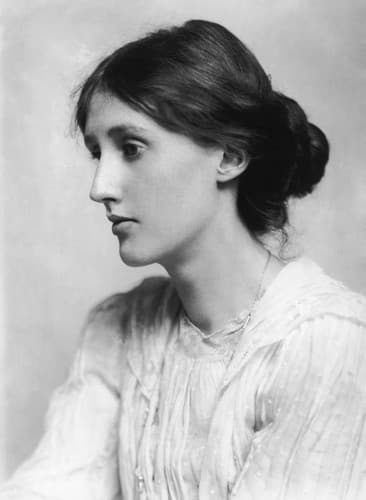
Adeline Virginia Woolf was an English writer. She is considered one of the most important modernist 20th-century authors and a pioneer in the use of stream of consciousness as a narrative device.

Ashley Antoinette
4.6

Mark McDonald
4.4
Luo Guanzhong
4.4
Mia McKenzie
4.3
Dorothy Parker
4.3

Joaquim Maria Machado de Assis
4.3
James Thurber
4.2

Terry Kay
4.2