“The greatest trick the Devil ever pulled was convincing the world he didn't exist. The greatest trick God ever pulled was convincing the world he did.”
— A philosophical musing on belief and deception.


Sign in to track this book
In a universe where murder is an ancient myth, one man’s confession shatters millennia of peace, forcing humanity to confront the terrifying rebirth of primal violence.
The story opens with Kullervo, a member of a highly advanced, peaceful, and long-lived interstellar civilization, confessing to mass murder. For millennia, his society has eradicated violence and death, living in harmonious stasis. Kullervo, however, has systematically murdered dozens of individuals, not through conventional means, but by using his unique training as a 'stone' – a specialized individual capable of manipulating probability and causality. He details how he orchestrated the deaths to appear as natural accidents, exploiting the fabric of reality to achieve his goals without leaving any direct evidence. His confession is not one of remorse, but a calculated unveiling of his motives and methods to a society that struggles to comprehend such an atrocity.
Kullervo elaborates on the nature of 'stones' – individuals born with an innate ability to perceive and subtly influence the probabilistic flow of the universe. This ability allows them to 'nudge' events, making improbable occurrences likely and vice versa. In their peaceful society, 'stones' are employed in specialized, often unseen, roles: ensuring the stability of complex systems, preventing accidents, and even subtly guiding cultural evolution. Kullervo himself was trained in a monastic-like order, honing his skills to an unparalleled degree. He describes the rigorous mental discipline and ethical frameworks instilled in them, making his deviation all the more shocking. His training allowed him to understand the 'grain' of reality, and how to work with it, or, in his case, against it, to achieve his murderous ends.
Kullervo reveals the driving force behind his actions: a deep and unbearable boredom with the static perfection of his civilization. He perceived their long lives and lack of conflict as a form of stagnation, a universe without genuine challenge or meaning. He describes a philosophical crisis, a yearning for something 'real' – even if that reality was death and suffering. He decided that the only way to reintroduce genuine change, to 'break' the perfect stasis, was to commit an act that was utterly unthinkable. His murders were not born of malice in the traditional sense, but from a desperate attempt to reintroduce consequence and meaning into a universe he found sterile. He saw himself as a catalyst, forcing his society to confront the foundations of its existence.
Kullervo recounts the first instances of his murders, explaining the intricate methods he employed. He didn't directly kill anyone; instead, he used his 'stone' abilities to manipulate the probability of rare accidents. A person might slip on an unseen patch of ice, fall from a great height due to a sudden gust of wind, or suffer a fatal malfunction in their personal transport. Each event was individually improbable but, through Kullervo's subtle influence, became inevitable. He took immense care to ensure no two deaths were alike, no pattern emerged that could be easily detected by forensic analysis, which was rudimentary in a society unaccustomed to violent crime. His precision was chilling, demonstrating a mastery over his unique abilities and a deep understanding of human and mechanical frailties.
As the 'accidental' deaths began to accumulate, Kullervo's society struggled to comprehend what was happening. Initially, each death was treated as an isolated, tragic incident. However, as the number grew, a subtle unease spread. Statisticians noted an unprecedented spike in 'random' fatalities, defying all previous models of societal safety. Psychologists grappled with the concept of a murderer, a phenomenon unheard of for millennia. The fabric of their peaceful existence was being subtly eroded by an unseen force. Kullervo observed this unfolding reaction with detached fascination, noting how the return of death was slowly but surely reintroducing fear, suspicion, and a search for answers into a world that had forgotten such emotions.
As the crisis deepened, the governing bodies turned to the 'stones' themselves for a solution. Other 'stones,' less powerful and less malicious than Kullervo, were tasked with investigating the anomalies. They could sense the subtle disturbances in the probabilistic field, the 'wrongness' of the accidents, but Kullervo's mastery was such that he could mask his interventions almost perfectly. The investigators found themselves chasing ghosts, detecting traces of manipulation but unable to pinpoint the source or even confirm malicious intent. Kullervo found this aspect of his plan satisfying, as he was using the very tools of his society's stability against them, forcing them to confront a threat that was fundamentally beyond their understanding and conventional detection methods.
Eventually, Kullervo, having achieved his desired number of victims and seeing the impact on his society, chooses to confess. His confession is not coerced; it is a deliberate act. He does not seek punishment, as the concept of punishment is alien to his culture. Instead, he intends his confession to be a final, undeniable shock to the system. He explains that his true goal was not merely to kill, but to shatter the complacency and existential void of his civilization. He wants them to remember death, to feel fear, to re-evaluate their values, and ultimately, to evolve beyond their current, stagnant state. He believes that only through confronting such an atrocity can they truly appreciate life and find new purpose.
Kullervo's confession plunges his society into an unprecedented crisis. The concept of a trial, of justice, or punishment, is foreign. They struggle with how to even classify his actions, let alone respond to them. The 'trial' becomes a philosophical debate, a public forum where the foundations of their peaceful existence are questioned. Some argue for his eradication, others for his rehabilitation, but all acknowledge the impact he has had. Kullervo remains calm and articulate, continuing to justify his actions as a necessary evil for the greater good of their species. He forces them to confront the possibility that their perfect, deathless existence might actually be a cage, and that he, the murderer, might be their reluctant liberator.
The long-term consequences of Kullervo's actions are profound. His society, unable to simply 'forget' the murders, begins to undergo a fundamental transformation. The concept of death, once eradicated, is now a tangible reality, albeit one brought about by a 'stone.' This forces them to re-examine their values, to appreciate the fragility of life, and to seek new meanings beyond their previous stasis. They begin to explore concepts of risk, challenge, and even the possibility of genuine suffering as pathways to growth. Kullervo's act, though horrific, inadvertently sparks a renaissance of curiosity, innovation, and a renewed sense of purpose, exactly as he had intended. The 'stone' has indeed shattered the glass of their perfect, static world.
The society ultimately decides against any form of traditional punishment for Kullervo, as such a concept remains outside their ethical framework. Instead, they recognize the profound, albeit brutal, catalyst he represented. His fate is left somewhat ambiguous but implies a form of supervised isolation or a continued role as a living reminder of their past complacency and their future potential. He is neither a hero nor a villain in the conventional sense, but a necessary evil that has reshaped their destiny. Kullervo, having achieved his goal of awakening his civilization, seems content with whatever outcome they devise, knowing that he has irrevocably changed the course of their history, bringing back death to carve out new life.
The Protagonist/Antagonist
Kullervo begins as a bored, disillusioned 'stone' and evolves into a self-appointed catalyst for societal change, willing to commit horrific acts for a perceived greater good.
The Supporting
They begin as complacent guardians of a perfect society and are forced to evolve their understanding of life, death, and justice in the face of Kullervo's actions.
The Supporting
They are initially confused and challenged by Kullervo's actions, forcing them to push the boundaries of their 'stone-sense' and confront the dark potential of their powers.
The Mentioned/Collective
Undergoes a profound transformation from a complacent utopia to a society grappling with renewed purpose and understanding of life and death.
The novel explores the idea that a perfect, deathless, and conflict-free existence, while seemingly ideal, can lead to existential boredom and a loss of meaning. Kullervo's society has achieved everything, but in doing so, has lost the impetus for growth and evolution. The absence of death removes the appreciation for life, and the absence of struggle removes the drive for achievement. Kullervo's murders are a desperate attempt to shatter this stasis, to reintroduce the very elements that give life its urgency and value. This theme is central to Kullervo's motivation, as he views his actions as a brutal but necessary 'awakening' for his complacent civilization.
“What is life, if it cannot end? What is joy, if there is no sorrow to define it?”
This theme explores how meaning is derived. In Kullervo's society, purpose has become diluted by endless life and effortless existence. Kullervo argues that true meaning arises from struggle, from the finite nature of existence, and from the choices made in the face of adversity. By reintroducing death, he forces his society to confront the value of their lives and the choices they make within a limited timeframe. The book suggests that without death, life itself can become meaningless, a prolonged, unchallenging existence. His actions, while horrific, are intended to provide a brutal re-education in the pursuit of meaning.
“I gave them back the one thing they had truly lost: the reason to live.”
The novel raises ethical questions about the right to intervene, even with seemingly benevolent intentions. Kullervo, in his attempt to 'save' his society from stagnation, commits mass murder, effectively overriding their collective free will to live in peace. His 'stone' abilities represent the ultimate form of subtle manipulation, blurring the lines between influence and coercion. The story forces readers to consider whether a 'greater good' can justify such extreme measures, and whether the imposition of meaning is truly beneficial if it comes at such a horrific cost. The society's struggle to 'judge' Kullervo highlights this ethical dilemma.
“They were free to choose stagnation. I chose for them, a harder path.”
The narrative explores the paradox within the concept of a perfect society. While ostensibly achieving an ideal state, Kullervo's civilization demonstrates that perfection can be its own undoing. By eliminating all flaws, challenges, and sources of suffering, they inadvertently eliminate the very drivers of evolution, innovation, and appreciation. The 'perfect' society becomes brittle, unable to cope with the unexpected, and ultimately sterile. Kullervo's actions expose the fragility and the hidden costs of such absolute perfection, suggesting that true vitality might reside in imperfection and the capacity for change.
“A universe without edges is a universe without form.”
The power to subtly manipulate probability and causality.
The 'stone' abilities are the central plot device. They allow Kullervo to orchestrate his murders without leaving direct evidence, making him virtually undetectable. This power is not magic, but a highly refined understanding and manipulation of the underlying probabilistic fabric of the universe. It serves to make Kullervo an almost omnipotent, yet unseen, force, highlighting the philosophical nature of his crime rather than a conventional physical conflict. It also creates a unique challenge for his society, as their usual methods of detection are useless against such a subtle and fundamental intervention.
The story is told primarily through Kullervo's detailed, unrepentant confession.
The entire novel is structured as Kullervo's confession, providing direct access to his motivations, methods, and philosophical justifications. This narrative choice immediately establishes his character as complex and intelligent, rather than a simple villain. It allows for deep introspection into his worldview and the nature of his society. By presenting the story as a confession, the focus shifts from a 'whodunit' to a 'whydunit' and 'howdunit,' forcing the reader to engage with the profound ethical and philosophical questions Kullervo raises, rather than merely following a suspenseful plot.
The driving psychological force behind Kullervo's unprecedented actions.
Existential boredom acts as the primary psychological plot device. It is not mere idleness but a deep, philosophical ennui arising from a life without challenge, consequence, or genuine suffering. This boredom is the catalyst for Kullervo's decision to commit mass murder, framing his actions not as typical villainy but as a desperate attempt to reintroduce meaning and purpose into a universe he perceives as sterile. It drives the entire narrative, explaining why someone in a perfect society would commit such an atrocity and allowing for a deeper exploration of the philosophical implications of utopia.
“The greatest trick the Devil ever pulled was convincing the world he didn't exist. The greatest trick God ever pulled was convincing the world he did.”
— A philosophical musing on belief and deception.
“History is a set of lies agreed upon.”
— Reflecting on the nature of historical narratives and their construction.
“Even a stopped clock is right twice a day. And a broken clock might be right more often than you think, if you're willing to adjust your perception of time.”
— Discussing perception, relativity, and the nature of correctness.
“The universe doesn't care about your feelings. It just is.”
— A stark reminder of cosmic indifference.
“We build our prisons out of the things we refuse to let go of.”
— Exploring the self-imposed limitations of attachment.
“Every lie we tell creates a debt to the truth.”
— A reflection on the consequences of dishonesty.
“The future is always a foreign country, even when you've already been there.”
— A paradoxical thought on the nature of time travel and experience.
“To truly know something, you must first forget everything you thought you knew.”
— Advocating for a tabula rasa approach to understanding.
“The greatest weapon against chaos is understanding. The greatest weapon against understanding is fear.”
— Contrasting the forces of order and disorder with human emotion.
“We are all just echoes in the vast, empty halls of eternity.”
— A somber reflection on human insignificance and legacy.
“There are no solutions, only trade-offs.”
— A pragmatic view on problem-solving and compromise.
“The only constant is change, and even that changes.”
— A meta-observation on the nature of flux and impermanence.
“Memory is not a record, but a story we tell ourselves.”
— Examining the subjective and reconstructive nature of memory.
“The greatest distances are not between stars, but between minds.”
— Highlighting the challenges of inter-personal understanding.
Ready to see how well you understood this book? Take our interactive quiz with 10 questions.
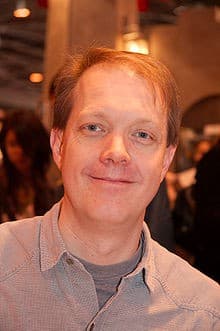
Adam Roberts is a British science fiction author known for his innovative and often philosophical works. His novel "Stone" explores themes of artificial intelligence and consciousness with a distinctive, thought-provoking style. Roberts has a background in literary criticism, which informs his intricate world-building and complex narratives.