“The past is a stubborn ghost, always lurking, always reminding you of what was.”
— Reflecting on the lingering impact of past events and decisions.

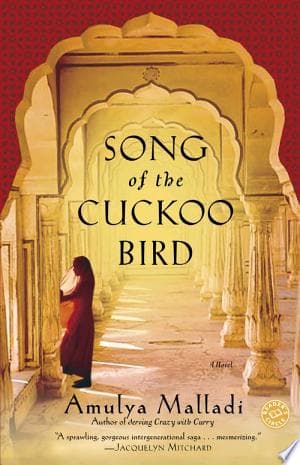
Amulya Malladi (2007)
Genre
Fiction
Reading Time
Varies (exact pages not provided, but typically 6-10 hours for a sweeping epic)
Key Themes
See below
Sign in to track this book
An orphaned eleven-year-old in an Indian epic defies expectations, forming an unconventional family and finding her voice within an ashram through decades of friendship, rivalry, and conviction.
In the 1940s, eleven-year-old orphan Kokila, promised in marriage, arrives at Tella Meda, an ashram by the Bay of Bengal in southern India. She is there to await her wedding, a common practice for poor girls. The ashram, a refuge for women, is run by the strong and kind Amma. Kokila notices the calm yet lively atmosphere, a contrast to her hard life. She watches the other women, each with their own stories, and begins to feel a sense of belonging, even with the approaching marriage she doesn't understand.
Driven by a strong desire for independence, Kokila makes a daring choice that changes her future. Instead of going through with the arranged marriage, she decides to stay at Tella Meda. This decision is a direct rebellion against the expectations for women of her time. She tells Amma, who, seeing Kokila's spirit and potential, allows her to stay. This act sets Kokila apart and starts her unconventional life, where she will choose her own path rather than follow tradition.
As Kokila grows up at Tella Meda, she forms deep and often difficult relationships with the other women there. Among them are the spirited Kamala, the quiet Sita, and the practical Meena. These women become her family, sharing laughter, sorrows, and daily ashram life. However, their bonds are not always smooth. Rivalries appear, especially over Amma's attention or tasks, and different opinions often lead to arguments. Despite these issues, their shared experiences and mutual support create a strong, if sometimes challenging, sisterhood that helps them through hardships.
The story spans several decades, mixing the personal lives of the Tella Meda women with India's political and social changes. They see the struggle for independence from British rule, experiencing the hopes, fears, and eventual success of a new nation. Later, they navigate post-colonial India's challenges, including the Partition, economic changes, and evolving social norms. These larger historical events directly affect their lives, bringing both opportunities and new difficulties. The ashram, while a sanctuary, is not entirely separate from the outside world, forcing its residents to adapt and find their place in a rapidly changing country.
Despite finding a home and family at Tella Meda, Kokila longs for something more, a desire to make a mark beyond the ashram. She feels the burden of being an 'untethered soul' in a society that often ignores women without traditional families. She tries different things, from helping the ashram with practical skills to engaging with local community issues. Her ambition is not always understood, even by her fellow residents, but her determination to define her own worth and contribute drives her, pushing against the limits placed on her gender and background.
As years pass, new generations of women arrive at Tella Meda, each with their own stories of hardship, hope, and resilience. These younger women, often escaping difficult situations or seeking refuge, bring new views to the ashram. Their presence sometimes causes generational clashes with older residents, including Kokila, as traditional values meet new ideas. However, it also revitalizes the community, ensuring Tella Meda's unique family structure continues. Kokila, now an elder, becomes a mentor, guiding and learning from these newcomers, reflecting on her own past choices through their experiences.
Life at Tella Meda includes sorrow. The women experience losses, including the deaths of loved ones, the departures of others who choose different paths, and the constant struggle against poverty and illness. These losses test their individual and collective resilience. Each departure leaves a void, forcing the remaining women to face their grief and reaffirm their commitment to one another. Through these times of mourning and rebuilding, their bonds deepen, showing the lasting strength of their makeshift family, proving that even with heartbreak, their collective spirit continues.
Amma, the wise matriarch of Tella Meda, guides the ashram's existence. Her leadership provides stability and a moral compass for the women who seek refuge there. She acts as a mother figure, mentor, and peacemaker, embodying the ashram's philosophy of compassion and self-reliance. Her wisdom often comes through parables and gentle guidance, helping the women with their personal struggles and outside challenges. Amma is central to Kokila's growth, and her teachings form the basis of the community, ensuring that even after her death, her legacy shapes the lives of all who call Tella Meda home.
Throughout her life at Tella Meda, Kokila often thinks about her decision to reject marriage and stay at the ashram. She questions if she made the right choice, especially during lonely times, when judged by society, or when seeing others' traditional family lives. These internal struggles are a recurring theme, showing the sacrifices she made for her independence. However, each time, she reaffirms her choice, recognizing the freedom and self-discovery her path has given her. Her reflections explore individual agency versus societal expectations, affirming the value of choosing one's own destiny, even if it is unconventional.
Despite their struggles and unconventional lives, the women of Tella Meda find comfort and joy in their makeshift family. Their shared experiences, mutual support, and daily pleasures within the ashram become their anchors. They celebrate small victories, share stories, and offer comfort during distress. This collective existence, born out of necessity, grows into a deep and lasting bond that goes beyond traditional family structures. They discover that true family is not always defined by blood or societal norms, but by the love, loyalty, and support found in unexpected hearts and places.
The Protagonist
Kokila transforms from a naive orphan into a wise and respected matriarch, continuously affirming her choice for an independent life.
The Supporting
Amma remains a consistent source of wisdom and stability, establishing a lasting legacy through the ashram's continued existence.
The Supporting
Kamala learns to channel her fiery spirit into constructive leadership and unwavering loyalty to her chosen family.
The Supporting
Sita develops her artistic voice and finds strength in her gentle nature, becoming a steadying presence within the ashram.
The Supporting
Meena solidifies her role as the pragmatic backbone of the ashram, her practical skills proving invaluable to its survival.
The Supporting
Lakshmi integrates into the ashram, learning from the elders while bringing new energy and perspectives to the community.
The Mentioned
N/A - He is not a developing character, but a catalyst for Kokila's initial decision.
This theme explores women's ability to make choices and define their own lives, especially in a society with strict gender roles. Kokila's initial decision to reject an arranged marriage and stay at Tella Meda is the main act of agency. The ashram itself shows this theme, providing a space where women can live independently, follow their own paths, and support each other outside of traditional structures. The women's struggles to make their mark in a country that often marginalizes 'untethered souls' highlight the ongoing fight for self-determination.
“Instead of becoming a wife and mother, youthful passion drives Kokila to remain at the ashram.”
The novel examines how family forms, often beyond biological ties. The women of Tella Meda, brought together by various circumstances and shared experiences, create a deep, lasting, and unconventional family. They are 'sometimes her friends, sometimes her enemies, but always they are her family.' This theme shows that love, loyalty, and support are not only for blood relatives but can be found in chosen communities. The ashram becomes a refuge where these outcasts make a home and find comfort in each other, showing the strength of collective belonging.
“Sometimes they are her friends, sometimes they are her enemies, but always they are her family.”
The characters, especially Kokila and the other women of Tella Meda, show great resilience in the face of personal hardship, societal judgment, and national upheaval. They survive poverty, loss, and India's history, from the struggle for independence to its aftermath. Their ability to adapt, support each other, and keep hope despite difficulties is central to the story. The ashram itself is a symbol of survival, lasting through generations as a haven for women seeking refuge and a new start.
“She struggles to make her mark in a country where untethered souls like hers merely slip through the cracks.”
The novel is set against India's journey from the 1940s to the present, showing the tension between traditions and modern ideas. Kokila's initial choice challenges the tradition of arranged marriage. The ashram, while a traditional structure in some ways, functions as a modern space for female independence. The arrival of younger generations at Tella Meda further highlights this theme, as new perspectives and societal changes inevitably clash with, and sometimes blend into, established ways of life, reflecting India's own transformation.
“Careening from the 1940s to the present day, Song of the Cuckoo Bird chronicles India’s tumultuous history as generations of a makeshift family seek comfort and joy in unlikely places.”
A physical and symbolic sanctuary for women, fostering an unconventional family.
Tella Meda serves as more than just a setting; it is a central plot device. Functioning as a sanctuary, it provides a physical space for women to escape societal pressures and forge independent lives. Symbolically, it represents freedom, chosen family, and female solidarity. Its existence allows the narrative to explore themes of agency and community, providing the necessary environment for Kokila and the other women to develop and interact. The ashram's longevity and adaptability over decades underscore its significance as a haven and a testament to resilience.
The narrative's timeline, from the 1940s to the present, mirrors India's historical changes.
The extensive timeline, covering several decades of Indian history, is a crucial plot device. It allows the author to show the long-term impact of Kokila's choices and the evolution of the Tella Meda community. By setting the story against India's tumultuous past, including its independence movement and subsequent social changes, the personal struggles of the characters are amplified and contextualized within broader national narratives. This device highlights how historical events directly influence individual lives and the resilience required to navigate a changing world.
Symbolizes freedom, homelessness, and the longing for a place to belong.
While not explicitly detailed in the provided description, the title 'Song of the Cuckoo Bird' strongly suggests a recurring motif. The cuckoo bird is often associated with rootlessness, not building its own nest, but also with its distinctive, far-reaching song. This likely symbolizes the 'untethered souls' like Kokila, who choose unconventional paths and don't fit into traditional societal 'nests.' It can represent their longing for belonging, their unique voices, and the freedom they gain, despite the potential for loneliness or societal displacement. The 'song' might represent their enduring spirit and impact.
“The past is a stubborn ghost, always lurking, always reminding you of what was.”
— Reflecting on the lingering impact of past events and decisions.
“Sometimes, the greatest strength lies in knowing when to let go, even if it hurts.”
— A character grappling with a difficult decision to move on from a cherished but damaging situation.
“Silence can be a comfort, a sanctuary where thoughts can finally breathe.”
— A moment of quiet introspection amidst chaos, finding solace in solitude.
“Hope is a fragile bird, easily frightened, but it never truly leaves, just hides.”
— During a period of despair, a character holds onto a glimmer of optimism.
“The weight of unspoken words can be heavier than any physical burden.”
— A character struggling with secrets and the desire to confess.
“Love, in its truest form, is not about possession, but about allowing freedom.”
— A realization about the nature of genuine affection and respect.
“Every ending is just a new beginning disguised as loss.”
— A character finding perspective after experiencing a significant life change.
“The heart has its own language, one that often defies logic and reason.”
— Describing the irrational yet powerful emotions driving a character's actions.
“We are all stories waiting to be told, and some are just harder to read.”
— Reflecting on the complexity of human lives and hidden narratives.
“Forgiveness is not about forgetting, but about releasing the chains of resentment.”
— A character's journey towards healing after a betrayal.
“Sometimes the greatest lessons are learned in the quiet moments, not the loud ones.”
— A character reflecting on a profound insight gained from a period of contemplation.
“The world keeps turning, indifferent to our joys and sorrows, yet we must keep living.”
— A moment of philosophical reflection on the human condition amidst life's indifferent flow.
“Home is not a place, but a feeling, a sense of belonging that resides within you.”
— A character searching for a sense of stability and belonging after displacement.
“The smallest act of kindness can echo through eternity, changing lives in ways we never foresee.”
— Highlighting the ripple effect of compassion and empathy.
Ready to see how well you understood this book? Take our interactive quiz with 10 questions.

Amulya Malladi is an Indian-American author known for her insightful fiction that often explores themes of cultural identity and personal relationships. Her notable works include "The Mango Season" and "Song of the Cuckoo Bird." Malladi's writing is recognized for its evocative prose and relatable characters, drawing from her own experiences and observations.

Ashley Antoinette
4.6

Mark McDonald
4.4
Luo Guanzhong
4.4

Mia McKenzie
4.3

Dorothy Parker
4.3

Joaquim Maria Machado de Assis
4.3

James Thurber
4.2

Terry Kay
4.2