“There are battles that are won in defeat and defeats that are won in victory.”
— A reflection on the nature of war and its outcomes, particularly relevant to the Spanish Civil War.

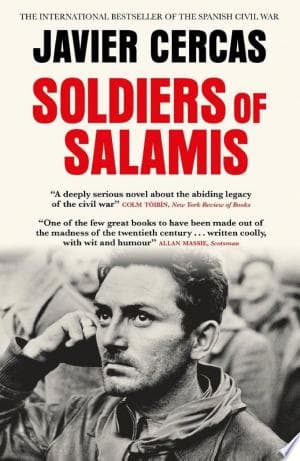
Javier Cercas (2019)
Genre
Fiction
Reading Time
240 min
Key Themes
See below
Sign in to track this book
In the chaos of the Spanish Civil War, a fascist writer escapes execution twice, first from a firing squad, then by the mercy of an unknown militiaman. A modern writer searches for the soldier who chose compassion.
Javier Cercas, a writer struggling with writer's block and a failing marriage, is encouraged by his editor, Conchi, to write about Rafael Sánchez Mazas, a Falangist writer who survived a firing squad in the Spanish Civil War. Cercas initially resists, finding the topic too political and uninteresting. However, Conchi insists that Sánchez Mazas's escape, especially the unknown militiaman who spared his life, has a unique human element that could appeal to readers and offer a new view of the conflict. She believes this untold story could help him overcome his writing slump and renew his passion for writing.
Cercas begins his research, looking into the final days of the Spanish Civil War. He learns that on January 30, 1939, Rafael Sánchez Mazas was one of fifty Nationalist prisoners set to be executed by Republican forces in the Sanctuary of Collell. During the chaotic firing squad, Sánchez Mazas escaped into the thick forest. A militiaman from the search party found him hiding. Instead of killing him, the militiaman simply looked him in the eye and walked away, telling his comrades, 'There's no one here.' Sánchez Mazas then hid for several days with the help of local Republican supporters, the 'Children of the Forest,' before rejoining Nationalist lines. This act of mercy becomes the main puzzle Cercas wants to solve.
Cercas travels to the area where Sánchez Mazas hid, looking for people who might know about his escape. He interviews several elderly men, the 'Children of the Forest,' who, as teenagers, had helped shelter Sánchez Mazas. These men, despite their Republican views, gave food and shelter to the Falangist writer, showing an unexpected act of humanity during the brutal conflict. Their stories show the moral difficulties of the war, where personal kindness sometimes went beyond political loyalty. Cercas notes their hesitation to speak openly, suggesting the lasting pain and divisions of the past. Their accounts confirm the main details of Sánchez Mazas's survival and the local help he received.
As Cercas reconstructs Sánchez Mazas's escape, he shifts his focus from the Falangist writer to the anonymous Republican militiaman who chose not to kill him. This soldier, for Cercas, represents a deep act of moral courage and becomes the true hero of the story. Driven to understand this unique moment of grace, Cercas begins a dedicated search to identify the militiaman. He searches through archives, interviews veterans, and follows every lead, hoping to find a name and face for this mysterious figure. The search becomes an almost spiritual journey for Cercas, who believes finding the soldier will reveal a deeper truth about human nature and the war itself.
Cercas investigates Rafael Sánchez Mazas's life after the Civil War. He finds that Sánchez Mazas became an important figure in Franco's government, serving as a minister and a cultural leader for the Falange. He helped shape the official story of the Nationalist victory. Despite his high position, Sánchez Mazas never publicly recognized the militiaman who saved him, nor did he fully tell the details of his escape in a way that highlighted the act of mercy. This omission makes Cercas think about Sánchez Mazas's character and his selective memory, further strengthening the writer's belief that the unknown soldier's story is the more compelling and morally important one.
During his research, Cercas meets Jaume Miralles, a Republican veteran living in France. Miralles fought in the International Brigades and survived several concentration camps. He is at first unwilling to talk about the war, burdened by his past and the memory of lost friends. However, as Cercas explains his search for the unknown soldier, Miralles's manner subtly changes. He has a quiet dignity and a deep understanding of the war's human cost. Cercas begins to suspect that Miralles might know something about the militiaman, or even be the person he is looking for, or at least a close friend.
Miralles, though never directly confirming his role in Sánchez Mazas's escape, shares his own broken but clear memories of the war. He talks about the friendship, the brutality, and the disappointment of the Republican cause. He describes his experiences fighting on different fronts, his capture, and his later imprisonment in French concentration camps, where he saw terrible suffering. His story is less about specific events and more about the emotional and psychological cost of war. Cercas listens closely, putting together Miralles's character and looking for clues that might connect him to the key moment in Collell. Miralles's strength and quiet pain deeply affect Cercas.
As Cercas spends more time with Miralles, a strong, unspoken understanding grows between them. Miralles never directly admits to being the militiaman who spared Sánchez Mazas, nor does he deny it. However, his reactions, his deep humanity, and his hidden hints strongly suggest he was at Collell. Cercas sees Miralles's physical and emotional scars, recognizing the deep weight of his experiences. He realizes that a direct confession might not be needed and even disrespectful, given Miralles's quiet dignity and the burden of his past. The truth, for Cercas, lies in Miralles's character rather than in a verbal confirmation.
Cercas concludes that whether Miralles was the exact militiaman or not, he represents the spirit of that unknown soldier – a man who, in the midst of war's dehumanizing chaos, chose humanity. Miralles becomes for Cercas a symbol of the many anonymous heroes whose acts of courage and compassion were ignored by official history. He represents the 'defeated' side, whose stories were suppressed or forgotten. Cercas realizes that his book is no longer just about Sánchez Mazas's survival, but about honoring the moral integrity of people like Miralles, whose quiet heroism offered a different story from the main historical accounts of the Spanish Civil War. Miralles's existence confirms Cercas's initial feeling about the true heart of the story.
The research and writing of 'Soldiers of Salamis' deeply affect Javier Cercas. His initial doubt and creative block turn into a renewed sense of purpose and a deeper understanding of history, memory, and morality. The search for the unknown soldier, and his meetings with figures like Miralles, force him to question his own ideas about heroism and the nature of truth. His personal life also seems to find a new balance as he commits to this meaningful project. The book becomes more than a historical account; it is a personal journey for Cercas, leading to his artistic and personal renewal.
After its completion and publication, 'Soldiers of Salamis' receives critical praise and becomes a notable literary success. Cercas reflects on the book's reception, noting how it started conversations about the Spanish Civil War, memory, and the often-ignored stories of the defeated. He acknowledges that while he may never definitively prove Miralles was the militiaman, telling the story, giving voice to the voiceless, is what truly matters. The book's impact is not in providing clear answers, but in asking deep questions about humanity, forgiveness, and the complex link between individual actions and historical stories. It challenges readers to rethink their understanding of heroism and the complex truths of the past.
The Protagonist
From a cynical and creatively stagnant writer, Cercas evolves into a passionate, morally committed investigator and storyteller, finding personal and artistic redemption through his search for the truth.
The Central Figure (initial focus)
His story begins as a miraculous escape, but as Cercas delves deeper, his post-war actions and silences complicate his heroic image, shifting the focus to the man who saved him.
The Supporting / Embodiment of Heroism
Miralles remains largely unchanged in his stoicism, but his presence and stories profoundly change Cercas, becoming the living symbol of the book's central theme of forgotten heroism.
The Supporting
She remains a consistent support and guide, witnessing Cercas's transformation through his writing process.
The Supporting / Collective
They offer fragmented but vital pieces of the past, their role remaining consistent as witnesses to a specific historical event.
The Symbolic / Pivotal Figure
His singular act of mercy drives the narrative, remaining a fixed point of moral significance that Cercas seeks to understand and honor.
The novel explores how history is made, remembered, and forgotten, especially concerning the Spanish Civil War. Cercas grapples with official stories versus individual, often suppressed, memories. He shows how the winners write history, which silences certain stories, such as that of the unknown militiaman or the 'Children of the Forest.' The broken nature of memory, the reluctance of survivors like Miralles to speak, and the protagonist's own struggle to put the past together all highlight how elusive and personal historical truth is. The book itself is an act of historical recovery, trying to give voice to those who were ignored.
“History is a matter of fragments, of scraps, of conjectures, of doubts, of things that are never entirely clear.”
A main theme is the rethinking of heroism. The novel compares the traditional, politically approved heroism of figures like Rafael Sánchez Mazas (a Falangist leader) with the quiet, moral courage of the unknown militiaman and, finally, Miralles. Cercas argues that true heroism is not in grand political acts or military wins, but in individual acts of humanity, mercy, and integrity, especially when facing extreme violence and strong hatred. The militiaman's choice to spare an enemy's life is presented as the greatest act of heroism, one that goes beyond the brutal logic of war and party lines.
“Perhaps the greatest heroes are those who are never recognized, those who perform an act of humanity when it is hardest.”
Cercas, as both the author and the main character, constantly blurs the lines between journalistic investigation, historical fact, and fictional narrative. He acknowledges the difficulties in rebuilding the past, especially when relying on broken memories and conflicting accounts. The novel questions whether absolute historical truth is ever possible, suggesting that a writer's role might be to create a 'truth' that feels right emotionally and morally, even if some details remain unconfirmed. The lack of clarity around Miralles's identity as the unknown soldier is a prime example of this interplay, where the spirit of the truth is more important than factual certainty.
“A writer is someone who, rather than telling the truth, invents it, or rather, invents a truth.”
The act of the unknown militiaman sparing Sánchez Mazas's life is a deep gesture of reconciliation and forgiveness, even if the recipient never acknowledged it. The novel subtly explores the possibility of healing the deep wounds left by the Civil War, not by forgetting, but by understanding and recognizing acts of humanity from all sides. Cercas's search itself can be seen as an attempt to bridge divides and encourage a more complex understanding of the conflict, moving beyond simple victim-perpetrator stories. Miralles's quiet dignity, a victim of the war yet free of bitterness, further shows this theme.
“Sometimes, the greatest act of courage is not to kill, but to let live.”
The author is also the protagonist, blurring the lines between reality and narrative.
Javier Cercas, the author of the novel, is also the central character, Javier Cercas, a writer researching the story. This metafictional approach allows the novel to explore the process of writing, the challenges of historical research, and the subjective nature of truth. It makes the reader privy to Cercas's doubts, frustrations, and moral dilemmas, immersing them in the creation of the story itself. This device also allows for self-reflection on the ethics of storytelling and the responsibility of the writer.
The contemporary investigation frames the historical events of the Spanish Civil War.
The story is structured with Javier Cercas's contemporary investigation into the past forming the outer frame. Within this frame, the historical events of Rafael Sánchez Mazas's escape and the Spanish Civil War are recounted. This allows the novel to move fluidly between past and present, showing how historical events continue to resonate and shape the present. The frame narrative emphasizes the ongoing effort to understand and interpret history, rather than presenting it as a static, resolved entity.
While Cercas strives for truth, his personal biases and the subjective nature of memory subtly influence the narrative.
Although Cercas is earnest in his pursuit of truth, the narrative implicitly acknowledges the inherent subjectivity of his quest. He relies on fragmented memories, conflicting testimonies, and his own interpretations. The ambiguity surrounding Miralles's identity as the unknown soldier highlights this. Cercas's desire for a 'hero' influences his interpretation, making the narrative a personal truth rather than an objective historical account. This challenges the reader to consider the constructed nature of any historical or personal story.
Cercas embarks on a journey to find a person and uncover a moral truth.
The novel is structured around Javier Cercas's quest to identify the unknown militiaman who saved Sánchez Mazas. This quest is not merely a journalistic investigation but a deeply personal and moral journey. It drives the plot forward, leading Cercas to various locations and encounters, and ultimately transforms him. The quest represents a search for meaning, for a forgotten act of humanity, and for a deeper understanding of the Spanish Civil War's complex legacy, transcending simple factual retrieval.
“There are battles that are won in defeat and defeats that are won in victory.”
— A reflection on the nature of war and its outcomes, particularly relevant to the Spanish Civil War.
“The past is never dead. It's not even past.”
— Although a famous quote by Faulkner, it's evoked in the novel to describe the lingering presence of the Spanish Civil War.
“To forget is to die a little.”
— Highlighting the importance of memory and the dangers of historical amnesia.
“We are all the children of our circumstances.”
— A character's observation on how individuals are shaped by the historical and personal events they experience.
“The truth is always more complex than we imagine.”
— A recurring theme in the novel as the narrator uncovers layers of ambiguity and contradiction in his research.
“Perhaps courage is simply the ability to go on when you can't.”
— Reflecting on the nature of bravery in desperate situations, particularly during wartime.
“History is not what happened, but what we remember.”
— Emphasizing the subjective and constructed nature of historical narratives.
“Every man has his own war, his own defeat, his own victory.”
— Suggests that personal struggles and triumphs are as significant as grand historical events.
“Sometimes the greatest acts of humanity are committed by the most unexpected people.”
— Referring to the republican soldier's decision to spare Sánchez Mazas's life.
“The dead speak, but only if we listen.”
— Underscoring the importance of historical inquiry and giving voice to past events and individuals.
“There are no heroes, only men who do what they have to do.”
— A demystification of heroism, portraying it as a result of necessity rather than inherent greatness.
“Memory is a fragile and treacherous thing.”
— The narrator's struggle to piece together accurate accounts from conflicting testimonies and fading recollections.
“In war, the lines between good and evil often blur.”
— A commentary on the moral ambiguities and difficult choices faced by individuals during conflict.
“To understand the present, you must confront the past.”
— The core motivation behind the narrator's investigation into the Spanish Civil War.
Ready to see how well you understood this book? Take our interactive quiz with 10 questions.
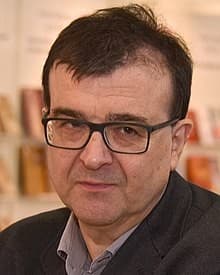
Javier Cercas Mena is a Spanish writer and professor of Spanish literature at the University of Girona, Spain.

Ashley Antoinette
4.6

Mark McDonald
4.4
Luo Guanzhong
4.4
Mia McKenzie
4.3
Dorothy Parker
4.3
Joaquim Maria Machado de Assis
4.3
James Thurber
4.2
Terry Kay
4.2