Devon C. Ford is a contemporary fiction author whose debut novel, "Society," explores themes of social hierarchy and personal ambition. Ford's writing is characterized by its sharp wit and insightful commentary on modern life. While "Society" is his most recognized work, his background in sociology informs his nuanced portrayals of characters and their societal interactions.
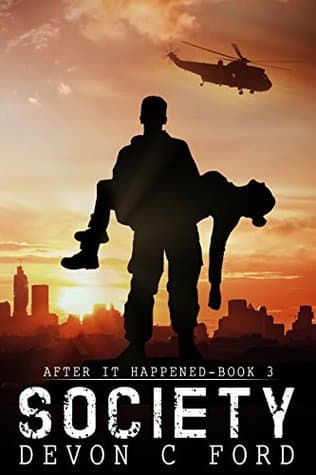
Archivist's Choice
Society
Devon C. Ford (2016)
Genre
Science Fiction
Reading Time
12 Minutes
Key Themes
See below
Track Your Reading
Sign in to track this book
After gaining prosperity, a besieged society must use its darkest methods to defend its home from relentless external threats.
Synopsis
In a post-apocalyptic world, a secluded society of survivors has managed to thrive and build a new home amidst the ruins. However, their prosperity makes them a target for other desperate factions. When their settlement comes under siege, the survivors are forced to confront the brutal realities of their existence and respond with extreme measures to protect their way of life. The narrative explores the moral compromises and inherent savagery required to ensure survival in a world where resources are scarce and humanity's darker impulses are unleashed, raising the question of whether maintaining their society necessitates the loss of their humanity.
Difficulty
Medium
Pacing
Fast
Mood
Gritty, tense, bleak, action-packed
Plot Summary
A New Beginning, A Lingering Threat
Years after the collapse, survivors in the Valley have built a self-sufficient and prosperous society. Led by figures like Marcus, they've created a functioning community, growing crops, raising livestock, and maintaining order. However, the 'Scourge' – the event that destroyed the old world – still affects them. Their cautious nature and the fortified perimeter around their settlement show this. Children born in the Valley know only this new world, unaware of the past's luxuries and complexities. The community focuses on defense, with regular patrols and a sharp awareness of dangers beyond their walls, especially mutated creatures and other human groups.
First Contact, First Conflict
A small scouting party, led by Marcus and his trusted lieutenants, goes beyond the Valley's immediate defenses to check the surrounding area. Their main goal is reconnaissance, looking for resources and potential threats. They encounter a group of heavily armed raiders, a common sight in the lawless post-apocalyptic world. The meeting quickly turns into a brutal firefight. The Valley scouts, though skilled, are outnumbered. They inflict casualties but are forced to retreat, suffering losses. This incident reminds them that despite their prosperity, the Valley is not safe. Hostile forces are active nearby, threatening their peace.
The Council Convenes
After the skirmish, the Valley's governing council, made up of elders, military leaders, and community representatives, meets to discuss the increasing number and aggression of outside threats. Opinions are split: some favor a defensive stance, reinforcing walls and avoiding direct conflict; others, like Marcus, argue for a more active approach, believing passivity will invite more attacks. The debate is intense, showing the community's fear and their desire to protect their way of life. They decide to strengthen defenses and prepare for potential offensive actions, acknowledging that their current plan might not be enough to deter a determined enemy.
Whispers of a Larger Force
During a later defensive engagement, the Valley forces capture a few raiders alive. Through questioning, they learn unsettling information: the raiders are not an isolated group but part of a larger, organized faction called the 'Warlord's Army.' This army is led by a ruthless individual who wants to expand his territory and control resources. The Valley, with its fertile land and thriving community, is a prime target. The news shocks the Valley. They realize they face not just sporadic banditry but a systematic invasion, requiring a unified and strategic response beyond simple defense.
Preparing for War
With the Warlord's Army threatening, the Valley prepares for war. Every able-bodied citizen helps, from reinforcing perimeter walls and setting traps to stockpiling food and ammunition. Training for the militia increases, with new recruits practicing combat tactics and defensive maneuvers. Marcus and his military advisors create detailed battle plans, anticipating various attack routes. The community's morale is a mix of fear and determination; they know their survival depends on fighting as one. Old rivalries and minor disagreements are put aside as the common enemy unites them against a shared threat.
The First Wave
The Warlord's Army launches its expected assault. The attack is relentless and overwhelming, with waves of heavily armed raiders trying to breach the Valley's defenses. The Valley defenders, though prepared, face a brutal attack. They use their knowledge of the terrain, their fortified positions, and their disciplined training to repel the initial advances. Casualties mount on both sides, but the Valley's resolve holds. The battle shows their resilience and effective preparations, but it also highlights the attackers' sheer numerical superiority and ferocity, signaling a prolonged and costly conflict.
Desperate Measures
As the siege continues, the Valley's resources become strained. Ammunition grows scarce, and medical supplies dwindle. The constant fighting wears down the defenders, physically and mentally. The council discusses drastic measures, including a possible counter-offensive to disrupt the Warlord's supply lines or assassinate key commanders. This is a high-risk plan, as it would expose their limited forces to the full strength of the enemy. Marcus, though cautious, sees the need for such a move to break the siege and prevent their society's collapse. Pressure builds to make a decision that will determine their fate.
The Turning Point
A small, elite strike team, led by Marcus, carries out a daring night raid on a key Warlord's encampment. Their goal is to destroy supply caches, disable siege weapons, and create chaos among the enemy ranks. The mission is dangerous, and the team faces fierce resistance. However, their precision and bravery succeed. They destroy vital resources and inflict significant damage, creating disorder within the Warlord's Army. This tactical victory, though not decisive, boosts the Valley's morale and shows that the Warlord's forces are not invincible. It buys them precious time and renews their will to fight.
An Alliance of Necessity
Realizing they cannot win alone, the Valley sends envoys to neighboring, smaller survivor communities, some of whom they've had cautious contact with. These communities are also threatened by the Warlord's expansion, though perhaps less directly. The envoys ask for an alliance, offering shared resources and a united front against the common enemy. While some groups hesitate, fearing the Warlord's wrath, others, recognizing the threat, agree to join forces. This alliance, though fragile, gives the Valley needed reinforcements and resources, slightly shifting the balance of power.
The Final Battle
With reinforcements from their allies, the Valley launches a coordinated counter-attack against the Warlord's main forces. This final battle is brutal and chaotic, involving skirmishes across multiple fronts. The combined forces use innovative tactics, exploiting weaknesses in the Warlord's command structure and overwhelming their positions. Marcus leads his troops, inspiring them. The Warlord's Army, though still strong, begins to falter under the sustained pressure and the unexpected resilience of their opponents. This confrontation will determine the Valley's fate and potentially set a precedent for future interactions among survivor groups.
Victory and Its Cost
After a grueling and costly battle, the Warlord's Army is broken, and the Warlord himself is killed or captured, ending his reign. The Valley wins, but at a tremendous cost. Many lives are lost, and resources are depleted. The community is scarred by the conflict, but they have shown their resilience and ability to act together. The victory solidifies their position as a formidable force in the post-apocalyptic world, but it also makes them confront the future: how to rebuild, how to maintain alliances, and how to prevent such a devastating conflict from happening again.
Rebuilding and Reflection
In the aftermath of the war, the Valley begins the hard task of rebuilding. Homes are repaired, fields are replanted, and the dead are mourned. The alliances made during the conflict strengthen, leading to a new era of cooperation and shared defense among survivor communities. Marcus and the council face the challenge of integrating new members and establishing a stronger regional defense network. They reflect on the brutality they had to use to survive, questioning the balance between necessary force and the values they uphold. The experience has hardened them, but also reinforced their commitment to their collective future.
Principal Figures
Marcus
The Protagonist
Marcus evolves from a defensive leader to a proactive strategist, embracing necessary savagery to protect his society and forging alliances to ensure its long-term survival.
The Warlord
The Antagonist
The Warlord's arc is one of escalating aggression and ultimate defeat, serving as the catalyst for the Valley's transformation.
Lena
The Supporting
Lena's arc demonstrates her unwavering loyalty and crucial tactical contributions, solidifying her role as an indispensable leader.
Elder Thomas
The Supporting
Elder Thomas initially advocates for caution but ultimately accepts the necessity of aggressive defense, representing the community's evolving understanding of survival.
Kael
The Supporting
Kael grows from an eager but inexperienced youth into a hardened and capable warrior, symbolizing the maturation of the Valley's next generation.
The Allied Leader (various)
The Supporting
These leaders overcome their initial distrust to form a crucial alliance, demonstrating the power of unity in the face of overwhelming odds.
Dr. Anya Sharma
The Supporting
Dr. Sharma's arc showcases her resilience and critical importance in maintaining the health and morale of the community under extreme pressure.
Jax
The Supporting
Jax's arc reinforces the importance of experience and practical skills in survival, proving his continued value to the community despite his age.
Themes & Insights
The Nature of Society in Collapse
The novel explores what makes a society when traditional structures have collapsed. It looks at the balance between staying human and using brutality to survive. The Valley tries to rebuild a moral and structured society, while the Warlord's Army represents anarchy and might-makes-right. The conflict forces the Valley to consider how much of its 'society' it will change to survive, questioning if the ends justify the means in a brutal world.
“We built this place on hope and hard work, but the world outside only understands one language: force. If we don't speak it, we'll be erased.”
Survival vs. Humanity
A main theme is the constant tension between the need for brutal, often violent, survival tactics and the desire to uphold human values, empathy, and morality. The Valley community seeks peace and order but must repeatedly respond with 'savagery' to protect itself. This internal conflict is clear in council debates and the personal struggles of characters like Marcus. The novel asks how much humanity can be compromised before survival becomes no different from the barbarism it fights.
“How many monsters do we have to become to protect what little humanity we have left?”
The Price of Prosperity
The Valley's success in creating a prosperous and self-sufficient community makes it a target. This theme explores how security and abundance in a post-apocalyptic world are not only hard to achieve but also unstable, attracting the envious and predatory. The novel shows that prosperity comes with the heavy cost of constant vigilance and the willingness to defend what has been built. It highlights the vulnerability of success in a lawless environment and the constant struggle to protect one's gains.
“Our fields grow food, our people grow strong. That makes us a beacon, and a target, in equal measure.”
Unity and Alliance
The novel shows the importance of unity and cooperation, both within a community and among different groups, for collective survival. Initially, the Valley tries to stand alone, but the growing threat forces them to see the need for alliances. The formation of a coalition against the Warlord's Army shows that even in a world broken by catastrophe, strength in numbers and shared purpose can overcome great odds. This theme suggests that true 'society' extends beyond individual settlements to include broader networks of mutual support and defense.
“Alone, we are just another meal for the wolves. Together, we are a pack.”
Plot Devices & Literary Techniques
The Siege
A prolonged military blockade and assault.
The siege is a central plot device, driving much of the narrative tension and character development. It creates a confined, high-stakes environment where resources dwindle, and morale is constantly tested. The prolonged nature of the siege forces the Valley to innovate, adapt, and make increasingly desperate decisions, highlighting their resilience and the brutal cost of survival. It serves as a crucible, forging their identity and testing the very foundations of their society, pushing them to their limits and revealing their true nature under extreme pressure.
The Unseen Threat (initially)
The presence of a larger, organized enemy revealed gradually.
Initially, the threats to the Valley are perceived as sporadic raider attacks. This device creates a sense of escalating danger as the true nature of the Warlord's Army is gradually revealed through captured enemies and reconnaissance. The 'unseen' or underestimated nature of the threat builds suspense and emphasizes the Valley's initial complacency or misjudgment. It forces a dramatic shift in their strategy from mere defense to active, preventative measures, demonstrating how ignorance of a true enemy can be just as dangerous as the enemy itself, leading to a more profound understanding of their perilous situation.
The Resource Scarcity
Dwindling supplies during the conflict.
Resource scarcity, particularly of ammunition, food, and medical supplies, acts as a powerful plot device throughout the siege. It constantly raises the stakes, forcing difficult decisions regarding rationing, risky supply runs, and the consideration of desperate, often dangerous, tactics. This scarcity amplifies the feeling of desperation and realism, showing the tangible pressures on the community. It underscores the fragility of their self-sufficiency and highlights the brutal economic realities of a post-apocalyptic existence, where every bullet and every meal can mean the difference between life and death.
The Moral Dilemma
Choices between ethical conduct and brutal necessity.
The moral dilemma is a recurring device, particularly for Marcus and the Valley Council. They are constantly faced with choices that pit their desire to maintain a civilized society against the brutal necessities of survival in a lawless world. Examples include interrogating prisoners, launching preemptive strikes, or deciding how much 'savagery' to adopt in their defense. This device explores the grey areas of morality in extreme circumstances, forcing characters and readers to question where the line is drawn and what price is paid for survival when the very definition of humanity is at stake.
Critical analysis
Notable Quotes
Quiz
Test Your Knowledge
Ready to see how well you understood this book? Take our interactive quiz with 10 questions.
10
Questions
~5
Minutes
?
Best Score
Key Questions (FAQ)
'Society' by Devon C. Ford is a science fiction novel. It explores themes of survival, defense, and the consequences of societal conflict in a futuristic setting.