“The modern university is a sort of intellectual supermarket.”
— Philip Swallow reflects on the state of academia.

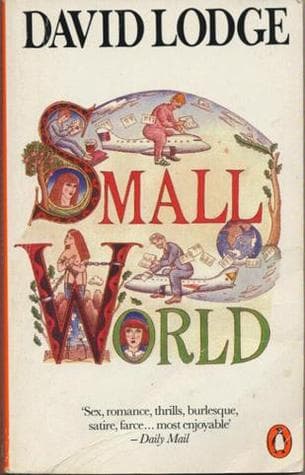
Sign in to track this book
Academics chase prestige, love, and literary theories through a satirical world of international conferences, uncovering the absurdities of their pursuits.
Philip Swallow, a middle-aged English lecturer from the University of Rummidge, attends an academic conference on Structuralism in Dublin. He feels out of place among the more ambitious academics. He meets Persse McGarrigle, a young Irish academic interested in medieval quest narratives, who tells Philip about the 'International Conference Circuit.' Philip also sees the famous American scholar Morris Zapp, known for his deconstructionist theories and rivalry with Arthur Beale. During the conference, Philip has a brief encounter with Angelica Pabst, a charming woman who moves easily among academics. This first look at the glamorous and competitive world of international academia prepares Philip for his own change and involvement in this circuit.
Morris Zapp, a celebrated but tired American literary critic, is in a personal and professional rut. His wife, Désirée, has left him, and he struggles with his deconstructionist theories, which seem to have undermined literary study itself. He is annoyed by the challenge of writing a book about Jane Austen that a rival cannot deconstruct. Zapp constantly travels from one conference to another, partly to escape his problems and partly to keep his academic standing. His travels take him to various European cities, where he lectures, attends panels, and engages in intellectual debates, all while dealing with his internal conflicts and the absurdities of academic competition.
Persse McGarrigle, a fervent young scholar, is deeply involved in his academic work on the medieval quest narrative. He believes the modern academic conference circuit is like the medieval quest for the Holy Grail, with the 'Unicorn' being the ultimate, secure academic position. Inspired by this idea, and his love for Angelica Pabst, whom he sees as his 'fairy mistress,' Persse begins his own quest. He travels widely, attending conferences across Europe and America, hoping to get a permanent job and perhaps win Angelica's affection. His journey includes both intellectual discovery and humorous mistakes as he navigates the eccentricities of the academic world.
Angelica Pabst is a beautiful and mysterious young woman who appears at various conferences, seemingly without a fixed academic affiliation. She attracts many male academics, including Persse McGarrigle, Philip Swallow, and Morris Zapp, though her reasons are often unclear. She is a graduate student, supposedly working on a thesis, but her main activity seems to be traveling and having a series of romantic and intellectual relationships. Her relationships are complex and often brief, showing her desire for both intellectual stimulation and freedom from commitment. Angelica's presence drives many of the male characters' actions, especially Persse's quest, and she represents the allure and elusive nature of the international academic scene.
Initially a reluctant participant, Philip Swallow becomes more involved in the international academic circuit. After his Dublin experience, he is invited to a conference in Amsterdam, where he reconnects with Persse and Angelica. He starts to enjoy the travel, the intellectual discussions, and the sense of freedom from his ordinary life in Rummidge. Philip becomes more confident, even having a brief affair with Joy, a young American academic. This change brings anxiety as he deals with his conscience and responsibilities at home, but the appeal of the 'small world' is too strong, fundamentally changing his perspective and lifestyle.
The novel introduces a new UNESCO Chair of Literary Criticism, a prestigious and well-paying position offering great academic freedom and financial security. This 'Unicorn' becomes the ultimate goal for many ambitious academics, especially Morris Zapp and Arthur Beale, whose rivalry grows as they both compete for the position. Persse McGarrigle also sees this as the end of his quest, believing it to be the modern Holy Grail. The existence of this chair fuels the competitive spirit of the conference circuit, pushing the characters to outmaneuver each other in their pursuit of the ultimate academic prize.
While at a conference in Sicily, Morris Zapp is kidnapped by Italian terrorists. They mistake him for an American industrialist because of a luggage mix-up. Zapp, always the academic, tries to talk with his captors, even trying to deconstruct their political manifestos. The kidnapping is a surreal and darkly humorous event that forces Zapp to face his own mortality and the limits of his theories in a real crisis. His eventual release, after a ransom is paid, allows him to return to the academic circuit, with a new, though temporary, perspective on life outside academia.
The story ends at a large international conference in Jerusalem, where the selection committee for the UNESCO Chair of Literary Criticism will make its final decision. Almost all the main characters—Philip Swallow, Morris Zapp, Persse McGarrigle, Angelica Pabst, and Arthur Beale—are there. The atmosphere is full of anticipation and rivalry. Philip thinks about his journey and his changing views, while Zapp and Beale have their final, intense intellectual battle. Persse, still hoping for both the chair and Angelica, watches the events. The conference becomes a small version of the entire 'small world,' with all its intellectual posturing, personal dramas, and career anxieties coming to a head.
At the Jerusalem conference, the winner of the UNESCO Chair of Literary Criticism is announced. To everyone's surprise, it is not Morris Zapp or Arthur Beale, but an obscure, previously unmentioned scholar, Fulvia Morgana. This anti-climax shows the arbitrary nature of such awards and the often-unpredictable results of the academic quest. Persse McGarrigle, disappointed by the outcome and his unrequited love for Angelica, decides to leave the academic circuit and pursue a different path. Philip Swallow, though not winning the chair, finds contentment in his more modest academic life and his personal growth. Zapp and Beale are left with their dashed ambitions, showing the often-futile pursuit of ultimate academic glory.
After the Jerusalem conference, the characters go their separate ways, each facing new realities. Persse McGarrigle, disillusioned, decides to leave academia and return to Ireland to write a novel. Angelica Pabst, after several relationships, reveals she is pregnant and plans to settle down, though her future is unclear. Morris Zapp, despite his disappointment, continues his academic life, with a slightly changed perspective after his kidnapping. Philip Swallow returns to Rummidge, having gained a broader understanding of the world and himself, content with his position and his adventures. The novel ends with a sense that while the 'small world' of academia continues, its inhabitants have been changed by their experiences.
The Protagonist
From a cautious, provincial academic, Philip transforms into a more confident and adventurous individual, finding a new lease on life through his travels.
The Protagonist/Antagonist
Zapp's journey involves a re-evaluation of his theories and a reluctant acknowledgment of life beyond pure intellect, particularly after his kidnapping.
The Protagonist
Persse's idealistic quest ultimately leads to disillusionment with academia, prompting him to seek a new path as a novelist.
The Supporting
Angelica moves from being an elusive, free-spirited academic muse to embracing a more settled life, revealing her pregnancy at the novel's end.
The Antagonist
Beale remains largely static in his ambition and rivalry, ultimately failing to achieve his ultimate goal of the UNESCO Chair.
The Supporting
Rasselas's arc is less about personal growth and more about his role in Angelica's life, culminating in fatherhood.
The Mentioned
N/A, as she appears only as the eventual winner.
The Supporting
Hilary's arc is largely static, serving as an anchor to Philip's home life and a reminder of his responsibilities.
The novel satirizes the pretentiousness, intellectual posturing, and often trivial nature of academic life, especially within the international conference circuit. Characters like Morris Zapp and Arthur Beale engage in elaborate intellectual duels that often lack real substance, driven more by ego and careerism than genuine inquiry. The pursuit of the UNESCO Chair becomes a farcical 'quest,' showing how academics, despite their intelligence, can be consumed by petty rivalries and the pursuit of status. Zapp's kidnapping further highlights the disconnect between academic theories and real-world events, as he tries to deconstruct his captors' manifestos. This theme is central to the novel's comedic tone.
“''But what if the whole thing is just a game, Zapp? What if it's all just a performance?''”
Many characters, especially Philip Swallow and Persse McGarrigle, are searching for meaning and identity. Philip seeks escape from his mundane life and finds a new, more adventurous self within the conference circuit. Persse literally sees his academic career as a medieval quest for the 'Unicorn' (the UNESCO Chair) and his 'fairy mistress' (Angelica), seeking validation and purpose through this framework. Even Morris Zapp, despite his cynicism, struggles with his deconstructionist theories, which have undermined his own sense of purpose. The novel explores how individuals try to define themselves through their work, relationships, and travels.
“''The modern academic, then, is a knight errant, forever riding off to conferences, in search of the Holy Grail of tenure, or a prestigious chair.''”
The novel explores the increasing interconnectedness of the academic world, where scholars travel across continents for conferences, creating a 'small world' where everyone knows everyone else. This globalization is shown as both exciting and confining. Characters often meet each other in different cities, reinforcing the idea of a close-knit, though geographically spread out, community. This theme is seen through the characters' constant travel, their ease of movement between countries, and their shared intellectual and social circles. It highlights opportunities for intellectual exchange but also the potential for insularity and a loss of connection to local realities.
“''It's a small world, isn't it?''”
The novel looks at how romantic and sexual relationships intertwine with academic pursuits. The conference circuit offers many chances for affairs, brief romances, and unrequited loves. Angelica Pabst, in particular, embodies this theme, attracting multiple male academics and navigating a series of relationships that are both intellectual and physical. Philip Swallow's affair with Joy and Persse's love for Angelica show how the freedom and excitement of travel can lead to personal transgressions and emotional entanglements. The novel suggests that along with intellectual stimulation, the 'small world' also offers an escape from domestic constraints and a chance for personal liberation, though with potential consequences.
“''Conferences, he reflected, were an ideal setting for adultery.''”
At its heart, *Small World* comments on the state of literary criticism in the late 20th century. Through Morris Zapp's deconstructionist theories and his rivalry with Arthur Beale, the novel satirizes various schools of thought, their jargon, and their often self-referential nature. Zapp's internal struggle with deconstruction, which seems to dismantle the very meaning of literature, reflects a real anxiety within the humanities. The search for the ultimate critical approach, symbolized by the UNESCO Chair, highlights the intellectual battles and theoretical fads that dominate academic discussion.
“''If you can deconstruct a text, you can deconstruct a deconstruction.''”
The central setting and organizing principle for the characters' movements and interactions.
The international conference circuit is the primary plot device, serving as the stage where all the characters meet, interact, and pursue their ambitions. It facilitates the 'small world' phenomenon, allowing Lodge to bring together diverse academics from different countries. The circuit provides opportunities for intellectual exchange, romantic liaisons, and career advancement, while also highlighting the absurdities and competitiveness of academic life. Each conference acts as a mini-chapter, propelling the narrative forward and allowing for new encounters and developments.
A structural and thematic metaphor for Persse McGarrigle's academic journey.
The medieval quest narrative, specifically the search for the Holy Grail and the Unicorn, is a crucial plot device, especially for Persse McGarrigle. Persse explicitly frames his pursuit of a permanent academic position (the UNESCO Chair) and Angelica Pabst as a modern-day quest. This device provides a humorous and ironic lens through which to view the often-mundane and self-serving academic world, elevating the stakes for Persse and providing a clear, albeit ultimately unfulfilled, goal for his character. It also allows Lodge to draw parallels between ancient myths and contemporary academic struggles.
A philosophical framework that both defines and traps one of the main characters.
Morris Zapp's deconstructionist theories serve as a significant plot device, particularly in defining his character and his intellectual struggles. His theories, which assert that all texts can be deconstructed and have no stable meaning, become a source of both his fame and his personal crisis. This device allows Lodge to satirize academic trends and the potential for critical theories to become self-defeating. Zapp's attempts to write an 'undeconstructable' book on Jane Austen, and his efforts to deconstruct his kidnappers' manifestos, highlight the pervasive influence and occasional absurdity of his own intellectual framework.
The ultimate academic prize that drives the characters' ambitions.
The UNESCO Chair of Literary Criticism functions as the central MacGuffin and the ultimate object of desire for many of the ambitious academics, particularly Morris Zapp, Arthur Beale, and Persse McGarrigle. This highly prestigious and lucrative position symbolizes the pinnacle of academic success and security. Its existence fuels the rivalries, intellectual battles, and extensive travels of the characters, giving their individual quests a collective focus. The eventual, unexpected winner of the chair serves as an ironic twist, undermining the characters' intense pursuit and highlighting the arbitrary nature of such awards.
“The modern university is a sort of intellectual supermarket.”
— Philip Swallow reflects on the state of academia.
“Academic life is just like real life, only more so.”
— Persse McGarrigle's early observations as he enters the academic world.
“There are only two things that matter in academic life: publications and international conferences.”
— Rudolf Zimmer's cynical advice to Persse.
“The quest for tenure is a medieval tournament, with the dragon being the peer review process.”
— Various characters implicitly or explicitly liken tenure to a difficult quest.
“To travel hopefully is a better thing than to arrive.”
— Persse McGarrigle often recalls this sentiment, particularly in relation to his search for Angelica.
“The international conference circuit is a kind of global village, but one where everyone speaks a different dialect of the same academic jargon.”
— Characters navigating the complexities of international academic gatherings.
“For the academic, the highest form of flattery is to be invited to give a paper at a conference.”
— Philip Swallow's musings on academic vanity.
“Love, like literary theory, is a constantly shifting signifier.”
— Persse McGarrigle, influenced by his studies, tries to apply theory to his romantic life.
“The most important thing in life is to be able to distinguish between what is important and what is not.”
— Professor Arthur Mizoguchi offers this philosophical insight.
“Every academic has a book inside them, and usually it's the same book.”
— Professor Ronald Frobisher's cynical take on academic publishing.
“The world is a small place, but it's getting smaller all the time.”
— A recurring theme and the inspiration for the book's title, reflecting increased international travel and interconnectedness.
“The only way to get anything done in academia is to pretend you're not trying to get anything done.”
— Philip Swallow's pragmatic (and somewhat ironic) approach to academic politics.
“Post-structuralism is like a hall of mirrors: you see many reflections, but never the original.”
— Critics and proponents of literary theory discuss its nature.
“The desire for tenure is the root of all academic evil.”
— A particularly jaded academic's view on the driving force behind much academic behavior.
Ready to see how well you understood this book? Take our interactive quiz with 10 questions.
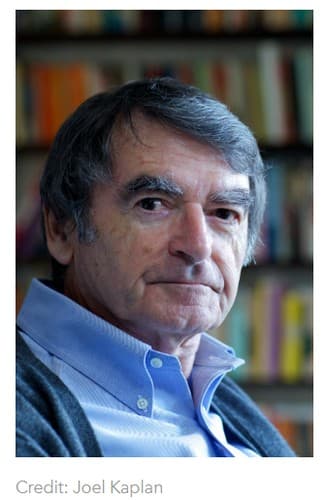
David Lodge is a celebrated British novelist and critic known for his satirical explorations of academic life. His acclaimed works, including "Small World," "Nice Work," and "Changing Places," humorously dissect the absurdities of university culture and the literary world. Lodge's sharp wit and intellectual depth have earned him a significant place in contemporary British fiction.
Ashley Antoinette
4.6

Mark McDonald
4.4
Luo Guanzhong
4.4
Mia McKenzie
4.3
Dorothy Parker
4.3
Joaquim Maria Machado de Assis
4.3
James Thurber
4.2
Terry Kay
4.2