“For the first time in their married life, Luther and Nora Krank would not be home for Christmas.”
— Introducing the Kranks' decision to skip Christmas and go on a cruise.

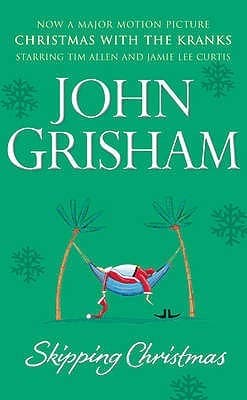
John Grisham (1998)
Genre
Fiction
Reading Time
180 min
Key Themes
See below
Sign in to track this book
A weary couple's attempt to ditch the holiday chaos for a Caribbean cruise backfires spectacularly when their suburban community rebels against their Christmas-skipping scheme.
On the Sunday after Thanksgiving, Luther Krank, an accountant, feels miserable about the upcoming Christmas season. His daughter, Blair, recently left for a two-year stint in the Peace Corps in Peru, leaving an empty nest. Luther calculates that they spent over $6,000 on Christmas the previous year. He proposes to his wife, Nora, that they skip Christmas entirely this year, using the money saved for a ten-day Caribbean cruise. Nora is hesitant, especially about not putting up their iconic Frosty the Snowman on the roof, but Luther convinces her, promising a relaxing, stress-free holiday away from commercialism and obligations.
The Kranks' decision quickly spreads through their affluent suburban neighborhood, particularly on Hemlock Street, known for its strong Christmas spirit. Their next-door neighbors, Vic Frohmeyer, the unofficial street leader, and Walt Scheel, are among the first to notice the absence of Frosty on the Kranks' roof. The neighborhood children, led by Wes Frohmeyer, are also puzzled. Despite Luther's attempts to politely decline participation in neighborhood events like the annual Christmas Eve party and the decorating contest, the community sees their abstention as a personal offense, especially Vic, who is invested in maintaining the street's festive reputation.
As December progresses, the Kranks become outsiders. They refuse to buy calendars from the firemen, donate to the police fund, or contribute to the Boy Scouts' Christmas tree drive. Carolers skip their house, and neighborhood children picket their lawn with signs. Marty, a local boy, repeatedly tries to sell them a Christmas tree. Luther's refusal to put up Frosty becomes a major point of contention, with Vic Frohmeyer leading the charge. Nora, despite her initial resolve, begins to feel the weight of social exclusion, missing the usual holiday cheer and feeling guilty about their defiance of tradition.
Luther attends his firm's annual Christmas party, where he is singled out for his lack of Christmas spirit. His boss makes a pointed joke about his Caribbean plans. Feeling pressure to get a head start on his tan for the cruise, Luther visits a tanning salon. He falls asleep in the bed, resulting in severe, painful sunburns all over his body. This incident further dampens his mood and makes him even more resentful of the holiday's complications, as he struggles with the physical discomfort while the neighborhood's festive preparations continue around him.
Nora, feeling increasingly guilty, tries to make a donation to the children's hospital fund, but her check is politely refused by Bev Scheel, Walt's wife, because of their non-participation in other community efforts. This rejection deeply hurts Nora. Later, a delivery truck mistakenly drops off a large honey-glazed ham at the Kranks' house, intended for the Frohmeyers. Luther, intending to return it, leaves it in the garage. The ham is stolen by a group of neighborhood kids, further increasing the Kranks' isolation and the community's passive-aggressive responses.
On Christmas Eve morning, just as Luther and Nora are preparing to leave for their cruise, the phone rings. It's Blair, calling from Miami. To their shock and delight, she announces she's flying home with her fiancé, Enrique, for Christmas Eve. She expects their usual festive party and for Frosty to be on the roof. This news completely shatters the Kranks' plans for a quiet, tradition-free holiday and their Caribbean cruise. Panic sets in as they realize they have mere hours to transform their anti-Christmas house into a festive wonderland.
Luther and Nora immediately spring into action, but their house is empty. They have no tree, no decorations, and no food for a party. Desperate, Luther calls Vic Frohmeyer, who, despite his earlier disapproval, mobilizes the entire neighborhood. Neighbors rush over with trees, lights, ornaments, food, and even their own Frosty the Snowman, which they hoist onto the Kranks' roof. The street becomes a flurry of activity, with everyone working together to ensure Blair's homecoming is perfect, showing an unexpected surge of community spirit.
Just as the transformation is complete, Blair and Enrique arrive. They are overjoyed and touched by the sight of their festively decorated home and the gathering of neighbors. The Kranks' house is bustling with their annual Christmas Eve party, filled with laughter, food, and music, as if they had never tried to skip Christmas. Blair introduces Enrique to everyone, and the atmosphere is one of genuine warmth and celebration. The community, having initially ostracized the Kranks, now embraces them fully, delighted by Blair's return.
Amidst the party, Luther notices Walt Scheel looking particularly frail and ill. Walt's wife, Bev, confides that Walt has terminal cancer and this will likely be his last Christmas. Moved by compassion, and realizing the true spirit of the season, Luther quietly offers his and Nora's non-refundable Caribbean cruise tickets to Walt and Bev. He insists they go, seeing it as a way to give them a final, special memory. This act of generosity is a significant shift for Luther, signaling his rediscovery of altruism and community.
The party continues, filled with joy and camaraderie. Luther and Nora reflect on the tumultuous month, realizing that while they tried to skip Christmas, Christmas ultimately found them. Blair's unexpected return forced them to confront the importance of family and tradition, and the subsequent outpouring of neighborhood support reminded them of the value of community. Luther's selfless gift of the cruise tickets to Walt and Bev solidifies his transformation, demonstrating that true happiness comes from giving and sharing, rather than escaping. It becomes a Christmas they will never forget, for all the right reasons.
The Protagonist
Luther transforms from a self-absorbed man seeking escape to someone who understands the true spirit of giving and community.
The Protagonist/Supporting
Nora struggles with her desire for a peaceful holiday versus her attachment to traditions, ultimately finding joy in community and family.
The Supporting
Blair's role is primarily as a catalyst, her presence reminding her parents of the importance of family tradition.
The Antagonist/Supporting
Vic transitions from a neighborhood antagonist to a helpful ally, showcasing the underlying good will within the community.
The Supporting
Walt's character provides a catalyst for Luther's final act of selfless giving, highlighting themes of empathy and mortality.
The Supporting
Bev serves to highlight the community's expectations and later provides the emotional context for Luther's transformation.
The Supporting
Spike's character remains consistent, embodying youthful dedication to holiday traditions.
The Mentioned
Marty's character is static, serving as a recurring symbol of the holiday's commercial traditions.
The Supporting
Enrique's role is to facilitate Blair's return and be introduced to the Kranks' family and community.
The novel explores the tension between the financial and materialistic aspects of Christmas and its deeper meaning of joy, community, and giving. Luther's initial motivation to skip Christmas stems from his frustration with the high costs and commercial pressures (e.g., the $6,000 spent last year). However, his attempt to escape these aspects leads to social isolation and unhappiness. Ultimately, the Kranks discover that true Christmas spirit is not about spending or elaborate decorations, but about shared experience, generosity, and community connection, as shown when neighbors unite to create Christmas for Blair's return and Luther gives away his cruise tickets.
“For the first time in his life, Luther Krank was actually excited about Christmas. Not the commercial nonsense, but the genuine joy of giving.”
The theme of community is central, showing the power of collective tradition and the consequences of deviating from it. Hemlock Street is a close-knit community where Christmas traditions are deeply ingrained and protected. The Kranks' decision to opt out is seen as a betrayal, leading to their ostracization and a feeling of isolation for Nora. The narrative emphasizes how belonging to a community involves shared rituals and mutual support. The triumph of this theme is seen when the entire neighborhood rallies to help the Kranks, showing that despite initial disapproval, community bonds are strong and resilient.
“On Hemlock Street, Christmas was not just a holiday; it was a way of life, a sacred ritual passed down through generations.”
The story highlights the role of tradition in personal and collective identity. The Kranks' attempt to bypass Christmas traditions—no Frosty, no tree, no party—creates a void and causes distress, not just for them but for their neighbors. Blair's unexpected return, expecting these very traditions, forces the Kranks to realize their intrinsic value. Traditions, even seemingly trivial ones like putting up a snowman, are shown to be anchors of memory, family connection, and communal celebration, providing comfort and continuity. The scramble to restore these traditions highlights their emotional significance.
“It was impossible to skip Christmas, not when Christmas was in their blood.”
Initially, Luther's motivation is largely self-serving: to save money and avoid stress. However, as the story progresses, especially with Blair's return and the revelation of Walt Scheel's illness, the theme of selflessness emerges. Luther's act of giving his cruise tickets to Walt and Bev is a powerful symbol of his transformation. This act of generosity, completely without personal gain, brings him a deep sense of satisfaction and joy, demonstrating that true happiness in the holiday season comes from giving to others, particularly those in need, rather than from material acquisition or personal comfort.
“He knew, with a certainty that surprised him, that this was the best Christmas he'd ever had.”
The Kranks' initial motivation and symbol of escape.
The Caribbean cruise serves as the primary goal for Luther and Nora at the outset of the story. It is the tangible reward for skipping Christmas, representing freedom from holiday stress and commercialism. While it drives their initial actions and decisions, its ultimate fate (being given away) reveals that the cruise itself is not the true objective, but rather a catalyst for exploring deeper themes of community, tradition, and selflessness. It is a goal that ultimately proves less fulfilling than the unexpected Christmas they create.
A potent symbol of Christmas tradition and neighborhood unity.
Frosty the Snowman, specifically the inflatable one that traditionally adorns the Kranks' roof, becomes a central symbol in the story. Its absence signifies the Kranks' defiance of tradition and their rejection of the community's values. Its eventual, frantic re-installation by the neighbors for Blair's return symbolizes the reinstatement of tradition, the power of collective effort, and the Kranks' reintegration into the community. Frosty embodies the visible, public aspect of Christmas spirit on Hemlock Street.
Subtle hints of Walt's declining health leading to Luther's compassionate act.
The narrative subtly foreshadows Walt Scheel's terminal illness through observations of his frailty and Bev's quiet concern. This device prepares the reader for the emotional impact of the revelation and makes Luther's subsequent act of giving his cruise tickets more poignant and believable. The foreshadowing ensures that the reader understands the gravity of Walt's situation, enhancing the significance of Luther's selfless gesture as a genuine act of compassion rather than a whimsical decision.
The opposite of the intended outcome occurs, leading to a more profound Christmas.
The central irony of the story lies in the Kranks' attempt to skip Christmas. Their efforts to avoid the stress and commercialism of the holiday ultimately lead to more stress, social ostracization, and a frantic scramble to recreate Christmas at the last minute. Paradoxically, by trying to avoid Christmas, they experience a more intense and meaningful version of it, rediscovering the true spirit of generosity and community that they initially sought to escape. Their 'skipped' Christmas becomes one of their most memorable and impactful.
“For the first time in their married life, Luther and Nora Krank would not be home for Christmas.”
— Introducing the Kranks' decision to skip Christmas and go on a cruise.
“No tree, no lights, no parties, no presents, no fruitcake, no carolers, no Frosty, no Santa, no Rudolph, no charity, no stress, no nothing.”
— Luther's detailed vision of what 'skipping Christmas' entails.
“The Kranks were about to embark on a radical adventure, a full-frontal assault on the most sacred of American holidays.”
— Narrator's observation on the Kranks' unusual plan.
“It’s just one year, Honey. One year out of our lives. We’ll be back next year, bigger and better than ever.”
— Luther trying to reassure Nora about their decision.
“The neighbors, however, were not amused. They were, in fact, outraged.”
— Describing the neighborhood's reaction to the Kranks' lack of Christmas decorations.
“Christmas, after all, was for children, and their child was gone.”
— Luther's initial justification for skipping Christmas, tied to their daughter's absence.
“There was a fine line between neighborly concern and outright harassment, and the Kranks’ neighbors were dancing on it.”
— Narrator's comment on the escalating pressure from the community.
“He just wanted to relax, to escape the madness, to not spend a fortune and gain five pounds in a month.”
— Luther reflecting on his true motivations for avoiding Christmas.
“‘It’s not Christmas without Frosty,’ she said, as if Frosty were a member of the family.”
— Nora's internal thought, highlighting the deep-seated traditions.
“The irony was not lost on Luther. He was skipping Christmas to escape the commercialism, and here he was, buying more Christmas stuff than ever.”
— Luther's realization as he's forced to buy decorations last minute.
“It was a Christmas miracle, of sorts, though not exactly the kind anyone had prayed for.”
— Describing the unexpected turn of events that forces the Kranks to celebrate.
“Sometimes, the best Christmas gifts are not wrapped in paper, but in the spirit of giving and togetherness.”
— A reflection on the true meaning of Christmas after the chaos.
“He had underestimated the power of tradition, the force of collective will, and the unbreakable spirit of Christmas.”
— Luther's final realization about his attempt to defy Christmas.
“It wasn't about the decorations or the parties; it was about the people.”
— Nora's understanding of what truly makes Christmas special.
Ready to see how well you understood this book? Take our interactive quiz with 10 questions.

Biography coming soon.

Ashley Antoinette
4.6

Mark McDonald
4.4
Luo Guanzhong
4.4

Mia McKenzie
4.3

Dorothy Parker
4.3

Joaquim Maria Machado de Assis
4.3

James Thurber
4.2

Terry Kay
4.2