“A character, sir, may always be a 'somebody'; a man, on the contrary, may be nobody.”
— The Father explaining the permanence of a character compared to a real person.

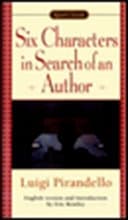
Luigi Pirandello (1979)
Genre
Fiction
Reading Time
90 min
Key Themes
See below
Sign in to track this book
Six unfinished characters interrupt a play rehearsal, demanding the actors bring their own tragic, unwritten drama to life.
The play starts on a bare stage where the PRODUCER (or Director) and the ACTORS are rehearsing 'The Rules of the Game' by Luigi Pirandello. The actors complain about the script and the producer's demands. Suddenly, six strange figures in mourning clothes walk onto the stage. These are the CHARACTERS: THE FATHER, THE MOTHER, THE STEPDAUGHTER, THE SON, THE BOY, and THE CHILD. They say they are unfinished characters from an author's imagination, demanding their tragic story be brought to life on stage, as their author abandoned them. The Producer, at first annoyed, becomes interested by their unusual request and the raw drama of their narrative.
The CHARACTERS begin to explain their situation. THE FATHER, an intellectual and self-deceptive man, says he encouraged his wife, THE MOTHER, to leave him and live with his secretary, which led to the birth of three children: THE STEPDAUGHTER, THE BOY, and THE CHILD. He believed he was acting with good intentions, freeing his wife from a life he felt she didn't enjoy. THE MOTHER, a suffering and emotional woman, describes her pain and the poverty she faced with her new family after being left. THE SON, the Father's legitimate child, remains distant and resentful of the whole situation, refusing to acknowledge the new family or their suffering.
The most scandalous part of the CHARACTERS' story unfolds. After the secretary dies, the Mother and her three children return to the city, living in poverty. To support her family, THE STEPDAUGHTER is forced to work as a seamstress for MADAME PACE, who secretly runs a brothel. THE FATHER, unaware of the Stepdaughter's new job and thinking he was approaching a casual acquaintance, visits Madame Pace's. He is about to engage in a sordid act with the Stepdaughter when THE MOTHER bursts in, recognizing her daughter and stopping the incestuous encounter. This revelation deeply disturbs the PRODUCER and ACTORS, showing the raw and morally complex nature of the Characters' drama.
Interested by the dramatic potential, the PRODUCER decides to try staging the CHARACTERS' story. He assigns his ACTORS to play THE FATHER, THE MOTHER, and THE STEPDAUGHTER. However, the Characters immediately object to the actors' interpretations. THE FATHER argues that the actor playing him cannot capture his true inner torment and intellectual justifications. THE STEPDAUGHTER is disgusted by the actress's superficial portrayal of her anger and despair. They insist that their reality, their 'fixed' existence as characters, cannot be replicated by mere actors, leading to constant conflicts between the real and the imagined, the spontaneous and the artistic representation.
During attempts to stage the scene at Madame Pace's, something remarkable happens. As the CHARACTERS describe the setting and THE STEPDAUGHTER calls for her, MADAME PACE herself, a character only mentioned but never fully 'written' by their author, suddenly appears on stage from behind a flat. She is an exaggerated, flashily dressed figure. Her appearance further blurs the line between fiction and reality, showing the powerful, independent existence of the characters. Her sudden presence adds another layer of confusion and surrealism to the drama, as the Producer and actors deal with a character that has seemingly willed herself into being.
Throughout the entire process, THE SON remains stubbornly distant and resentful. He refuses to acknowledge his half-siblings or the tragic circumstances that connect the CHARACTERS. He sees the whole situation as a humiliating spectacle and an invasion of his privacy. He constantly expresses his disdain for the theatrical process and the attempts to expose his family's private miseries. His aloofness highlights the theme of alienation and the different ways people cope with shared trauma, as he rejects any reconciliation or participation in the 'play' of their lives.
The CHARACTERS insist on performing the final, most tragic events of their story. They move to a part of the stage representing a garden with a pond. THE BOY, overwhelmed by the family's misery and the public spectacle, shoots himself. At the same time, THE CHILD, the youngest and most innocent, drowns in the garden pond. These events unfold with chilling realism, leaving the PRODUCER and ACTORS horrified and questioning whether these deaths are 'real' or simply the fixed, unchangeable ending of the Characters' narrative. The ambiguity deepens the play's exploration of illusion and reality.
After the shocking deaths of THE BOY and THE CHILD, the PRODUCER is completely confused. He cannot understand what he has just seen—were these real deaths, or just the predetermined, unalterable 'reality' of the CHARACTERS' story? The ACTORS are equally bewildered and traumatized. The Producer declares that the whole experience has been a failure, a 'madness,' because he cannot make sense of the conflicting realities presented. He dismisses the company, defeated by the Characters' uncontainable, unstageable truth, leaving the audience to consider the nature of existence and artistic representation.
Even after the PRODUCER declares the rehearsal over and the play impossible to stage, the CHARACTERS remain on stage, their figures in the dimming light. Their story, though rejected by the theatrical company as too real, too chaotic, and too unstageable, continues to exist for them. They are forever bound by their tragic narrative, destined to relive it or exist within its parameters. Their final presence emphasizes the central idea that characters, once conceived, have an independent life and an unchangeable reality, regardless of whether an author or a director chooses to bring them to life.
The stage is eventually empty, but the unsettling questions raised by the CHARACTERS' intrusion remain. The audience is left to grapple with the implications of what they have witnessed: the conflict between life and art, the nature of identity, the reliability of perception, and the power of narrative. The play does not offer easy answers but rather opens up a philosophical inquiry into the essence of theatre and human existence, leaving a lasting impression of the fragility of reality and the enduring power of stories, whether finished or abandoned.
The Supporting/Antagonist (in a meta-theatrical sense)
He transitions from annoyance to intrigue, then to frustration and ultimately to complete philosophical and professional defeat by the Characters' uncontainable reality.
The Protagonist/Leader of the Characters
He attempts to justify his past actions and ensure his 'truth' is accurately portrayed, but ultimately fails to control the narrative or his fixed identity.
The Supporting/Victim
Her arc is one of enduring, unchanging grief and helplessness, forever fixed in her role as the suffering mother.
The Protagonist/Rebellious Figure
She is fixed in her rebellious and resentful state, determined to expose the Father's hypocrisy and her family's tragedy.
The Supporting/Alienated Figure
He remains stubbornly alienated and resentful, refusing to participate in the family drama or find reconciliation.
The Supporting/Tragic Figure
He remains silent and withdrawn, ultimately succumbing to despair and taking his own life.
The Supporting/Innocent Victim
She remains a figure of pure innocence, tragically dying as a consequence of the family's unresolved drama.
The Supporting/Antagonist
Her brief, unexpected manifestation serves to expose the family's darkest secret and intensify the conflict.
The Supporting/Representational
They begin as conventional performers, then become confused and eventually traumatized by the Characters' reality, failing to adequately embody their roles.
This is the main theme, exploring the blurred lines between what is real and what is perceived or created. The Characters argue that they are more 'real' than the actors because their reality is fixed and unchangeable, while human reality is constantly shifting. The play questions what truth and existence mean, especially in art. The Producer struggles to know if the deaths of The Boy and The Child are 'real' or simply the unchangeable, tragic ending of the Characters' fictional lives.
“For a drama, you see, is not just a written play. It is life itself.”
The play explores how identity is formed, perceived, and maintained. The Characters have fixed identities, defined by their author's creation, and they resist the actors' attempts to misrepresent them. They are 'fixed' in their suffering and their roles, unable to change or escape their past. This contrasts with the human actors, whose identities are fluid and changing. The Father, in particular, struggles with how others see him versus his own self-perception, showing the subjective nature of identity and the pain of being misunderstood.
“We have no other reality outside of this illusion.”
Pirandello critiques conventional theater's ability to capture complex human experience. The Actors cannot embody the raw emotion and specific reality of the Characters, leading to constant clashes. The Producer, representing the theatrical establishment, is ultimately defeated by the unstageable truth of the Characters' lives. The play suggests that art distorts and simplifies reality, and that life's spontaneous, chaotic nature can never be fully contained or replicated on stage.
“That's the trouble with you people! You want to create art, but you can't even reproduce life!”
The family of Characters is deeply fragmented, with deep divisions between them. The Son is completely alienated from his family, refusing to acknowledge them or participate in their drama. The Father and Mother have a strained, painful relationship, and the Stepdaughter harbors immense resentment. Their attempts to communicate their 'truth' to the Producer and Actors are constantly met with misunderstanding. This theme highlights the difficulty of true empathy and the isolation that can result from personal trauma and fixed perspectives.
“Each of us, as you see, believes himself to be 'one,' but it's not true: each of us is 'many,' and 'many' in different ways, according to the depths of our being.”
The play emphasizes the power of stories, not just as entertainment but as forces that shape identity and existence. The Characters exist because of their story, and they are desperate to have it told, believing their very being depends on its realization. Their story dictates their reality, showing how narratives, whether personal or artistic, shape our understanding of ourselves and the world. The act of telling and hearing their story deeply affects everyone involved, proving that stories have a life and agency of their own.
“We are characters, sir. We are creatures of art.”
The play self-consciously draws attention to its own theatricality and construction.
The entire play is a prime example of meta-theatre. It takes place on a stage during a rehearsal, with characters discussing the nature of theatre itself. This device constantly reminds the audience that they are watching a play, blurring the lines between the performance and the reality of the characters within the play. It allows Pirandello to directly explore philosophical questions about art, reality, and the relationship between the stage and life.
Characters directly address the audience, acknowledging their presence.
While the Characters primarily interact with the Producer and Actors, their very presence on stage, demanding their story be told, inherently breaks the fourth wall. They are aware of being characters in a play, and their philosophical discussions often feel directed outwards, inviting the audience to consider the play's themes directly. This device further challenges conventional theatrical illusion and draws the audience into the meta-theatrical debate.
The play deliberately leaves key questions unresolved, focusing on contradictions.
Pirandello masterfully employs ambiguity, particularly regarding the 'reality' of the Characters and their actions. Are The Boy and The Child truly dead, or is it merely the fixed, unchangeable ending of their story being re-enacted? The play thrives on paradoxes: characters who are more real than humans, life that is more fixed than art. This device forces the audience to confront the limitations of logical certainty and embrace the complex, often contradictory nature of existence and perception.
The premise that the Characters were abandoned by their author.
The central premise that the Six Characters were created but then abandoned by an author serves as a powerful metaphor for unfulfilled potential and the independent life of artistic creations. It grants the Characters their unique agency and their desperate plea for completion. This device allows Pirandello to explore the relationship between creator and creation, and the inherent 'fixed' nature of characters once conceived, even if their story remains untold.
“A character, sir, may always be a 'somebody'; a man, on the contrary, may be nobody.”
— The Father explaining the permanence of a character compared to a real person.
“The drama is in us, sir, and we are the drama. We are impatient to play it.”
— The Father expressing the inherent dramatic nature of the Characters' existence.
“Don't you see that the whole thing is a game?”
— The Father to the Manager, trying to explain the Characters' predicament.
“We want to live!”
— The Step-Daughter's desperate cry to the Manager.
“We carry our drama within us, and we are our drama.”
— The Father explaining the Characters' unchanging internal conflict.
“Every character, in a work of art, has a life of his own, a life more intense than that of a human being.”
— The Father arguing for the Characters' reality and permanence.
“You see, it's all a game, a terrible game.”
— The Step-Daughter's cynical view of their situation.
“What is reality? It is a continually changing, a continually forming, a continually dissolving reality.”
— The Father's philosophical musings on the nature of reality.
“A fact is like a sack which will not stand up when it is empty. In order that it may stand up, one has to put into it the reason and the sentiment which have caused it to exist.”
— The Father explaining the subjective nature of truth and facts.
“We are characters, sir. We live, fixated for ever and ever in the moment or in the scene in which we were created.”
— The Father explaining the static nature of their existence as Characters.
“It is the illusion of a reality that you want to create.”
— The Manager's pragmatic view of theater, contrasted with the Characters' lived reality.
“Each one of us has a world of his own inside him.”
— The Father on the subjective experience and internal world of individuals.
“But for us, sir, life is not a game. It is a tragedy.”
— The Step-Daughter correcting the Manager's lighthearted view of their story.
“You want to play at acting! We, on the other hand, are condemned to reality.”
— The Father contrasting the actors' role-playing with the Characters' inescapable reality.
Ready to see how well you understood this book? Take our interactive quiz with 10 questions.
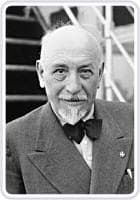
Luigi Pirandello was an Italian dramatist, novelist, poet, and short story writer whose greatest contributions were his plays. He was awarded the 1934 Nobel Prize in Literature for "his almost magical power to turn psychological analysis into good theatre." Pirandello's works include novels, hundreds of short stories, and about 40 plays, some of which are written in Sicilian. Pirandello's tragic farces are often seen as forerunners of the Theatre of the Absurd.

Ashley Antoinette
4.6

Mark McDonald
4.4
Luo Guanzhong
4.4

Mia McKenzie
4.3
Dorothy Parker
4.3
Joaquim Maria Machado de Assis
4.3
James Thurber
4.2

Terry Kay
4.2