“I just don't know why you have to be so negative all the time.”
— Sasha expressing frustration with Ben's cynical outlook.

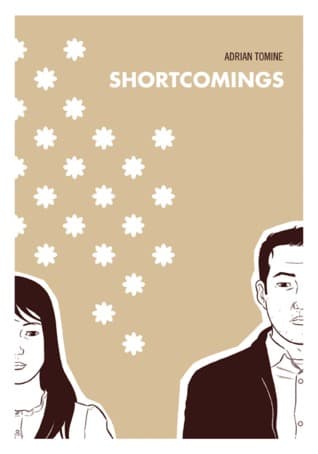
Sign in to track this book
A graphic novel follows Ben Tanaka, a cynical Japanese American, as he navigates rocky relationships, racial hang-ups, and his own self-loathing in a cross-country quest for an elusive ideal woman and contentment.
The story introduces Ben Tanaka, a cynical and insecure Japanese American man in his late twenties who manages an independent movie theater in Berkeley. He is in a long-term relationship with Sasha, a Japanese American graduate student. Ben is unhappy with his life and relationship; he often criticizes Sasha's artistic aspirations and expresses his attraction to white women, which bothers her. Their dynamic is strained, with Ben's passive-aggressive behavior and Sasha's increasing frustration. Sasha decides to move to New York City for an internship, a decision Ben reluctantly supports but internally resents, seeing it as a sign their connection is failing. This move leads to their separation and Ben's misguided attempts at finding happiness.
After Sasha leaves for New York, Ben feels more alone and spends a lot of time with his best friend, Alice, a sharp-witted queer Asian American woman. He often meets her for coffee, where he complains about Sasha, his job, and his general unhappiness, often revealing his shallow and racially-charged dating preferences. Alice supports him but also points out his problematic views and self-pity. Ben tries to date, which leads to several awkward and short-lived encounters. One interaction is with Autumn, a young, aspiring performance artist who works at the movie theater. Ben's attempts to flirt with her are clumsy and unsuccessful, showing his social ineptitude and inability to connect with others.
Ben's pursuit of Autumn increases when he invites her to a party, where he embarrasses himself with his awkwardness and attempts to impress her. Autumn, not interested in him romantically, eventually tells him she has a boyfriend, which further deflates Ben's ego. Soon after, Ben's ex-girlfriend, Miko, a successful professional, unexpectedly reappears. Miko, having heard about Ben's behavior and his treatment of Sasha, confronts him directly about his self-destructive patterns and his issues with Asian American identity and dating. She criticizes his attraction to white women and his general immaturity, giving him a clear, outside view of his shortcomings. This confrontation leaves Ben feeling more exposed and defensive.
Feeling lost and hoping to fix his relationship or get some clarity, Ben decides to visit Sasha in New York. He expects a reunion, perhaps a reconciliation, but quickly finds that Sasha has moved on. She is doing well in her internship and has started a new relationship with a kind and supportive white man named Ian. Sasha introduces Ben to Ian, which creates an uncomfortable situation for Ben, who struggles to hide his jealousy and resentment. The visit makes it clear that Sasha has found happiness and a healthier dynamic away from him, leaving Ben feeling more isolated and heartbroken.
After the painful realization about Sasha, Ben stays longer in New York, hoping to find distraction or connection. He meets up with Alice, who is also visiting, and they navigate the city together, with Ben continuing to vent his frustrations. He also tries to date, meeting a young white woman named Carly through an acquaintance. Ben is initially drawn to Carly, but their interactions are superficial and marked by Ben's insecurities and his tendency to overanalyze every comment. He interprets her polite interest as genuine attraction, which leads to a series of awkward encounters that go nowhere, reinforcing his pattern of failed romantic pursuits and his inability to form meaningful connections.
During their time together in New York, Ben's constant complaining, self-pity, and barely hidden racist and misogynistic comments about women and his dating life begin to bother Alice. She has been a patient and understanding friend, but his persistent negativity and refusal to acknowledge his own flaws reach a breaking point. Alice confronts Ben directly, criticizing his entitlement, his inability to take responsibility for his actions, and his problematic views on race and relationships. This heated argument shows the strain in their friendship and highlights Ben's deep-seated issues that he consistently avoids, leaving their friendship in a precarious state.
Defeated and disillusioned, Ben eventually returns to Berkeley. His trip to New York has not given him the clarity or resolution he sought; instead, it has only solidified his loneliness and reinforced his inability to change. He resumes his routine at the movie theater, still managing it with a cynical attitude. He has not reconciled with Sasha, nor has he found a new partner. His friendship with Alice is strained, and he remains isolated in his own self-pity. The ending of the graphic novel shows Ben largely unchanged, still struggling with his 'shortcomings' and offering little hope for immediate personal growth, leaving him unhappy.
The Protagonist
Ben's arc is largely one of stagnation; despite facing numerous confrontations and opportunities for growth, he ends the story much as he began, unwilling or unable to confront his own flaws.
The Supporting
Sasha evolves from a girlfriend enduring a dysfunctional relationship to an independent woman who finds happiness and a supportive partner in a new city.
The Supporting
Alice's arc involves her growing frustration with Ben's inability to change, culminating in a direct confrontation that tests the limits of their friendship.
The Supporting
Autumn remains largely static, serving as a catalyst for Ben's romantic failures and reinforcing his problematic dating patterns.
The Supporting
Miko acts as an agent of direct confrontation, highlighting Ben's flaws and offering a stark contrast to his stagnant existence.
The Supporting
Ian's role is static, serving as a symbol of Sasha's successful move towards a better life.
The Mentioned
Carly's character exists to further illustrate Ben's repeated dating failures and his consistent attraction to white women.
Ben Tanaka's struggle with his Japanese American identity is central to the story. He openly prefers white women, which is a sign of internalized racism and self-loathing. This theme is explored through his critiques of Sasha's Asian American identity and his own discomfort with his heritage. His cynicism and dissatisfaction with his life come from a deeper inability to accept himself, which in turn hurts his relationships and prevents personal growth. The graphic novel explores racial identity, self-acceptance, and the impact of societal beauty standards on a person's mind.
““I just... I'm not really into Asian girls.””
Poor communication and the inability to form genuine connections define Ben's relationships. His relationship with Sasha is full of passive aggression, unexpressed resentments, and a lack of emotional intimacy. Ben is self-centered and cannot empathize with others, which leads to his romantic and platonic relationships failing. His conversations are often just complaints, and he struggles to truly listen or respond to others' needs. This theme is clear in his failures with Sasha, Autumn, and Carly, and the strain on his friendship with Alice.
““You know, for someone who hates his job, you spend a lot of time talking about it.””
Ben's overwhelming cynicism and apathy are in every part of his life. He is critical of everything around him — his job, independent film, Sasha's art, and even his own prospects. This constant negativity is a defense mechanism, stopping him from engaging deeply with life or taking responsibility for his own happiness. His apathy towards his job and his future shows a broader disengagement from personal growth. The story shows how such a mindset can trap a person in a cycle of dissatisfaction, making true contentment impossible.
““If I were you, I'd at least try to be happy.””
Underneath Ben's cynicism is a desperate, though misguided, search for meaning and connection. His cross-country journey, driven by the hope of reconciling with Sasha or finding a new partner, reflects this underlying desire. However, his methods are flawed; he seeks external validation and superficial connections rather than addressing his internal issues. His longing for a 'perfect girl' or a different life shows his yearning for something more fulfilling, even if he cannot identify or pursue it in a healthy way. The book suggests that true connection requires self-awareness and vulnerability.
““I just want to be happy. Is that too much to ask?””
Provides direct access to Ben's unfiltered, cynical thoughts and insecurities.
The graphic novel frequently utilizes Ben's internal monologue, often presented in thought bubbles or narrative captions, to reveal his innermost thoughts, anxieties, and judgments. This device is crucial for understanding his self-loathing, his racial hang-ups, and his critical perspective on the world around him. It allows the reader to experience his 'shortcomings' directly from his point of view, even as his words often contradict his actions or the perceptions of others. This unfiltered access highlights the disparity between what Ben says and what he truly thinks, deepening the reader's understanding of his complex character.
Conveys emotional subtext and character reactions through subtle, realistic artwork.
Tomine's minimalist yet highly expressive artwork, particularly his detailed depiction of facial expressions and body language, serves as a powerful plot device. Without explicit dialogue, a slight change in a character's gaze, a furrowed brow, or a slump of the shoulders can convey deep emotional states like discomfort, disappointment, or resignation. This visual subtlety is especially effective in showing Sasha's growing frustration or Alice's exasperation, often revealing more than their spoken words. It allows for unspoken tension and emotional undercurrents to be a significant part of the narrative, enriching the character interactions and the overall tone of the story.
A recurring theme and the title itself, referring to Ben's numerous personal flaws.
The concept of 'shortcomings' is not just the title but a pervasive motif throughout the narrative. It refers directly to Ben's numerous personal flaws: his immaturity, his cynicism, his racial fetish, his inability to commit, and his lack of self-awareness. Each interaction, failed relationship, and moment of introspection (or lack thereof) serves to highlight these deficiencies. The motif underscores the central irony of Ben's character: he is quick to point out the 'shortcomings' of others or the world, but blind to his own, making it a critical device for character development (or lack thereof) and thematic exploration.
Characters' conversations, particularly Ben's, expose their personalities and prejudices.
The dialogue in 'Shortcomings' is a primary vehicle for character revelation. Ben's conversations are often filled with self-pity, thinly veiled racist comments, and cynical observations, immediately establishing his personality and prejudices. Sasha's more direct and increasingly frustrated dialogue reveals her breaking point, while Alice's sharp, insightful remarks highlight her role as Ben's moral compass and critic. The way characters interact, or fail to interact, through their spoken words meticulously exposes their inner lives, their relationship dynamics, and the deep-seated issues that drive the plot forward.
“I just don't know why you have to be so negative all the time.”
— Sasha expressing frustration with Ben's cynical outlook.
“Maybe I just like things that are a little bit more... exotic.”
— Ben attempting to explain his dating preferences to Sasha.
“It's not about being 'political,' it's about being a decent human being.”
— Sasha's response to Ben dismissing her concerns as overly political.
“I think you just like the idea of me, not the actual me.”
— Autumn confronting Ben about his idealized perception of her.
“I just wish I knew what I was doing with my life.”
— Ben reflecting on his lack of direction and ambition.
“You're always looking for what's wrong, never what's right.”
— Sasha's observation of Ben's critical nature.
“Sometimes I feel like I'm just waiting for something to happen.”
— Ben's internal monologue about his passive approach to life.
“It's not that I don't care, it's just... I don't know what to do.”
— Ben's struggle with emotional expression and action.
“You can't just keep running away from everything.”
— Sasha's warning to Ben about his avoidance tendencies.
“I just want to be happy, you know? Is that too much to ask?”
— Ben's yearning for contentment amidst his dissatisfaction.
“There's a difference between being a critic and just being a jerk.”
— Sasha's sharp retort to Ben's dismissive comments.
“I'm not trying to be difficult, I just... I see things differently.”
— Ben attempting to justify his contrarian viewpoint.
“Maybe some people are just meant to be alone.”
— Ben's melancholic thought about his perceived destiny.
“It's like you're actively trying to sabotage your own happiness.”
— Sasha's exasperated observation of Ben's self-destructive patterns.
Ready to see how well you understood this book? Take our interactive quiz with 10 questions.

Biography coming soon.

Ashley Antoinette
4.6

Mark McDonald
4.4
Luo Guanzhong
4.4

Mia McKenzie
4.3

Dorothy Parker
4.3

Joaquim Maria Machado de Assis
4.3

James Thurber
4.2

Terry Kay
4.2