“I have no money, no resources, no hopes. I am the happiest man alive.”
— A declaration of self-liberation and contentment despite material lack.

Sign in to track this book
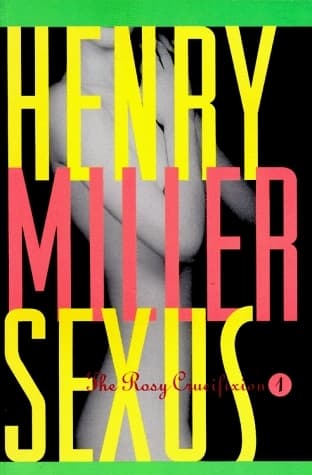
In 1920s Brooklyn, a struggling writer begins a turbulent affair with a dance hall girl, entering a world of passion, artistic ambition, and self-discovery in the bohemian underworld.
The novel starts with Henry Miller, recently married to Maude, thinking about his life in Brooklyn. He works at the 'Cosmodemonic Telegraph Company' but finds his job dull and meaningless. Despite his new home life, Henry feels trapped and unsatisfied, already wanting to leave his wife and duties. He sees his marriage to Maude as temporary, a step to something more, though he is not sure what that is. His days are full of thoughts about art, freedom, and the pointlessness of normal life, setting up his search for self-discovery and sexual freedom, even as he deals with his current life.
Henry starts going to Greenwich Village, drawn to its bohemian feel and the promise of artistic and intellectual excitement. He meets many writers, painters, and unusual people who show the freedom and non-conformity he wants. These meetings make him want to leave his ordinary life and live more genuinely. He has long, philosophical talks about art, sex, and society, finding a temporary escape from his home troubles. This time changes his view significantly, as he starts to actively look for experiences that challenge social norms and his own ideas about life and relationships, further separating him from Maude.
Henry meets Mara, a striking and unrestrained dancer who immediately captivates him with her raw sensuality and independent spirit. She represents everything he feels is missing from his life with Maude — passion, unpredictability, and no middle-class limits. Their first meetings have a strong sexual tension. Mara's presence acts as a powerful trigger, increasing Henry's unhappiness with his marriage and pushing him further towards open rebellion against traditional morals. He becomes obsessed with her, seeing her as a muse and a symbol of the free life he wants, despite the problems her presence brings to his already turbulent life.
Henry begins a passionate affair with Mara, marked by intense physical closeness and a deep emotional bond he feels he has never had before. Their encounters are shown in detail, displaying an open exploration of sexuality. At the same time, Henry continues to live with Maude, keeping up a show of normal home life, though with growing difficulty. He struggles with the guilt of his lies, yet Mara's appeal and the promise of a life without social expectations are too strong to resist. The affair becomes a main part of his life, controlling his thoughts and actions and further separating him from his duties.
Amid his romantic involvements, Henry faces severe money problems. He quits his job at the Cosmodemonic Telegraph Company, choosing a life of poverty to follow his artistic goals. He struggles to find steady work, often relying on friends' generosity or temporary, low-paying jobs. Despite the hardship, he stays committed to writing, seeing it as his only true calling. This period shows his strong dedication to art, even at the cost of comfort and stability. His poverty often puts him in difficult situations, further showing his rejection of capitalism and his choice of a more bohemian, unconventional life.
The love triangle between Henry, Maude, and Mara reaches a breaking point. Maude eventually finds out about Henry's cheating, leading to explosive arguments and emotional breakdowns. Maude is devastated by his betrayal, but Henry, caught between his desire for Mara and a lingering sense of duty, struggles to say how he feels. The house becomes a battleground of accusations, pleas, and blame. Despite the pain he causes, Henry feels an unstoppable pull towards Mara, convinced she holds the key to his artistic and personal freedom. This period has intense emotional instability and a growing sense of crisis in Henry's personal life.
Wanting to escape the city's chaos and the fallout with Maude, Henry and Mara decide to move to the countryside. They imagine a simple life, free from social pressures, where Henry can write and their love can grow. However, their rural peace is short-lived. The change of scenery does little to solve their basic problems. Mara's changing moods and Henry's self-focus lead to new tensions. The countryside's isolation also brings their individual worries to the surface, showing that external changes cannot fix internal conflicts, and their relationship remains as turbulent as ever, despite the temporary calm.
Unable to keep up their life in the countryside, Henry and Mara return to New York, where they continue their unconventional life. Their relationship changes further, with periods of intense passion mixed with arguments and emotional distance. Henry continues to struggle with his writing, feeling pressure to create something meaningful while dealing with financial instability. They move through the city's bohemian groups, meeting old friends and new acquaintances, each interaction shaping their views. The return to the city brings a renewed sense of urgency to Henry's artistic goals and forces him to face the long-term future of his relationship with Mara.
Throughout his difficult experiences, Henry's search for meaning and truth grows stronger. He thinks deeply about existence, art, and human relationships. He reads widely, discusses unusual ideas with friends, and reflects on his own experiences to understand the universe. These intellectual explorations often mix with his sexual adventures, as he sees both as ways to discover himself. His thoughts are often like a stream of consciousness, showing his chaotic inner world and his constant search for a personal philosophy that can combine his desires with his intellectual hopes, often leading to more questions than answers.
As the story goes on, Mara becomes a central, almost legendary figure in Henry's life. Despite their frequent arguments, her unpredictable nature, raw sexuality, and strong spirit continue to inspire and trouble him. She is not just a lover but a muse, a symbol of the wild life he wants to live. Henry sees her as a force of nature, an example of the feminine that both grounds and frees him. Their relationship, though difficult, is shown as important to his artistic and personal growth, a place where his identity as a writer and a man is formed, even as he thinks about a future without her.
Even after their separation and Henry's time with Mara, Maude's presence still affects his life. She represents the traditional, domestic life he purposefully left, a constant reminder of his past choices and the pain he caused. His memories of her, often with guilt and a strange nostalgia, reappear throughout the story. Maude contrasts with Mara, showing the social expectations and responsibilities Henry so strongly rejects. Her lasting influence shows the deep impact of his decision to break free from traditional marriage, highlighting how his journey towards self-freedom is irreversible.
Towards the end of the novel, Henry seriously thinks about leaving America. The idea of moving to Europe, especially Paris, is a recurring thought, representing the ultimate escape and the promise of a truly free artistic and personal life. He feels that America, with its strict values and focus on money, can no longer hold his spirit or help his artistic growth. This desire for a new place shows his constant search for freedom and his belief that a complete change of location and culture is needed for him to fully realize himself. The novel ends with this anticipation, hinting at the further adventures and changes that await him.
The Protagonist
He begins as a man suffocated by conventional life, progressively shedding societal expectations to pursue an uninhibited existence centered on art, sex, and philosophical inquiry.
The Supporting
She evolves from a captivating new acquaintance to Henry's all-consuming lover and muse, maintaining her independent spirit despite their tumultuous relationship.
The Supporting
She begins as Henry's devoted wife, then becomes a victim of his infidelity and a symbol of the life he leaves behind.
The Supporting
He remains a consistent intellectual companion and friend to Henry, providing stability and shared understanding amidst Henry's personal turmoil.
The Supporting
He remains a consistent presence in Henry's bohemian social circle, embodying the unconventional lifestyle.
The Mentioned
Her influence is primarily felt through Henry's recollections, shaping his understanding of past relationships.
The Supporting
He remains a consistent presence within Henry's artistic and intellectual circle.
The Mentioned
They remain static, representing the oppressive world Henry escapes, rather than undergoing personal development.
The novel is about Henry Miller's constant search for his true self. He always questions his role as a husband, a worker, and an artist, letting go of social expectations to create an identity based on real experience and personal truth. His sexual encounters, philosophical thoughts, and artistic efforts are all ways for him to explore himself, leading him to reject traditional morality for an authentic, though often messy, life. This theme appears in his thoughts about his purpose and his choice to leave a stable life for an uncertain artistic future.
“I have no money, no resources, no hopes. I am the happiest man alive.”
Sex is shown not just as a physical act but as a deep philosophical and spiritual experience, important to Henry's search for freedom. Through his open and unrestrained encounters with Mara and others, Miller challenges the strict sexual norms of his time. He sees sex as a way to deeper understanding, a basic force that connects him to the core of life and helps him break free from a puritanical society. The detailed descriptions of sexual acts show this theme, presenting sexuality as a vital and life-changing part of human existence.
“To sing you must first open your mouth. You must have a pair of lungs, and a little knowledge of music. It is not necessary to have a master, or a school, or even a piano. You just sing.”
Henry strongly rejects the values, systems, and ways of life of middle-class society. He sees traditional marriage, steady jobs (like his at the 'Cosmodemonic Telegraph Company'), and money pursuits as stifling and meaningless. His choice of poverty, bohemianism, and a wandering life is a deliberate act of rebellion against what he sees as a false and hypocritical world. This rejection is central to his search for freedom, as he wants to live a life free from the expectations and limits of mainstream culture, even if it means personal hardship and social disapproval.
“The world is not a place where you can find happiness. It's a place where you can only find yourself.”
The novel deeply explores the struggles and reasons of an artist. Henry is driven by a strong desire to write, seeing it as his main purpose, even when facing poverty, rejection, and personal chaos. His life experiences, especially his sexual adventures and philosophical thoughts, are seen as material for his art. The theme shows the artist's need for authenticity, freedom, and a willingness to cross boundaries to express creativity, often at great personal cost. His inner thoughts often focus on the nature of art and the artist's special role in society.
“I am a man who is trying to find himself, and if I have to destroy everything that stands in my way, I will do it.”
Miller presents a complex and often conflicting view of love and relationships. He explores the damaging parts of traditional marriage through his relationship with Maude, comparing it with the raw, passionate, and often difficult connection he shares with Mara. Love is shown as a powerful, sometimes overwhelming force, often mixed with desire, jealousy, and pain. The novel challenges traditional ideas of loyalty and commitment, suggesting that real connection might exist outside social norms, even if it causes emotional wreckage. His relationships are less about romantic ideals and more about deep, often painful, self-discovery.
“Love is a game, and the more you play, the more you lose.”
Narrative technique mirroring Henry's unfiltered thoughts and experiences.
The novel is largely narrated through Henry Miller's stream of consciousness, presenting his thoughts, feelings, memories, and observations in a continuous, unfiltered flow. This device allows readers direct access to Henry's complex inner world, his philosophical musings, sexual fantasies, and existential anxieties. It blurs the lines between plot, reflection, and digression, creating an intimate and immersive experience that mirrors the chaotic, non-linear nature of human thought. This technique is crucial for conveying Henry's subjective reality and his unique perspective on life, love, and art, making the reader feel deeply embedded in his psyche.
Blending personal experience with fictionalized elements for raw authenticity.
While presented as fiction, 'Sexus' is deeply autobiographical, drawing heavily from Henry Miller's own life experiences, relationships, and philosophical development. This device lends a raw, confessional authenticity to the narrative, making the protagonist's struggles and triumphs feel intensely personal and real. Miller uses his own life as source material, often exaggerating or reinterpreting events to serve his artistic and thematic purposes. This blending of fact and fiction allows for an unvarnished exploration of controversial themes, giving the work a powerful, almost documentary-like quality despite its fictional framing.
Graphic descriptions of sex as a means of philosophical and personal exploration.
The novel employs explicit sexual detail not merely for shock value, but as a fundamental device for exploring themes of liberation, identity, and the primal aspects of human nature. These graphic descriptions challenge societal taboos and serve to underscore Henry's rejection of conventional morality. Sex is depicted as a transformative experience, a path to self-discovery, and a powerful force that connects individuals to their deepest desires and to the essence of life itself. The explicitness is integral to Miller's philosophical project, pushing the boundaries of what literature can express about the human condition.
Extended passages of introspection and commentary on life, art, and society.
Throughout the narrative, Henry engages in extensive philosophical monologues and digressions, often interrupting the plot to offer his profound (and sometimes rambling) insights on a wide range of subjects: art, love, society, religion, and the meaning of existence. These passages are central to the novel's intellectual core, allowing Miller to articulate his worldview and challenge conventional thought. They provide depth to Henry's character, revealing his relentless intellectual curiosity and his desire to understand the fundamental truths of life, often overshadowing the narrative action itself and giving the book its distinctive philosophical weight.
“I have no money, no resources, no hopes. I am the happiest man alive.”
— A declaration of self-liberation and contentment despite material lack.
“The world is a cancer, and my only hope is to die laughing.”
— A darkly humorous, cynical view of the world's state.
“To sing you must first open your mouth. You must have a pair of lungs, and a little knowledge of music. It is not necessary to have a master's degree in music. But you must have some desire to sing. And you must not be afraid to make a fool of yourself.”
— A metaphor for engaging with life and art, emphasizing courage and desire over formal training.
“All my life I've been running away from something. I've been running away from myself.”
— A moment of introspection regarding personal identity and self-acceptance.
“The aim of life is to live, and to live means to be aware, joyously, drunkenly, serenely, divinely aware.”
— A philosophical statement on the essence and purpose of existence.
“Every man has his own destiny: the only imperative is to follow it, to accept it, no matter where it leads him.”
— Reflecting on the acceptance of one's individual path.
“What is not in the open is not.”
— A concise statement about truth and authenticity, suggesting hidden things lack reality.
“The moment one ceases to be a child, one is dead.”
— Emphasizing the importance of maintaining childlike wonder and curiosity.
“I am a man of peace, but if war comes, I will be the first to fight.”
— A paradoxical statement illustrating complex human nature and a readiness to defend values.
“To imagine a language is to imagine a form of life.”
— A subtle nod to the interconnectedness of language and experience, perhaps inspired by Wittgenstein.
“One's destination is never a place but rather a new way of looking at things.”
— A profound observation on the true nature of travel and personal growth.
“The only thing we can be sure of is change.”
— A fundamental philosophical insight into the constant flux of existence.
“Life is a journey, not a destination.”
— A classic aphorism emphasizing the value of the process over the end result.
“The greatest prison where I live is myself.”
— A poignant reflection on internal struggles and self-imposed limitations.
Ready to see how well you understood this book? Take our interactive quiz with 10 questions.
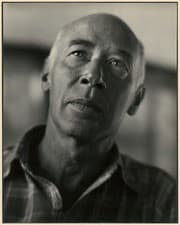
Henry Valentine Miller was an American novelist. He broke with existing literary forms and developed a new type of semi-autobiographical novel that blended character study, social criticism, philosophical reflection, stream of consciousness, explicit language, sex, surrealist free association, and mysticism. His most characteristic works of this kind are Tropic of Cancer, Black Spring, Tropic of Capricorn, and the trilogy The Rosy Crucifixion, which are based on his experiences in New York and Paris. He also wrote travel memoirs and literary criticism, and painted watercolors.

Ashley Antoinette
4.6

Mark McDonald
4.4
Luo Guanzhong
4.4
Mia McKenzie
4.3
Dorothy Parker
4.3
Joaquim Maria Machado de Assis
4.3
James Thurber
4.2
Terry Kay
4.2