“It’s as if, when the first person singular is no longer a possibility, the second person singular takes its place.”
— The narrator reflects on the shift in his identity and relationships after his life changes.

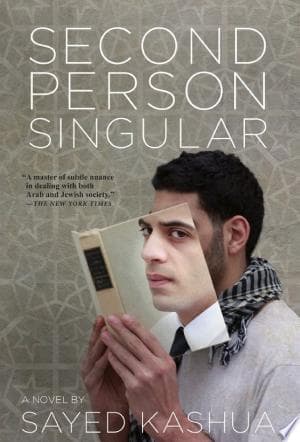
Sayed Kashua (2012)
Genre
Fiction
Reading Time
240 min
Key Themes
See below
Sign in to track this book
An Arab-Israeli lawyer's carefully built life falls apart due to jealousy and an identity crisis after he finds a love letter in his wife's handwriting, leading him to track down the letter's former owner.
The unnamed narrator, an Arab-Israeli criminal attorney in Jerusalem, prides himself on his integrated identity. He lives in a large house with his wife and two children, drives a Mercedes, and visits a local bookstore often to maintain an intellectual image. One evening, he buys a used copy of Tolstoy's 'The Kreutzer Sonata,' a book his wife had suggested. To his shock, he finds a handwritten love letter in Arabic tucked inside. The handwriting is his wife's, and the letter speaks of deep affection and a secret affair, immediately sending the lawyer into a spiral of suspicion.
The love letter shatters the lawyer's carefully constructed world and his sense of marital security. He becomes obsessed with identifying the recipient, a man named Yonatan, whose name is in the letter. Driven by betrayal and a need for answers, he begins a secret investigation. His search is not only for Yonatan but also for the truth behind his wife's perceived infidelity, leading him down a path of secrecy and increasingly erratic behavior, jeopardizing his composure and professional life.
Through his inquiries, the lawyer slowly learns about Yonatan. He discovers Yonatan was a Jewish social worker with a complex relationship with his family, especially his father. Yonatan later left social work for art, causing more friction. The lawyer's investigation reveals Yonatan's struggles with identity and belonging, mirroring the lawyer's own internal conflicts. These initial findings intensify the lawyer's need to confront Yonatan and understand his full connection to his wife.
The lawyer learns that Yonatan is holding an art exhibition. He sees this as a chance to finally meet Yonatan, observe him, and perhaps confront him about the letter. He attends the exhibition, filled with apprehension and determination. The art itself, personal and reflective of Yonatan's inner world, offers more clues to his character. The lawyer observes Yonatan from a distance, studying his demeanor, trying to reconcile the image of the man with the perceived threat to his marriage. This indirect encounter further fuels his obsession.
The story begins to weave in Yonatan's past as a child of a secular Jewish family in Jerusalem. Yonatan's upbringing is marked by not fitting in, a feeling made worse by his father's strict expectations and his own artistic inclinations. He struggles with his identity, feeling alienated from both religious and secular Israeli society. His path to becoming a social worker and then an artist is explored, showing his search for meaning and connection, often leading to disillusionment. His story provides a contrasting yet parallel exploration of identity and belonging.
A key event in Yonatan's life is a long stay in a hospital, the reasons for which are initially unclear. During this time, he deals with his mental and physical health, reflecting deeply on his life choices and aspirations. This hospitalization becomes a turning point, pushing him further from his social work career and solidifying his decision to pursue art. He also meets various people who influence his perspective, shaping his understanding of connection, vulnerability, and the human condition. The hospital is a crucible for his transformation.
As the lawyer's investigation into Yonatan deepens, his own life begins to fall apart. His professional focus wanes, his interactions with his wife become strained and suspicious, and his controlled demeanor gives way to paranoia and erratic behavior. He constantly scrutinizes his wife's actions and words, searching for any sign of her alleged infidelity. The pursuit of Yonatan becomes an all-consuming quest, blurring the lines between his public persona and his internal turmoil, ultimately threatening his reputation and family stability.
The novel reveals how the lives of the unnamed lawyer and Yonatan are more connected than they first appear. Their paths cross in unexpected ways, not just through the lawyer's wife, but through shared experiences, institutions, and even subtle, unacknowledged interactions from their pasts. This web of connections highlights the idea that individuals, especially in a complex society like Israel, are often unknowingly linked, and that personal histories can unexpectedly converge, creating unforeseen consequences and challenging perceptions of individual autonomy and identity.
The climax of the lawyer's investigation uncovers the truth behind the love letter. It is revealed that the letter was not written by his wife to Yonatan in an affair. Instead, the letter was written by Yonatan's mother to his father, found within the pages of 'The Kreutzer Sonata' by Yonatan himself. The lawyer's wife, having previously read the book and knowing its importance to Yonatan, had simply returned it to him. This revelation completely overturns the lawyer's assumptions, exposing the depths of his paranoia and the fragility of his perceptions.
The truth about the letter forces the lawyer to confront his own biases, his insecurity, and the extent of his misjudgment. While the immediate threat of infidelity is gone, the emotional damage from his intense jealousy and suspicion remains. His relationship with his wife has been strained, and his self-perception as a rational individual is shattered. The novel ends with the lawyer facing the aftermath of his obsessive quest, left to reconcile his actions with his identity and grapple with the lasting impact of his journey into suspicion and self-deception.
The Protagonist
He transforms from a seemingly composed and successful professional into a paranoid and obsessive man, ultimately confronting the fragility of his identity and the destructive power of his own biases.
The Supporting
Yonatan's arc is largely revealed through flashbacks and the lawyer's investigation, showing his evolution from a dutiful son to an independent artist seeking his own path.
The Supporting
Her character remains relatively static in terms of personal development, but her portrayal shifts from an ideal wife to a suspected betrayer, and finally to a victim of her husband's misjudgment.
The Mentioned
Her arc is presented retrospectively, revealing her hidden emotional life and the lasting impact of her intimate correspondence.
The novel explores the complexities of identity, especially for Arab-Israelis navigating a dual cultural existence. The unnamed lawyer tries to balance his Arab heritage with his desire to be seen as a sophisticated, integrated Israeli. He feels like an outsider in both worlds, leading to deep insecurities. Yonatan, a Jewish Israeli, also struggles with his identity, feeling alienated from his family's expectations and seeking his own path through art. Their parallel searches highlight the universal human need for belonging and the challenges of forging a unique identity amidst societal pressures, as seen in the lawyer's relentless pursuit of a 'perfect' image.
““I had carefully constructed an identity, a facade, that I believed made me invisible to judgment. But the letter shattered it all.””
Jealousy and paranoia are the central forces driving the plot. The discovery of the love letter immediately sends the lawyer into an obsessive spiral, where suspicion overrides reason. He projects his own insecurities onto his wife and Yonatan, creating an elaborate story of betrayal that has little basis in reality. This theme shows in his increasingly erratic behavior, his constant surveillance of his wife, and his relentless investigation into Yonatan's life, demonstrating how unchecked suspicion can warp perception and destroy trust.
““Suspicion, once planted, grows into a monstrous tree, its branches reaching into every corner of your mind.””
The novel plays with the difference between what characters perceive and what is true. The lawyer creates an entire reality based on one piece of evidence—the love letter—misinterpreting its origin and intent. He sees his wife's innocent actions as betrayal, and Yonatan as a rival. The narrative slowly reveals the true, more mundane, story behind the letter. This theme highlights how personal biases, fears, and cultural assumptions can distort understanding, leading to profound misunderstandings and personal turmoil.
““I had built an entire world on a single word, a single piece of handwriting, and it was all a house of cards.””
The past strongly influences the characters' present lives. The love letter itself is from Yonatan's parents' past, resurfacing to create a crisis in the lawyer's present. Yonatan's struggles with his family history and his father's expectations shape his life choices. The lawyer's own internal conflicts are rooted in his past experiences as an Arab in Israeli society. The novel suggests that personal and collective histories are not easily shed, and that echoes of the past can unexpectedly intrude upon and redefine contemporary experiences, often with dramatic consequences.
““The past is never truly past; it lies in wait, ready to ambush the present when you least expect it.””
An object that drives the plot forward, despite its true nature being less important than its effect.
The love letter found in 'The Kreutzer Sonata' serves as a classic MacGuffin. Its content and perceived authorship are the initial catalyst for the entire plot, driving the lawyer's obsession and investigation. However, the true significance of the letter is not in its actual message or sender (which turns out to be a misunderstanding), but in its ability to propel the protagonist into action, exposing his deep-seated insecurities and prejudices. The letter itself is merely a trigger for a much deeper psychological exploration of the narrator.
The story is told from alternating viewpoints, initially focused on one character before introducing another.
The novel employs a shifting narrative perspective, primarily focusing on the unnamed lawyer's first-person account of his paranoia, and then gradually introducing Yonatan's story, often in the third person or through the lawyer's piecemeal discoveries. This device creates suspense and allows the reader to experience the lawyer's subjective, often misguided, interpretation of events before slowly revealing Yonatan's objective reality. It also highlights the parallel yet distinct struggles of two men from different backgrounds, ultimately converging their stories in unexpected ways.
The audience is aware of information that the characters are not, creating tension.
Dramatic irony is a key element throughout the lawyer's investigation. The reader is often privy to subtle clues or contextual information that the lawyer, blinded by his jealousy, either misses or misinterprets. For example, the reader might infer Yonatan's innocence or the true nature of the letter before the lawyer does, building tension and highlighting the tragic flaw in the protagonist's perception. This device allows the reader to anticipate the eventual revelation and observe the lawyer's self-deception unfold.
A literary work within the story that reflects and foreshadows themes.
Tolstoy's 'The Kreutzer Sonata' is not just a plot device for holding the letter; it functions as a powerful symbol. The original novel deals with themes of marital jealousy, infidelity, and the destructive nature of possessive love, directly mirroring the lawyer's descent into paranoia. By embedding this specific book within the narrative, Kashua immediately establishes a thematic framework, foreshadowing the lawyer's emotional journey and providing an intertextual commentary on the destructive potential of unchecked suspicion within a marriage.
“It’s as if, when the first person singular is no longer a possibility, the second person singular takes its place.”
— The narrator reflects on the shift in his identity and relationships after his life changes.
“A man’s life is nothing but a series of adjustments to his disappointments.”
— The protagonist ponders the nature of human existence and coping mechanisms.
“The worst part is not the lying, but the constant fear of being caught.”
— Referring to the narrator's secret life and the anxiety it brings.
“He had always believed that his job was to tell stories, not to live them.”
— The protagonist, a writer, grapples with the blurring lines between his fiction and reality.
“Memory is a cruel master, especially when it brings back what you’ve tried so hard to forget.”
— Reflecting on past events that continue to haunt the narrator.
“You can change your clothes, your address, even your name, but you can never escape yourself.”
— A realization about the inescapable nature of one's true identity.
“Every secret is a burden, and some burdens are heavier than others.”
— The narrator's thoughts on the weight of his hidden life.
“He wondered if anyone truly knew him, or if he was just a collection of roles he played for different people.”
— An internal questioning of his authenticity in relationships.
“The past is not dead; it is not even past. It’s just waiting for you to stumble upon it again.”
— A reflection on the persistent influence of past events on the present.
“Sometimes, the only way to move forward is to pretend you’re someone else.”
— The narrator's justification for his adopted identity.
“He had built a life on sand, and now the tide was coming in.”
— A metaphor for the fragility of the protagonist's fabricated existence.
“The greatest tragedy is not failing, but never having tried to be who you truly are.”
— An implicit critique of the narrator's choices and his hidden self.
“To be seen is to be vulnerable, and vulnerability was a luxury he could not afford.”
— Explaining the protagonist's reluctance to reveal his true self.
“Every man has two lives: the one he lives, and the one he pretends to live.”
— A core theme of the novel, reflecting the protagonist's dual existence.
Ready to see how well you understood this book? Take our interactive quiz with 10 questions.

Ashley Antoinette
4.6

Mark McDonald
4.4
Luo Guanzhong
4.4

Mia McKenzie
4.3
Dorothy Parker
4.3

Joaquim Maria Machado de Assis
4.3
James Thurber
4.2

Terry Kay
4.2