“All my life I had been told that I was a girl and that I was black; that alone was a double burden.”
— Adah reflects on the societal expectations and prejudices she faces from a young age.

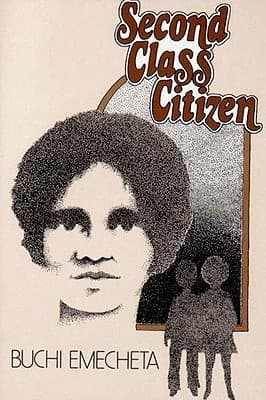
Buchi Emecheta (1977)
Genre
Fiction
Reading Time
240 min
Key Themes
See below
Sign in to track this book
Adah, a Nigerian woman, fights patriarchal traditions and societal obstacles to build an independent life in London, showing resilience in the face of adversity.
Adah, a young girl from Ibuza, Nigeria, grows up wanting an education, a dream her community often dismisses as only for boys. She is drawn to the idea of the United Kingdom, a place her father’s cousin, Mr. Nweze, describes as a utopia where everyone is equal. Adah’s determination leads her to defy expectations, sneaking into school and doing well academically. Her father, a progressive man, supports her education, but his sudden death leaves Adah vulnerable to her mother's more traditional views. Despite this, Adah continues to fight for her schooling, seeing it as her only path to a better future and to fulfilling her dream of traveling to the UK.
To escape relatives who plan to marry her off, Adah arranges her own marriage to Francis Obi, a young man she barely knows but who seems to share her goals. They move to Lagos, where Adah quickly gets a good job as a librarian at the American Consulate, which pays well and includes housing. Francis, meanwhile, struggles to find stable work, relying heavily on Adah's income. Despite their different levels of success, Adah believes in Francis's potential and supports his efforts to study for his accountancy exams. She also starts having children, a common expectation in Nigerian society, even as she balances her demanding job and household duties.
Adah's long-held dream of going to the United Kingdom finally happens when Francis decides to study accountancy there. Adah, despite her worry about leaving her secure job, agrees to move with their two young children, Vicky and Titi. They arrive in London to a harsh reality: the UK is not the promised land of equality she imagined. They settle in a run-down room in Kentish Town. Francis, instead of finding the opportunities he expected, struggles to adjust, becoming increasingly dependent and resentful. Adah quickly realizes that her romanticized image of London is far from the cramped, often hostile environment they now live in.
Life in London proves to be a constant struggle for Adah. She faces extreme poverty, racial discrimination from landlords and neighbors, and the challenge of raising her children in a foreign land. Francis, instead of focusing on his studies, becomes lazy and abusive, blaming Adah for their problems. He forbids her from working, believing it shames him, despite their dire financial state. Adah, however, is resourceful and determined. She secretly takes on odd jobs, like working in a factory, to provide for her children, often hiding her earnings from Francis to keep him from wasting them. The dream of the UK slowly disappears under the weight of their daily struggles.
Against Francis's wishes and in the middle of their financial struggles, Adah becomes pregnant with her third child. Francis is angry, seeing another child as an unbearable burden. He calls the unborn baby 'illegal' due to their uncertain financial state and crowded living conditions. Despite his cruelty, Adah carries the pregnancy to term, giving birth to a daughter whom she names Adah, after herself. This birth highlights the deep difference between Adah's resilience and Francis's increasing irresponsibility and lack of empathy, strengthening her resolve to protect her children and secure their future, even if it means defying her husband.
Francis's resentment and frustration lead to increasing physical and emotional abuse towards Adah. He often beats her, locks her out of their room, and verbally assaults her, often in front of their children. He blames her for their poverty and for his inability to pass his exams, despite his own lack of effort. Adah, though bruised and humiliated, refuses to be broken. She finds comfort in her children and her secret writing, which becomes her only escape. Her resilience is tested daily as she navigates the constant threat of Francis's temper while trying to maintain a sense of normalcy for her children and pursue her own intellectual growth.
Despite Francis's attempts to control her and deny her access to books, Adah secretly continues to educate herself. She goes to the local library often, reading books and newspapers, and even enrolls in a typing course. Her greatest ambition, however, is to write a novel. She begins to write about her experiences, pouring her heart and struggles onto paper. This act of writing becomes her rebellion, her voice, and her way to self-expression and eventual independence. Francis discovers her manuscript, titled 'The Bride Price,' and, in a fit of rage and jealousy, burns it, calling her aspirations foolish. This destructive act, however, only strengthens Adah's resolve to write and to leave him.
The burning of her manuscript is the final straw for Adah. She realizes that her marriage to Francis cannot be saved and that for her and her children to survive, she must leave him. She begins to actively seek ways to secure her independence, considering options like social services for her children. She confides in her friend, Janet, and begins to explore her legal rights as a woman in the UK. This decision is not easy, as it goes against traditional Nigerian cultural norms, but Adah's determination to protect her children and reclaim her own life outweighs her fear of societal judgment and the unknown.
Facing homelessness and Francis's continued abuse, Adah makes the difficult decision to temporarily place her children, Vicky and Titi, into the care of social services. This is a deep cultural taboo, as Nigerian mothers are expected to always keep their children with them. The separation is heartbreaking for Adah, but she sees it as a necessary step to stabilize her life and secure a safe environment for her children while she finds her footing. She visits them regularly, reassuring them of her love and her plan to reunite their family. This act shows Adah's immense sacrifice and her commitment to her children's well-being.
With the help of social workers and her growing understanding of her rights, Adah formally separates from Francis. She gets her own small flat, creating a safe home for herself and her children. Francis continues to harass her, demanding money and trying to control her, but Adah stands firm. She finds a job, enrolls her children in school, and begins to rebuild their lives. She eventually gets her children back from foster care, and they start a new chapter, free from Francis's abuse. Adah, though still facing challenges as a single Black mother in London, has achieved a deep sense of independence and self-worth.
Adah, now truly independent, embraces her identity as a strong, resourceful woman and a writer. She continues to work, care for her children, and write, unaffected by Francis's attempts to sabotage her. She recognizes that the 'second class citizen' status she experienced, both in Nigeria as a girl wanting education and in London as an immigrant, no longer defines her. She has made her own path, showing immense courage and resilience. The novel ends with Adah looking towards the future with hope, determined to publish her stories and provide a better life for herself and her children, embodying self-reliance and defying societal limits.
The Protagonist
Adah transforms from a naive dreamer into a self-reliant, independent woman who reclaims her voice and agency after enduring immense hardship.
The Antagonist
Francis devolves from a seemingly promising young man into a resentful, abusive, and utterly dependent individual who loses everything due to his own failings.
The Supporting
Vicky grows up amidst hardship but is ultimately provided a chance for a stable life by her mother's sacrifices.
The Supporting
Titi's early life is marked by instability, but her mother's determination secures her a chance at a more stable upbringing.
The Supporting
Born into hardship, she represents the new generation for whom Adah strives to create a better life.
The Supporting
Janet remains a steadfast friend, offering consistent support and guidance to Adah through her journey to independence.
The Mentioned
His initial influence shapes Adah's early dreams, though he plays no role in her later struggles.
The Supporting
Her initial opposition to Adah's education gradually lessens as Adah proves her determination, but she remains rooted in traditional values.
The Supporting
His early support empowers Adah, but his death leaves her to navigate patriarchal society on her own.
Adah's journey is about defining herself outside the roles her culture and husband assign her. From her childhood fight for education in Ibuza to her decision to leave Francis and pursue writing in London, she consistently asserts her right to an individual identity. Her refusal to be a 'second class citizen,' whether as a girl in Nigeria or a Black immigrant woman in the UK, drives her actions. This theme is clear when she names her third daughter Adah, symbolizing her self-affirmation, and when she secretly writes her novel, claiming her voice.
“She was a woman, and a black one at that, so she had to be a second-class citizen. But she was not going to be one.”
The United Kingdom is first presented as a utopian 'heaven' in Adah's childhood imagination, a place of equality and opportunity. However, upon arrival, she finds a harsh reality of poverty, racism, and social indifference. This contrast between expectation and reality shatters her romanticized view. The theme explores how external perceptions of a place can differ from the lived experience, especially for immigrants facing systemic discrimination, as seen in the run-down housing and the casual racism Adah experiences from landlords and neighbors.
“The United Kingdom was not a dream, it was a nightmare. It was a place where people were rude to you because of the colour of your skin.”
The novel examines the widespread nature of patriarchy, both in traditional Nigerian society and within Adah's marriage. In Nigeria, Adah battles the expectation that education is for boys and that a woman's main role is marriage and childbearing. In London, Francis embodies this patriarchy, expecting Adah to be subservient, financially dependent, and to give up her ambitions. His abuse and control come from his belief in male superiority. Adah's fight for independence challenges these patriarchal structures, ending with her decision to leave him and raise her children alone.
“In Nigeria, a woman was a second-class citizen. In England, she was a third-class citizen.”
Adah's role as a mother is central to her identity and her motivations. Her children are both her greatest joy and her heaviest burden, especially with poverty and abuse. She makes great sacrifices for them, working secretly, enduring Francis's cruelty, and even making the difficult decision to temporarily place them in foster care to ensure their safety and future. Her unwavering love and commitment to her children drive her to seek independence and provide them with a better life, showing the profound strength and resilience in maternal love.
“Her children were her life. She would do anything for them, even if it meant sacrificing her own happiness.”
Education is Adah's lifelong aspiration and her main tool for liberation. From her early determination to attend school in Ibuza to her secret library visits and her pursuit of writing in London, knowledge empowers her. Literature, especially her own novel, becomes her voice and her way of processing her experiences and asserting her identity. Francis's burning of her manuscript symbolizes his attempt to silence her, but it ultimately strengthens her resolve to write and to achieve intellectual freedom, proving that the power of words cannot be destroyed.
“Books were her only friends, her only hope, her only escape.”
Hints at future difficulties and the disillusionment of the 'dream'
Foreshadowing is used to hint at the challenges Adah will face. Early descriptions of the UK as a 'heaven' or 'paradise' subtly set up the eventual disillusionment, suggesting that such an idealized vision cannot be sustained. Francis's initial laziness and reliance on Adah's income in Lagos foreshadow his later irresponsibility and abusive behavior in London. Adah's struggles with traditional expectations in Ibuza also foreshadow the larger battles she will fight against patriarchal control in her marriage and as an immigrant in a new country.
The contrast between Adah's expectations of the UK and its harsh reality
Situational irony is prominent in the novel, particularly concerning Adah's expectations of the United Kingdom. She envisions it as a land of equality, opportunity, and escape from traditional constraints, a 'heaven' where everyone is treated fairly. The reality, however, is a stark contrast: she encounters poverty, racism, and a society that often treats her as a 'second class citizen.' This ironic reversal of her dreams highlights the systemic barriers faced by immigrants and the gap between idealized perceptions and lived experiences.
Adah's written work symbolizes her voice, identity, and freedom
Adah's manuscript, 'The Bride Price,' is a powerful symbol. It represents her voice, her intellectual aspirations, her personal story, and her burgeoning independence. The act of writing is her way of processing her experiences and asserting her identity. When Francis discovers and burns the manuscript, it symbolizes his attempt to silence her, destroy her dreams, and maintain control over her. However, this act ultimately serves as the catalyst for Adah's final break from him, making the manuscript a symbol of her eventual liberation rather than her defeat.
Provides intimate insight into Adah's thoughts and feelings
The novel is primarily told through a limited omniscient first-person perspective, focusing almost exclusively on Adah's internal world. This narrative choice allows readers deep access to her thoughts, emotions, and struggles, fostering empathy and understanding for her experiences. We understand her motivations, her dreams, her fears, and her resilience directly from her point of view. While it limits our insight into other characters' inner lives, it powerfully immerses us in Adah's journey of self-discovery and survival, making her story intensely personal and impactful.
“All my life I had been told that I was a girl and that I was black; that alone was a double burden.”
— Adah reflects on the societal expectations and prejudices she faces from a young age.
“To be a Nigerian woman in England was to be a second-class citizen.”
— Adah's poignant realization about her status and struggles as an immigrant.
“What was the point of being educated if you could not use your education?”
— Adah's frustration with her inability to pursue her professional ambitions despite her qualifications.
“She was a woman, and a black woman at that, and so she must always be grateful for any crumbs of kindness thrown her way.”
— Adah's internal observation about the condescending attitudes she often encounters.
“The greatest joy for a woman was to be a mother.”
— A prevailing societal belief in Nigeria that Adah initially internalizes but later questions.
“She was alone in this big, cold country, with no one to turn to.”
— Adah's feeling of isolation and vulnerability after moving to England.
“She decided that she would be a writer, no matter what.”
— Adah's determined resolution to pursue her dream of writing, despite all obstacles.
“It was her life, and she was going to live it the way she wanted.”
— Adah's growing assertiveness and desire for autonomy over her own life choices.
“The children were hers, and she would fight for them.”
— Adah's fierce protectiveness and love for her children, especially when facing hardship.
“She was learning to be selfish, and she liked it.”
— Adah's embrace of self-care and prioritizing her own needs, a departure from her upbringing.
“There was no such thing as a free lunch, especially not for a black woman.”
— Adah's cynical but realistic view of the world, understanding that opportunities often come with hidden costs or expectations.
“She had to make her own way, create her own path.”
— Adah's realization that she cannot rely on others and must forge her own future.
“The future was not a place to be feared, but a place to be conquered.”
— Adah's growing courage and optimistic outlook despite her past struggles, as she looks towards a new chapter.
Ready to see how well you understood this book? Take our interactive quiz with 10 questions.
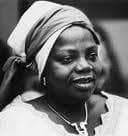
Buchi Emecheta was a prolific Nigerian novelist andонер known for her unflinching portrayal of the experiences of African women. Her seminal works, including 'The Joys of Motherhood,' 'The Bride Price,' and 'Second Class Citizen,' explore themes of female independence, cultural conflict, and post-colonial identity. Emecheta's powerful narrative voice and realistic depiction of societal pressures cemented her status as a significant voice in post-colonial literature.

Ashley Antoinette
4.6

Mark McDonald
4.4
Luo Guanzhong
4.4

Mia McKenzie
4.3

Dorothy Parker
4.3

Joaquim Maria Machado de Assis
4.3

James Thurber
4.2

Terry Kay
4.2