“He had been to a public school and a university and knew, therefore, that the world was full of things that he had never heard of.”
— Describing William Boot's initial naiveté and education.

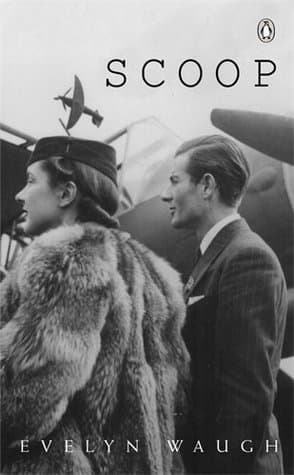
Sign in to track this book
In Evelyn Waugh's satirical novel, an unwitting nature correspondent is mistakenly sent to cover a war in the fictional African nation of Ishmaelia, comically exposing the sensationalism and errors of Fleet Street journalism.
Lord Copper, the powerful and often misguided owner of the 'Daily Beast' newspaper, is at a dinner party. Mrs. Algernon Smith mentions a promising young writer named John Boot. Mistaking him for a distant cousin, William Boot, a reclusive nature columnist who writes the popular 'Lush Places' column, Lord Copper decides to send 'Boot' to cover a coming war in the fictional African country of Ishmaelia. William Boot, living a quiet life in the English countryside, is horrified by the sudden call to London and the news that he is to become a war correspondent, a job he is completely unsuited for. He tries to protest, but Lord Copper's orders are final, and the newspaper quickly prepares him for departure.
Despite having no experience and feeling very uncomfortable with war reporting, William Boot receives an elaborate and unsuitable tropical kit from the 'Daily Beast'. He is given a large expense account, many gadgets he doesn't understand, and endless useless advice. His attempts to explain the mistake to editors and officials are met with blank stares or laughter. He is simply 'Boot,' the new star correspondent, and his fate is set. With a varied group of other journalists from rival papers, including the experienced and cynical Shumble and the flamboyant Wenlock Jakes, William begins the long journey to Ishmaelia, completely out of his depth and full of fear.
William Boot arrives in Jacksonburg, the capital of Ishmaelia. The city is full of foreign journalists, diplomatic schemes, and general disorder. The 'war' itself is hard to find, with no clear front lines or fighters. The foreign press corps, including seasoned veterans and equally confused newcomers, stay at the luxurious Jacksonburg Hotel. They spend their days inventing stories, filing sensational but often false reports, and competing for non-existent scoops. William, overwhelmed by the heat, noise, and absurdity, struggles to understand anything. He feels isolated, unable to connect with other journalists or find any real news to report. Instead, he relies on his basic survival instincts and a wish to return home.
The 'war' in Ishmaelia remains largely a product of the journalists' imaginations. With no real fighting to report, the foreign correspondents resort to making up stories, exaggerating minor events, and copying each other's reports. Wenlock Jakes, a famous correspondent, is especially good at creating dramatic stories from nothing, often sending the same story with small changes to different papers. William Boot, unable to join this pretense, feels increasingly frustrated. He tries to report on local plants and animals, which amuses and confuses his editors back in London. The competition for 'scoops' becomes more desperate, leading to absurd lengths to invent news.
Through accidental encounters and misunderstandings, William Boot stumbles upon a real international conspiracy. German, Italian, and Soviet agents are competing for influence in Ishmaelia. He unknowingly becomes a pawn in their plans, befriending a young, charming German agent and getting caught in a small fight he barely understands. While the other journalists continue to invent their tales, William, because of his naive honesty and simple observations, begins to put together pieces of real events. He sends back a series of factual, though understated, reports about the true nature of the political maneuvering. These, in the context of the fabricated news, are seen as groundbreaking revelations by the 'Daily Beast'.
Just as the international powers are about to secure their influence, a real, though brief, revolution breaks out in Ishmaelia. The country's leader, Dr. Benito Azani, is overthrown, and the foreign journalists are suddenly in the middle of actual events. William Boot, far from being a skilled war correspondent, survives the chaos through luck and the kindness of strangers. He meets the deposed Dr. Azani and, through comical misinterpretations, helps him escape. The other journalists, still focused on their made-up stories, are largely unaware of the true nature of the uprising, continuing to send back sensationalized but inaccurate reports.
Having unknowingly played a role in the Ishmaelian events, William Boot returns to England. He is hailed as a national hero and the 'Daily Beast's' greatest correspondent. His simple, factual reports, which stood out from the extravagant lies of his rivals, are seen as brilliant investigative journalism. Lord Copper, completely unaware of his initial mistake, takes full credit for discovering William's talent. William receives many awards, public speaking invitations, and a large bonus. He is very uncomfortable with the attention and false praise, wanting only the quiet solitude of his country home and his 'Lush Places' column. The irony of his situation is lost on everyone but himself.
Meanwhile, the actual John Boot, the aspiring novelist Lord Copper had originally intended to send to Ishmaelia, has been living in obscurity and frustration. He has been trying to get into journalism, sending serious, well-researched articles to various papers, only to be rejected. He watches with growing bitterness as his distant cousin, William, is praised for reports he believes he could have written better. John Boot remains an unrecognized talent, a victim of Lord Copper's random decisions and the chaotic nature of the newspaper world. His situation sharply contrasts with William's undeserved success, showing the theme of unearned recognition.
Despite his new fame and the demands of celebrity, William Boot longs for his previous life. He struggles to write anything meaningful for the 'Daily Beast' after his return, finding no inspiration in the manufactured drama of Fleet Street. Eventually, the fickle public and the even more fickle newspaper industry forget about his 'heroics.' William is able to retreat back to his beloved country estate, resuming his 'Lush Places' column, which continues to be popular with readers. The column becomes his sanctuary, a place where he can genuinely express himself and observe the natural world, far from the absurdity and superficiality of the news cycle. His brief experience as a war reporter becomes a distant, confusing memory.
The novel ends with Lord Copper, still confident in his own judgment, about to make another huge error. He is considering sending another unsuspecting person to cover a new, vaguely defined international crisis. The cycle of misinformation, incompetence, and accidental success seems likely to repeat within the 'Daily Beast' empire. The message is that news production, especially under leaders like Lord Copper, is flawed and prone to absurdity. Genuine talent is often overlooked for chance and sensationalism. William Boot's story illustrates this comedic and satirical truth.
The Protagonist
William is thrust from his quiet, predictable life into the chaotic world of war reporting, enduring bewildering experiences, only to return to his original state, albeit with a temporary, undeserved reputation.
The Antagonist/Catalyst
Lord Copper remains static, his unwavering self-belief and incompetence driving the plot without him ever learning or changing.
The Supporting
Salter's arc involves continued, if increasingly weary, efforts to manage the chaos created by Lord Copper, without ever truly challenging the system.
The Supporting
Jakes remains consistently deceitful and successful through his fabrications, highlighting the corruptibility of the news industry.
The Supporting
Shumble's arc is minimal, serving more as an observer and a foil, his cynicism remaining constant.
The Mentioned
John's arc is one of unfulfilled potential and growing frustration, as he remains in obscurity while his cousin is lauded.
The Supporting
Azani experiences a fall from power and a subsequent escape, demonstrating resilience in the face of political upheaval.
The Mentioned
Mrs. Smith has no arc, serving purely as a catalyst for the initial misunderstanding.
The novel satirizes the sensationalism, incompetence, and outright fabrication common in the newspaper industry. Lord Copper's arbitrary decisions, the journalists' invention of news, and the public's gullibility all show the media as a farcical, self-serving entity. This is clear in the entire premise of William Boot, a nature writer, being sent to cover a war, and the praise he later receives for simply reporting facts in a world of lies. The 'war' itself is made up, showing the media's power to create its own reality.
“Up to a point, Lord Copper.”
Scoop explores the blurred lines between truth and fiction, especially in news reporting. The journalists in Ishmaelia, desperate for stories, openly invent events, characters, and conflicts. William Boot's accidental success comes from his inability to fabricate, which makes his simple, factual reports seem revolutionary. The novel suggests that in a world full of manufactured drama, real truth can be overlooked or, ironically, celebrated as a groundbreaking 'scoop' simply because it is rare. This theme is central to the contrast between Wenlock Jakes's elaborate lies and William's ordinary observations.
“News is what a chap who doesn't want to print it tries to suppress. Everything else is public relations.”
A main theme is how incompetence and arbitrary decisions can lead to unexpected success, while real talent goes unnoticed. Lord Copper's initial mistake in assigning William Boot to Ishmaelia starts everything. William, despite being completely unqualified, becomes a hero through luck and the misinterpretation of his simple reports. Conversely, his cousin John Boot, a truly aspiring and talented writer, remains unknown. This highlights the randomness of fame and fortune, and the often unfair distribution of recognition in society.
“He had sent the wrong Boot.”
The fictional African nation of Ishmaelia serves as a backdrop for a satirical look at international power struggles and the lingering effects of colonialism. Various foreign powers (Germany, Italy, Soviet Union) are shown competing for influence, treating the country as a mere pawn in their geopolitical games. The local population and their concerns are largely ignored or misunderstood by the foreign correspondents and diplomats. The chaos and superficiality of the 'war' reflect a broader critique of how Western powers often view and interact with developing nations.
“The continent of Africa is a dark and mysterious place.”
The central comedic device, where one character is confused for another.
The entire plot of 'Scoop' hinges on Lord Copper's mistaken identity of William Boot for his more ambitious cousin, John Boot. This initial error sets in motion a chain of absurd events, as William is thrust into a role he is completely unsuited for. The persistence of this mistake, despite William's attempts to correct it, highlights the inflexibility and self-deception within the 'Daily Beast' and the wider media world. It's a classic comedic trope used to generate irony and satire.
The use of humor, irony, exaggeration, or ridicule to expose and criticize folly.
Waugh employs biting satire throughout 'Scoop' to lampoon the newspaper industry, political figures, and international relations. The exaggerated characters, the ludicrous situations (like inventing a war), and the cynical dialogue all serve to highlight the absurdities and moral failings of the subjects being criticized. The novel critiques the sensationalism of news, the incompetence of those in power, and the gullibility of the public, using humor as its primary weapon to deliver sharp social commentary.
The audience's knowledge of events or circumstances that characters lack.
Dramatic irony is a pervasive device in 'Scoop', particularly concerning William Boot's 'success'. The reader is aware from the outset that William is a naive nature correspondent and that Lord Copper has made a mistake. This knowledge creates a constant layer of humor and pathos, as we watch William bumble through events and be praised for qualities he doesn't possess. The irony is heightened by the fact that the 'Daily Beast' staff and Lord Copper remain oblivious to the truth, attributing William's accidental triumphs to their own superior judgment.
A plot device that drives the story but is ultimately unimportant in itself.
The 'war' in Ishmaelia functions as a MacGuffin. It is the catalyst that sends William Boot to Africa and creates the setting for the journalistic chaos, but its actual details or resolution are largely irrelevant to the novel's core themes. The 'war' is mostly a phantom, a figment of the journalists' imaginations, and its true nature is less important than the absurd reactions and behaviors it provokes among the characters. The fleeting, almost inconsequential nature of the actual conflict underscores the superficiality of the news coverage.
“He had been to a public school and a university and knew, therefore, that the world was full of things that he had never heard of.”
— Describing William Boot's initial naiveté and education.
“Up to a point, Lord Copper!”
— Mr. Salter's characteristic agreement with Lord Copper's often incorrect statements.
“The great thing about the British Press is that it is free. Free from all trammels, free from all restrictions, free from all obligations save those which it chooses to impose upon itself.”
— A cynical observation about the supposed freedom of the press.
“Foreigners are news.”
— Lord Copper's simple directive for what constitutes newsworthiness.
“He became a hero through no will of his own, simply by being there.”
— Referring to William Boot's accidental rise to fame.
“The Press is a mighty engine, Mr. Boot. A mighty engine.”
— Mr. Salter emphasizing the power of the press to William Boot.
“He had never felt so important in his life.”
— William Boot's reaction to being sent on a foreign assignment.
“He did not know what was happening, but he knew that it was happening to him.”
— William Boot's bewildered experience of events in Ishmaelia.
“The more one learns about the world, the more one realizes how little one knows.”
— A reflection on the nature of knowledge and ignorance.
“Journalism is not a profession. It is a dodge.”
— A cynical view on the nature of journalism.
“The truth is a terrible thing, Mr. Boot. Never let it stand in the way of a good story.”
— A seasoned journalist's advice to William Boot.
“He was a man who knew precisely what he wanted, and he wanted it now.”
— Describing Lord Copper's decisive and impatient nature.
“Sometimes it is better to be a victim of circumstances than to be the author of one's own misfortunes.”
— A philosophical musing on responsibility and fate.
“News is what a chap who doesn't want to be bothered reads on his way to work.”
— A definition of news from a cynical perspective.
“He had achieved success, not by effort, but by the sheer, unadulterated force of his own incompetence.”
— Summarizing William Boot's accidental triumph.
Ready to see how well you understood this book? Take our interactive quiz with 10 questions.
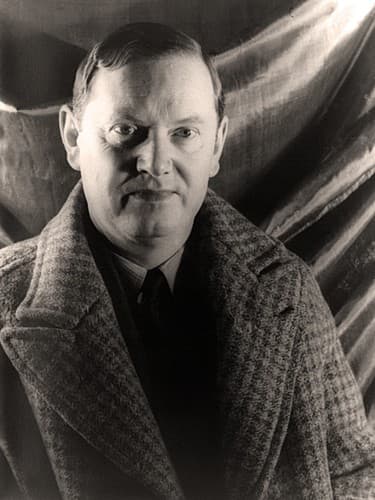
Arthur Evelyn St. John Waugh was an English writer of novels, biographies, and travel books; he was also a prolific journalist and book reviewer. His most famous works include the early satires Decline and Fall (1928) and A Handful of Dust (1934), the novel Brideshead Revisited (1945), and the Second World War trilogy Sword of Honour (1952–1961). He is recognised as one of the great prose stylists of the English language in the 20th century.
Ashley Antoinette
4.6

Mark McDonald
4.4
Luo Guanzhong
4.4
Mia McKenzie
4.3
Dorothy Parker
4.3
Joaquim Maria Machado de Assis
4.3
James Thurber
4.2
Terry Kay
4.2