“I was born in 1944 in a small town in Pennsylvania. My mother was a waitress and my father was a factory worker. They were both poor and uneducated, and they both died young.”
— Molly Bolt's opening lines, setting the stage for her life story.

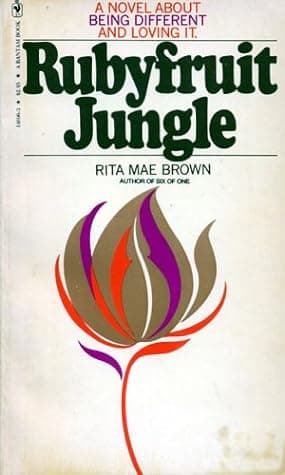
Rita Mae Brown (1973)
Genre
Fiction
Reading Time
246 min
Key Themes
See below
Sign in to track this book
Molly Bolt, a strong, spirited young woman, makes her own way through 1950s America, embracing her lesbian identity with joy and a refusal to conform, all while defying societal expectations.
Molly Bolt, adopted by working-class Pennsylvanian parents, Carrie and Carl, has an unusual and often difficult childhood. From a young age, Molly shows a strong independence and sense of self that conflicts with societal expectations, especially regarding gender roles. She discovers her attraction to other girls early on, having innocent but important sexual experiences with her friend, Patsy. Her outspoken nature and refusal to conform often cause problems at school and with her adoptive parents, who struggle to understand her. Carl, her adoptive father, is often harsh, while Carrie, her adoptive mother, is more understanding but still limited by traditional views. Molly's early life is a series of adventures, showing her rebellious spirit and developing identity as a lesbian in a conservative environment.
As Molly enters high school, her rebellious nature continues, but she also finds her first serious love with Leona, the popular head cheerleader. Their secret relationship becomes central to Molly's life. However, their affair is eventually discovered, leading to a quick and harsh social backlash. Leona, fearing for her reputation and future, gives in to pressure and publicly rejects Molly, denying their relationship. This betrayal hurts Molly deeply. She is then excluded by her peers and becomes the target of rumors and ridicule. Despite the pain, this experience strengthens Molly's decision to live honestly and reinforces her understanding that her love for women is a part of her identity, even if it means facing societal disapproval.
After graduating high school, Molly gets a scholarship to a local college, but she constantly struggles financially. She takes on various odd jobs, often finding herself in difficult situations because of her outspoken nature and lack of respect for authority. Her college experiences mix academic pursuits with further explorations of her sexuality, though she remains cautious after her heartbreak with Leona. Eventually, feeling restricted by the small-town thinking and wanting a more open environment, Molly decides to drop out of college and moves to New York City with little money but great ambition. She sees New York as a place where she can truly be herself and pursue her dream of becoming a filmmaker.
In New York City, Molly faces immediate and harsh realities. She lives in poverty, struggling to find stable housing and work. She takes on a series of unusual and often exploitative jobs, from working as a nude model to a delivery person, constantly seeing the city's rough side. These experiences expose her to many different people, both kind and cruel, and further develop her street smarts and resilience. Despite the difficulties, Molly keeps her optimistic and determined spirit, refusing to be broken by her circumstances. She learns to rely on her wit and charm to survive, always keeping her long-term goal of making films in mind, even as it seems increasingly distant.
Molly's time in New York City is also marked by new relationships. She becomes involved with Holly, a wealthy and older woman who initially provides some financial stability and a look into a different lifestyle. However, Molly soon realizes that Holly's expectations and possessiveness are stifling, and she eventually leaves, unwilling to trade her independence for comfort. She also forms a strong friendship with another struggling artist, which provides needed emotional support and companionship. These relationships, though sometimes challenging, help Molly understand herself and her desires, reinforcing her need for real connection and freedom in her romantic and personal life.
While in New York, Molly's experiences and observations lead her to a deeper political awareness. She meets various feminist and lesbian activist groups, finding a sense of community and purpose among like-minded individuals. She participates in protests and discussions, lending her outspoken voice to the growing movements for women's rights and gay liberation. These interactions give Molly a way to understand her own life and struggles within a broader social and political context. Her involvement in activism strengthens her commitment to fighting for justice and equality, solidifying her identity not just as a lesbian, but as a politically aware person.
Driven by her lifelong ambition, Molly decides to apply to film school, seeing it as a step toward her dream of making movies. However, she quickly faces significant obstacles, mainly due to institutional sexism and prejudice against her unusual background and outspoken personality. The male-dominated film industry and academic world are unwelcoming, and Molly faces skepticism and dismissal from admissions committees. Despite these setbacks, she remains determined, turning her frustration into an even stronger resolve to prove herself. This period highlights the systemic challenges women and lesbians faced in creative careers during that era, but also Molly's refusal to be intimidated by them.
When traditional paths for film school prove difficult, Molly does not give up on her creative goals. Instead, she finds other ways to express herself and tell the stories she believes are important. She starts writing, documenting her experiences and observations in a raw, honest style. This shift from aspiring filmmaker to writer allows her to process her life and share her unique perspective. Her writing becomes a powerful outlet for her voice, showing her strength and her determination to create art that reflects the realities of her life as a lesbian woman, regardless of whether it fits mainstream expectations or structures.
After some time in New York, Molly decides to return to Pennsylvania to reconnect with her adoptive parents, Carrie and Carl. This visit has tension as Molly, now more confident in her identity, confronts the lingering resentments and misunderstandings from her childhood. She tries to explain her life and choices to them, particularly her lesbianism, hoping for acceptance and understanding. While Carl remains mostly unyielding, Carrie shows glimpses of a deeper, though still limited, acceptance. This reunion is an important step for Molly in coming to terms with her past and strengthening her sense of self, understanding that she can love her parents even if they do not fully understand her.
By the end of the novel, Molly has fully accepted her identity as a lesbian woman and an artist. She has navigated a challenging world, faced prejudice and poverty, but emerged with her spirit intact. She continues to write, using her experiences to create stories that are truthful and authentic. Molly's journey is not about finding a conventional happy ending, but about making her own. She is confident, self-reliant, and unapologetically herself, showing that living authentically is the ultimate success. Her story ends with her firmly on her artistic path, ready to face whatever comes next with her characteristic wit and strength.
The Protagonist
Molly evolves from a rebellious, misunderstood child into a confident, self-possessed artist who embraces her lesbian identity and finds her voice.
The Supporting
Carrie moves from a position of near complete incomprehension and worry to a grudging, if incomplete, acceptance of Molly's identity.
The Supporting
Carl remains largely static, unable to fully accept Molly's true self, serving as a foil to Molly's journey of self-acceptance.
The Supporting
Leona's arc is brief, showing her capitulation to social pressure, which serves as a catalyst for Molly's resolve to live authentically.
The Supporting
Holly remains largely unchanged, representing a type of possessive love that Molly ultimately rejects in her pursuit of true independence.
The Mentioned
Patsy's role is confined to Molly's early childhood, serving as a catalyst for Molly's sexual self-discovery.
The novel's main theme is Molly's strong commitment to living authentically and accepting her true self, especially her lesbian identity. From a young age, Molly refuses to fit into societal expectations of gender and sexuality, leading to constant clashes with her adoptive parents and peers. Her experiences, such as Leona's betrayal in high school, only strengthen her decision to be true to herself, even if it means facing exclusion and hardship. In New York, despite poverty and exploitation, Molly never compromises her identity, always striving for a life that matches her inner truth. Her journey shows the importance of self-love and integrity above all else.
“I was a lesbian and I was going to be an artist. This was not a choice. It was a condition.”
Molly Bolt is a constant rebel, always pushing against the restrictive societal norms of her time, especially those concerning women and sexuality. Her defiance begins in childhood, challenging traditional gender roles and expectations for 'nice girls.' As she grows, her open lesbianism and outspoken nature directly confront the heteronormative and patriarchal structures of small-town Pennsylvania and, later, the exploitative aspects of New York City. Her refusal to be silent, to be a 'lady,' or to hide her relationships is a direct act of rebellion, asserting her right to exist and thrive on her own terms. This theme highlights the courage needed to challenge deeply ingrained social conventions.
“I was not a lady. I was a person, and I had a right to be me.”
Throughout her journey, Molly looks for a place where she can truly belong and feel at home, both physically and emotionally. Her adoptive home in Pennsylvania, while providing basic needs, never feels like a true home due to the lack of understanding and acceptance from her parents. This drives her to seek community elsewhere. In New York, despite the initial struggles, she finds a sense of belonging among other artists, activists, and queer individuals who share her values and experiences. The 'home' she ultimately finds is not a physical place but an internal state of self-acceptance and a community of like-minded people who affirm her identity. Her journey shows that home is where one can be authentically oneself.
“I went to New York to find out who I was, and I found out I was a lesbian. And I was glad.”
Art, particularly filmmaking and later writing, is Molly's main way of expressing herself and a key survival tool. From her early interest in movies to her later goal of becoming a filmmaker, Molly sees art as a way to tell her own stories and challenge common narratives. When traditional paths like film school are difficult due to prejudice, she turns to writing, finding power in creating her own story. Her creative pursuits are not just hobbies; they are essential to her identity, allowing her to process her experiences, assert her voice, and create a world where her life and love are visible and valid. Art becomes her weapon, her shield, and her legacy.
“I wanted to make movies, not because I wanted to be a star, but because I wanted to tell stories. My stories.”
Molly Bolt's journey shows the strength of the human spirit in difficult times. She endures poverty, social exclusion, heartbreak, and systemic prejudice, yet she never loses her optimism, wit, or determination. Each setback, from Leona's betrayal to the struggles in New York, only strengthens her resolve and sharpens her spirit. Her ability to recover, to find humor in difficult situations, and to maintain a strong belief in herself is central to her character. This theme emphasizes how much individuals can not only survive but thrive despite overwhelming challenges, especially when driven by a strong sense of self and purpose.
“I was a survivor. I had always been a survivor. And I always would be.”
Molly Bolt narrates her own story, offering direct access to her thoughts and experiences.
The entire novel is told from Molly Bolt's first-person perspective. This device allows readers to experience Molly's life, emotions, and unfiltered opinions directly, fostering a strong sense of intimacy and empathy. Her distinctive voice—witty, defiant, and honest—shines through, making her experiences feel immediate and personal. The first-person narrative is crucial for conveying Molly's internal struggles and triumphs, particularly her journey of self-acceptance and her unique way of viewing the world, which often clashes with external norms. It ensures that her story is told on her own terms, reinforcing the theme of authenticity.
The plot unfolds as a series of distinct, often humorous or poignant, episodes from Molly's life.
Rubyfruit Jungle employs an episodic structure, presenting Molly's life as a collection of vignettes and distinct experiences rather than a tightly linear, cause-and-effect plot. Each chapter or section often focuses on a particular adventure, relationship, or challenge Molly faces, from her childhood escapades to her various jobs in New York. This structure mirrors the often chaotic and unpredictable nature of Molly's life, emphasizing her resilience and adaptability. It also allows the author to highlight key moments of self-discovery and social commentary without being constrained by a rigid plot, giving the narrative a feeling of spontaneity and lived experience.
Molly's sharp wit and humorous observations provide levity and insight into her character.
Molly Bolt's defining characteristic is her pervasive humor and sharp wit, which serves as a significant plot device. Her sarcastic remarks, clever comebacks, and often outrageous observations inject levity into even the most challenging situations, preventing the narrative from becoming overly bleak despite the hardships Molly faces. This humor is not merely for comedic effect; it's a coping mechanism for Molly, a way to assert control and maintain her dignity in the face of adversity and prejudice. It also highlights her intelligence and resilience, allowing her to disarm opponents and connect with readers, making her an endearing and unforgettable character.
The novel traces Molly's development from childhood to adulthood, focusing on her moral and psychological growth.
Rubyfruit Jungle is fundamentally a bildungsroman, a coming-of-age story that meticulously details Molly Bolt's journey from her unconventional childhood through adolescence and into young adulthood. The narrative focuses on her moral, psychological, and social development as she navigates her identity as a lesbian in a heteronormative society. Key events, relationships, and challenges serve as catalysts for her growth, shaping her understanding of herself and the world. The device allows readers to witness Molly's evolution, her struggles with self-discovery, and her ultimate triumph in embracing her authentic self, making her story a powerful example of personal liberation and self-realization.
“I was born in 1944 in a small town in Pennsylvania. My mother was a waitress and my father was a factory worker. They were both poor and uneducated, and they both died young.”
— Molly Bolt's opening lines, setting the stage for her life story.
“From childhood, I was afflicted with the curse of curiosity. I wanted to know everything, and I wanted to do everything. This, of course, led to a great deal of trouble.”
— Molly reflecting on her inherent nature and its consequences.
“I was a lesbian before I knew what a lesbian was.”
— Molly's early realization of her sexual identity, before she had the language for it.
“It was a strange feeling, being in love with a girl. It was like I had found a missing piece of myself.”
— Molly describing her first significant romantic feelings for a girl.
“The world was not ready for me, and I was not ready for the world.”
— Molly's general feeling of being an outsider and a misfit.
“The only way to get rid of a temptation is to yield to it.”
— Molly's attitude towards desires and impulses, often leading her into adventures.
“I never met a man I didn't like, but I never met one I couldn't live without either.”
— Molly's casual dismissal of heterosexual relationships as a necessity in her life.
“They called me a rebel. I called myself a survivor.”
— Molly's reinterpretation of labels placed upon her by society.
“Life is a constant struggle, but it's a beautiful struggle.”
— Molly's optimistic outlook despite numerous hardships.
“I wasn't looking for trouble, but trouble always seemed to find me.”
— A recurring theme in Molly's life, where mischief and complications follow her.
“To be truly free, you have to be willing to lose everything.”
— Molly's understanding of the cost of genuine freedom and autonomy.
“People always want to put you in a box. But I wasn't made for a box.”
— Molly's resistance to societal expectations and labels.
“I wasn't afraid of anything, except being bored.”
— Molly's fearless nature and her drive for constant stimulation and experience.
“The only true wisdom consists of knowing that you know nothing.”
— Molly's philosophical musings, echoing Socratic thought, on the limits of knowledge.
Ready to see how well you understood this book? Take our interactive quiz with 10 questions.
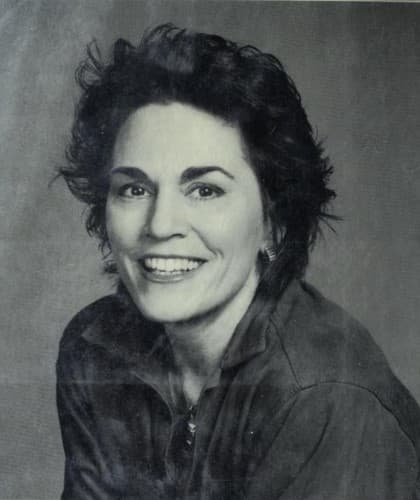
Biography coming soon.

Ashley Antoinette
4.6

Mark McDonald
4.4
Luo Guanzhong
4.4
Mia McKenzie
4.3
Dorothy Parker
4.3

Joaquim Maria Machado de Assis
4.3
James Thurber
4.2
Terry Kay
4.2