“Men were not all bad, nor all good. That was the big truth.”
— Young Lassiter reflects on his understanding of human nature.

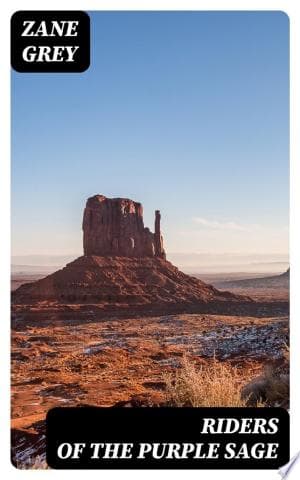
Zane Grey (2022)
Genre
Fiction
Reading Time
300 min
Key Themes
See below
Sign in to track this book
In the arid canyons of 1870s Utah, a mysterious rider with a hidden past helps a woman fight for justice, love, and survival against a powerful Mormon elder and his gang.
The story begins with Jane Withersteen, a wealthy rancher in Cottonwoods, Utah, facing persecution from Bishop Tull and the Mormon church elders. Tull wants to marry Jane and take her property. He has ruined her non-Mormon riders and pressured her Mormon workers to leave her. Jane, a devout but independent woman, resists their demands, holding onto her father's legacy and her faith. Her last loyal rider, Venters, is about to be driven away, leaving her with few protectors against the church's power. This pressure shows her isolation and vulnerability in a community determined to control her.
As Jane's situation worsens, a mysterious, black-clad gunman named Lassiter rides into Cottonwoods. Lassiter is a well-known gunfighter, famous for his accuracy and his pursuit of justice against Mormon polygamists who have wronged women. He says he is looking for his lost sister, Milly Erne, and her daughter, who he believes were taken by an Elder Sleath. Lassiter quickly becomes Jane's protector, and his presence intimidates Bishop Tull and his men. He starts to learn the truth about Jane's missing non-Mormon riders, many of whom he thinks were killed or driven off by the church. He takes quick, violent action against those who threaten Jane, becoming a strong force against the oppressive community.
Lassiter, seeing Venters as a possible rival for Jane's affection and an obstacle to his plans, tells him to leave Cottonwoods. Venters, though at first angry, obeys. While exiled, Venters meets a group of rustlers led by the Masked Rider. He tracks them to a hidden, green valley called Surprise Valley. During a fight, Venters wounds the Masked Rider, only to find that the 'man' is a young woman named Bess, also known as 'Arizona' or 'The Withersteen's' Bess. Bess, a victim of Mormon oppression, has been forced into rustling by her 'guardian,' Oldring, and his gang. Venters, feeling responsible, nurses her back to health, and a relationship starts to grow between them in their secluded home.
Venters and Bess spend weeks together in Surprise Valley, safe from the dangers of Cottonwoods and the rustlers. Venters learns Bess's story: she was abandoned as a child, raised by Oldring, and forced to participate in his rustling, though she hates it. She admits her fear of being found and her wish for a different life. Venters, deeply in love, promises to protect and provide for her. Their time together is peaceful, marked by their growing affection, shared dreams of a future, and a sense of freedom neither had known before. They live off the land, and their bond strengthens, confirming their commitment despite the harsh realities outside their sanctuary.
Meanwhile, Lassiter stays in Cottonwoods, his presence a constant threat to Bishop Tull and his allies. He continues to protect Jane, often clashing with the Mormon riders and stopping their attempts to take her property or force her into marriage. Lassiter's constant questions and investigations bring him closer to the truth about his sister, Milly Erne. He suspects that Tull and other elders were involved in her disappearance and the taking of her daughter. His grim determination to uncover the past grows stronger, adding to his reputation as a man of few words but deadly action. He sees Jane's worsening situation, understanding the church's strong hold on the community.
Jane Withersteen, despite continued pressure, refuses to marry Tull or give up her non-Mormon faith. Her resilience impresses Lassiter, who starts to see her as a strong, principled woman, not just a victim. During a tense confrontation with Tull and his men, Lassiter reveals a truth: Bess, the Masked Rider, is his niece, the daughter of his lost sister, Milly Erne. He recognizes her unique birthmark from Venters' description. This news deeply affects both Jane and Lassiter, as it connects their fates even more and adds a personal element to Lassiter's search for justice, shifting his focus to rescuing Bess from her forced life with Oldring's rustlers.
The story builds to a confrontation. Lassiter, knowing Bess's identity, and Venters, determined to protect Bess, work together. They track Oldring and his rustler gang, now with Tull, to Surprise Valley. A gunfight happens, and Oldring is killed. Tull, trying to escape, is trapped by Lassiter. In an act of justice, Lassiter avenges his sister and the wrongs done to Jane by eliminating Tull and his most corrupt followers. The valley becomes a battleground where Lassiter and Venters defeat the oppressive, lawless elements that have troubled Cottonwoods and the surrounding area.
After the violent confrontation, Lassiter, Jane, Venters, and Bess realize they cannot return to Cottonwoods. Lassiter, having taken his revenge, knows his actions will make him an outlaw to the Mormon community. Jane, having openly defied the church and sided with Lassiter, is also permanently an outcast. Together, they decide to retreat into the secluded safety of Surprise Valley, where Venters and Bess had lived. To ensure their permanent isolation and protection, Lassiter uses his skills to dislodge a large rock, sealing the narrow pass that is the only entrance and exit to the valley. This act symbolically and literally closes them off from the corrupt outside world, creating their private paradise.
Inside the sealed Surprise Valley, Lassiter, Jane, Venters, and Bess start a new life. Venters and Bess, now free from the threat of Oldring and the church, can fully embrace their love and plan their future. Lassiter, having found his niece and avenged his sister, finds some peace; his years of violent searching are over. Jane, though she lost her property and social standing, finds true freedom and a different kind of happiness with Lassiter, whose quiet strength she has come to admire. The valley becomes a sanctuary where they can live by their own rules, free from outside judgment or oppression, representing a fresh start and the triumph of individual will over societal control.
The Protagonist
Jane transforms from a beleaguered rancher clinging to her past to a woman who finds true freedom and love by embracing a new, isolated future.
The Protagonist
Lassiter transitions from a solitary avenger consumed by vengeance to a man who finds peace, family, and love in a new life.
The Supporting
Venters evolves from a loyal but hot-headed subordinate into an independent, loving partner and protector.
The Supporting
Bess transforms from a forced outlaw to a woman who reclaims her identity, finds love, and embraces a peaceful future.
The Antagonist
Tull's arc is one of escalating villainy, ultimately ending in his violent demise at Lassiter's hands.
The Supporting
Oldring remains a static villain, serving as a catalyst for Bess's plight and ultimately facing justice.
The Mentioned
N/A (already deceased)
The Supporting
Sleath's arc is one of complicity leading to his eventual downfall alongside Tull.
The Mentioned
N/A (already deceased)
Justice, often with vengeance, is a main theme in 'Riders of the Purple Sage.' Lassiter shows this theme, driven by a desire to avenge the wrongs done to his sister and other women by corrupt Mormon elders. His actions, though violent, are shown as a form of frontier justice in a place where traditional law is weak or corrupt. Jane Withersteen also seeks justice, through resistance, against the church's attempts to take her property. The novel's ending brings these individual searches for justice together, ending in a violent resolution of conflicts and the triumph of a personal code of honor over systemic oppression.
“'My business is to see that justice is done to women, and I have a long account to settle with the Mormons.'”
Zane Grey clearly shows the oppressive and hypocritical parts of the Mormon community, especially through Bishop Tull. The church is shown using its authority to control people, take property, and force marriages, especially targeting outsiders like Jane Withersteen. The elders' actions go against their stated religious values, showing the dangers of unchecked power and fanaticism. This theme highlights Jane's fight for spiritual and personal freedom and provides the main conflict that Lassiter and Venters must face, leading to their escape from its influence.
“'They want my property, and they want me. They will break me if I don't yield.'”
The desire for personal and spiritual freedom is a strong theme. Jane Withersteen fights to keep her independence and her father's legacy against the Mormon church. Venters and Bess, by escaping to Surprise Valley, seek freedom from the rustler's life and the social rules of Cottonwoods. Lassiter, though driven by vengeance, also shows strong individualism, acting outside the law to achieve his own justice. The sealing of Surprise Valley at the end of the novel represents the ultimate triumph of individual freedom and self-determination, as the characters create their own isolated haven away from the corrupting influences of the outside world.
“'Here, in this valley, we are free. Free from men, free from hate, free from fear.'”
The untamed American West itself is an important theme, shown as both a dangerous, lawless place and a possible refuge. The large, rugged landscapes provide cover for rustlers and outlaws but also offer safety and a chance for new beginnings. Surprise Valley is a symbolic Eden—a hidden, fertile place where Venters and Bess, and later Lassiter and Jane, can escape the corruption and violence of civilization. The wilderness allows for the removal of social pretense and the formation of true character and relationships, representing the promise of renewal and a return to a more natural, authentic existence.
“'A wild, free, beautiful world, where the sun shone always, and the air was sweet.'”
Among the violence and oppression, themes of love and redemption appear. The love between Venters and Bess grows in their isolated valley, offering both characters a chance at a new life free from their pasts—Bess from her life as a rustler, and Venters from his aimless existence. Lassiter, at first a figure of pure vengeance, finds a form of redemption through finding Bess and his growing affection for Jane, changing his solitary search into a shared future. Jane's love for Lassiter allows her to give up her possessions for companionship, showing how love can offer salvation and a path to a more meaningful life.
“'You have shown me that a man can be kind, and that a woman can be loved.'”
Symbol of hidden identity and forced criminality
The Masked Rider is a central plot device, initially creating mystery and suspense. The revelation that the rider is actually a young woman named Bess (Lassiter's niece) is a major turning point. This device allows for the exploration of themes of hidden identity, societal expectations, and the forced circumstances that can lead individuals to a life of crime. It also serves to connect Venters's subplot directly to Lassiter's overarching quest for his sister and niece, intertwining the narrative threads and driving the plot towards its climactic revelations and resolutions.
A hidden, Edenic sanctuary and escape route
Surprise Valley functions as a critical plot device, representing both a refuge and a symbol of freedom. It is a hidden, fertile valley discovered by Venters, where he and Bess find love and temporary peace. Later, it becomes the ultimate sanctuary for all four protagonists (Lassiter, Jane, Venters, and Bess) as they escape the oppressive world of Cottonwoods. The valley's isolation, culminating in Lassiter sealing its entrance, provides a literal and symbolic escape from the corrupting influences of society and the law, allowing the characters to forge a new, self-determined existence. It's a classic example of a 'safe haven' trope in Westerns.
Visual symbolism of vengeance, justice, and the deadly frontier
Lassiter's iconic black attire and his mastery of his guns are powerful visual and symbolic plot devices. The black clothing immediately marks him as a figure of vengeance and death, setting him apart from the other characters and emphasizing his grim purpose. His two 'forty-fives' are extensions of his will, representing the swift, uncompromising justice he dispenses in a lawless land. These elements establish his legendary status and contribute to the atmosphere of danger and high stakes whenever he is present, making him an almost mythic figure of frontier justice.
Antagonistic force and source of conflict
The institutional authority of the Mormon Church, particularly through Bishop Tull and his elders, serves as the primary antagonistic force and a crucial plot device. Its pervasive control over the community, its attempts to seize Jane's property, and its role in the disappearance of Lassiter's sister drive the entire conflict of the novel. This device creates the oppressive atmosphere that the protagonists must fight against and ultimately escape. It highlights themes of religious persecution, hypocrisy, and the struggle for individual freedom against powerful, entrenched institutions, fueling the motivations of nearly every major character.
“Men were not all bad, nor all good. That was the big truth.”
— Young Lassiter reflects on his understanding of human nature.
“Marriage had been a word to Jane Withersteen, a beautiful yet terrible word.”
— Jane contemplates the societal expectations and personal implications of marriage.
“He was a rider of the purple sage, a man of mystery, a man of blood.”
— Description of Lassiter as he is perceived by others and the landscape.
“There was no good in fighting against the inevitable.”
— Jane's internal struggle with the forces trying to take her property.
“The wind was a spirit, a voice, a presence.”
— Describing the natural elements of the Western landscape.
“He lived for revenge, and it was a consuming fire.”
— Lassiter's motivation for his relentless pursuit of wrongdoers.
“A woman's heart, though often wounded, was still a treasure.”
— Lassiter's evolving view of women, particularly Jane.
“The vast, silent spaces held secrets and tragedies.”
— Reflecting on the desolate beauty and hidden histories of the West.
“He was a law unto himself, and his justice was swift and terrible.”
— Describing Lassiter's vigilante actions in the absence of formal law.
“Faith was a strange thing; it could move mountains or build walls.”
— Jane's struggle with her religious faith and the actions of her church.
“The desert was a cruel mistress, but she held a terrible beauty.”
— An evocative description of the harsh yet captivating Western environment.
“To hide was to live, to face them was to die.”
— Reflecting on the desperate circumstances of those pursued.
“Love was not a thing to be bought or sold, but a gift to be cherished.”
— Jane's realization about the true nature of love, contrasting with societal pressures.
“The color of the sage, a purple-gray, was the color of loneliness and peace.”
— A poetic description of the iconic landscape and its emotional resonance.
Ready to see how well you understood this book? Take our interactive quiz with 10 questions.
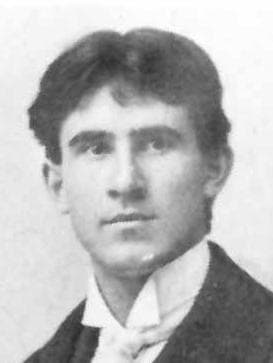
Pearl Zane Grey was an American author and dentist. He is known for his popular adventure novels and stories associated with the Western genre in literature and the arts; he idealized the American frontier. Riders of the Purple Sage (1912) was his best-selling book.

Ashley Antoinette
4.6

Mark McDonald
4.4
Luo Guanzhong
4.4

Mia McKenzie
4.3

Dorothy Parker
4.3

Joaquim Maria Machado de Assis
4.3

James Thurber
4.2

Terry Kay
4.2