“There are no monsters, only people who make monstrous choices.”
— A recurring theme about the nature of evil and personal responsibility.

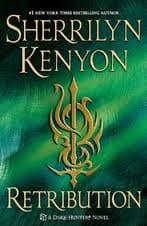
Sherrilyn Kenyon (2011)
Genre
Science Fiction
Reading Time
369 min
Key Themes
See below
Sign in to track this book
An immortal gunslinger, resurrected for vengeance and sworn to protect humanity, confronts a lethal assassin who believes he murdered her family, forcing them to unite against an ancient evil threatening both their races.
In 1878, William Jessup Brady, a notorious gunslinger, is ambushed and killed by a former associate, Gideon, during a bank robbery. Gideon, pretending to be a fellow outlaw, betrays Jessup to get the loot for himself. As Jessup lies dying, the Greek goddess Artemis offers him a second chance at life and vengeance if he serves her as a Dark-Hunter. He accepts, becoming an immortal protector of humanity, forever haunted by the betrayal and the loss of his mortal life and the woman he loved, Mary. This transformation binds him to Artemis and pulls him into the hidden world of gods, vampires, and other supernatural beings.
Abigail Yager, orphaned as a toddler, is adopted and raised by a family of vampires after her parents are supposedly killed by a Dark-Hunter. Her adoptive vampire father, Malachai, teaches her to hate Dark-Hunters, saying they are evil beings who prey on both vampires and humans. He specifically names Jess Brady as the Dark-Hunter responsible for her parents' deaths. Abigail dedicates her life to training as a vampire hunter, becoming skilled in combat and strategy, with the goal of avenging her family and killing Dark-Hunters, especially Jess Brady.
Centuries later, Jess Brady, now an experienced Dark-Hunter, is tasked by Artemis with investigating a series of assassinations targeting other Dark-Hunters. These killings are done with unusual precision and brutality, confusing the immortal community. Jess tracks the killer, eventually confronting a figure who is an incredibly skilled human female. To his surprise, he recognizes her face—it is identical to the woman who betrayed him and planned his death in his mortal life. This resemblance causes a deep sense of unease and suspicion in Jess, reopening old wounds and raising questions about his past.
Jess finally confronts Abigail Yager, who he believes is his betrayer, Gideon, reincarnated. Abigail, in turn, recognizes Jess as the Dark-Hunter she has been trained to hate and kill—the man she believes murdered her parents. Their first encounter is a violent clash of wills and weapons, fueled by centuries of misinformation and personal vendetta. Jess is confused by her human nature and her belief in his guilt, while Abigail is determined to get her long-awaited revenge. Neither is willing to believe the other's story, leading to a standstill built on mutual hatred and misunderstanding.
As Jess and Abigail are forced together by circumstances and an angry god, Apollo, they begin to find inconsistencies in their beliefs. Jess starts to doubt that Abigail is truly Gideon, despite the resemblance, as her fighting style and knowledge do not match. Abigail, through subtle clues and Jess's denials, begins to question the story her adoptive father, Malachai, told her. The truth about Malachai's manipulation, his real intentions, and the actual circumstances of her parents' deaths slowly come out, revealing a deeper conspiracy.
Amidst the personal fight between Jess and Abigail, an older, more sinister force appears. Stryker, an ancient god who hates Artemis and her Dark-Hunters, begins to use the ongoing conflict between vampires and Dark-Hunters. He manipulates events, creating distrust and chaos, to weaken both sides. Stryker wants to gain power and destroy Artemis and her chosen warriors, seeing the current turmoil as a chance to get his long-held revenge. His presence adds a new layer of danger and urgency to Jess and Abigail's situation, forcing them to consider a larger threat.
Realizing they are both pawns in a larger game, Jess and Abigail are forced into an uneasy alliance. The true enemy is revealed to be not each other, but Malachai, who created Abigail's hatred to use her as a weapon against Dark-Hunters, and Stryker, who seeks to destroy all immortals. They must learn to trust each other, overcoming centuries of ingrained prejudice and personal pain, to fight these powerful enemies. Their combined skills and knowledge become essential in unraveling the intricate web of lies around them, even as their personal animosity lingers.
Jess and Abigail, along with other Dark-Hunters and unexpected allies, confront Malachai and Stryker. Malachai's twisted reasons for turning Abigail against Dark-Hunters are fully exposed, showing his selfish desire for power and control. Stryker's ancient grudge against Artemis and his plan to kill her followers come to a head. The battle is fierce and dangerous, testing their newfound alliance and abilities. They learn that Malachai was not only behind Abigail's parents' death but also worked with Stryker in a larger plan.
During the final battle, Abigail finally gets proof of Malachai's betrayal and Jess's innocence regarding her parents' deaths. The realization shatters her world, making her re-evaluate everything she has believed. She deals with the emotional weight of her misplaced hatred and the years spent seeking revenge against the wrong person. Jess, in turn, acknowledges her pain and offers understanding. This moment marks a turning point, allowing Abigail to begin forgiving—for Jess, for herself, and for the life stolen from her by Malachai's lies.
With Malachai defeated and Stryker's immediate threat neutralized, Jess and Abigail emerge from the conflict changed. They have faced their pasts, confronted their enemies, and found an unexpected connection amidst the chaos. The initial hatred between them has become a deep understanding and a growing love. They decide to embrace their future together, committing to protecting both humans and immortals from rising dark forces. Their journey marks not just the end of a long feud, but the beginning of a strong partnership built on trust, sacrifice, and shared purpose.
The Protagonist
From a vengeful immortal shackled by his past, Jess learns to trust and open his heart again, finding love and a renewed purpose beyond just duty.
The Protagonist/Love Interest
Abigail transforms from a vengeance-driven hunter blinded by lies to a woman who embraces truth, forgiveness, and love, finding a new purpose.
The Antagonist
Revealed as a calculating villain, Malachai's manipulations are exposed, leading to his downfall.
The Antagonist
Stryker's ancient vendetta escalates, leading to a direct confrontation with the protagonists and a temporary defeat.
The Supporting
Artemis continues her role in overseeing the Dark-Hunters, her resolve tested by the rising threats.
The Supporting
Apollo's interference inadvertently pushes Jess and Abigail towards their destiny, as he continues his unpredictable divine machinations.
The Mentioned
Gideon's past betrayal remains a foundational trauma for Jess, influencing his initial mistrust of Abigail.
The Mentioned
Mary's memory serves as a reminder of Jess's lost humanity, making his eventual love for Abigail even more poignant.
This theme explores how vengeance can blind individuals to the truth and continue cycles of hatred, while forgiveness offers a path to healing and freedom. Abigail's entire life is consumed by a quest for vengeance against Jess, fueled by Malachai's lies. Her single-minded pursuit stops her from seeing the truth about her past or Jess's innocence. Jess, too, carries the weight of his own betrayal, which initially affects how he sees Abigail. The story shows that true peace comes not from getting revenge, but from finding the truth and choosing to forgive, both others and oneself. Forgiveness allows Abigail to break free from Malachai's manipulation and Jess to open his heart again.
“''Vengeance is a poison that seeps into your soul, corrupting everything it touches.'”
The story relies heavily on the theme of truth vs. deception, showing how easily individuals can be manipulated by carefully made lies. Abigail's entire reality is built upon Malachai's deceit, leading her to dedicate her life to a false story. Jess's initial judgment of Abigail is also clouded by her resemblance to his betrayer, Gideon. The plot carefully reveals these deceptions, forcing both main characters to confront uncomfortable truths about their pasts, their enemies, and their own biases. The journey to truth is painful but ultimately freeing, allowing them to see clearly and form real connections.
“''The greatest lies are often woven from threads of truth, making them almost impossible to untangle.'”
Redemption is a main theme, especially for Jess. Once a gunslinger, he is given a second chance at life as a Dark-Hunter, dedicating his immortal existence to protecting humanity, making up for his past. Abigail also seeks a form of redemption from her misguided vengeance, finding it in the fight against true evil and in embracing a new purpose. The story suggests that even after big mistakes or betrayals, there is always a chance for individuals to change their path, make amends, and find meaning in their existence. Their shared journey is one of finding purpose and making up for past actions, whether their own or those forced upon them.
“''Every sunrise offers a chance to rewrite the wrongs of yesterday.'”
This theme explores how identity is shaped by personal history, external stories, and one's own choices. Jess deals with his identity as both a mortal gunslinger and an immortal Dark-Hunter, constantly reminded of the man he was and the man he became. Abigail's identity is almost entirely made up by Malachai, forcing her to confront who she truly is once the lies are revealed. The story questions whether one's identity is defined by their past actions, the roles they are given, or the choices they make now. Both characters ultimately create new identities based on truth and love.
“''Who we were is not always who we are meant to be.'”
Abigail's resemblance to Jess's betrayer, Gideon, drives initial conflict.
The uncanny resemblance between Abigail Yager and Gideon, the man who betrayed and murdered Jess in his mortal life, is a central plot device. This visual similarity immediately ignites Jess's deep-seated trauma and fuels his initial distrust and animosity towards Abigail. Conversely, Abigail's indoctrination about Jess being her parents' killer creates a reciprocal, albeit false, animosity. This device creates a powerful initial conflict, ensuring the protagonists are at odds, and allows for the gradual reveal of truth as Jess struggles to reconcile the past with the present, and Abigail questions her deeply held beliefs.
Malachai's role as Abigail's adoptive father who feeds her lies.
Malachai serves as the manipulative mentor for Abigail. He adopts her and systematically feeds her a fabricated history, painting Dark-Hunters, and specifically Jess Brady, as the murderers of her parents. This device ensures Abigail's motivation for vengeance and her skill as a hunter are deeply ingrained, making her a formidable antagonist to Jess. It also creates a powerful emotional core for Abigail's character arc, as she must confront the devastating betrayal by the man she considered family. Malachai's manipulation is the root cause of much of the initial conflict, driving the plot forward through deceit and engineered hatred.
The machinations of gods like Artemis and Apollo shape the characters' destinies.
The involvement of Greek gods, particularly Artemis and Apollo, acts as a significant plot device. Artemis's initial offer of immortality to Jess establishes his role as a Dark-Hunter. Apollo's seemingly random or spiteful interference often forces Jess and Abigail into situations where they must interact and eventually confront the truth, accelerating the plot. This device adds a layer of cosmic destiny and external pressure to the personal struggles of the characters, suggesting that their paths are not entirely their own, and that ancient powers are at play in their lives and the larger world. It also introduces the overarching threat of Stryker.
The false narrative of Abigail's parents' death that drives her actions.
The 'MacGuffin of Vengeance' refers to the fabricated story Malachai tells Abigail about her parents' murder by a Dark-Hunter, specifically Jess Brady. This false narrative is the primary driver of Abigail's character and her actions throughout much of the story. It's not the actual event that matters, but the belief in it, which motivates her quest to kill Jess. This device keeps the protagonists at odds until the truth is revealed, and serves as a powerful emotional anchor for Abigail, making her eventual realization of the deception all the more impactful and leading to a significant shift in her allegiances and goals.
“There are no monsters, only people who make monstrous choices.”
— A recurring theme about the nature of evil and personal responsibility.
“The past is a phantom, a whisper of what was, but the future is a storm waiting to break.”
— Reflecting on the weight of history versus the uncertainty of what's to come.
“Love isn't a weakness; it's the only true strength we possess.”
— A character defending the power of emotional connection in a harsh universe.
“Sometimes, the greatest battles are fought within the confines of our own minds.”
— Describing the internal struggles and psychological warfare faced by characters.
“Hope is a dangerous thing. It can keep you alive, or it can destroy you.”
— A cynical observation on the double-edged sword of maintaining hope in dire situations.
“To truly live, one must first be willing to die.”
— A philosophical statement about embracing risks and the fullness of existence.
“Revenge is a poison that you drink, hoping it will kill your enemy.”
— A warning against the self-destructive nature of seeking vengeance.
“The universe doesn't care about your plans. It only cares about its own.”
— Emphasizing the vast indifference of the cosmos to individual aspirations.
“Trust is a fragile thing, easily broken, and almost impossible to mend completely.”
— Discussing the difficulty of rebuilding trust after betrayal.
“Even in the darkest night, a single star can guide you.”
— A metaphor for finding guidance or hope amidst overwhelming despair.
“We are all prisoners of our choices, some more than others.”
— Highlighting how past decisions shape current realities and limitations.
“Knowledge is power, but wisdom is knowing when not to use it.”
— A distinction between acquiring information and understanding its proper application.
“Sometimes, the only way to save someone is to let them go.”
— A painful realization about the necessity of sacrifice and difficult decisions.
“Silence can be louder than any scream.”
— Describing the profound impact of unspoken truths or withheld emotions.
Ready to see how well you understood this book? Take our interactive quiz with 10 questions.

Biography coming soon.