“The Ramans do everything in threes.”
— A recurring observation about the alien spacecraft's patterns and structures.

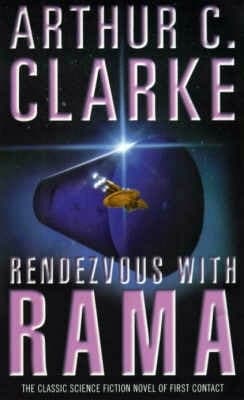
Arthur C. Clarke (1973)
Genre
Science Fiction
Reading Time
240 min
Key Themes
See below
Sign in to track this book
Humanity's first contact with alien intelligence happens not through a greeting, but by exploring the silent, huge, and mysterious interior of an abandoned interstellar ark moving through our solar system.
In 2130, humanity's Spaceguard system, set up after a large asteroid hit in the 2070s, finds an unusual object entering the solar system from space. First called 31/439, it is quickly confirmed to be a huge, perfectly cylindrical asteroid, too regular to be natural. Astronomers rename it 'Rama' after a Hindu god. Its immense size – 20 kilometers long and 8 kilometers wide – and unusual path immediately create scientific and public interest. The United Planets' Advisory Council sends the survey vessel *Endeavour*, led by Commander Bill Norton, from the Mars orbital base to investigate this visitor. The trip will take several weeks, during which humanity guesses about Rama's origins and purpose.
The *Endeavour* reaches Rama as it gets closer to the Sun. After careful scouting, the crew finds three large airlocks at one end of the cylinder. Commander Norton, with Lieutenant Boris Rodrigo, makes the first entry into Rama through a partly open airlock. They find an antechamber that leads to a vast, dark interior. Using bright floodlights, they light up an incredible view: a perfectly cylindrical world with a 'sky' on one side and a flat plain on the other, divided by a deep trench. Rama's size and alien design are overwhelming, confirming it is an artificial, interstellar vessel of unknown origin and purpose. Their first exploration is limited by the darkness and the environment's unknown nature.
As Rama continues its journey closer to the Sun, its internal environment starts to change greatly. Commander Norton and his crew see a gradual increase in light as six large, linear 'strips' running the length of the cylinder slowly light up, like sunlight. Air begins to form, and the temperature rises to a comfortable level. Most surprisingly, three huge 'seas' of liquid, at first frozen, begin to melt. The central trench, now seen as the 'Cylindrical Sea,' also melts, creating a large body of water. This activation suggests Rama is not just an abandoned ship but a working vessel, now getting ready for its own internal operations, making the mystery of its creators and their intentions even deeper.
With Rama's interior now lit and warm, exploration increases. The *Endeavour* crew builds a small, inflatable catamaran, called a 'sea-cat,' to cross the large Cylindrical Sea. During their trip, they find strange, geometric 'islands' and structures. On the far side of the Cylindrical Sea, they discover a large, complex arrangement of buildings and towers, which they call 'New York' because it looks like a city on Earth. This 'city' seems designed for beings of a different size and body, with unusual ramps and many levels. Finding such an intricate and seemingly working urban environment inside Rama raises questions about its inhabitants and if they are still there.
As the *Endeavour* crew explores New York, they start to find strange, robotic-like creatures. These 'biots' come in different shapes and functions, looking like crabs, spiders, and other insects, but they are clearly mechanical or bio-mechanical creations. They do various maintenance tasks, repairing structures and collecting materials, seeming unaware of the humans unless directly bothered. The biots appear to be Rama's 'workers' or 'drones,' suggesting a higher intelligence designed and programmed them. The humans watch them with awe and caution, realizing these are not the creators themselves but their tools, which further shows the Ramans' advanced nature.
A small team, including Lieutenant Karl Mercer, goes to the 'Southern Continent' – the landmass opposite the original entry point. Here, they find a different type of biot: the 'spider-bots.' These biots hunt, are drawn to biological heat, and are a direct danger. During an encounter, Mercer accidentally damages one of the spider-bots, causing it to break down and attack him. He is hurt, and the incident shows the possible dangers of interacting with Rama's systems and its inhabitants, even if they are only machines. This event makes the crew more cautious and respect the alien nature of their surroundings, reinforcing the idea that Rama is not a museum but an active, alien place.
News of the biots and the possibility of a hostile encounter reaches the Mercury colony. Out of fear and worry, and without talking to the United Planets, the Mercury High Council decides that Rama is a threat. They send a missile with a nuclear warhead, meant to destroy Rama before it can harm humanity. Commander Norton is shocked by this sudden and aggressive action, understanding it is a serious mistake and a lost chance for peaceful contact. He immediately orders the *Endeavour* crew to try to stop and disarm the missile, a desperate race against time to prevent an act of war against an unknown, possibly peaceful, intelligence.
In a tense and dangerous operation, the *Endeavour* crew, led by Norton, races to stop the Mercury missile. They reach it and, using remote control and a daring spacewalk, successfully disarm the nuclear warhead just moments before it would have hit Rama. This act of going against the Mercury Council's orders saves humanity from committing an act of aggression and keeps open the chance for peaceful study and possible communication with the Ramans. The incident shows humanity's different reactions to the unknown: fear versus curiosity and respect.
As Rama nears the Sun's closest point, it performs a complex move, using the Sun's gravity to slingshot itself out of the solar system. Before it leaves, a final, fascinating discovery is made: a 'biological ark' containing samples of various Raman plants and animals, kept in suspended animation. The biots continue their work, preparing the vessel for its next part of the journey. The humans realize that Rama is not a warship or an invasion craft, but a large, self-sustaining biological research vessel or ark, collecting and listing life forms. The *Endeavour* crew watches as Rama speeds away, leaving more questions than answers, but also a great sense of wonder and a new understanding of the vastness and diversity of the cosmos.
Rama leaves the solar system, heading towards the Greater Magellanic Cloud, its original destination or perhaps just a stop on a much longer journey. The *Endeavour* crew, having spent weeks inside the alien artifact, returns to their base, changed by their experience. Humanity is left to deal with what Rama's visit means: the confirmation of intelligent alien life, the advanced technology, and the realization of their own place in a much larger universe. The novel ends with the hint of future encounters, as astronomers detect 'Rama II' and 'Rama III' following the same path, suggesting this was not a unique event but part of a recurring pattern, promising more mysteries and discoveries for humankind.
The Protagonist
Norton begins as a cautious explorer and evolves into a decisive leader who protects humanity's chance at peaceful contact, ultimately becoming a witness to a profound alien departure.
The Supporting
Rodrigo acts as a loyal and capable second-in-command, demonstrating resourcefulness and courage throughout the mission.
The Supporting
Perera provides crucial scientific analysis, helping humanity understand Rama's alien biology and technology.
The Supporting
Mercer's injury serves as a key plot point, illustrating the dangers of the unknown in Rama.
The Supporting
Barnes proves her exceptional skill and bravery in critical zero-G operations, especially during the missile interception.
The Supporting
Ernst provides critical medical support, particularly after a crew member's injury, highlighting the practical challenges of alien exploration.
The Mentioned
The Ramans remain an unseen but powerful presence, their intentions and nature slowly revealed through their magnificent creation, Rama.
The Antagonist
The Council's actions serve as a foil to Norton's leadership, representing humanity's fear-driven impulse to destroy the unknown.
The main theme is humanity's first meeting with an alien intelligence, Rama. The book explores human reactions: from scientific curiosity and wonder, shown by Commander Norton and his crew, to fear, paranoia, and aggression, seen in the Mercury High Council's decision to launch a nuclear missile. Clarke describes the process of careful exploration, observation, and forming ideas, showing the challenges of understanding an intelligence so different from our own. The lack of direct contact with the Ramans highlights the deep mystery and the limits of human understanding.
“For a long time, nothing happened. Then, a single airlock iris slowly opened. Humanity took its first hesitant step into the unknown.”
Rama's arrival makes humanity face its place in a vast, populated universe. Rama's sheer size and technology make human achievements seem small, reminding us that humanity is likely not alone, nor necessarily the most advanced civilization. The book subtly changes humanity's view from being the main intelligence in the solar system to being a curious observer of a much larger cosmic effort. The realization that Rama is a working biological ark, not a warship, further shows the diversity of life and purpose beyond Earth, making us think about humanity's relative importance.
“It was impossible to look at Rama and not feel a profound sense of awe, and a corresponding sense of humanity's own insignificance.”
At its core, the novel celebrates exploration and the scientific method. The *Endeavour* crew's careful way of investigating Rama, from first scouting to detailed internal mapping and observing the biots, shows the spirit of discovery. Each new finding about Rama – its awakening, the Cylindrical Sea, New York, and the biots – moves the story forward and deepens the mystery. The book praises human cleverness and bravery in going into dangerous and unknown places for knowledge, emphasizing the human desire to explore and understand the universe.
“There was no fear here, only a hunger for knowledge, a burning need to understand.”
Not directly talking with the Ramans brings up big questions about what intelligence is and if different species can understand each other. Humanity only meets the Ramans' automated creations – the biots – which do their jobs without seeming to notice or interact with humans. This makes the *Endeavour* crew 'read' the Ramans through their technology and their ship, much like archaeologists studying an old civilization. The theme explores if true communication is possible when the basic biological and psychological ways of thinking are so different, and if advanced intelligence always means a desire for contact.
“They were dealing with a mind so utterly alien that even its tools were beyond full comprehension.”
A massive, mysterious, and often automated alien artifact that serves as the central enigma.
Rama itself is the quintessential 'Big Dumb Object.' It is an enormous, self-contained artificial world whose purpose and origins are largely unknown to humanity. The BDO device allows Clarke to create a sense of wonder and mystery, as the focus is on humanity's exploration and interpretation of the object rather than direct interaction with its creators. Rama's sheer scale and the gradual revelation of its internal mechanisms – the lighting, atmosphere, seas, and biots – create continuous suspense and discovery, making the object a character in itself and a catalyst for human reactions and scientific inquiry.
The intelligent alien creators are never directly encountered, only inferred through their technology.
Clarke deliberately keeps the Ramans themselves hidden, only showcasing their advanced technology and their automated 'biots.' This device magnifies the sense of mystery and prevents the story from becoming a typical 'alien invasion' or 'first contact' narrative with dialogue. By denying direct interaction, Clarke emphasizes the vast differences between species and the challenges of understanding a truly alien intelligence. It forces the human characters, and the reader, to speculate and interpret, making Rama's exploration an exercise in cosmic archaeology rather than diplomacy or conflict. This enhances the feeling of profound alienness and wonder.
The plot progresses through a methodical process of observation, hypothesis, and experimentation.
The narrative structure of *Rendezvous with Rama* is driven by the scientific method. Commander Norton and his crew approach Rama not with weapons, but with instruments and cautious exploration. Each discovery, from the airlocks to the Cylindrical Sea, New York, and the biots, is met with careful observation, data collection, and the formulation of hypotheses. The plot unfolds as a series of scientific investigations and problem-solving challenges, mirroring actual scientific discovery. This device grounds the fantastical elements in a sense of realism and celebrates human intellect and curiosity as the primary tools for confronting the unknown.
The final discovery of Rama's true purpose as a vessel for life specimens.
The revelation that Rama is a 'biological ark' containing diverse Raman flora and fauna serves as a powerful plot twist and thematic culmination. It subverts expectations of either a warship or a derelict, instead presenting a more benign and scientific purpose. This device fundamentally alters humanity's understanding of the Ramans, shifting perceptions from potential invaders to advanced researchers or custodians of life. It provides a satisfying, albeit incomplete, answer to Rama's purpose, while simultaneously raising new questions about the scope of Raman civilization and their cosmic journey. It reinforces the theme of humanity's evolving understanding of alien intentions.
“The Ramans do everything in threes.”
— A recurring observation about the alien spacecraft's patterns and structures.
“The human race had to face the fact that it was no longer alone in the universe.”
— Reflection on humanity's reaction to the discovery of Rama.
“There are times when a man has to abandon logic and accept the improbable.”
— Commander Norton contemplating the inexplicable nature of Rama.
“The only thing we can be sure of is that nothing is as it seems.”
— Commentary on the deceptive and evolving environment inside Rama.
“It is not the destination that matters, but the journey.”
— Philosophical musing during the exploration of the cylindrical world.
“The universe is not only stranger than we imagine, it is stranger than we can imagine.”
— Adaptation of a famous quote by J.B.S. Haldane, reflecting on Rama's mysteries.
“We are like children playing on the shore of a vast ocean.”
— Metaphor for humanity's limited understanding in the face of cosmic scale.
“Curiosity is the engine of civilization.”
— Defense of the decision to explore Rama despite risks.
“In space, all directions are equally meaningless until you choose one.”
— Description of navigating the interior of the cylindrical spacecraft.
“The past is a foreign country; they do things differently there.”
— Reflection on the ancient and alien nature of Rama's creators.
“Fear is the mind-killer, but in Rama, it was wonder that paralyzed.”
— Contrasting the crew's awe with typical sci-fi tropes of fear.
“Every answer only leads to more questions.”
— Observation about the incremental and puzzling discoveries aboard Rama.
“The stars are not for man, but man must reach for them anyway.”
— Philosophical statement on humanity's drive to explore the cosmos.
“Silence is the most perfect expression of scorn.”
— Interpretation of Rama's lack of response to human presence.
Ready to see how well you understood this book? Take our interactive quiz with 10 questions.
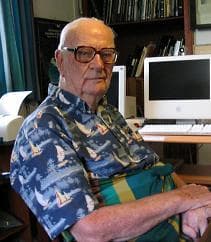
Sir Arthur Charles Clarke was an English science fiction writer, science writer, futurist, inventor, undersea explorer, and television series host.