“The red oleander is not a flower, it is a flame.”
— The protagonist Nandini describes the symbolic flower central to the play.

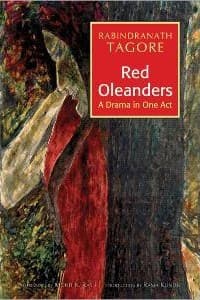
Rabindranath Tagore (1925)
Genre
Fiction
Reading Time
90 min
Key Themes
See below
Sign in to track this book
In a gold-obsessed town, Nandini, with red oleanders, ignites a desire for freedom in enslaved miners, sacrificing herself for their liberation.
The play opens in Yakshapuri, a city built around a gold mine. Men are reduced to numbers and forced into labor, extracting wealth for their unseen King. The atmosphere is oppressive, with strict rules, constant surveillance, and fear. Professor, a scholar, deciphers ancient inscriptions. Ranjan, a spirited young man, is Nandini's beloved, though his whereabouts are unknown. Nandini, a free-spirited woman, arrives in Yakshapuri, wanting to find Ranjan and understand the strange, veiled King. Her presence immediately disrupts the order, her beauty and vivacity captivating those around her, including the King, who watches her from behind a screen.
Nandini's arrival stirs the humanity in the oppressed miners and officials. She openly questions the King's authority and the dehumanizing system, speaking of freedom, love, and the beauty of life, symbolized by the red oleander flowers she wears. The King, interested and disturbed by her, tries to understand her through intermediaries like Professor and Bishu. He is drawn to her purity and freedom, which contrast with his own existence as a prisoner of his power and wealth. Nandini is not intimidated by his hidden presence and insists on seeing him face-to-face, challenging his authority and his rule.
Bishu, a simple but poetic miner, becomes devoted to Nandini. He expresses his love and admiration through songs and acts of subtle defiance, drawn to her spirit and her joy. Nandini, aware of his affection, remains steadfast in her love for Ranjan. Her conversations and interactions with the miners, especially Bishu, start to awaken their suppressed desires for freedom and dignity. They begin to see the pointlessness of their endless labor and the emptiness of the King's wealth, inspired by Nandini's belief in human connection and the value of life beyond material gain. Discontent begins to grow among the enslaved people.
The King, despite his power, is lonely and longs for genuine connection, which he sees in Nandini. He tries to win her over by offering her wealth and position, but Nandini rejects these, valuing love and freedom. His attempts to understand her through intellectual talks with Professor fail, as he cannot grasp her spirit. He is torn between his desire to possess her and his inability to abandon the system that defines him and keeps him isolated. His hidden nature and veiled presence emphasize his detachment from humanity, a contrast to Nandini's open and vibrant being.
Ranjan, Nandini's beloved, arrives in Yakshapuri. His arrival is met with both hope and dread, as the King, fueled by jealousy and his desire to control Nandini, sees Ranjan as a threat. The King, in an act of possessiveness and cruelty, orders Ranjan's capture and forceful removal. This act shows the King's tyrannical nature and pushes Nandini to a breaking point. News of Ranjan's fate further ignites the growing rebellion among the miners, who now have a reason to fight against the King's oppression.
Devastated by Ranjan's fate, Nandini confronts the King directly, breaking through his barriers and demanding an explanation. She appeals to his humanity, but his addiction to power and his fear prevent him from truly connecting. In a moment, Nandini, holding the red oleanders, is killed by the King's guards or by the King himself in anger, or she collapses from grief. Her death is not an end but a catalyst. The sight of her lifeless body, adorned with red oleanders, shatters the last of the miners' fear.
Nandini's sacrifice ignites the suppressed rebellion. The miners, led by figures like Bishu, rise up against the King's oppressive rule. They break free from their chains, destroying the symbols of their enslavement and demanding justice. The King, for the first time, faces the consequences of his actions. He is forced to emerge from his veiled sanctuary and witness the chaos and violence he caused. He understands the true cost of his pursuit of wealth and power—the loss of humanity, his own and his subjects'. The gold mine, once his power source, becomes the site of his downfall.
The rebellion reaches its peak, leading to the collapse of the King's rule in Yakshapuri. The workers, now united and free, dismantle the oppressive structures. The King, stripped of his power and his veils, is left to confront the ruins of his kingdom and the emptiness of his own existence. While Nandini is physically gone, her spirit of love, freedom, and humanity prevails. Her sacrifice becomes a beacon, guiding the liberated people towards a new future. The play concludes with the sense that while a life was lost, a greater freedom and a more humane way of living have been born from the oppression, hinting at a transformation of society.
The Protagonist
Nandini arrives seeking her beloved, but her presence inadvertently sparks a revolution, culminating in her sacrifice that liberates the people of Yakshapuri.
The Antagonist
Initially an absolute, hidden ruler, he is gradually drawn out by Nandini, eventually confronting the consequences of his tyranny and facing the collapse of his kingdom.
The Supporting
His journey to Yakshapuri and subsequent fate serve as a tragic catalyst for the climax of the play, solidifying Nandini's resolve and sparking the rebellion.
The Supporting
From a resigned, poetic miner, he transforms into a courageous leader, directly participating in the rebellion inspired by Nandini.
The Supporting
He remains largely intellectually detached, observing the events and trying to interpret them through his scholarly framework, but ultimately witnessing the collapse of the system he served.
The Supporting
He moves from a state of fear and obedience to showing signs of courage and participating in the collective awakening of the miners.
The Supporting
He is part of the collective transformation of the miners from subservience to rebellion, driven by Nandini's spirit.
The Supporting
He attempts to uphold the King's order but ultimately sees his authority crumble with the rebellion.
This is the central theme, shown by the contrast between Nandini's free spirit and the oppressive, gold-mining city of Yakshapuri. The King's rule enslaves men, reducing them to numbers, while Nandini champions human dignity and liberation. The plot revolves around the struggle to break free from the physical and psychological chains of the King's tyranny, ending in the miners' rebellion. Nandini's red oleanders symbolize this desire for freedom in a suffocating environment.
“You are a prisoner yourself, King, in your own web of power and greed.”
The play explores the conflict between the pursuit of material wealth (gold) and the value of human life, love, and connection. The King's obsession with gold has dehumanized him and his subjects, turning Yakshapuri into a sterile, joyless place. Nandini, with her spirit and focus on relationships, represents humanity's win over materialism. Her death, while tragic, starts the people's reclaiming of their humanity, showing that true wealth is not in gold but in life and love.
“Your gold has hidden the sky from you, King, and the green earth too.”
Nandini's love for Ranjan and her compassion for humanity act as a liberating force. Her love is pure, unconditional, and challenges the King's sterile, possessive desires. This theme shows how love can break down social barriers, inspire courage, and ignite the desire for freedom. Nandini's love awakens the dormant spirits of the miners, and her sacrifice, born of love and compassion, starts their rebellion against the oppressive rule.
“I have come to find my Ranjan. My love for him is my only weapon.”
Nandini, a single individual, transforms an entire society. Her courage, beauty, and spirit challenge the power structures of Yakshapuri. She inspires awe, love, and rebellion in those around her. This theme shows that even against overwhelming oppression, one person's refusal to conform and their commitment to truth and humanity can start collective change, proving that a single spark can ignite a revolution.
“One day, this small flower will break open your iron gates.”
The King, despite his absolute power, is isolated and enslaved by his own authority and wealth. He rules from behind veils, unable to connect with anyone. His power, built on fear and exploitation, ironically makes him a prisoner. This theme explores how unchecked power can corrupt and dehumanize the ruler as much as the ruled, leading to a sterile existence without genuine human connection and joy. His interest in Nandini comes from his longing to escape this self-imposed prison.
“I am a king, but I am more a prisoner than any of my subjects.”
Symbolizes the dehumanizing and abstract nature of oppressive power.
The King's constant veiled presence is a central plot device. It signifies his detachment from humanity, his fear of genuine connection, and the abstract, impersonal nature of the oppressive system he embodies. His hiddenness also creates an aura of mystique and fear, emphasizing the psychological control he exerts. Nandini's insistence on seeing him face-to-face is a direct challenge to this dehumanizing power structure, as she seeks to expose the man behind the myth. His eventual emergence from behind the veil symbolizes the collapse of his authority.
A potent symbol of life, beauty, freedom, and rebellion.
The red oleander flowers worn by Nandini are a powerful and recurring symbol. They represent her vibrant life force, her beauty, and her defiance against the sterile, metallic world of Yakshapuri. Red signifies passion, love, and rebellion, while the flower itself denotes natural beauty and fragility. The oleanders stand in stark contrast to the gold, symbolizing the triumph of organic life over inorganic wealth. They become a badge of courage for the miners and a visual reminder of Nandini's spirit even after her death.
A setting that symbolizes the destructive nature of avarice and industrial exploitation.
The gold mine itself is more than just a setting; it is a critical plot device. It symbolizes the insatiable greed of the King and the dehumanizing effects of industrial exploitation. The mine's endless depths represent the endless pursuit of wealth, while the forced labor within it illustrates the enslavement of human spirit for material gain. It is the heart of the oppression, and its eventual disruption or destruction by the rebellion signifies the dismantling of the entire corrupt system. The gold extracted becomes a metaphor for the 'curse' of wealth.
A device for expressing suppressed emotions, resistance, and human connection.
Songs and poetry, particularly through Bishu, serve as a vital plot device for expressing the inner lives of the characters and for subtly resisting the oppressive regime. In a world where direct speech is dangerous, songs allow for the expression of love, longing, and dissent. They provide a means for human connection and emotional release, acting as a counterpoint to the King's sterile, numerical world. Bishu's songs often reflect Nandini's spirit and the yearning for freedom, becoming a shared language of hope among the oppressed.
“The red oleander is not a flower, it is a flame.”
— The protagonist Nandini describes the symbolic flower central to the play.
“I am not a queen to be shut up in a palace. I am a woman who wants to breathe the free air.”
— Nandini asserts her independence against the oppressive King.
“Gold has made the king blind; it has shut out the light of the sun from his eyes.”
— Critique of the King's greed and the dehumanizing effect of wealth.
“The prison is not made of bricks and mortar, but of fear and suspicion.”
— Reflection on psychological imprisonment in the authoritarian state.
“Love is not a thing to be bargained for, like a piece of merchandise in the market.”
— Nandini rejects the King's transactional view of relationships.
“The true treasure is not in the mine, but in the heart that can feel.”
— Contrast between material wealth and emotional richness.
“Why do you build walls around yourself? They only keep the light out.”
— Questioning the King's isolation and defensive nature.
“A song is not meant to be imprisoned in a golden cage.”
— Metaphor for art and expression constrained by power.
“The river flows freely; it does not ask permission from the rocks.”
— Natural imagery used to advocate for unrestrained life.
“Your crown is heavy with the weight of stolen dreams.”
— Accusation against the King's oppressive rule.
“Do not mistake silence for submission; sometimes it is the gathering of a storm.”
— Warning about the potential for rebellion among the oppressed.
“The eyes of the hungry are more eloquent than the speeches of the full.”
— Highlighting the plight of the poor under the King's regime.
“You have mined the earth for gold, but forgotten to dig for truth.”
— Critique of prioritizing material gain over moral values.
“A single red oleander can set a forest on fire with its color.”
— Symbolic hope for small acts to inspire large change.
Ready to see how well you understood this book? Take our interactive quiz with 10 questions.
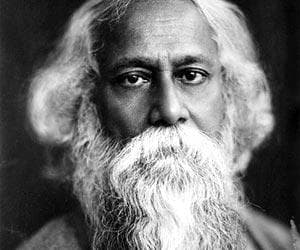
Rabindranath Tagore was a Bengali poet, writer, playwright, composer, philosopher, social reformer and painter. He reshaped Bengali literature and music as well as Indian art with Contextual Modernism in the late 19th and early 20th centuries. Author of the "profoundly sensitive, fresh and beautiful" poetry of Gitanjali, he became in 1913 the first non-European and the first lyricist to win the Nobel Prize in Literature. Tagore's poetic songs were viewed as spiritual and mercurial; however, his "elegant prose and magical poetry" remain largely unknown outside Bengal. He was a fellow of the Royal Asiatic Society. Referred to as "the Bard of Bengal", Tagore was known by sobriquets: Gurudeb, Kobiguru, Biswokobi.

Ashley Antoinette
4.6

Mark McDonald
4.4
Luo Guanzhong
4.4

Mia McKenzie
4.3

Dorothy Parker
4.3

Joaquim Maria Machado de Assis
4.3

James Thurber
4.2

Terry Kay
4.2