“For a man, no matter how honest, is bound to have his share of selfish thoughts. But a woman is different.”
— From 'Rashomon', a servant considers the old woman's actions.

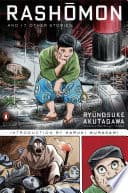
Ryūnosuke Akutagawa (2007)
Genre
Fiction
Reading Time
360 min
Key Themes
See below
Sign in to track this book
Akutagawa's Japan mixes ancient tales of moral uncertainty and feudal life with the author's raw, modernist descent into sadness and madness, all told with a master stylist's clear prose.
On a bleak evening, a dismissed servant, whose name is not given, takes shelter under the ruined Rashomon gate in Kyoto. The city is destroyed by earthquakes, fires, and famine, and the gate has become a place for dumping bodies. The servant, having lost his job, faces the choice of starving or stealing to live. As he thinks about his grim options, he sees an old woman taking hair from the bodies to make wigs. This sight deeply bothers him, challenging his remaining sense of right and wrong. His initial shock quickly turns into a deep internal struggle about human nature and how far people will go to survive.
Driven by disgust and a twisted curiosity, the servant confronts the old woman, accusing her of disrespecting the dead and being inhuman. The old woman, calm, explains her actions with cold logic. She says the woman whose hair she is taking had sold snakes, cutting them up to sell as fish. The old woman argues that if such a person could commit worse evils to survive, then her act of taking hair, which she sees as a lesser evil, is also justified for her own survival. This explanation deeply affects the servant, blurring his understanding of good and evil.
The old woman's argument, though terrible, resonates with the servant's own desperate situation. He realizes that the line between right and wrong has become completely unclear in this ruined world. Instead of feeling pity or more anger, a dark resolve forms in him. He sees her act not just as a way to survive, but as a reason for his own potential turn to crime. With a sudden burst of violence, he takes the old woman's kimono, leaving her to the elements. He then vanishes into the night, leaving behind the Rashomon gate, now a symbol of his own moral decay and the harsh reality of human survival.
A woodcutter reports finding the body of a young samurai, Kanazawa no Takehiro, in a remote bamboo grove. Near the body, he also finds a woman's comb and a rope. The samurai's death is violent, with a single stab wound to the chest. The woodcutter's account is the first in a series of conflicting stories about the samurai's murder. He describes the dense, quiet grove and the unsettling scene, setting the stage for later investigations and the unreliability of witness accounts. His testimony establishes the initial facts of the crime, but gives no clue about who did it.
A traveling priest states that he saw Takehiro, the murdered samurai, and his wife, Masago, riding together on horseback shortly before the event. He describes them as a noble and beautiful couple. His statement confirms their presence in the area and that they were together. However, he gives no specific details about the murder itself, only remembering their last known appearance. This account confirms the victims' identities and their location, but like the woodcutter's, it does not explain the crime, only adding to the mystery.
The well-known bandit Tajomaru is caught and admits to killing Takehiro. He brags about his skill as a bandit and tells how he tricked Takehiro and Masago into the bamboo grove by pretending to find buried treasure. He then tied Takehiro to a tree and raped Masago. Afterward, he claims that Masago, ashamed, insisted that either her husband or Tajomaru must die, challenging Tajomaru to a duel. Tajomaru states he killed Takehiro in a fair fight. His confession is full of boasting and self-praise, making himself out to be a powerful, clever figure, and blaming Masago's honor for the duel.
Masago, confessing to a priest at a temple, gives her version of events. She confirms being raped by Tajomaru while her husband was tied up. Overwhelmed by shame and the sight of her husband's disgusted look, she claims she fainted. When she woke up, she found Tajomaru gone and her husband still tied. Unable to bear the shame and her husband's silent judgment, she says she then stabbed her husband with Tajomaru's dagger, meaning to kill herself, but failed. Her account focuses on her deep shame and the emotional pain of the event, describing her husband's death as a mercy killing from her point of view.
Through a medium, the spirit of Takehiro, the dead samurai, gives his account. He confirms being tied up and seeing his wife's rape. He states that after Tajomaru fled, Masago approached him, untied him, and offered to go with Tajomaru, leaving him. Shocked by her betrayal, Takehiro claims he was so disgusted and hopeless that he took Tajomaru's dagger and killed himself by stabbing. His testimony portrays Masago as a disloyal woman who chose the bandit over her husband, driving him to take his own life out of shame and despair. This account directly contradicts both Tajomaru's and Masago's versions.
Zenchi Naigu, a respected Buddhist priest, has an unusually long nose that reaches his chin. This physical flaw causes him constant embarrassment and self-consciousness, even though he tries to act indifferent. He secretly obsesses over it, reading medical books and trying various cures, all without success. His students and the public subtly mock him, which he pretends not to notice, but it deeply affects his spiritual peace and public image. His wish to get rid of the nose consumes him, overshadowing his religious duties and leading to a deep internal struggle for acceptance and normalcy.
A student, returning from Kyoto, suggests a folk remedy involving boiling the nose in hot water and having it stepped on. Naigu, desperate, agrees. The procedure works, and his nose is much shorter. At first, Naigu feels great relief and satisfaction, believing he has finally become normal and can live without shame. However, to his dismay, people start laughing at him even more openly than before. The subtle mockery he once endured turns into obvious ridicule. He realizes that his previous, abnormal nose had been accepted, but his 'normal' nose now makes him a figure of greater scorn, ironically because it highlights his vanity.
Distressed by the renewed and increased ridicule, Naigu becomes very unhappy. He finds himself wishing for his old, long nose back, as at least then the mockery had been more subdued and he had kept up a pretense of indifference. One morning, he wakes to find his nose has miraculously returned to its original, long state. To his surprise, he feels a strange sense of relief and comfort. He realizes that people's mockery has now lessened, as they are once again used to his unique appearance. The story ends with Naigu finding peace in his old deformity, understanding human cruelty and the uselessness of chasing social approval.
Yoshihide, a famous and arrogant artist, is asked by the powerful and kind Lord Horikawa to paint a magnificent 'Hell Screen' for his temple. Yoshihide is a genius, but his artistic process is very demanding and often cruel, requiring him to see real suffering to show it accurately. He is known for his strange ways and his strong dedication to artistic truth, even if it hurts others. Lord Horikawa, while admiring Yoshihide's talent, is also wary of his extreme methods, especially since Yoshihide's daughter, Yoshika, serves the Lord as a lady-in-waiting, and Yoshihide is very protective of her.
As Yoshihide struggles to finish the central panel showing a lady burning in a chariot, he admits he has never seen such a scene. Lord Horikawa, in a chilling act of cruelty disguised as artistic support, arranges for a magnificent, burning chariot to be brought before Yoshihide. To Yoshihide's horror, his beloved daughter, Yoshika, is tied inside the chariot. Yoshihide is forced to watch her burn to death, screaming in pain. Despite his immense personal suffering, Yoshihide, in a macabre display of artistic devotion, carefully watches every detail of her torment, capturing the horrific scene in his mind for his masterpiece. Lord Horikawa watches with cold satisfaction.
After seeing his daughter's terrible death, Yoshihide finishes the Hell Screen. The completed painting is a masterpiece of unmatched power and horror, showing the infernal realms with terrifying realism and capturing suffering itself. It receives universal praise, but Yoshihide himself is completely broken. Having sacrificed everything, including his beloved daughter, for his art, and having endured such deep trauma, he kills himself shortly after the screen is finished. His death shows the extreme cost of his artistic genius and the dark places both artist and patron went for the sake of art.
This story is a broken, autobiographical narrative, presented as short, numbered paragraphs, reflecting the author's own struggles with mental illness and the pressures of modern life. The main character, clearly representing Akutagawa himself, recounts moments from his childhood, education, relationships, and his growing sense of despair, anxiety, and paranoia. He grapples with literary influences, the meaninglessness of life, and the growing threat of madness, which he fears is hereditary. The story is sad and reflective, showing a mind on the edge, haunted by the past and afraid of the future, ending with his decision to end his life.
The Protagonist
He begins as a man struggling with his conscience but transforms into a cynical survivor, abandoning his moral principles.
The Antagonist/Catalyst
She remains static, representing a fixed point of amoral survival in a decaying world.
The Victim/Central Figure
His character is revealed through conflicting accounts, creating an enigma rather than a clear arc.
The Victim/Accused
Her character is defined by the traumatic events and her struggle with shame, rather than a linear development.
The Antagonist/Confessor
He remains a static character, defined by his criminality and his self-serving narrative.
The Protagonist
He experiences a cycle of hope, disappointment, and eventual acceptance of his original deformity, finding peace in the familiar rather than the ideal.
The Protagonist
He descends into the ultimate artistic sacrifice, achieving his masterpiece at the cost of his humanity and life.
The Antagonist
He remains a static figure of power and cruelty, his true nature revealed through his actions.
The Protagonist
His arc is one of gradual mental deterioration, culminating in a profound sense of despair and the decision to end his life.
This theme is most clearly shown in 'In a Bamboo Grove,' where many conflicting testimonies give completely different versions of the same event. Each character—the bandit, the wife, and the dead samurai—offers a self-serving or shame-driven story, making it impossible for the reader to know the real truth of the murder. This shows how truth is often subjective, shaped by individual views, desires, and the need to protect one's honor or self-image. The story suggests that objective truth might be hard to find or even not exist when seen through human perception.
“''Truly, I do not know who killed my husband.'”
Akutagawa often looks at how easily moral limits can disappear under extreme pressure or when faced with the darker parts of human nature. In 'Rashomon,' the servant's initial disgust at the old woman's actions quickly leads to his own turn to theft, justified by the same logic of survival. This theme also appears in 'Hell Screen,' where the pursuit of art leads to terrible acts, and 'The Nose,' where social judgment can turn a seemingly moral man into a target of ridicule. The stories suggest that human morality is not natural but a fragile idea easily broken by desperation, vanity, or cruelty.
“'Then it is right for me to do it. If I don't, I'll starve to death.'”
This theme is clearly shown in 'Hell Screen,' where the artist Yoshihide's strong dedication to his art demands great sacrifice. He believes that true artistic realism requires direct experience, leading him to see and even help create horrific acts. Lord Horikawa's cruelty, in burning Yoshihide's daughter, pushes this to the extreme, forcing the artist to choose between his child and his art. The story questions the ethical limits of artistic pursuit, the cost of genius, and whether creating a masterpiece can justify immense suffering. It suggests that art can be a powerful, almost evil, force demanding complete devotion.
“'Ah, what a masterpiece! What a masterpiece!'”
In 'The Nose,' Zenchi Naigu's deep self-consciousness about his long nose drives all his actions and thoughts. He tries to fit in with society's ideas of beauty and normalcy, only to find that his 'cure' makes him an even greater target of ridicule. This highlights how arbitrary and often cruel social judgment can be, and how people's perceptions can be more powerful than objective reality. Naigu's eventual peace comes only when he accepts his original deformity, realizing that chasing external approval is pointless and that humans naturally find fault in others, no matter their appearance.
“'People are always ready to mock a man with a long nose; yet they are equally ready to mock a man who has had his long nose shortened.'”
This theme is most noticeable in Akutagawa's later, more autobiographical works, especially 'The Life of a Stupid Man' and 'Spinning Gears.' The main character struggles with deep sadness, anxiety, and a constant feeling of meaninglessness. He fears inherited madness and is haunted by his own thoughts and perceptions, which become more and more distorted. This theme explores the psychological toll of modern life, the fragility of the human mind, and the overwhelming sense of isolation and dread that can lead to a complete breakdown. It offers a raw, honest look into the author's own struggles with mental illness and his final surrender to despair.
“'I was afraid of madness, afraid of my own death.'”
Multiple characters recount the same event with conflicting details, obscuring the truth.
This device is central to 'In a Bamboo Grove.' The story presents the murder of Takehiro through the testimonies of various characters—a woodcutter, a priest, the bandit Tajomaru, the wife Masago, and even the dead samurai's spirit via a medium. Each account is plausible yet contradictory, revealing the biases, self-preservation instincts, and differing perspectives of the narrators. The reader is left without a definitive truth, highlighting the subjective nature of reality and the elusiveness of objective truth when human ego and memory are involved.
Characters are forced to choose between deeply conflicting ethical principles.
In 'Rashomon,' the dismissed servant faces a stark moral dilemma: starve to death or resort to theft. This choice is intensified by his encounter with the old woman, whose amoral actions challenge his remaining sense of decency. The story explores the breaking point of human morality under extreme duress, where survival instincts can override established ethical codes. Similarly, in 'Hell Screen,' Yoshihide is presented with the horrifying choice between his daughter's life and the completion of his artistic vision, forcing him into an impossible moral corner.
Situations or outcomes that are contrary to what is expected, often with a tragic or cynical twist.
Irony is a prominent device, particularly in 'The Nose.' Zenchi Naigu's lifelong obsession is to shorten his nose, believing it will bring him happiness and acceptance. When he finally achieves this, the opposite occurs: he becomes an even greater object of ridicule. His eventual relief comes only when his nose returns to its original, 'abnormal' length. This ironic twist highlights the futility of chasing societal approval and the perverse nature of human judgment, where conformity can lead to greater scorn than eccentricity.
A narrative structure where a story is told within another story.
While not a frame story in the traditional sense of a single overarching narrative, 'In a Bamboo Grove' uses a similar technique of presenting a central mystery (the murder) through a series of enclosed, distinct 'testimony' narratives. Each testimony acts as a mini-story within the larger framework of the investigation, contributing to the central enigma without fully resolving it. This structure emphasizes the fragmentation of truth and the multiple perspectives surrounding a single event.
A narrative style that mimics the flow of a character's thoughts, often non-linear and introspective.
This device is most evident in 'The Life of a Stupid Man' and 'Spinning Gears.' The stories are presented as a series of short, often disconnected paragraphs or vignettes, reflecting the protagonist's (and presumably Akutagawa's) fractured mental state, anxieties, and introspective musings. This technique allows the author to delve deep into the character's psychological landscape, showcasing the raw, unfiltered thoughts, memories, and fears that contribute to his existential despair and eventual mental breakdown, creating an intimate yet unsettling portrait of a mind in decline.
“For a man, no matter how honest, is bound to have his share of selfish thoughts. But a woman is different.”
— From 'Rashomon', a servant considers the old woman's actions.
“In this world, there are only two kinds of fools: those who believe in God, and those who believe they can do without Him.”
— From 'Hell Screen', a character's cynical observation.
“The human heart is like a mirror. It gathers dust, and if we do not polish it, it ceases to reflect.”
— From 'The Spider's Thread', a reflection on moral purity.
“Beauty and ugliness exist only in the eye of the beholder.”
— From 'The Nose', a general philosophical statement.
“What is called civilization is nothing but a grand and elaborate device to make us forget death.”
— From 'In a Grove', a character's musing on society.
“But the truth is not something that can be cut out of a cloth and neatly presented.”
— From 'In a Grove', concerning the elusive nature of truth.
“All human beings are slaves to their desires.”
— From 'The Nose', a thought about human motivation.
“Even the most righteous man, if he is starving, will steal.”
— From 'Rashomon', a servant's justification for theft.
“Life is more comfortable when one has no conscience.”
— From 'The Spider's Thread', a cynical thought.
“There are no ordinary people. Everyone has their own unique hell.”
— From 'Hell Screen', a character's grim observation.
“Man's life is but a moment in the vastness of eternity.”
— From 'The Spider's Thread', a reflection on human insignificance.
“He who loves others too much is doomed to suffer.”
— From 'The Life of a Fool', a personal lament.
“What is more frightening than death itself is the fear of death.”
— From 'The Spider's Thread', a philosophical point.
“Humans are creatures who cannot live without illusions.”
— From 'In a Grove', a character's cynical view of humanity.
Ready to see how well you understood this book? Take our interactive quiz with 10 questions.

Biography coming soon.

Ashley Antoinette
4.6

Mark McDonald
4.4
Luo Guanzhong
4.4

Mia McKenzie
4.3
Dorothy Parker
4.3
Joaquim Maria Machado de Assis
4.3
James Thurber
4.2

Terry Kay
4.2