“The heart is not a thing to be broken; it is a thing to be wielded.”
— Dinah reflects on her power and the nature of love and control.

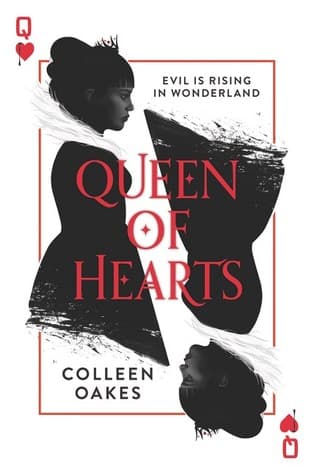
Colleen Oakes (2014)
Genre
Fiction
Reading Time
360 min
Key Themes
See below
Sign in to track this book
Before she was a villain, Princess Dinah fought for her throne and her heart in a treacherous Wonderland, unaware that the seeds of her own tyranny were already taking root.
Princess Dinah, heir to the Wonderland throne, is about to turn sixteen and marry Wardley, the handsome and kind son of the Duke of Spades. Her life at the Red Palace involves lessons in etiquette and politics, overseen by her strict but loving father, the King of Hearts. Dinah is bothered by the memory of her mother, Queen Lilian, who died mysteriously when Dinah was young and is often called 'mad.' Dinah feels growing pressure to be the perfect queen, fearing she might become unstable like her mother. She confides in Wardley, whose constant support offers her comfort amidst the rigid court life and her father’s often distant manner.
The night before her betrothal ball, Dinah finds Wardley in a passionate embrace with her older, more beautiful stepsister, Mariana. The betrayal is a shock, destroying Dinah’s trust and her dreams of a happy future. Heartbroken and embarrassed, Dinah confronts Wardley. He admits to the affair, saying he never truly loved her and was forced into the betrothal. This news leaves Dinah stunned, not only from the personal pain but also the public shame and the political problems of a broken betrothal. She struggles to understand how someone she loved and trusted could deceive her so completely, questioning her own judgment and worth.
News of Wardley's betrayal and the broken betrothal reaches the King, who is angry, not just at Wardley but at Dinah for the scandal it brings to the crown. In a fit of uncontrolled rage, like the 'madness' often said to be Queen Lilian's, the King banishes Dinah from the Red Palace. He sends her to the Outer Regions – a desolate, dangerous, and lawless part of Wonderland. This exile is a harsh punishment. It takes away Dinah's royal comforts and protections and forces her into an unfamiliar and hostile place. It is a clear message that she has disappointed her father and is not worthy of the throne, at least for now.
When she arrives in the Outer Regions, Dinah is stripped of her fine clothes and left with only basic needs. She quickly learns that her royal title means nothing here. Survival depends on her own intelligence and strength. She meets rough people, including Cheshire, a cunning and observant boy who offers her cynical advice and occasional help. Dinah must find food, shelter, and defend herself. She quickly changes from a pampered princess to a hardened survivor. This hard time starts to break down her naive view of the world and forces her to face the darker parts of Wonderland and herself.
During her time in the Outer Regions, Dinah finds a peculiar tea party hosted by the Mad Hatter and his eccentric companions, the March Hare and the Dormouse. At first, their nonsensical behavior confuses her. Dinah soon realizes they are more than just mad; they are part of a hidden group of people who oppose the King's harsh rule and the corrupt court. The Mad Hatter, in his own cryptic way, hints at a resistance movement and a desire for a different kind of Wonderland. This meeting gives Dinah a bit of hope, suggesting she might not be alone in her unhappiness and that others see the flaws in her father's reign.
Cheshire, who has been watching Dinah, reveals that he knows more about her mother, Queen Lilian, than Dinah does. He suggests that Lilian wasn't simply 'mad' but perhaps a victim of court intrigue and the King's growing paranoia. He implies that the King's actions, including Dinah's banishment, are part of a pattern of control and fear. Cheshire also mentions a prophecy or a destiny for Dinah, hinting that her mother's past is connected to Wonderland's future. This information deeply upsets Dinah, forcing her to rethink everything she thought she knew about her family and the kingdom.
Wanting answers about her mother and better understanding the political schemes, Dinah, with Cheshire's reluctant help, plans to sneak back into the Red Palace. She returns in disguise, observing court life from the shadows. She sees her father, the King, with a critical eye, noticing his increasing cruelty and the fear he causes in his subjects. She also sees Mariana's growing influence and the Duke of Spades's ambition. The palace, once a symbol of comfort and safety, now seems like a gilded cage, full of deceit and hidden dangers. This fuels Dinah's resolve to find the truth.
Through careful observation and piecing together overheard conversations, Dinah finds out the full extent of the conspiracy. She learns that Mariana and the Duke of Spades planned Wardley's betrayal. They wanted to remove Dinah from the line of succession to clear the way for Mariana to marry the King and eventually gain power. More disturbingly, Dinah finds evidence that her mother, Queen Lilian, was not mad but was poisoned or driven to despair by the Duke of Spades and possibly the King himself. They feared her influence or her knowledge of their schemes. This discovery strengthens Dinah's hatred for those who wronged her and her mother.
Filled with rage and a desire for justice, Dinah confronts Mariana and the Duke of Spades. The confrontation is tense and shows their manipulative nature. Dinah, no longer the naive princess, stands her ground, her eyes burning with a new coldness. While she doesn't get immediate revenge, this encounter is a turning point. Dinah realizes that to survive and reclaim her rightful place, she must be as cunning and ruthless as her enemies. The desire for revenge begins, and the 'madness' that once scared her now feels like a powerful, though dangerous, tool she might need to use.
Having revealed some of the truth, Dinah is now in a difficult position. She cannot openly challenge the King or the Duke of Spades without concrete proof and allies. She begins to form an uneasy alliance with the Mad Hatter and his network, understanding that their shared desire for a change in leadership could help her. Cheshire, always an opportunist, continues to guide and challenge her, pushing her further down a path of calculated ruthlessness. Dinah ends the book no longer a naive princess, but a young woman hardened by betrayal and exile, determined to reclaim her throne and avenge her mother, even if it means embracing the darker aspects of her own nature.
The Protagonist
From a naive, sheltered princess, Dinah transforms into a hardened, cunning individual driven by a desire for justice and vengeance, ready to embrace her 'madness' to fight for her throne.
The Antagonist
His character remains largely static, representing the oppressive status quo and the source of Dinah's initial suffering and later, her motivation for rebellion.
The Supporting
His arc is brief, starting as Dinah's seemingly loving fiancé and quickly revealing his true, manipulative nature, leading to Dinah's disillusionment.
The Antagonist
She begins as a rival and intensifies into a direct antagonist, solidifying her role as a manipulative force against Dinah's claim.
The Supporting
From a detached observer, Cheshire becomes a key mentor and ally, pushing Dinah to embrace her strength and uncover the truth.
The Supporting
He serves as an initial source of cryptic wisdom and later, a potential strategic ally for Dinah.
The Antagonist
He remains a consistent antagonist, representing the established power structure that Dinah must overcome.
The Mentioned
Her story is revealed retrospectively, transforming from a cautionary tale into a symbol of betrayal and injustice.
Dinah's journey is about finding out who she is beyond her royal title. Her banishment forces her to lose her naive princess identity and develop strength, cunning, and a darker side. She deals with her mother's 'madness' and questions if she is meant to follow a similar path or create her own. This theme is clear as Dinah learns to survive in the Outer Regions, contrasting her pampered past with her new self-sufficiency. This ultimately leads her to accept a more complex, less innocent identity.
““Perhaps the madness was not in her mother, but in the world that had tried to contain her.””
Betrayal is the main reason for Dinah's change. Wardley's affair with Mariana breaks her trust and leads to her exile. This personal betrayal quickly shows a deeper political conspiracy involving her father, stepsister, and the Duke of Spades, concerning her mother's fate and her own claim to the throne. The widespread deception within the Red Palace forces Dinah to become more cynical and suspicious. She learns that appearances are often misleading and that those closest to her can be her biggest enemies. This shows how dangerous power can be.
““The truth was a viper, coiled and waiting to strike, and Dinah had walked blindly into its path.””
The novel looks at how power corrupts and what people will do to get and keep it. The King's harsh rule, the Duke of Spades's ambitious schemes, and Mariana's ruthless pursuit of influence all show how destructive unchecked power is. Dinah's experiences in the Outer Regions, where the King's law doesn't reach, further highlight the difference between a corrupt monarchy and a lawless, yet sometimes more honest, existence. The story suggests that wanting the throne can turn even seemingly good people into villains, and that Dinah herself must navigate this dangerous path.
““A crown was a heavy thing, not just for the jewels it carried, but for the weight of the lies and betrayals it demanded.””
After finding out the truth about Wardley's betrayal and her mother's fate, Dinah wants justice, which quickly turns into a desire for revenge. Her banishment and the unfairness she suffers make her determined to reclaim her throne and punish those who wronged her and her mother. This theme drives many of Dinah's actions in the latter half of the book, as she plans her return to the palace and starts to form alliances. This indicates that her pursuit of justice may lead her down a darker, more vengeful path.
““Justice was a dish best served cold, and Dinah’s heart was turning to ice.””
The idea of 'madness' is central, especially concerning Queen Lilian and Dinah's fear of inheriting it. At first, madness is shown as a terrifying genetic curse. But as Dinah finds out the truth, she realizes it was a label used to discredit and control her mother. The book questions the usual understanding of madness, suggesting it can be a subjective diagnosis given by those in power, or even a form of rebellion against a controlling system. Dinah begins to see that embracing a certain 'madness' might be necessary to survive in a truly mad world.
““They called her mad. But sometimes, madness was the only sane response to a world gone wrong.””
A symbolic setting for Dinah's transformation and growth.
The Outer Regions serve as a crucial plot device, representing a stark contrast to the opulent but deceitful Red Palace. Dinah's banishment to this lawless, dangerous territory forces her out of her sheltered existence and into a harsh reality. It's a crucible where she sheds her innocence, learns survival skills, and gains a critical perspective on the kingdom she is meant to rule. This setting allows for the introduction of characters like Cheshire and the Mad Hatter, who expose Dinah to alternative viewpoints and the hidden resistance against the King's tyranny, directly facilitating her character development.
A central mystery and a catalyst for Dinah's quest for truth.
The alleged 'madness' of Dinah's mother, Queen Lilian, functions as a powerful plot device. Initially presented as a family curse that Dinah fears inheriting, it becomes a central mystery that drives Dinah's investigation. The revelation that Lilian's 'madness' was a fabrication or a consequence of manipulation by the King and the Duke of Spades serves to expose the deep-seated corruption within the court. This device not only provides a personal motivation for Dinah's actions but also challenges the reader's perception of sanity and power dynamics within Wonderland.
The inciting incident that shatters Dinah's world and propels the plot.
Wardley's betrayal with Mariana is the pivotal inciting incident of the novel. It immediately shatters Dinah's naive worldview, breaks her heart, and directly leads to her banishment from the Red Palace. Without this betrayal, Dinah would likely have remained a sheltered princess, unaware of the deeper conspiracies at play. This event forces her into the Outer Regions, triggering her journey of self-discovery and her eventual decision to fight for her rightful place, making it a crucial turning point that sets the entire plot in motion and defines Dinah's character arc.
A symbolic gathering that hints at rebellion and alternative truths.
The Mad Hatter's Tea Party acts as a symbolic gathering and a plot device that introduces Dinah to the underground resistance movement. It represents a subversion of traditional courtly order and a place where 'madness' is embraced as a form of defiance. Through the Hatter's cryptic dialogue and the presence of his companions, Dinah gains her first glimpse of hope that there are others who oppose the King. It's not just an eccentric scene but a crucial meeting point that plants the seeds of rebellion in Dinah's mind and provides her with potential future allies.
“The heart is not a thing to be broken; it is a thing to be wielded.”
— Dinah reflects on her power and the nature of love and control.
“In Wonderland, madness is not a curse but a crown.”
— Describing the twisted logic and allure of the kingdom.
“A queen does not ask for loyalty; she commands it.”
— Dinah asserts her authority as she embraces her role.
“The truth is a weapon, and I have learned to sharpen it.”
— Dinah contemplates the power of knowledge and deception.
“Love in Wonderland is a dangerous game, one I no longer wish to play.”
— Dinah expresses disillusionment with romantic entanglements.
“Every rose has its thorns, and every crown its weight.”
— Reflecting on the burdens and sacrifices of royalty.
“I am not the girl they remember; I am the queen they will fear.”
— Dinah declares her transformation and newfound strength.
“In the court of hearts, betrayal is the only constant.”
— Commenting on the treacherous nature of Wonderland's politics.
“Sometimes, the greatest power lies in knowing when to yield.”
— Dinah learns a strategic lesson about strength and patience.
“My destiny is not written in cards, but in blood and will.”
— Dinah rejects fate and asserts her own agency.
“The madness of Wonderland is a mirror, and I see myself clearly now.”
— Dinah gains self-awareness amidst the chaos of her world.
“To rule is to walk a path of thorns, with beauty as the only reward.”
— Describing the harsh realities and fleeting joys of leadership.
“In the end, we are all just players in a game we did not choose.”
— A philosophical moment about fate and choice in Wonderland.
“My heart may be broken, but it beats stronger for the breaking.”
— Dinah finds resilience and strength through hardship.
Ready to see how well you understood this book? Take our interactive quiz with 10 questions.

Colleen Oakes is a fiction author known for her imaginative retellings of classic fairy tales. Her notable works include the "Queen of Hearts" trilogy and the "Stars" series, which explore themes of power, destiny, and the complexities of female protagonists. Oakes' writing often features intricate world-building and compelling character development.

Ashley Antoinette
4.6

Mark McDonald
4.4
Luo Guanzhong
4.4
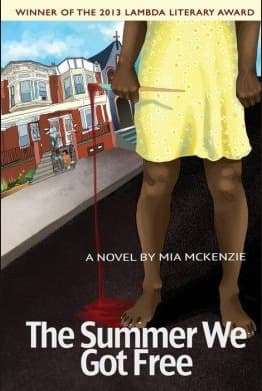
Mia McKenzie
4.3
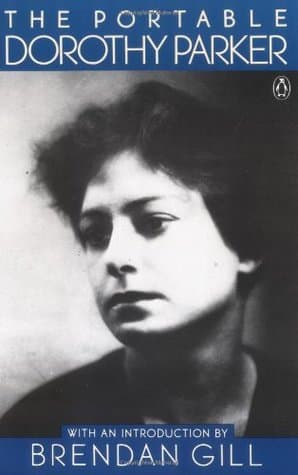
Dorothy Parker
4.3
Joaquim Maria Machado de Assis
4.3

James Thurber
4.2

Terry Kay
4.2