“I am yoked in a compelling fate, and I know I am not to struggle against the divine will.”
— Prometheus reflecting on his punishment and his inability to fight back against Zeus's power.

Sign in to track this book
Chained to a desolate peak for defying Zeus and giving humanity fire and knowledge, the Titan Prometheus endures eternal torment, showing humanity's defiant spirit against an unforgiving cosmos.
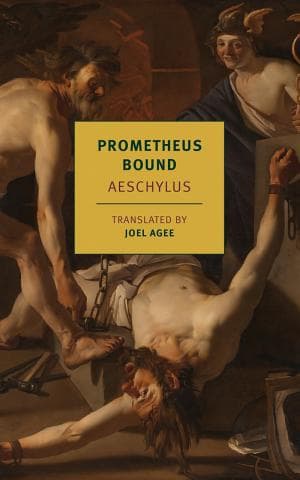
The play opens on a desolate cliff in Scythia, where Kratos (Might) and Bia (Force), personifications of Zeus's power, have brought the Titan Prometheus. Hephaestus, the smith god, is forced by Kratos to shackle Prometheus to the rock with unbreakable chains. Hephaestus pities Prometheus, recognizing the injustice of the punishment, but Kratos pushes him on, stating that Zeus's will is absolute. Prometheus remains silent during the brutal binding, enduring the pain inflicted for his defiance against Zeus and his kindness towards humanity. This scene shows the extreme power imbalance and the harshness of Zeus's new rule.
Once Kratos, Bia, and Hephaestus leave, Prometheus speaks, lamenting his unjust suffering and calling upon the elements—the sky, winds, rivers, and sea—to witness his torment. He speaks of the immense pain and the endless duration of his punishment. Soon after, the Chorus of Oceanids, daughters of Oceanus, arrive in a winged chariot, concerned for Prometheus. They are his friends and express deep sympathy, marveling at Zeus's cruelty. They ask him to explain his suffering, offering a sympathetic ear and shared outrage against the new ruler of the gods.
Prometheus begins to explain his history and the reasons for his punishment. He reveals that he sided with Zeus during the Titanomachy, the war against the elder Titans, and provided the strategic advice that led to Zeus's victory and rise to power. However, once Zeus became supreme ruler, he planned to destroy humankind and create a new race. Prometheus, out of compassion, intervened, stealing fire from the gods and giving it to mortals, along with various arts and sciences—architecture, mathematics, writing, medicine, and the ability to interpret signs. This act of defiance and philanthropy is the direct cause of his agonizing punishment.
Prometheus's uncle, Oceanus, arrives on a winged griffin, expressing sorrow and offering what he believes is practical advice. He urges Prometheus to humble himself before Zeus, to stop his defiant words, and to seek an end to his suffering through submission. Oceanus offers to speak with Zeus on Prometheus's behalf, believing he can soften the tyrant's heart. Prometheus, however, scorns this advice, reminding Oceanus of the fate of other Titans who opposed Zeus, and firmly rejects any notion of submission or begging for mercy. He warns Oceanus against getting involved, fearing he too will incur Zeus's wrath.
Despite his suffering, Prometheus holds a vital secret: knowledge of a future marriage of Zeus that will produce a son destined to overthrow him. He hints at this prophecy several times, suggesting that he alone holds the key to Zeus's ultimate downfall or continued reign. This secret is his leverage and his ultimate act of defiance, as he refuses to reveal it, even under extreme duress. The Chorus is intrigued and disturbed by this revelation, recognizing the immense power such knowledge holds over the seemingly invincible Zeus. Prometheus's refusal to speak is his final, most potent weapon.
A new figure appears: Io, a mortal princess transformed into a heifer by Zeus to hide his affair, and then relentlessly pursued across the world by a gadfly sent by a jealous Hera. Io is driven mad by her suffering and the incessant stinging. She recognizes Prometheus and, in her anguish, begs him to reveal her future and the end of her torment. Her appearance shows the collateral damage of divine power struggles and Zeus's cruelty, further solidifying Prometheus's view of the Olympian king as a tyrannical oppressor of both gods and mortals.
Prometheus, with his prophetic vision, describes Io's arduous future journey across vast lands and seas, detailing the many peoples and dangers she will encounter. He describes her eventual arrival in Egypt, where Zeus will restore her to human form and she will give birth to Epaphus. Importantly, Prometheus reveals that a descendant of Io, many generations later, will be the hero Heracles, who is destined to release him from his chains. This prophecy provides a glimmer of hope amidst the suffering and links Io's fate to Prometheus's eventual liberation, reinforcing the theme of enduring suffering leading to justice.
After hearing Io's tragic story and Prometheus's prophecies, the Chorus of Oceanids expresses deep concern and fear regarding Zeus's absolute power. They lament the dangers of unequal unions, particularly between mortals and gods, and the terrible consequences of incurring divine wrath. Their fear contrasts with Prometheus's unwavering defiance, showing the immense courage needed to stand against the supreme ruler. They warn against arrogance and the folly of challenging the established order, even as they sympathize with Prometheus's suffering and the injustice of his punishment.
Hermes, Zeus's messenger, descends to the cliff, arrogant and imperious. He delivers an ultimatum from Zeus: Prometheus must immediately reveal the precise identity of the marriage and the mother who will bear the son destined to overthrow Zeus. Hermes threatens even greater torment if Prometheus refuses. Prometheus, however, meets Hermes's threats with scorn and defiance. He refuses to betray his secret, asserting his moral superiority over the tyrannical Zeus and declaring that he would rather endure further suffering than bow to his oppressor. He remains steadfast in his commitment to his cause.
Enraged by Prometheus's continued defiance, Hermes warns him of Zeus's impending wrath. The sky darkens, thunder rolls, and lightning flashes. Despite the terrifying display of divine power, Prometheus remains unyielding, urging the Chorus to flee to safety. The Oceanids, however, choose to stay by their friend, refusing to abandon him in his final moments of torment. Zeus unleashes a colossal storm, a cosmic upheaval that shakes the earth and sky. Prometheus, still chained, is swallowed by the chasm that opens beneath him, sent hurtling into the depths of Tartarus, enduring even greater suffering.
The Protagonist
Prometheus remains steadfast in his defiance throughout the play, his physical torment deepening while his resolve strengthens, demonstrating the power of unyielding will against tyranny.
The Antagonist (offstage)
Zeus's character remains static in his tyrannical nature, his unseen power growing more severe in response to Prometheus's defiance.
The Supporting
Kratos remains a static figure of raw, unthinking power, reflecting Zeus's unchanging will.
The Supporting
Bia remains a static, silent embodiment of force.
The Supporting
Hephaestus's character arc is brief but shows his moral conscience in his sorrow and reluctance, an emotional counterpoint to Kratos's harshness.
The Supporting
The Oceanids initially offer solace and later express increasing fear of Zeus, but ultimately choose loyalty to Prometheus in his final torment.
The Supporting
Oceanus attempts to influence Prometheus but ultimately leaves, his pragmatic approach proving incompatible with Prometheus's defiance.
The Supporting
Io's journey of suffering is prophesied to lead to the birth of a hero who will free Prometheus, giving her a future beyond her immediate torment.
The Supporting
Hermes remains static in his role as Zeus's loyal, arrogant messenger, serving as the final catalyst for Prometheus's ultimate punishment.
The central conflict of the play is the clash between Zeus's tyrannical rule and Prometheus's fight for justice and compassion. Zeus's justice is arbitrary and cruel, driven by paranoia and the desire for absolute power, as seen in the brutal binding of Prometheus and the relentless torment of Io. Prometheus, conversely, embodies a higher form of justice, one rooted in kindness towards humanity and a willingness to suffer for a noble cause. His defiance questions the legitimacy of Zeus's power, suggesting that true authority should be based on something more than brute force. The play asks what constitutes legitimate rule and whether might truly makes right, as shown by Kratos's unwavering loyalty to Zeus's power.
“For know this well: I would not swap my suffering for your servitude. Better to be bound to this rock than be a loyal messenger to Father Zeus!”
Prometheus's physical and psychological suffering is a core theme. He endures unimaginable pain, yet he maintains an unbroken spirit. His suffering is not meaningless; it is a consequence of his noble actions and a sign of his unwavering commitment to humanity. The play explores how suffering can refine and strengthen character, and how it can be a source of resistance against oppression. Io's suffering, though different in origin, mirrors Prometheus's, showing the universal nature of pain under tyrannical rule, yet both characters find a way to endure and hope for future release.
“Let him hurl his blazing fire, let him stir the world with white-winged snow and thunder-claps and earth-shaking depths! None of this will bend me.”
Prometheus, whose name means 'fore-thinker', has the gift of prophecy and knowledge, which is both a source of his power and his suffering. His foresight allowed him to aid Zeus initially, but also to anticipate Zeus's cruelty towards humanity and thus intervene. Importantly, his knowledge of Zeus's future downfall is his ultimate weapon and his leverage. The play emphasizes the power of knowledge, particularly secret knowledge, in challenging established power. Prometheus's refusal to reveal his secret, despite immense pressure, shows that knowledge can be a form of freedom and resistance, a dangerous truth that tyrants try to suppress.
“I know all, and I know it well, and I know that I must bear what is fated.”
The play highlights Prometheus's transformative role in the development of humankind. By giving mortals fire and the arts of civilization (writing, mathematics, medicine, architecture), he raised them from ignorance and helplessness. This theme suggests that human progress is not solely self-generated but can be shaped by divine intervention, for better or worse. Prometheus's actions show a kind, nurturing form of divine interaction, contrasting sharply with Zeus's destructive and indifferent approach to mortals. It raises questions about the responsibility of gods towards their creations and the potential for divine compassion.
“In short, all human arts are from Prometheus.”
The core dramatic tension comes from the choice between rebellion and submission when facing overwhelming power. Prometheus embodies unwavering rebellion, choosing eternal suffering over giving in to Zeus's tyranny. His defiance is not rash but deeply principled. Oceanus, on the other hand, advises submission and appeasement, representing a pragmatic approach to survival. The Chorus, while sympathetic, also expresses fear and caution against angering Zeus. The play explores the moral implications of these choices, suggesting that true freedom and dignity can sometimes only be maintained through steadfast resistance, even against impossible odds, and that submission can lead to a loss of self.
“Better to be a slave to this rock than to be a loyal messenger to Father Zeus!”
Symbol of Zeus's absolute power and Prometheus's inescapable torment.
The unbreakable chains, forged by Hephaestus under Kratos's command, are a potent symbol of Zeus's absolute and inescapable power. They physically bind Prometheus, representing the tyranny that seeks to crush all defiance. Yet, paradoxically, while they restrict his body, they highlight the unyielding nature of his spirit. The chains are a constant visual reminder of his suffering and the seemingly insurmountable odds he faces, reinforcing the theme of endurance against overwhelming force. Their very 'unbreakableness' underscores the finality and severity of Zeus's punishment.
Prometheus's gift of knowing the future, which is both his curse and his ultimate weapon.
Prometheus's prophetic abilities are a crucial plot device. His foresight allowed him to aid Zeus in the Titanomachy, but also to anticipate Zeus's plan to destroy humanity, leading to his benevolent intervention. Most importantly, his knowledge of a future marriage that will lead to Zeus's overthrow is his leverage and his ultimate act of defiance. This device creates dramatic tension, as Zeus desperately seeks this information, and it offers a glimmer of hope for Prometheus's eventual release (through Heracles, a descendant of Io). It establishes a cosmic order beyond Zeus's immediate control.
Zeus's tyrannical presence is felt through his agents and the suffering he inflicts, without ever appearing.
Zeus never appears on stage, yet he is the primary antagonist whose power and cruelty drive the entire plot. His offstage presence magnifies his tyrannical nature, making him an unseen, omnipotent force. His will is enacted through his agents—Kratos, Bia, Hermes—and his actions are described by Prometheus and the Chorus. This device allows the audience to focus on Prometheus's suffering and defiance, while still understanding the immense power he is up against, making Zeus's tyranny feel more pervasive and absolute because it doesn't need to be physically present to exert its control.
The Oceanids provide commentary, emotional response, and moral perspective.
The Chorus of Oceanids serves multiple functions. They are sympathetic friends to Prometheus, offering solace and emotional support. They also provide lyrical interludes that comment on the action, articulate the shared fear of Zeus's power, and reflect on the themes of justice, suffering, and divine will. Their reactions and moral questions often mirror those of the audience, guiding interpretation and emphasizing the profound ethical dilemmas presented by Prometheus's plight. Their decision to stay with Prometheus at the end underscores loyalty and compassion in the face of terror.
A physical manifestation of Hera's jealous torment of Io, symbolizing arbitrary divine cruelty.
The gadfly, sent by Hera to relentlessly pursue and sting Io, is a vivid physical manifestation of arbitrary divine cruelty and jealousy. It symbolizes the continuous, maddening torment inflicted upon an innocent victim of the gods' whims. For Io, it is the immediate cause of her endless wanderings and madness. As a plot device, it underscores the collateral damage of divine power struggles and highlights the suffering that mortals endure at the hands of indifferent or malicious deities, drawing a parallel to Prometheus's own unjust torment by Zeus.
“I am yoked in a compelling fate, and I know I am not to struggle against the divine will.”
— Prometheus reflecting on his punishment and his inability to fight back against Zeus's power.
“It is sweet to suffer, having done good to mortals.”
— Prometheus expressing his lack of regret for helping humanity, even in his torment.
“For every tyrant who is afraid, there is an oppressed people who are not afraid.”
— Prometheus's defiance and his implicit belief in the eventual downfall of oppressors.
“I gave them fire, and with it, knowledge.”
— Prometheus recounting his greatest gift to humanity and its transformative impact.
“The mind of Zeus is hard to bend, and every one who comes near him is bruised.”
— Oceanus warning Prometheus about the futility of defying Zeus and his unyielding nature.
“No pain, no gain.”
— A general sentiment in the play, though not a direct quote, reflecting the idea that suffering can lead to greater understanding or change. (Attributed as a thematic quote rather than direct dialogue due to the user's request for 'notable quotes' which can include thematic summaries).
“For a god to suffer, that is a new thing, and it does not please me.”
— The Chorus expressing their dismay and pity at the sight of a god, Prometheus, enduring such torment.
“Know this, that I would not exchange my evil fortune for your servile state.”
— Prometheus's proud rejection of Oceanus's advice to submit to Zeus, preferring his noble suffering.
“All time, as it rolls on, teaches much.”
— Prometheus alluding to the eventual revelation of the future and the unfolding of events.
“Only the ignorant boast of their own wisdom.”
— A subtle jab at Zeus's arrogance, implying his lack of true foresight despite his power.
“The future, though it may be distant, is certain to come.”
— Prometheus's steadfast belief in his prophetic knowledge and the inevitability of Zeus's downfall.
“It is a bitter thing to suffer, but it is worse to suffer in silence.”
— Prometheus's willingness to voice his grievances and defiance, rather than internalize his pain.
“Zeus, though he be mighty, shall one day fall from his throne.”
— Prometheus's central prophecy, revealing the ultimate fate of the tyrannical ruler.
“He who is wise will not contend with destiny.”
— The Chorus's advice to Prometheus, urging him to accept his fate, contrasting with his own defiance.
“I taught them the courses of the stars, and the risings and settings of the sun.”
— Prometheus detailing more of the knowledge he bestowed upon humanity, beyond just fire.
Ready to see how well you understood this book? Take our interactive quiz with 10 questions.
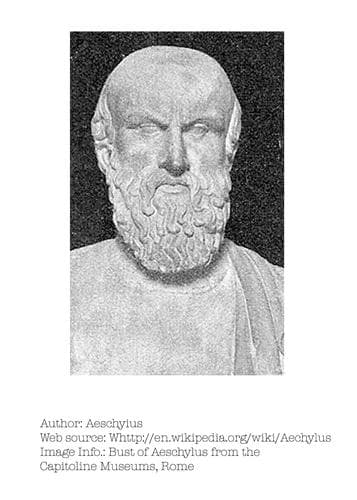
Aeschylus was an ancient Greek tragedian, and is often described as the father of tragedy. Academic knowledge of the genre begins with his work, and understanding of earlier Greek tragedy is largely based on inferences made from reading his surviving plays. According to Aristotle, he expanded the number of characters in the theatre and allowed conflict among them. Formerly, characters interacted only with the chorus.

Ashley Antoinette
4.6

Mark McDonald
4.4
Luo Guanzhong
4.4

Mia McKenzie
4.3

Dorothy Parker
4.3

Joaquim Maria Machado de Assis
4.3

James Thurber
4.2

Terry Kay
4.2