“The universe doesn't care about your plans, only your probabilities.”
— A philosophical musing by the protagonist early in their journey to understand the Powerball.

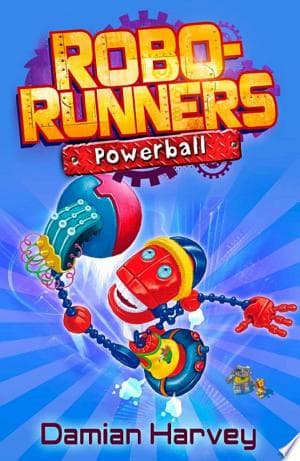
Damian Harvey (2013)
Genre
Science Fiction
Reading Time
180 min
Key Themes
See below
Sign in to track this book
In a city where sentient robots dream of powerball stardom, two fugitive friends find the game is a brutal fight for survival in Iron City, where every goal could be their last.
Crank, a small, ambitious robot, and his larger, more careful friend Al, arrive in the magnificent, mobile Iron City. They are fugitives, having escaped their previous owners, and see Iron City as a place for new beginnings. Crank is especially excited about becoming a renowned powerball star, a sport he deeply admires. As they move through the crowded, metallic streets, they are amazed by the city's size and the energy around the powerball arenas. Crank dreams of joining a top team and proving his worth, believing their past troubles can be forgotten if they succeed in the sport.
Soon after arriving, Crank and Al try to join the powerball scene. They meet a tough coach named Scar, who quickly dismisses Crank's first attempts to impress him, showing how competitive the sport is. Scar makes it clear that talent alone is not enough; survival in Iron City requires more. The friends also see the difficult conditions many unattached robots face. These robots are often exploited or forced into dangerous, low-paying jobs just to get energy. This first experience starts to chip away at Crank's hopeful view of the city.
With critically low energy and no other options, Crank and Al must join a struggling powerball team called the Scrappers. This team consists of various downtrodden robots, led by the practical and experienced 'Grinder'. They learn that the Scrappers are about to be disbanded if they do not start winning, meaning their very existence depends on their performance. The prize for winning matches is not just fame, but essential energy cells — the robots' literal lifeblood. This realization shatters Crank's romantic view of powerball, revealing its brutal, survival-driven core.
Training with the Scrappers is very different from Crank's ideal vision. The team lacks good equipment, relying on cleverness and grit. Crank, initially focused on showy individual moves, struggles to adapt to Grinder's focus on strategic play and selfless teamwork. Al, with his strength and steadiness, is a valuable asset, often helping to balance Crank's impulsiveness and Grinder's strict leadership. Through tough, often painful, practice sessions, Crank slowly begins to understand that powerball in Iron City is not about personal awards, but about collective survival. He starts to respect his teammates and their unique skills.
The Scrappers' first official powerball match is a difficult test. They face a well-organized, aggressive opposing team. Crank, despite his growing understanding of teamwork, returns to old habits, trying to score spectacular individual goals. This ego-driven play disrupts the team's strategy and leaves them vulnerable. The Scrappers suffer a demoralizing defeat, pushing them closer to being disbanded. Grinder directly confronts Crank, making him realize the severe impact of his actions on the entire team. This loss is a key moment for Crank, forcing him to face his flaws and the seriousness of their situation.
After their loss, the stakes rise dramatically when the Scrappers learn more about the 'Junkyard.' This is the terrifying destination for any robot or team that fails to perform, where they are stripped for parts and permanently deactivated. The thought of ending up in the Junkyard weighs heavily on the team, causing deep fear and urgency. This discovery motivates them, especially Crank, to train harder and work together more than ever before. The threat of the Junkyard changes powerball from a game of survival into a desperate fight for existence.
Grinder, seeing the Scrappers' unique strengths and weaknesses, creates an unusual strategy that uses their individual skills while minimizing their disadvantages against better-equipped teams. Crank, having learned from his past failures, commits to mastering his role within this new system. He starts to see the value in supporting his teammates, setting up plays, and defending, rather than just focusing on scoring. The team begins to work well together, forming bonds of trust and friendship. Their shared struggle and the looming threat of the Junkyard forge them into a surprisingly effective unit, showing true resilience.
The Scrappers' new strategy begins to work. They win several important matches, surprising their opponents and even earning some respect from the city's powerball fans. Crank, now playing as a true team player, helps significantly in their victories, assisting goals and making key defensive plays. The energy cells from their wins stabilize their existence, and for the first time since arriving in Iron City, the team feels a glimmer of hope. Their success challenges the established powerball order, proving that determination and unity can overcome better resources.
The Scrappers' winning streak leads them to a critical match against one of Iron City's top-ranked and most formidable teams. This game is not just for more energy cells, but for their continued existence and a chance to truly establish themselves. The atmosphere in the arena is electric, with the entire city watching. Crank, Al, Grinder, and the rest of the Scrappers know that this is their moment of truth. They must execute their strategy perfectly and rely on the bonds they have formed to overcome their superior opponents, or face the grim reality of the Junkyard.
In a nail-biting, hard-fought match, the Scrappers, through sheer determination, teamwork, and smart tactics, defeat their powerful opponents. Crank plays a key role, not with individual heroics, but with a crucial assist or defensive play that secures their victory. The crowd erupts, recognizing the underdog team's incredible achievement. With their win, the Scrappers secure their place in Iron City, earning respect and ensuring their survival. Crank and Al, no longer just robots on the run, have found a true home and a purpose, proving that powerball is more than just a game — it is a story of resilience and unity.
The Protagonist
Crank transforms from an individualistic, glory-seeking robot into a selfless team player, learning that survival and success come through unity and cooperation.
The Supporting
Al remains a consistent source of support and strength, demonstrating the quiet power of reliability and loyalty in the face of adversity.
The Supporting
Grinder successfully molds a disparate group of robots into a cohesive, winning team, proving his leadership and strategic prowess.
The Supporting
Scar remains a formidable competitor and a symbol of the established order, ultimately forced to acknowledge the Scrappers' rise.
The Supporting
The Scrappers transform from a struggling, disparate group into a formidable, unified team, achieving success against overwhelming odds.
This theme is central to Crank's journey. At first, Crank believes his individual skill will bring glory, as seen in his early, showy attempts to impress Coach Scar. However, his experience with the Scrappers, especially his first disastrous match where his ego-driven play leads to a loss, forces him to confront this. Grinder always emphasizes collective strategy and mutual support. Crank's change into a selfless player, setting up goals and playing defense, is key to the Scrappers' eventual success, showing that true strength comes from unity. This is reinforced by the Scrappers' diverse skills complementing each other.
“It's not about how many goals you score, Crank. It's about how many goals we score.”
The harsh reality of Iron City means powerball is not just a sport, but a matter of life and death for its robot inhabitants. The Scrappers' motivation to win comes from the need for energy cells and the terrifying threat of the Junkyard, where failed robots are dismantled. This desperation shows in their rigorous training, the high stakes of every match, and the constant fear of failure. Crank and Al's initial status as fugitives also highlights this theme, as they constantly seek a place where they can survive and thrive, finding it only through their team's collective effort.
“Win, or get scrapped. Those are the rules in Iron City.”
Crank and Al arrive in Iron City as fugitives, unattached and looking for a place to belong. Crank first seeks identity through fame, but he truly finds belonging within the Scrappers. The team, made up of various outcasts and underdogs, offers him a sense of purpose and a surrogate family. Through shared struggle and mutual support, Crank moves beyond his past as a 'robot on the run' to become a valued member of a community. His identity shifts from an individual player to an important part of a winning team, giving him a stable place in the otherwise ruthless city.
“For the first time, Crank felt like he wasn't just running from something, but running towards something.”
The Scrappers show resilience, constantly facing seemingly impossible odds. They lack resources, are initially dismissed as failures, and face the constant threat of the Junkyard. Despite losses and setbacks, they always pick themselves up, adapt, and train harder. Grinder's strategic thinking and the team's willingness to learn and grow demonstrate this theme. Their ultimate victory against a superior team highlights how determination and a unified spirit can overcome significant disadvantages, offering hope in a harsh environment.
“We might be scraps, but we're tough scraps.”
The ultimate consequence for failed robots in Iron City.
The Junkyard serves as a powerful external motivator and a constant threat hanging over the Scrappers. It is the destination for any robot or team that fails to perform, where they are permanently deactivated and stripped for parts. This device elevates the stakes of powerball from a mere game to a fight for literal existence. The fear of the Junkyard drives the characters' actions, intensifies their training, and fosters a desperate unity among the team members, making every match a high-stakes battle for survival.
The vital resource that powers robots and serves as the prize for winning powerball matches.
Energy cells are a crucial plot device that directly ties the game of powerball to the robots' survival. They are not merely a reward but a necessity for the robots to function. The Scrappers' initial desperation for energy highlights their precarious existence. Winning matches means earning these cells, which literally keeps them 'alive.' This device grounds the fantastical world in a tangible, survival-driven economy, making the stakes of the game immediately understandable and impactful, especially when the team's energy supplies run low.
A mobile, bustling metropolis that provides the setting and context for the powerball league.
Iron City itself acts as more than just a setting; it's a character in its own right and a significant plot device. Its mobile nature implies a transient existence for many of its inhabitants, including Crank and Al. The city's vastness and the clear hierarchy within its powerball league establish the challenges and opportunities for the protagonists. Its bustling, competitive atmosphere reinforces the cutthroat nature of the sport and the constant struggle for survival, shaping the characters' experiences and motivations as they navigate its metallic streets.
The story structure where a disadvantaged group rises to challenge powerful, established entities.
The entire narrative of 'Powerball' is built upon the classic underdog story. Crank and Al are fugitives, and the Scrappers are a struggling, resource-poor team dismissed by others. This device creates inherent tension and makes their eventual success all the more satisfying. It highlights themes of resilience, teamwork, and the triumph of spirit over superior resources. The audience naturally roots for the Scrappers, as their journey symbolizes the hope that even the most disadvantaged can achieve greatness through unity and determination against overwhelming odds.
“The universe doesn't care about your plans, only your probabilities.”
— A philosophical musing by the protagonist early in their journey to understand the Powerball.
“We weren't just predicting the future; we were nudging it.”
— A realization by the team as they begin to master the Powerball's influence.
“Every choice is a branch, every outcome a leaf on an infinite tree.”
— Describing the multiverse theory as it relates to the Powerball's capabilities.
“Power isn't just about what you can do, but what you choose not to.”
— A mentor's advice on the ethical implications of wielding the Powerball.
“The greatest danger wasn't in failing, but in succeeding too well.”
— Reflecting on the unforeseen negative consequences of their successful predictions.
“Time is not a river; it's a tapestry, and we just found a loose thread.”
— A poetic description of their ability to perceive and alter temporal events.
“The algorithms were just tools; the true magic was in the interpretation.”
— Highlighting the human element necessary to make sense of the Powerball's data.
“You can't cheat fate, but you can certainly distract it.”
— A cynical but effective strategy employed when facing overwhelming odds.
“Every solution creates a new problem. That's the first law of reality, or at least, of this device.”
— A weary observation after dealing with the ripple effects of their interventions.
“The quiet hum of the Powerball was the sound of a thousand futures whispering.”
— Describing the sensory experience of being near the active Powerball.
“Ignorance is not bliss when the storm is already on the horizon.”
— Justifying their proactive, sometimes disruptive, interventions.
“We didn't just see the odds; we felt them, a tremor in the fabric of what was to be.”
— An explanation of the intuitive connection developed with the Powerball.
“The real power wasn't in knowing the future, but in choosing to change it.”
— A core theme of the book, emphasizing agency over determinism.
“Sometimes, the most significant change comes from the smallest, most improbable nudge.”
— Illustrating the butterfly effect in action through their use of the Powerball.
Ready to see how well you understood this book? Take our interactive quiz with 10 questions.