“What do you think, Makar Alexeievitch? Is it not true that a man is sometimes not a bad man at all, but only a poor one?”
— Varvara Dobroselova reflecting on the nature of poverty and morality.

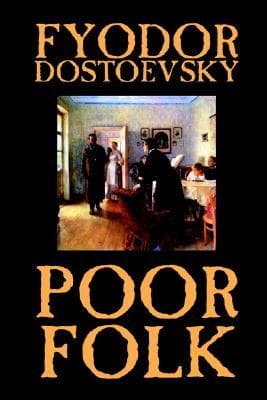
Fyodor Dostoyevsky (2007)
Genre
Fiction
Reading Time
167 min
Key Themes
See below
Sign in to track this book
In a series of letters, an aging copywriter and a young seamstress navigate the quiet desperation and dignity of their shared poverty, their chaste love a fragile light against a world that diminishes them.
The novel begins with letters between Makar Alexeievitch Devushkin, an elderly, poor government clerk, and Varvara Alexeievna Dobroselova, a young, orphaned seamstress. They live in separate rooms in the same poor Petersburg building, separated by a courtyard. Makar's first letter expresses his joy at her well-being and his concern for her comfort, despite his own bad financial state. He describes his cramped, unheated corner of a room, shared with other lodgers, and his efforts to save money to send her small gifts. Varvara, in turn, thanks him, but also hints at her own struggles and her need to work tirelessly as a seamstress, showing the ongoing cycle of their shared poverty.
Makar continues to send Varvara small luxuries like grapes and flowers, often skipping his own meals. He often worries about her reputation and well-being, sometimes with paternal pride. However, his letters also reveal deep self-consciousness about his shabby look and low social standing. Varvara, more practical, gently scolds him for his spending, reminding him of their uncertain financial state and urging him to save. She worries about his health and future, showing her role as the more sensible and grounded of the two, despite her youth and vulnerability. This exchange shows the delicate balance of their relationship, where affection mixes with the harsh realities of their poverty.
Varvara begins to share her personal history with Makar through her letters, painting a clear picture of her happy childhood in the countryside with her loving parents. She describes the beauty of nature and the warmth of her family life, a sharp contrast to her current poor living conditions. This ideal period ends with her father's financial ruin and death, which forces her and her mother to move to St. Petersburg. Her mother's declining health and eventual death leave Varvara an orphan, dependent on relatives, especially Anna Fyodorovna, who takes advantage of her. This background explains Varvara's current vulnerability and her deep desire for security and a better life, making her present struggles more difficult.
Makar describes a painful incident at his office. He tells how his old, worn boots draw the attention and scorn of his superior, Bykov, and a younger, richer colleague named Ratazyayev. The incident leaves him deeply humiliated and ashamed, strengthening his feelings of inadequacy. He is very aware of the social gap between himself and his colleagues, and the incident reminds him of his low status. He tries to downplay the event to Varvara, but his distress is clear, showing his fragile self-esteem and the constant insults he faces because of his poverty. This event greatly affects him, making him question his dignity and place in the world.
Makar tries to engage with literature, sharing his thoughts on various Russian authors with Varvara. He is especially sensitive to how authors portray poor and common people. While he struggles with complex literary analysis, he shows a real desire for respect and understanding, especially from Varvara. He buys a copy of 'The Stationmaster' and offers his simple, yet heartfelt, critique, identifying deeply with the characters' suffering. This venture into literary discussion is Makar's way of trying to better himself, to prove his intellect and worth beyond his clerical duties, and to connect with Varvara more deeply than just their shared poverty.
Makar's financial situation quickly worsens. He falls behind on his rent and faces eviction from his already bad room. His landlord, Gorshkov, is also very poor and pushes him for payment. Makar's letters become more desperate, filled with worry about his inability to provide for himself, let alone send Varvara any help. He describes his hunger and the constant fear of being completely without money. This period marks a low point for Makar, as he deals with the overwhelming burden of his poverty and his lack of resources, showing how truly vulnerable he is.
Varvara's health, already weak, gets worse. She falls ill, likely due to the harsh living conditions and constant stress. Her letters show her physical weakness and growing despair. She cannot work as much, further hurting her financial stability. The illness also makes her more vulnerable to Anna Fyodorovna's manipulations, who continues to negatively influence her life. Makar, despite his own struggles, is deeply upset by her illness and tries to send her his small earnings, showing his strong devotion and concern for her, even as his own world falls apart.
A turning point happens with the return of Bykov, a wealthy, older landowner and a distant relative of Varvara's. Bykov, who had been involved in her family's past troubles, now proposes marriage to Varvara. His proposal offers an escape from her poverty and a chance at security, but it is presented in a practical, almost cold way, without real affection. Varvara is torn between her feelings for Makar and the clear practical benefits of Bykov's offer. This development introduces a stark choice for Varvara, forcing her to face the harsh realities of her situation and the limits of her love for Makar.
Makar is devastated by the news of Bykov's proposal. His letters become frantic and heartbroken, filled with pleas for Varvara to stay. He expresses his deep love and reliance on her, seeing her as his only source of joy and meaning. He tries to convince her not to go, appealing to their shared past and the purity of their affection. However, Varvara, though clearly conflicted and sad about leaving Makar, ultimately decides to accept Bykov's proposal. She admits her weakness and her need for security, realizing that Makar, despite his love, cannot offer her the stability she desperately needs.
Varvara begins preparing for her departure with Bykov. Her final letters to Makar show a mix of sadness, regret, and resignation. She tries to comfort him but also holds to her decision. Makar, however, sinks into deeper despair. His last letters are full of grief, confusion, and a deep sense of loss. He struggles to imagine a life without Varvara, his protector, confidante, and reason for living. The novel ends with Makar's final, heartbreaking letter, showing his complete desolation and the void left by Varvara's departure, highlighting the tragic end of their tender, yet doomed, relationship.
The Protagonist
Makar's character arc is one of increasing despair and self-awareness of his own powerlessness, culminating in utter desolation after Varvara's departure.
The Protagonist
Varvara's arc is a tragic journey from fragile hope to a pragmatic decision to sacrifice love for security, driven by her desperate circumstances.
The Antagonist/Supporting
Bykov's arc is static; he remains a symbol of the external forces dictating the lives of the poor.
The Supporting
Anna Fyodorovna remains a consistently negative and exploiting force in Varvara's life.
The Supporting
Gorshkov's arc is one of continuous struggle and quiet suffering, ending ambiguously but implying ongoing hardship.
The Mentioned
Ratazyayev's role is static; he serves as a brief, symbolic representation of social snobbery.
The Mentioned
Pokrovsky's arc is complete before the novel begins; he is a nostalgic memory for Varvara.
The Mentioned
Pokrovsky Jr.'s arc is complete before the novel begins; he is a tragic memory for Varvara.
Poverty is the main theme, shown not just as a lack of money but as a destructive force that takes away dignity, self-respect, and hope. Makar's constant humiliation at work, his inability to afford basic needs, and his despair after Varvara leaves all show how poverty crushes the human spirit. Varvara's illness, her forced labor, and her final choice to marry for security rather than love further show how poverty dictates life choices and limits freedom. The novel details the daily insults and constant worry that define the lives of the poor in St. Petersburg, showing how it isolates and ultimately destroys.
“Poverty is a vice, sir, a vice. In poverty you can't satisfy your vanity, you can't be demanding, you can't be proud, you can't even stand up for yourself.”
Despite their poverty, both Makar and Varvara try to keep their dignity and self-respect. Makar is very sensitive to public opinion and the scorn of his superiors, constantly trying to justify his existence and worth. His attempts at literary criticism, even if clumsy, are a bid for intellectual dignity. Varvara, despite her desperate circumstances, tries to maintain a refined manner and proper behavior. The novel explores the deep psychological impact of being constantly ignored and humiliated, and the characters' desperate attempts to hold onto their inner worth in a society that undervalues them. Their struggle highlights the human need for recognition beyond material wealth.
“I know very well that I am a ridiculous person, but I have a soul, I am a man, and I have a heart.”
The relationship between Makar and Varvara explores love and sacrifice. Makar's love for Varvara is pure, paternal, and self-sacrificing; he always puts her needs before his own, even when it means going hungry. This love is his only source of joy and meaning. Varvara, while returning affection, is forced by circumstances to make a practical decision, sacrificing their tender connection for the promise of security. The novel portrays love not as a romantic ideal, but as a complex force tied to social and economic realities, showing how outside pressures can force heartbreaking choices and highlight the limits of love in overcoming material hardship.
“I love you, my angel, with all my heart, but I know that I am a poor man, and I have no right to love you.”
The novel clearly shows the social injustice and strict class division in 19th-century St. Petersburg. The wealthy, like Bykov and Makar's disrespectful colleagues, live in comfort and indifference, while the poor suffer in squalor and humiliation. The story highlights the lack of opportunities for those born into poverty and the systemic nature of their suffering. Makar's constant awareness of his 'place' and Varvara's forced choice show how social structures limit individual freedom and keep hardship going. The novel criticizes a society that allows such extreme differences to exist, and the moral issues of such a system.
“And the poor man is a poor man, whatever he does, he'll always be a poor man.”
Empathy is a key element, especially in Makar's character. He has a deep capacity for empathy, not only for Varvara but also for other suffering people like Gorshkov and characters in the books he reads. His attempts to understand and ease Varvara's suffering, despite his own limits, show the power of human connection. However, the novel also shows the limits of empathy when faced with overwhelming systemic poverty. Makar's empathy, while noble, cannot save Varvara from her fate, nor can it change their circumstances. It offers comfort but not salvation, showing the gap between individual compassion and societal change.
“It's hard, Varvara Alexeievna, it's very hard for a poor man to be honest.”
The novel is told entirely through an exchange of letters between Makar and Varvara.
The epistolary format is central to 'Poor Folk.' It allows for direct access to the characters' inner thoughts, feelings, and perspectives, creating a profound sense of intimacy and immediacy. The letters reveal their individual voices, their vulnerabilities, and their attempts to present themselves to each other. This format also highlights their isolation, as their communication is limited to written words, often with delays. It allows for a gradual unfolding of their backstories and their present struggles, building suspense and emotional depth as the reader pieces together their lives through their correspondence. The unreliability of each narrator, trying to put on a brave face for the other, adds another layer of complexity.
Small gifts exchanged between Makar and Varvara symbolize affection, sacrifice, and their economic struggle.
The small gifts Makar sends Varvara – grapes, flowers, sweets – are highly symbolic. They are not merely tokens of affection but represent Makar's profound sacrifice and his desperate attempts to provide comfort and luxury for Varvara, often at the expense of his own sustenance. These gifts underscore his paternalistic love and his longing to offer her a better life. Conversely, Varvara's attempts to return or refuse these gifts highlight her practicality and her concern for Makar's well-being, as well as the burden of his generosity. The gifts become poignant reminders of their shared poverty and the tenderness of their bond in the face of hardship.
Both Makar and Varvara present selective and often self-deceptive accounts of their lives.
Both Makar and Varvara function as unreliable narrators to varying degrees. Makar frequently tries to downplay his own suffering and humiliation, presenting a more dignified image of himself than reality suggests, particularly to Varvara. He exaggerates his well-being and his ability to cope. Varvara, too, sometimes minimizes her illness or her despair, trying to shield Makar from further worry. This unreliability is born out of love, shame, and a desire to protect each other, but it also creates a subtle tension, requiring the reader to read between the lines and infer the true extent of their suffering. It highlights their struggle to maintain appearances and dignity.
The stark differences between the poor tenement and Varvara's childhood countryside home.
The novel uses contrasting social environments to emphasize the characters' current plight. Varvara's detailed recollections of her idyllic childhood in the lush, peaceful countryside stand in stark opposition to the squalid, cramped, and impersonal Petersburg tenement where she and Makar now reside. This contrast highlights the tragic fall from grace her family experienced and underscores the harshness of their present reality. The city itself, with its coldness and anonymity, becomes a symbol of the indifference of society towards the poor, making their shared corner of a room seem like a fragile haven against a hostile world. It amplifies the sense of loss and the oppressive weight of their circumstances.
“What do you think, Makar Alexeievitch? Is it not true that a man is sometimes not a bad man at all, but only a poor one?”
— Varvara Dobroselova reflecting on the nature of poverty and morality.
“Poverty is no vice, but destitution is.”
— Makar Devushkin's often-repeated, yet increasingly challenged, personal philosophy.
“And the fact is that I am a quiet man, an inoffensive man, and I do not want to annoy anyone.”
— Makar Devushkin trying to justify his meekness and avoid conflict.
“I am a man who has lived a good deal, and I have seen a good deal; and I know what is what.”
— Makar Devushkin trying to assert his experience and wisdom to Varvara.
“But a man must live, you know, and if he has nothing to live on, then he must steal.”
— A harsh thought expressed by Makar Devushkin, revealing his desperation.
“A man must have some self-respect, you know, or else he is not a man at all.”
— Makar Devushkin's struggle to maintain his dignity despite his circumstances.
“How can one live in this world without a friend? Without a friend, a man is like a bird without wings.”
— Makar Devushkin expressing his deep need for companionship and Varvara's friendship.
“It is a terrible thing to be poor, Varvara Alexeievna; it is a terrible thing!”
— Makar Devushkin's raw and emotional outcry about the suffering caused by poverty.
“But I am no hero, Varvara Alexeievna, I am only a poor man, a very poor man.”
— Makar Devushkin's humble self-assessment, contrasting with his idealized image of himself.
“We are all human beings, you know, and we all have our weaknesses.”
— Makar Devushkin's philosophical reflection on human imperfection.
“It is not good to be always alone; it is not good to be always thinking.”
— Varvara Dobroselova's observation on the isolating effects of introspection and solitude.
“And what is a man without a name? He is nothing, a mere speck of dust.”
— Makar Devushkin's concern about his social standing and lack of recognition.
“One must suffer, you know, to understand.”
— Varvara Dobroselova's melancholic acceptance of suffering as a path to understanding.
“I am a literary man, Varvara Alexeievna, a literary man, though I don't write anything.”
— Makar Devushkin's endearing and somewhat delusional self-description, highlighting his love for literature.
“A man must be a man, and not a rag!”
— Makar Devushkin's internal struggle to assert his masculinity and worth.
Ready to see how well you understood this book? Take our interactive quiz with 10 questions.

Fyodor Mikhailovich Dostoevsky, sometimes transliterated as Dostoyevsky, was a Russian novelist, short story writer, essayist and journalist. Numerous literary critics regard him as one of the greatest novelists in all of world literature, as many of his works are considered highly influential masterpieces.

Ashley Antoinette
4.6

Mark McDonald
4.4
Luo Guanzhong
4.4

Mia McKenzie
4.3
Dorothy Parker
4.3

Joaquim Maria Machado de Assis
4.3
James Thurber
4.2

Terry Kay
4.2