“We are all of us made up of many men, and the man who appears is the one who is most in harmony with the circumstances.”
— Narrator reflecting on human nature and identity.


Guy de Maupassant (2019)
Genre
Fiction
Reading Time
160 min
Key Themes
See below
Sign in to track this book
One brother's sudden inheritance brings out jealousy and suspicion, forcing his family to face a devastating secret that shatters their quiet life and divides them.
The Roland family, made up of former Parisian jewelers Monsieur and Madame Roland, and their two adult sons, Pierre and Jean, live a comfortable, retired life in Le Havre. Pierre, the older son, is a new doctor. He is thin, dark, and nervous, with big goals and quick discouragement. Jean, five years younger, is plump, fair, and calm. He is a new law graduate. Both sons are home after their studies and thinking about their futures, including settling down. Both also subtly want the attention of the charming young widow, Madame Rosémilly. During a family fishing trip with Madame Rosémilly, the brothers have a hard rowing competition. It is for sport, but it is also clearly fueled by an unspoken rivalry for the widow's affections. This shows the competition under their seemingly loving sibling relationship.
After the fishing trip, the Roland family gets surprising news: Monsieur Maréchal, a rich old family friend who had recently died in Paris, has left his entire fortune to Jean. The news gets different reactions; Monsieur and Madame Roland are happy for Jean, and Jean himself is surprised but pleased. Pierre, however, immediately feels intense jealousy. While he congratulates his brother, the unexpected and unequal distribution of Maréchal's wealth instantly creates bitterness in him. This shatters the fragile peace of their family and plants the first seeds of suspicion in his mind.
Pierre's jealousy quickly turns into obsessive suspicion, fueled by comments from others. The local pharmacist, Marowsko, hears the news and says the inheritance 'will not look good,' suggesting something wrong. Later, a girl from a brewery says Jean 'looks so little like you,' referring to Pierre and his father. These comments, with Pierre's existing resentment, start a terrifying thought in his mind: What if Jean is not his father's son, but Monsieur Maréchal's son? This possibility starts to consume Pierre, disturbing his peace and making him question everything about his family.
Troubled by his suspicions, Pierre cannot enjoy a happy family meal. His thoughts are on the possible truth. He goes out to sea, looking for comfort, but the 'suspicions raised by the remarks of his relatives' continue to bother him. He cannot understand why Maréchal, whom he had known since childhood, would leave his entire fortune only to Jean. Forced to return home by a thick fog, Pierre starts a 'careful investigation' to solve the mystery. He remembers that Maréchal's portrait was taken off the wall shortly after Jean's birth. This seemingly small detail now seems important. His mind races, putting together bits of memory.
Pierre asks his mother directly about Maréchal's portrait, subtly letting her know he suspects something. He hopes a trip to Trouville might distract him, but it only makes his suspicions stronger. His mother's vague and upset reaction about the portrait, along with his sudden view of a strong resemblance between Maréchal and Jean, changes his nagging doubt into a 'certainty.' He is now sure that Jean is Maréchal's illegitimate son. This truth fills him with anger and a deep sense of betrayal. The knowledge becomes a heavy burden, isolating him within his family.
Unhappy and tormented by the secret he carries, and by the regret and shame he feels for his suspicions, Pierre becomes more agitated. He torments his mother with his unspoken accusations, but she stays silent. During a trip to the beach, in an emotional moment, Pierre tells Madame Rosémilly he loves her. She does not ignore his advances, suggesting a possible romantic connection. This briefly offers a glimmer of hope or distraction from his inner turmoil, even as his family secret still weighs heavily on him.
Jean, now financially secure from Maréchal's inheritance, moves into a new, more luxurious apartment. This further fuels Pierre's already strong jealousy and resentment. The tension between the brothers finally breaks into a heated argument. In a fit of uncontrolled anger and bitterness, Pierre tells the devastating truth he has found. He tells Jean, 'You are the son of a man who left you his fortune,' directly implying Jean's illegitimacy. Their mother, in an adjacent room, hears this 'horrible confession.' This sets the stage for a family crisis and the irreversible shattering of their lives.
After Pierre's revelation, Madame Roland, faced with the truth, confirms the long-held secret to Jean. She admits, 'You are not Roland's son.' Devastated and ashamed, she first wants to leave forever, unable to face her family or the past. However, Jean, despite the shock and pain of learning his true parentage, begs her to stay. In a poignant moment, mother and son reconcile. Jean accepts his mother and her past, showing a deep capacity for forgiveness and understanding, even as the family dynamic is changed forever.
With the truth out and the family changed, Pierre decides he cannot stay. The weight of his discovery, his role in exposing the secret, and the emotional turmoil are too much for him. He decides to leave Le Havre and his family. He wants a complete break and a fresh start, so he gets a job as a doctor on a transatlantic liner. This decision shows his acceptance of a solitary future. He chooses to escape the stifling atmosphere of his family's shattered reality and start a 'new life of a wandering prisoner,' as the narrator describes it, meaning a self-imposed exile.
In the last chapter, the Roland family, including Monsieur Roland, who still does not know the tragedy that has happened, gathers at the port. This group, like the first scene of family unity, is now missing Pierre. They are all there to say goodbye to 'La Lorraine,' the ship on which Pierre is starting his new life. His departure means a permanent change to the family structure. Monsieur Roland remains unaware, but the remaining family members, Madame Roland and Jean, have a new, though painful, understanding and bond, forever marked by the secret revealed and the son who chose to leave.
The Protagonist
Pierre transitions from an ambitious but insecure son to a tormented individual consumed by jealousy and suspicion, eventually becoming an outcast who leaves his family.
The Protagonist
Jean goes from a contented, unsuspecting son to discovering his true parentage, ultimately accepting the truth and forgiving his mother.
The Supporting
Madame Roland's arc involves the painful unraveling of her long-held secret, leading to a confession and a difficult reconciliation with Jean.
The Supporting
Monsieur Roland's arc is largely static; he remains unaware of the central conflict, symbolizing the superficiality of their family's initial happiness.
The Supporting
Madame Rosémilly observes the brothers' rivalry and serves as a potential romantic interest, though her ultimate decision is left open.
The Mentioned
Not applicable, as he is deceased; his legacy drives the plot.
The Mentioned
Not applicable; he serves as a plot device.
The novel explores how destructive jealousy is, especially between siblings. Pierre's initial resentment of Jean's calm nature and easy success grows into a consuming jealousy when Jean inherits Maréchal's fortune. This jealousy drives Pierre to find the truth, leading him to destroy his family's peace and his own happiness. His inability to cope with his brother's good fortune shows how envy can corrupt a person and break family bonds, leading to Pierre's self-imposed exile.
“He felt in his soul a kind of irritation, a vague and confused bitterness against his brother.”
The main theme is the long-kept secret of Jean's true father. Madame Roland's deception, kept for decades, forms the basis of the family's unstable life. The gradual reveal of this secret, started by Pierre's suspicions, shows how damaging lies are and how they affect relationships. The secret not only affects Madame Roland but also changes the identities and relationships of both her sons. This shows how hidden truths eventually come out and demand to be faced, no matter how painful.
“A terrible secret, which she had kept for twenty years, was about to be revealed.”
Identity is important, especially for Jean. His entire sense of self is challenged by the revelation that he is illegitimate. He learns he is not biologically a Roland, forcing him to rethink his past and his place in the family and society. Pierre's identity is also affected, as he feels his position as the 'true' son is threatened. The novel explores how one's lineage and the truth of one's birth shape who they are and where they belong. It highlights the importance society placed on legitimate birth and inherited status in 19th-century France.
“You are the son of a man who left you his fortune.”
The novel looks at the role of money and social standing in 19th-century French society. The Roland family, though retired jewelers, wants to maintain and improve their status. Jean's unexpected inheritance from Maréchal immediately improves his prospects. It allows him to live a more comfortable life and gain a better position in society, including being able to court Madame Rosémilly. This shows how wealth can change one's path and influence social dynamics. It contrasts with Pierre's struggle for professional success and financial independence, which he sees as undermined by Jean's windfall.
“It was no longer the same Jean, the poor student who had come home. He was a rich man now.”
The catalyst that ignites the central conflict and unravels the family secret.
Monsieur Maréchal's will, leaving his entire fortune to Jean, serves as the primary inciting incident of the novel. This unexpected bequest is the spark that ignites Pierre's intense jealousy and suspicion, prompting him to question Jean's parentage. Without the inheritance, the family's long-kept secret might have remained buried. It acts as a powerful external force that disrupts the established order of the Roland family, forcing hidden truths to the surface and driving the entire narrative forward, leading to the ultimate disintegration of their familial harmony.
A symbolic object that serves as a crucial clue to the family secret.
The portrait of Monsieur Maréchal, initially a mundane household item, becomes a potent symbol and a key piece of evidence in Pierre's investigation. Its removal from the wall after Jean's birth, and later Pierre's insistent questioning about its whereabouts, directly link Maréchal to the family's hidden past. The portrait represents the physical manifestation of the secret, a constant reminder of Madame Roland's infidelity. Pierre's observation of a likeness between the portrait and Jean solidifies his 'intolerable certainty,' transforming a decorative object into a damning testament to the truth.
A foundational conflict that drives the brothers' actions and reactions.
The underlying sibling rivalry between Pierre and Jean is a pervasive plot device, present from the novel's opening. Initially subtle, manifesting in a rowing competition for Madame Rosémilly's attention, it escalates dramatically with Jean's inheritance. This rivalry provides the emotional engine for Pierre's jealousy and his subsequent relentless pursuit of the truth. It highlights the destructive potential of envy within family relationships, demonstrating how competitive dynamics can turn toxic when fueled by perceived injustices or unequal advantages, ultimately leading to a complete rupture between the brothers.
Environmental elements that reflect Pierre's internal turmoil and provide moments of introspection.
The sea, particularly the port of Le Havre, is a recurring setting that mirrors Pierre's psychological state. His fishing trips and solitary excursions on the water provide him with moments of intense introspection, during which his suspicions fester and grow. The fog, specifically, acts as a metaphorical representation of his confused and clouded mental state, forcing him to return home, symbolically driving him back to confront the unsettling truths. The sea ultimately becomes a means of escape for Pierre, representing a new, solitary, and uncertain future, contrasting with the confined and suffocating atmosphere of his family life.
“We are all of us made up of many men, and the man who appears is the one who is most in harmony with the circumstances.”
— Narrator reflecting on human nature and identity.
“A man who has never been loved is like a man who has never seen the sun.”
— Pierre contemplating love and its absence.
“Jealousy is a terrible thing. It resembles love, but it is the opposite of love.”
— Pierre's inner turmoil regarding his brother Jean.
“The truth is rarely pure and never simple.”
— Narrator commenting on the complexities of truth in the story.
“Happiness is not a destination, but a manner of traveling.”
— Reflection on the pursuit of happiness in life.
“We are all prisoners of our own thoughts.”
— Pierre's introspection during his struggles.
“The sea is a mirror that reflects the soul.”
— Description of the sea's symbolic role in the novel.
“Family is not defined by blood, but by bonds of the heart.”
— Themes of paternity and familial relationships.
“To understand everything is to forgive everything.”
— Narrator on empathy and forgiveness.
“The greatest tragedy is not to die, but to live without purpose.”
— Pierre's existential reflections.
“Wealth does not bring happiness, but it can bring comfort.”
— Discussion of Jean's inheritance and its effects.
“Silence is often more eloquent than words.”
— Moments of unspoken tension between characters.
“The past is a ghost that haunts the present.”
— Impact of secrets and history on the family.
“Love is a madness that reason cannot cure.”
— Reflections on irrational aspects of love.
Ready to see how well you understood this book? Take our interactive quiz with 10 questions.
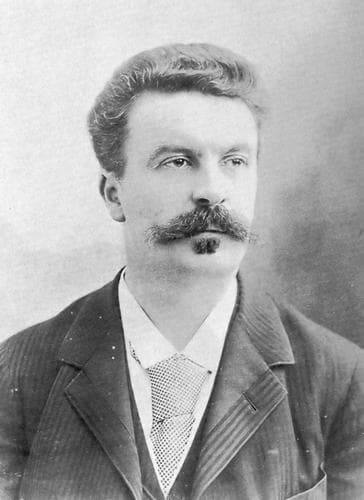
Henri René Albert Guy de Maupassant was a 19th-century French author, remembered as a master of the short story form, as well as a representative of the Naturalist school, who depicted human lives, destinies and social forces in disillusioned and often pessimistic terms.

Ashley Antoinette
4.6

Mark McDonald
4.4
Luo Guanzhong
4.4

Mia McKenzie
4.3
Dorothy Parker
4.3

Joaquim Maria Machado de Assis
4.3

James Thurber
4.2

Terry Kay
4.2