“Oh, what a bitter thing it is to be a man!”
— Philoctetes laments his fate and suffering on Lemnos.

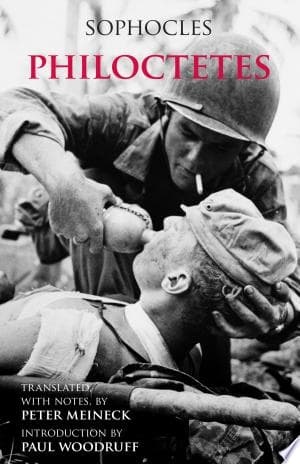
Sign in to track this book
Stranded on a desolate island, the archer Philoctetes, betrayed and bitter, must choose between vengeance and the pleas of Odysseus and Neoptolemus to join the Trojan War, forcing him to confront his trauma, his friendships, and his destiny.
The play opens on the desolate island of Lemnos. Odysseus, the cunning Greek general, has brought Neoptolemus, the young son of Achilles, to this remote island. An oracle dictates their mission: to retrieve Philoctetes, an archer abandoned there ten years earlier because of a festering wound on his foot. Odysseus instructs Neoptolemus to use deception, as Philoctetes despises Odysseus and the Atreidae for his abandonment. Neoptolemus is to pretend to have quarreled with the Greeks and to be sailing home, thus gaining Philoctetes's trust and tricking him into coming to Troy with his bow.
Neoptolemus expresses discomfort with Odysseus's plan. He is a young man of noble birth, used to honesty, having inherited his father Achilles's dislike for deceit. He finds tricking a suffering man wrong and believes it would harm his honor. Odysseus, however, argues that the situation requires cunning for the greater good of the Greek cause. He emphasizes that victory at Troy depends on Philoctetes and his bow, and that Neoptolemus's personal feelings must be set aside for military necessity. Despite his doubts, Neoptolemus agrees to follow Odysseus's instructions, though reluctantly.
Neoptolemus, with the Chorus of sailors, approaches Philoctetes's cave. They soon find the man himself, a figure of misery and isolation, his clothes ragged and his body thin. Philoctetes is startled, having not seen another human in a decade. He is wary but quickly warms to Neoptolemus, who, following Odysseus's instructions, presents himself as a wronged man, also abandoned by the Greeks and seeking passage home. Philoctetes tells of his decade of suffering, the agony of his wound, his struggle for survival, and his bitter resentment toward the Greek leaders.
Neoptolemus continues his deception, telling Philoctetes a false story about being denied his father's armor and treated unjustly by Odysseus and the Atreidae, leading him to abandon the Trojan War. This story resonates with Philoctetes's own feelings of betrayal. He sees a similar experience in Neoptolemus, someone who has also suffered from the same men. Philoctetes, desperate for companionship and a way off the island, readily believes Neoptolemus's story and offers him his friendship and trust, unaware he is being manipulated. The Chorus, though hesitant, supports Neoptolemus's mission.
As their bond grows, Philoctetes suffers one of his agonizing attacks from his wound. The pain is intense, causing him to writhe and cry out. In his delirium, he entrusts his bow, a gift from Heracles, to Neoptolemus, asking him to guard it until the fit passes. This moment tests Neoptolemus, who now holds the object he was sent to acquire, given to him out of trust by a man in immense suffering. He struggles with his conscience, the weight of his deception pressing on him, as he watches Philoctetes succumb to the pain and fall asleep.
After Philoctetes awakens from his painful sleep, Neoptolemus cannot continue the deception. Overwhelmed by guilt and pity for Philoctetes's suffering, and valuing his honor above the military objective, Neoptolemus confesses the truth. He reveals he was sent by Odysseus and the Atreidae to trick Philoctetes and his bow to Troy, and that his stories of injustice were lies. Philoctetes is devastated and enraged by this betrayal, feeling the sting of a second abandonment and a deeper wound to his trust. He denounces Neoptolemus and demands his bow back, feeling hopeless.
Just as Philoctetes is recovering from Neoptolemus's confession, Odysseus reappears. He is furious with Neoptolemus for failing to maintain the deception and for jeopardizing their mission. Odysseus tries to seize Philoctetes's bow by force and declares they will take Philoctetes to Troy, even against his will. Philoctetes, defiant, refuses to go and threatens to commit suicide rather than return to the Greeks who wronged him. The confrontation escalates, with Odysseus asserting his authority and Philoctetes clinging to his pride and hatred, creating a stalemate.
Faced with Odysseus's brutality and Philoctetes's desperate pleas, Neoptolemus makes a decision. He defies Odysseus, choosing compassion and honor over military obedience. He returns Philoctetes's bow, even though it means jeopardizing the mission and incurring Odysseus's anger. This act of empathy and courage shows Neoptolemus's change from a reluctant deceiver to a man of integrity. Philoctetes is stunned by Neoptolemus's unexpected kindness, but his deep hatred for the Greeks remains, preventing him from immediately accepting their offer to go to Troy.
Even with his bow returned and Neoptolemus's genuine remorse, Philoctetes remains firm in his refusal to join the Greeks at Troy. His decade of suffering and profound betrayal have hardened his heart, and he cannot forgive those who abandoned him. Neoptolemus, now acting with sincere intention, tries to persuade Philoctetes by appealing to his honor, the glory of contributing to the Greek victory, and the prospect of healing his wound at Troy. He acknowledges Philoctetes's past suffering but emphasizes the future and divine will, yet Philoctetes's resolve against his former tormentors is too strong.
Just as the situation seems impossible, with Philoctetes preparing to return to his solitary life on Lemnos, the god Heracles (the hero who gifted Philoctetes his bow) appears. Heracles, speaking from the heavens, commands Philoctetes to go to Troy. He reveals it is the gods' will for Philoctetes to participate in the fall of the city, where he will be healed of his wound and achieve great glory. Heracles also instructs Philoctetes to take Neoptolemus with him, emphasizing their destined partnership. Faced with a divine command, Philoctetes finally gives in.
With Heracles's divine intervention, Philoctetes's resistance breaks. He acknowledges the gods' will and accepts his fate. He bids farewell to the desolate island that has been his prison for ten years, expressing a bittersweet gratitude for its harsh hospitality. Philoctetes agrees to sail to Troy with Neoptolemus, not out of forgiveness for the Greeks, but out of obedience to the divine decree and the promise of healing and glory. The play concludes with Philoctetes and Neoptolemus preparing to depart for Troy, marking the end of Philoctetes's isolation and the beginning of his role in the war's conclusion.
The Protagonist
Philoctetes transitions from an embittered, isolated victim to a reluctant participant in the Trojan War, forced by divine will but softened by Neoptolemus's compassion.
The Protagonist
Neoptolemus evolves from a reluctant deceiver to a man of profound moral conviction, choosing honesty and compassion even at great personal cost.
The Antagonist
Odysseus remains static in his utilitarian worldview, serving as a foil to Neoptolemus's moral development.
The Supporting
The Chorus's perspective shifts from purely pragmatic to one tinged with pity, reflecting the moral ambiguity of the situation.
The Mentioned/Deus ex machina
As a divine figure, Heracles does not have an arc but acts as a catalyst for the resolution.
The play contrasts Odysseus's utilitarian view that 'the ends justify the means' with Neoptolemus's adherence to honor and truth. Odysseus argues that deceit is a necessary evil for the greater good of the Greek cause, a practical approach to warfare. Neoptolemus, however, believes that a man's honor and integrity are most important, and that deception, no matter its goal, harms the soul. This conflict is central to Neoptolemus's struggle, as seen when he confesses the truth to Philoctetes, choosing his personal integrity over mission success. The play asks the audience to consider if deceit is ever morally permissible or if honor should always win.
“I was not born to work by treachery, nor were you, I hear.”
Philoctetes's character shows the deep impact of physical and emotional suffering combined with betrayal. His decade of isolation on Lemnos, plagued by a wound, has made him a bitter and vengeful man. The play details his agony and his deep resentment toward the Greeks who abandoned him. His initial trust in Neoptolemus, followed by the deception's revelation, represents a second, deeper betrayal, showing how broken trust is hard to mend. His suffering is so immense that it makes him resistant to any pleas, even those for his own benefit, demonstrating trauma's lasting scars.
“Oh, what a life is mine! I am the most wretched of all mortals!”
Neoptolemus's journey is defined by the tension between his duty to the Greek army and his growing compassion for Philoctetes. Initially, he reluctantly agrees to Odysseus's plan, prioritizing his duty as a warrior. However, as he sees Philoctetes's suffering and experiences his trust, his conscience awakens. His decision to return the bow and confess the truth is a direct result of his inability to suppress his empathy. This theme explores the moral weight of leadership and the personal cost of sacrificing one's humanity for a perceived greater good. Neoptolemus ultimately chooses compassion, showing that true heroism can be moral courage rather than just battlefield skill.
“I will not deceive you. I cannot.”
The play concludes with Heracles's intervention, an example of a deus ex machina. This highlights divine will and fate overriding human choice and moral dilemmas. Despite the human conflict, moral struggles, and the seemingly impossible situation between Philoctetes and the Greeks, the gods ultimately decide the outcome. Heracles's appearance suggests that while humans struggle with choices, a larger, predetermined plan is at work. This reinforces the ancient Greek belief that individual destinies are often shaped by the Olympians' will, and that human will, no matter how strong, can only go so far against divine decree.
“Know that it is your destiny to go to Troy.”
The unexpected appearance of Heracles to resolve the conflict.
The 'deus ex machina' (god from the machine) is employed at the play's climax when Heracles appears to command Philoctetes to go to Troy. This device provides a definitive resolution to a seemingly intractable human conflict, where neither persuasion nor force could move Philoctetes. It underscores the theme of divine will overriding human agency and moral dilemmas, ensuring the fated outcome of the Trojan War. While sometimes seen as an artificial plot device, here it serves to emphasize the ultimate power of the gods in Greek tragedy.
The audience knows Neoptolemus's true intentions, while Philoctetes does not.
Dramatic irony is prevalent throughout the first half of the play. The audience is privy to Odysseus's plan and Neoptolemus's reluctant agreement to deceive Philoctetes. This creates tension as Philoctetes wholeheartedly trusts Neoptolemus, sharing his deepest sorrows and eventually entrusting him with his bow. The audience watches, aware of the impending betrayal, intensifying the tragic nature of Philoctetes's suffering and highlighting Neoptolemus's internal conflict before his eventual confession.
A symbolic and literal object of power and survival.
Philoctetes's bow, a gift from Heracles, is a powerful symbol. Literally, it is his sole means of survival on Lemnos, providing him with food. Symbolically, it represents his past glory, his connection to a hero, and his remaining power. Its possession is crucial for the Greek victory at Troy. The bow's transfer to Neoptolemus, then its return, marks critical shifts in trust, betrayal, and Neoptolemus's moral journey, making it a central object around which much of the plot revolves and an extension of Philoctetes's own identity.
“Oh, what a bitter thing it is to be a man!”
— Philoctetes laments his fate and suffering on Lemnos.
“For no one loves the messenger of ill.”
— Odysseus speaks to Neoptolemus about the unpopularity of delivering bad news.
“It is not by force, but by persuasion, that you must win him.”
— Odysseus instructs Neoptolemus on how to deal with Philoctetes, advocating for cunning over direct force.
“For all men hate the man who talks too much.”
— Philoctetes expresses his disdain for lengthy or insincere speeches.
“There is no evil that does not bring some good.”
— A general reflection on the nature of adversity.
“To betray a friend is a terrible thing.”
— Neoptolemus grapples with the moral dilemma of betraying Philoctetes.
“What is life without honor?”
— Philoctetes questions the value of survival without dignity.
“A man's true nature is often hidden, until necessity reveals it.”
— A commentary on how circumstances reveal one's true character.
“The gods love not the impious, nor do they favor the unjust.”
— A reflection on divine justice and the consequences of wrongdoing.
“For suffering makes even the wise man foolish.”
— The Chorus observes how extreme pain can cloud judgment.
“The noblest deed is to speak the truth, and act justly.”
— Neoptolemus asserts his desire to do what is right, despite pressure.
“It is a bitter thing to live with pain, and know no remedy.”
— Philoctetes laments the chronic nature of his wound and lack of cure.
“For even the strongest heart may break under the weight of sorrow.”
— A general observation on the limits of human endurance.
“Trust no one, for all men are false.”
— Philoctetes expresses his deep cynicism and distrust after years of isolation and betrayal.
Ready to see how well you understood this book? Take our interactive quiz with 10 questions.
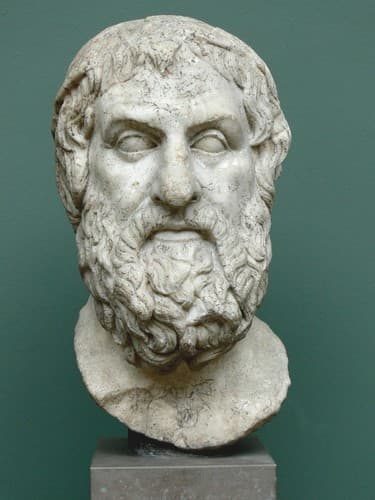
Sophocles was an ancient Greek tragedian, known as one of three from whom at least one play has survived in full. His first plays were written later than, or contemporary with, those of Aeschylus; and earlier than, or contemporary with, those of Euripides. Sophocles wrote over 120 plays, but only seven have survived in a complete form: Ajax, Antigone, Women of Trachis, Oedipus Rex, Electra, Philoctetes and Oedipus at Colonus. For almost fifty years, Sophocles was the most celebrated playwright in the dramatic competitions of the city-state of Athens which took place during the religious festivals of the Lenaea and the Dionysia. He competed in thirty competitions, won twenty-four, and was never judged lower than second place. Aeschylus won thirteen competitions, and was sometimes defeated by Sophocles; Euripides won four.

Ashley Antoinette
4.6

Mark McDonald
4.4
Luo Guanzhong
4.4

Mia McKenzie
4.3

Dorothy Parker
4.3

Joaquim Maria Machado de Assis
4.3

James Thurber
4.2

Terry Kay
4.2