“I will give you a hundred dollars if you will let me hit you in the face with a shovel.”
— The narrator's provocative offer to a boy, highlighting his unsettling nature.

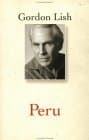
Sign in to track this book
A middle-aged man confesses to a childhood murder, blurring the lines between memory and delusion as he dissects the violent act.
The unnamed narrator immediately establishes the novel's central premise: that he, as a child, brutally murdered another child named Jeffrey, with Jeffrey's passive consent. He recounts the setting as a wooded area near a quarry, a place of childhood games. The narrator emphasizes the planning and execution of the act, detailing how he used a rock to bludgeon Jeffrey. He continually questions the reader's belief, almost daring them to disbelieve him, while insisting on the truth and vividness of his memory. This opening sets an unsettling tone, introducing themes of memory, guilt, and the ambiguous nature of truth.
The narrator focuses on the specific details of the quarry, describing its terrain, a 'pit,' and the chosen rock, which he calls a 'stone.' He recounts how Jeffrey lay down willingly, almost inviting the act, and how the narrator, with deliberate and repeated blows, ended his life. The narrator's descriptions are graphic, unflinching, yet delivered with a detached, clinical tone. He emphasizes Jeffrey's lack of resistance, which he interprets as complicity or even a desire for the act. This section solidifies the horrific core event, grounding it in a disturbing physical reality, even as the reliability of this reality remains in question.
After the killing, the narrator describes dragging Jeffrey's body to a 'pit' within the quarry, trying to conceal the evidence. He then returns home, seemingly unaffected, and continues with his life, carrying the secret of the murder. He speaks of the isolation this secret creates, separating him from ordinary childhood experiences. The narrator frequently returns to the idea that no one ever suspected him, and that the crime went unnoticed. This period establishes the long-term psychological impact of the event, whether real or imagined, on the narrator's identity and perception of self.
Throughout his recounting, the narrator moves between presenting the murder as fact and acknowledging it might be a fabrication. He dissects his own memories, questioning their authenticity and vividness. He suggests that the act, if not real, is a powerful fantasy that has shaped his entire existence. This internal conflict highlights the unreliable nature of memory and how imagination can create a reality as potent as objective truth. The reader is left to grapple with the ambiguity, never fully certain of the event's factual basis.
A recurring theme is the absence of parental figures or adult authority in the narrator's childhood world. His parents are mentioned only in passing, if at all, and never in a way that suggests involvement or awareness of his activities. The murder, if real, occurs in a vacuum, without immediate investigation or consequence. This lack of external judgment contributes to the narrator's internal burden and the lasting nature of his secret. It also underscores a pervasive sense of isolation and a world where children are left to their own devices, capable of unspeakable acts without intervention.
The narrator's recounting is characterized by an obsessive focus on trivial details: the exact size and shape of the stone, the texture of the ground, Jeffrey's specific posture, the precise number of blows. This meticulousness serves multiple purposes. It lends an air of realism to his story, making it feel horrifyingly real. However, it also suggests a psychological compulsion, a need to control the narrative and perhaps to convince himself of the event's reality. The endless repetition and slight variations in these details further blur the line between memory and invention, making the reader question the purpose behind such exhaustive recall.
A crucial element of the narrator's confession is his insistence on Jeffrey's active or passive consent to the murder. He describes Jeffrey lying down, closing his eyes, and offering no resistance, almost as if he desired the act. This portrayal complicates the nature of the crime, shifting it from a simple act of violence to something more like a shared, horrifying ritual. The narrator uses Jeffrey's perceived complicity to justify or contextualize his actions, suggesting he was fulfilling a shared, unspoken desire. This aspect is central to the psychological depth of the novel, exploring themes of power, submission, and the dark corners of human interaction.
Regardless of whether the murder occurred, the narrator lives with its weight. He describes it as the central event of his life, shaping his identity, relationships, and perception of the world. The secret isolates him, creating an internal world where he is always marked by this act. He speaks of it as an inescapable burden, a constant companion that has prevented him from fully engaging with life. This section highlights the psychological reality of guilt and the power of a deeply held secret, illustrating how an event, real or imagined, can consume an individual's existence.
The entire novel is a confession, an attempt by the narrator to articulate and understand the central trauma of his life. He is not seeking external judgment or punishment, but rather internal processing. The act of telling, of putting the story into words, becomes a way of confronting the past, even if that past is partly fictionalized. This continuous verbalization, with its repetitions and variations, reflects a mind grappling with an unbearable truth. The confession is not just about the murder; it is about the narrator's struggle to define himself in relation to this defining event.
Ultimately, 'Peru' explores the subjective nature of truth. The narrator's unwavering conviction in his memory of the murder, juxtaposed with his acknowledgments of its potential unreality, forces the reader to question the foundations of storytelling and autobiography. The novel suggests that an imagined event, if held with enough conviction and if it profoundly shapes an individual's life, can become as real and impactful as any verifiable fact. This ambiguity is not a flaw but the essence of the narrative, inviting readers to consider the mind's power to create and sustain its own realities.
The Protagonist
The narrator's arc is less about change and more about a relentless, circular exploration of a single, defining event, seeking understanding or absolution through endless recounting.
The Victim (or imagined victim)
Jeffrey does not have an arc; he exists as a static, symbolic figure in the narrator's memory.
The novel explores how memory functions, not as a static record but as a malleable, subjective construction. The narrator recounts Jeffrey's murder, yet acknowledges the possibility it might be a fabrication. He dissects his memories, questioning their vividness, consistency, and truthfulness. This oscillation between certainty and doubt forces the reader to confront the idea that personal history can be as much about invention as factual recall, shaping an individual's identity regardless of objective truth. The endless repetition of details, sometimes with slight variations, emphasizes this theme.
““I have killed a child. I have killed a child. I have killed a child. And I have killed him with a stone.””
Whether Jeffrey's murder is real or imagined, the narrator lives under an immense psychological burden of guilt and secrecy. This alleged act defines his entire existence, isolating him from others and shaping his self-perception. The novel illustrates how an internal conviction, even if based on a fantasy, can inflict a profound and inescapable psychological cost. The narrator's obsessive recounting is a sign of this burden, a relentless attempt to process, understand, or perhaps absolve himself of the weight of this secret. The lack of external consequence only intensifies his internal suffering.
““And I am not allowed to forget. I am not allowed to forget a single detail.””
The novel delves into the capacity for evil within childhood and challenges conventional notions of innocence. The narrator, as a child, commits an act of shocking brutality, seemingly without remorse or external consequence. Jeffrey's passive, almost complicit, role complicates the moral landscape, questioning the distinction between victim and perpetrator. The narrative suggests that dark impulses and violence can exist even in seemingly innocent contexts, unobserved and unchecked by the adult world. It forces a disturbing contemplation of human nature at its most primal.
““He let me. He let me do it. He lay there, and he let me do it.””
A pervasive theme is the narrator's isolated childhood and the striking absence of adult supervision or intervention. His parents are barely present, and the alleged murder occurs in a vacuum, unnoticed by the outside world. This lack of external authority or judgment means the narrator is left alone with his secret, intensifying his internal burden and fostering a sense of separateness. This isolation underscores the idea that individuals, even children, can exist in their own moral universes, capable of extreme acts without immediate societal repercussions, leading to an internalized and inescapable form of punishment.
““No one ever knew. No one ever knew a thing.””
The narrator's credibility is constantly questioned, blurring the lines between fact and fiction.
The entire novel is filtered through the consciousness of a narrator who confesses to a murder but also hints that it might be an elaborate fantasy. He frequently questions his own memories, dissects his thoughts, and admits to the possibility of fabrication. This device is central to the novel's thematic exploration of memory and truth, forcing the reader to actively participate in constructing the narrative's reality. It creates a pervasive sense of ambiguity and psychological tension, making the reader perpetually uncertain about the events described.
Key phrases, descriptions, and events are repeated with subtle shifts, emphasizing obsession and the malleability of memory.
The narrator frequently repeats details about the quarry, the stone, Jeffrey's posture, and the act itself. These repetitions are not identical; they often contain slight variations, additions, or omissions. This device mirrors the obsessive nature of the narrator's mind, stuck in a loop of replaying the traumatic event. It also serves to highlight the subjective and reconstructive nature of memory, where each recall is a slightly different performance of the past, further undermining the idea of a fixed, objective truth.
The entire novel is presented as a direct, unfiltered confession to the reader.
The narrative takes the form of an extended, intimate confession from the narrator directly to the reader. There are no other characters' perspectives, no dialogue outside of the narrator's recounting. This direct address creates an intense, claustrophobic atmosphere, drawing the reader into the narrator's disturbed mind. It also implies a search for understanding or absolution, using the act of telling as a means of processing the profound psychological weight of the alleged crime. The reader becomes both confidant and judge.
The narrative focuses intensely on a single event, leaving out much of the external world and conventional plot elements.
Lish's style is characterized by its extreme minimalism. The novel largely eschews traditional plot progression, character development beyond the narrator's internal state, and detailed descriptions of the wider world. Instead, it relentlessly circles back to the central act of violence and its psychological repercussions. This absence of external detail forces the reader to focus solely on the narrator's internal landscape and the disturbing core event, amplifying its impact and highlighting the theme of isolation.
“I will give you a hundred dollars if you will let me hit you in the face with a shovel.”
— The narrator's provocative offer to a boy, highlighting his unsettling nature.
“He was a boy who could not be told.”
— Describing the stubborn and unyielding nature of the young protagonist, Jeffrey.
“And the thing is, there are some people, and I am one of them, who will always be looking for a fight.”
— The narrator's self-assessment of his inherent combative personality.
“The world is full of people who are trying to get away with something.”
— A cynical observation from the narrator about human nature.
“I believe that every single one of us is capable of anything.”
— A dark philosophical statement from the narrator about human potential for good and evil.
“There are no accidents, only intentions.”
— The narrator's belief that events are not random but driven by underlying motives.
“He wanted to be loved, but he didn't know how to ask for it.”
— Referring to Jeffrey's underlying desire for affection despite his difficult exterior.
“The truth is, I never knew what I was doing. I was just doing it.”
— The narrator's admission of his impulsive and unthinking actions.
“Some things, once seen, can never be unseen.”
— A reflection on the lasting impact of disturbing experiences.
“And it was that particular kind of emptiness that made him dangerous.”
— Describing the void within a character that fuels their destructive tendencies.
“You can't save anyone who doesn't want to be saved.”
— A realization about the limits of intervention and the nature of free will.
“The past is never dead. It's not even past.”
— A variation of Faulkner's famous line, emphasizing the persistent influence of past events.
“He had a way of looking at you that made you feel like you were the only person in the world.”
— Describing an intense, almost unsettling, gaze from one of the characters.
“All I ever wanted was to be understood.”
— A poignant, underlying desire expressed by a character, despite their outward behavior.
Ready to see how well you understood this book? Take our interactive quiz with 10 questions.

Ashley Antoinette
4.6

Mark McDonald
4.4
Luo Guanzhong
4.4

Mia McKenzie
4.3
Dorothy Parker
4.3

Joaquim Maria Machado de Assis
4.3
James Thurber
4.2
Terry Kay
4.2