“The young people, Tommy and Tuppence, were a great success. They were not detectives, but partners in crime.”
— Introducing the protagonists and the premise.

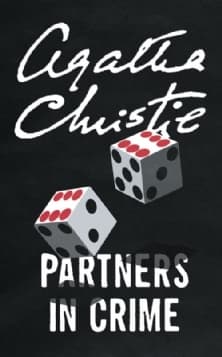
Agatha Christie (1929)
Genre
Mystery
Reading Time
7-8 hours
Key Themes
See below
Sign in to track this book
Tommy and Tuppence, a daring duo, trade domesticity for danger, diving headfirst into a whirlwind of perplexing cases from stolen pearls to poisoned chocolates, all while masquerading as the masterminds of Blunt's International Detective Agency.
Tommy and Tuppence Beresford, bored with domestic life after WWI, are approached by Mr. Carter, a high-ranking intelligence official. He offers them a unique undercover assignment: to take over Blunt's International Detective Agency. The former head, Mr. Blunt, has disappeared, and the agency is suspected of being a front for Soviet espionage. Tommy will pose as Mr. Theodore Blunt, while Tuppence takes on the role of his secretary, Miss Robinson. This new role promises the excitement and danger they both want, pulling them back into the world of intrigue they knew during the war.
Their first 'case' is a test from Mr. Carter: finding a stolen pink pearl belonging to Lady Vandemeyer. Posing as the Blunts, Tommy and Tuppence move through high society and minor criminals. They meet Jane Howard, who seems involved with the pearl's disappearance, and Mrs. Sprot, a woman with a mysterious past. Through deductions and calculated risks, Tuppence, in particular, shows her skill for observation and quick thinking. They successfully get the pearl back, proving their ability to Mr. Carter and gaining confidence in their new undercover roles, despite Tommy's initial doubts about Tuppence's methods.
A client, Mrs. Van Snyder, asks the agency about unsettling events around her family, ending with a mysterious message from her dead brother, Mr. Kingston, about 'the seven stars.' Tommy and Tuppence investigate, meeting a spiritualist medium, Dr. Charles, and a strange young man named Daniel. They suspect a coded message about a hidden will or fortune. Tuppence, using her usual charm and cleverness, enters the spiritualist's group. They uncover a plan to manipulate Mrs. Van Snyder for money, with the 'seven stars' referring to a specific group of people rather than astrology, ultimately exposing the fraudsters.
Captain Marvell hires the agency to investigate the murder of Mr. Harrison, found stabbed on the Sunningdale golf course. The case appears to be a classic 'locked-room' scenario, as Harrison was alone. Tommy and Tuppence go to Sunningdale and interview the suspects, including Harrison's secretary, his fiancée, and other golf club members. They carefully check alibis and motives, uncovering a complex web of lies and hidden relationships. Tuppence's sharp eye for detail and Tommy's logical approach help them piece together the events, revealing a clever method used to commit the murder and frame an innocent person.
The Beresfords are called to investigate the death of a politician, Sir James Peel, at his country estate, Laurels. His death is first called an accident, but his family suspects foul play. Tommy and Tuppence immerse themselves in the household, observing the eccentric family, staff, and the estate's complex dynamics. They find a history of strange incidents and a general feeling of unease. Tuppence, through her understanding of human nature, identifies a pattern of manipulation and subtle poisoning. They eventually unmask a clever murderer who has been systematically eliminating family members for inheritance.
Mr. Ralph Merton seeks the agency's help, claiming he is accused of a crime he could not have committed due to an 'unbreakable alibi.' He says he was in two places at once. Tommy and Tuppence, curious about the apparent impossibility, look into Merton's story and situation. They discover a careful plan involving a look-alike and clever timing, designed to create the illusion of an alibi while a crime was happening elsewhere. Tuppence's imaginative thinking, combined with Tommy's methodical investigation, exposes the elaborate deception, proving that even the most perfect alibi can be broken with careful checking.
As the Beresfords continue their work, more cases with subtle links to the Soviet network appear. They receive cryptic messages and meet suspicious people, all hinting at a powerful and elusive figure known only as 'No. 16.' This case is a culmination of their undercover mission, as they realize they are getting close to the true leader of the spy ring. They must use all their experience and observation skills to identify No. 16 among a group of suspects, knowing that a wrong move could expose their identities and put them in danger. The tension rises as they near the final confrontation.
A client, Mr. Parker, brings the agency a box of poisoned chocolates, claiming they were sent anonymously. The case quickly becomes a murder investigation when a woman who ate one of the chocolates dies. Tommy and Tuppence investigate the sender, the intended victim, and various people who might have a motive. They uncover a tangled web of relationships, grudges, and hidden desires. Tuppence's intuitive leaps and Tommy's logical deductions lead them through red herrings and false leads, revealing a cunning killer who used the chocolates to commit murder while trying to avoid suspicion.
While on a seemingly routine investigation, Tommy and Tuppence encounter a sinister stranger who seems to be following them. This meeting leads to a pursuit and further investigation, as they realize this person is connected to the larger Soviet espionage plot. The stranger's actions and cryptic communications lead them to a secret meeting place and a network of conspirators. This case further highlights the danger of their mission and the widespread nature of the enemy they face, bringing them closer to identifying the elusive No. 16 and the full scope of the threat.
The agency receives an inquiry about a series of cryptic messages in the personal columns of various newspapers. These messages, seemingly nonsense, spark Tuppence's interest; she suspects they are coded communication. She carefully analyzes the patterns and seemingly random words, with Tommy's help in cross-referencing information. They discover that the 'gentleman dressed in newspaper' refers to a specific person and that the messages contain instructions or intelligence for the Soviet agents. This case shows Tuppence's talent for code-breaking and her imaginative approach to puzzling clues, bringing them closer to the central conspiracy.
Tommy and Tuppence are tasked with recovering sensitive government documents stolen by a notorious burglar. To do this, Tuppence, using her talent for disguise and acting, infiltrates the criminal underworld, posing as an accomplice. Tommy, meanwhile, uses his connections and intelligence training to gather information from the sidelines. They navigate the dangerous world of thieves and fences, facing real threats and close calls. Through Tuppence's daring and Tommy's strategic planning, they successfully retrieve the documents, further proving their versatility and resourcefulness in undercover operations, and showing their ability to adapt to various criminal settings.
A frantic gentleman approaches the agency, reporting his wife, Mrs. Vandermeyer, has mysteriously vanished. Tommy and Tuppence begin a search, interviewing her acquaintances and retracing her last known movements. The investigation leads them to a secluded country house and a group of suspicious individuals. As they dig deeper, they uncover a plot involving abduction and coercion, tied to the larger espionage network. The case becomes a race to find the missing lady before she is silenced permanently, with the Beresfords putting themselves in danger to expose the truth and rescue her from her captors.
The Beresfords are informed that a seemingly harmless blind man holds vital information about the Soviet network. Their challenge is to get this information without alarming him or the agents likely watching him. Tuppence, adopting a sympathetic persona, befriends the man, using her charm and wit to gain his trust. Tommy, meanwhile, maintains surveillance and provides strategic guidance. Through careful conversation and observation, they piece together the clues he unknowingly possesses. This delicate operation requires extreme subtlety and psychological insight, ultimately leading them closer to identifying No. 16 and understanding the full scope of the enemy's plans.
All the individual cases and clues come together, leading Tommy and Tuppence to the true identity of No. 16 – the elusive mastermind behind the Soviet espionage ring. The final confrontation is tense and dangerous, requiring the Beresfords to use all their accumulated skills, courage, and quick thinking. They expose No. 16, revealing their clever plan and the extent of their network. With the help of Mr. Carter's intelligence resources, they successfully dismantle the spy ring, arresting the key figures and neutralizing the threat. The mission concludes with Tommy and Tuppence having successfully completed their undercover assignment, proving their skill as detectives and patriots.
With the Soviet spy ring broken and No. 16 caught, Tommy and Tuppence report back to Mr. Carter. Their undercover operation at Blunt's International Detective Agency is officially over. While they have stopped a major espionage threat and proven their abilities, the experience leaves them with a new sense of purpose and a desire for adventure. They reflect on their personal growth and their stronger partnership. Though the immediate danger is over, the thrill of detection and the allure of the unknown suggest that their days of quiet domesticity might be short-lived, hinting at future escapades.
The Protagonist
Tommy grows from a somewhat reluctant undercover agent to a confident and capable detective, embracing the challenge and finding his own style of investigation.
The Protagonist
Tuppence fully embraces her role as a detective, refining her natural talents and proving her worth as an invaluable and resourceful investigator.
The Supporting
Mr. Carter remains a constant, guiding presence, his trust in the Beresfords growing as they prove their capabilities.
The Antagonist
No. 16's presence is felt through the various cases until their true identity is dramatically revealed and their network dismantled.
The Supporting
Jane's true role is revealed, moving from a suspected criminal to a more nuanced figure caught in the machinations of others.
The Mentioned
Her role is limited to being the initial victim, whose plight sets the first mystery in motion.
The Mentioned
His death is the starting point for a complex investigation, his character revealed posthumously through the unraveling of the mystery.
The Mentioned
His death is the catalyst for the Beresfords to uncover a pattern of murder within his family.
The Supporting
Merton's seemingly perfect alibi is systematically dismantled by the Beresfords, revealing the truth of his involvement.
Tommy and Tuppence, feeling restless after the war, eagerly take the chance to run Blunt's International Detective Agency. This theme explores the human desire for excitement and purpose beyond everyday domestic life. Their undercover mission offers a thrilling escape, allowing them to shed their conventional identities and embrace danger, intrigue, and the intellectual challenge of solving mysteries. The series of cases, from stolen pearls to international espionage, constantly feeds their craving for adventure, showing how unusual circumstances can revitalize individuals.
“They were restless for adventure, so when they were asked to take over Blunt's International Detective Agency, they leapt at the chance.”
A main theme is the exploration of identity through Tommy and Tuppence's undercover roles. They pose as the 'Blunts,' adopting new personas and mimicking famous fictional detectives. This allows them to experiment with different parts of their personalities and develop their detective skills. Tuppence, in particular, enjoys the theatricality of it, using various disguises and accents. The constant need to maintain their cover while also investigating real crimes blurs the lines between their true selves and their assumed identities, making them question who they truly are when not 'playing a part.'
“Tommy was to be Mr. Theodore Blunt and Tuppence, Miss Robinson, his secretary. A glorious adventure!”
The dynamic between Tommy and Tuppence is central to the novel. They are a partnership where complementary skills lead to success. Tommy is often the more logical, methodical, and cautious investigator, relying on deduction and established procedures. Tuppence is intuitive, impulsive, and often uses her charm and wit to get information, unafraid to bend rules or improvise. Their different approaches, while sometimes leading to humorous disagreements, ultimately make them a strong team, each balancing the other's strengths and weaknesses. Their personal relationship deepens through shared danger and mutual respect for each other's talents.
“Tommy supplied the brains, Tuppence supplied the dash. Together they were irresistible.”
Given their undercover roles, deception is a constant theme. The Beresfords constantly engage in it, and they frequently encounter it in their cases. From unbreakable alibis to coded messages and sophisticated spy networks, the novel explores how truth can be hidden and manipulated. Characters often present false fronts, motives are hidden, and appearances are misleading. The detectives' job is to peel back these layers of illusion to reveal the underlying reality, whether it is a murderer's carefully constructed alibi or a spy's secret identity. This theme highlights the constant battle between appearance and reality.
“It's always the obvious things that are the most difficult to see, because you're looking for something complicated.”
Underlying all the individual cases is the main plot of Soviet espionage. This theme adds a darker, more serious dimension to the Beresfords' adventures, reminding the reader of the post-WWI political climate and worries about international relations. The spy ring, led by the mysterious No. 16, represents a significant threat to national security, raising the stakes beyond mere criminal investigations. The subtle clues, coded messages, and dangerous encounters with agents emphasize the widespread and insidious nature of political intrigue, making their mission one of patriotic duty as well as personal excitement.
“There are bigger things at stake than a few stolen jewels, Mr. Blunt. The safety of the Empire, no less.”
Blunt's International Detective Agency serves as the central setting and premise.
The concept of Tommy and Tuppence taking over Blunt's International Detective Agency acts as the primary framing device for the entire collection of short stories. It provides a plausible (within the context of the genre) reason for them to encounter a variety of cases. More importantly, it allows them to operate undercover as a front for a larger intelligence operation, seamlessly blending individual mysteries with an overarching espionage plot. This device enables the episodic nature of the book while maintaining narrative cohesion and a sense of progression towards a larger goal.
Tommy and Tuppence assume the identities of 'Mr. and Mrs. Blunt'.
The Beresfords' undercover identities as Mr. Theodore Blunt and his secretary, Miss Robinson (who sometimes poses as his wife), are crucial to the plot. This device allows them to infiltrate various social circles and criminal underworlds without revealing their true intentions as intelligence agents. It also provides opportunities for humor as they try to embody the 'Blunt' persona, often mimicking famous fictional detectives. This constant role-playing heightens the sense of adventure and allows them to investigate without raising immediate suspicion from the true Soviet agents they are trying to uncover.
Tommy and Tuppence consciously mimic the styles of established fictional detectives.
Throughout their cases, Tommy and Tuppence deliberately adopt the methods and mannerisms of well-known fictional detectives, such as Sherlock Holmes, Hercule Poirot, and even the 'Old Man in the Corner.' This meta-fictional device adds an layer of playful homage to the mystery genre. It also serves as a way for the Beresfords to define their own investigative styles, often trying on different personas before settling into a more unique 'Beresford' approach. This device provides comic relief and allows Christie to subtly comment on the conventions of detective fiction.
Individual cases are connected to a larger Soviet spy network.
While each chapter presents a self-contained mystery, they are all subtly linked by the underlying mission to uncover a Soviet espionage ring and identify its elusive leader, No. 16. This plot device provides a strong narrative through-line, adding suspense and a sense of urgency to the Beresfords' work. It elevates the stakes beyond mere crime-solving, imbuing their adventures with national importance. Clues about the spy ring are gradually revealed across different cases, culminating in a final confrontation that ties the seemingly disparate stories together into a cohesive whole.
Misleading clues and false suspects designed to distract the reader and detectives.
Agatha Christie expertly employs red herrings in nearly every case presented in 'Partners in Crime.' These are misleading clues, suspicious characters, or seemingly obvious solutions that divert the attention of both the Beresfords and the reader from the true culprit or the actual method of the crime. For example, in 'The Sunningdale Mystery,' the initial focus is on a single, isolated victim, leading to assumptions about the nature of the crime. This device creates suspense and challenges the reader to think critically, making the eventual reveal of the truth more satisfying.
“The young people, Tommy and Tuppence, were a great success. They were not detectives, but partners in crime.”
— Introducing the protagonists and the premise.
“It's the little things that give people away, not the big ones.”
— Tommy observing human nature in a case.
“One must be careful not to make a fetish of facts.”
— Tuppence discussing how sometimes intuition is more important than pure facts.
“The truth is often stranger than fiction, especially in detective stories.”
— A meta-commentary on the nature of the mystery genre itself.
“There are times when a little bluff is worth a good deal of evidence.”
— Tommy considering a strategy to extract information.
“One never knows what one can do till one tries.”
— Tuppence's adventurous spirit pushing them into a new challenge.
“Sometimes the most innocent people have the most to hide.”
— A common theme in detective fiction, applied to a suspect.
“It's a great mistake to imagine that all criminals are stupid.”
— Tommy reflecting on the intelligence of their adversaries.
“The greatest art of a detective is to know where to look and what to overlook.”
— A reflection on the skill required for successful detection.
“Life is a game, and one must play it according to the rules, or break them with style.”
— Tuppence's philosophy on approaching challenges.
“The human mind is a curious thing, full of twists and turns.”
— Observing the psychological complexities of a character.
“There's nothing so dangerous as a woman who knows what she wants.”
— Tommy's observation about Tuppence's determination.
“One should always be prepared for the unexpected.”
— A general piece of advice relevant to their adventures.
“The most effective disguise is often to be yourself, only slightly different.”
— Discussing methods of blending in or deception.
“It's all a matter of putting yourself in the other person's shoes.”
— Empathy as a tool for understanding motives and actions.
Ready to see how well you understood this book? Take our interactive quiz with 10 questions.
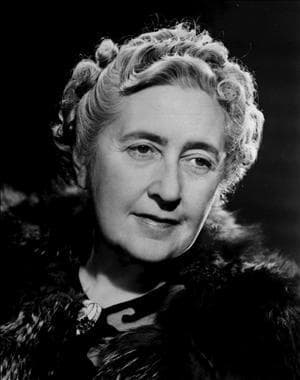
Dame Agatha Mary Clarissa Christie, Lady Mallowan, was an English writer known for her 66 detective novels and 14 short story collections, particularly those revolving around fictional detectives Hercule Poirot and Miss Marple. She also wrote the world's longest-running play, the murder mystery The Mousetrap, which has been performed in the West End since 1952. A writer during the "Golden Age of Detective Fiction", Christie has been called the "Queen of Crime". She also wrote six novels under the pseudonym Mary Westmacott. In 1971, she was made a Dame (DBE) by Queen Elizabeth II for her contributions to literature. Guinness World Records lists Christie as the best-selling fiction writer of all time, her novels having sold more than two billion copies.