BookBrief
Paradise Lost cover
Archivist's Choice

Paradise Lost

John Milton (2003)

Genre

Mystery / Young Adult / Romance

Reading Time

Approximately 1500 min (assuming 935 pages at 1.6 pages/min for poetry)

Key Themes

See below

Track Your Reading

Sign in to track this book

Lucifer, a rebel angel, orchestrates humanity's fall in the Garden of Eden, starting a long conflict between divine justice and human choice.

Synopsis

In "Paradise Lost," John Milton retells the biblical Fall of Man, focusing on the cosmic battle between good and evil. The story starts after Satan and his angels are cast from Heaven; they plot revenge from Hell. Satan, a defiant figure, rallies his forces and volunteers to travel to Earth, where God has placed humankind. God knows about the Fall and the future redemption through His Son, but Satan still journeys through Chaos to reach Eden. In Paradise, Satan sees Adam and Eve's innocence. He plans their downfall. Meanwhile, God sends Raphael to warn Adam about danger and the need for obedience. Despite the warning, Satan, disguised as a serpent, tempts Eve with the forbidden fruit, promising knowledge. Eve eats it, and Adam, unwilling to live without her, also eats it. They immediately feel shame and guilt, losing their innocence. God judges them, but the Son offers hope for humanity's redemption. Satan returns to Hell, announcing his victory, only to find himself and his followers turned into serpents. Adam and Eve, now sorry, are expelled from Paradise but see a vision of the Messiah's coming, giving them hope for a fallen world.
Reading time
Approximately 1500 min (assuming 935 pages at 1.6 pages/min for poetry)
Difficulty
Hard
Pacing
Slow
Mood
Epic, Grand, Philosophical, Theological, Tragic, Sublime
✓ Read this if...
You are interested in a foundational work of English literature, epic poetry, or a detailed, dramatic retelling of the biblical story of the Fall from a unique theological and philosophical perspective.
✗ Skip this if...
You prefer modern prose, fast-paced narratives, or find dense, archaic language and extensive theological discourse challenging.

Plot Summary

Satan's Rebellion and Expulsion

The story begins with Satan, once Lucifer, and his fallen angels in Hell, a fiery dungeon after their defeat in a war against God. Satan, despite his despair, gathers his lieutenants, including Beelzebub, Moloch, Belial, and Mammon. He declares they will never submit to God and vows to continue their war through trickery. They build Pandemonium, a grand palace in Hell, where they hold a council. They decide to investigate a new world where a new race is rumored to live.

The Council in Pandemonium

In Pandemonium, the council meets. Moloch wants to restart open war against Heaven. Belial argues for a more cautious approach, suggesting they endure their current state, as more conflict would only worsen their suffering. Mammon proposes making Hell a self-sufficient kingdom, focusing on its riches rather than engaging with God. Beelzebub, prompted by Satan, suggests corrupting God's new creation, Man, to hurt God indirectly. This plan is approved, and Satan volunteers to journey alone to Earth.

Satan's Journey to Earth

Satan begins his difficult journey from Hell, passing through gates guarded by Sin and Death, his offspring. They recognize him and clear his way. Satan then crosses the vast, formless abyss of Chaos. He meets Chaos, who directs him toward the new universe. With great effort, Satan reaches the outer sphere of the cosmos, focused on Earth.

God Foresees the Fall

Meanwhile, in Heaven, God the Father watches Satan's progress and foresees the Fall of Man. He states that Man will fall by his own free will and thus deserve punishment. Yet, in his mercy, God also decrees that Man will be offered grace and redemption. He asks who among the heavenly host will pay the price for Man's sin. Only the Son of God, Christ, volunteers to sacrifice himself, promising to become human and suffer death to atone for humanity's wrongs.

Creation of the World and Man

Before Satan's arrival, the poem describes the universe's creation. After Satan's first rebellion, God commanded his Son to create a new world. The Son, with angels, went into Chaos. He brought order out of disorder, forming the heavens, stars, and Earth in six days. He created all life, ending with Adam and Eve in the Garden of Eden. They were given control over all creatures and told their duties. They were forbidden to eat from the Tree of Knowledge of Good and Evil, or they would die.

Satan's Arrival in Eden and Observation

Satan, disguised as a lesser angel, passes the archangel Uriel, who guards the sun, and descends to Earth. He lands on Mount Niphates and, after a moment of envy, enters the Garden of Eden by leaping its wall. He disguises himself as a cormorant and sits on the Tree of Life, watching Adam and Eve. He sees their beauty and harmony. He overhears their conversation about God's single rule regarding the Tree of Knowledge, seeing it as the weak point for his temptation plan.

Gabriel Dispatches Ithuriel and Zephon

As night falls in Eden, the archangel Gabriel, leader of the angelic guard, senses an evil spirit in Paradise. He sends two cherubim, Ithuriel and Zephon, to find the intruder. They find Satan, disguised as a toad, whispering evil dreams into Eve's ear. When touched by Ithuriel's spear, Satan returns to his true form. A fight starts between Satan and the two angels, who recognize him. Gabriel arrives and challenges Satan. Satan, seeing a divine sign, leaves Eden, vowing to return.

Raphael Warns Adam

In Heaven, God, aware of Satan's escape and his plan to corrupt humanity, sends the archangel Raphael to Eden. Raphael's job is to warn Adam about disobedience and prepare him against temptation. Raphael tells the story of Satan's rebellion in Heaven, describing the war and the fallen angels' expulsion. He explains Satan's envy and his plan to destroy Adam and Eve's happiness. Raphael stresses the importance of free will and obedience to God's commands, especially about the forbidden fruit, reminding Adam of the serious results of breaking the rule.

The Temptation of Eve

Satan returns to Eden, this time as a serpent. He finds Eve alone, who has separated from Adam to work more efficiently. The serpent approaches Eve and flatters her. He then questions God's rule, suggesting God is keeping knowledge from them out of envy. He claims to have eaten the fruit and gained speech and intelligence. He convinces Eve that eating the fruit will make her like God, knowing good and evil, and that God's threat of death is a lie. Eve, convinced by his arguments and the fruit's look, eats it.

The Fall of Adam and Its Immediate Aftermath

Eve, after eating the fruit, feels new sensations and believes herself to be elevated. She finds Adam, eager to share her discovery. Adam, shocked by her act, is torn. His love for Eve overcomes his judgment. He chooses to share her fate, believing he cannot live without her, and eats the fruit. Immediately, they lose their innocence. They feel shame, guilt, and lust, covering themselves with fig leaves and blaming each other. Their perfect harmony is broken.

God's Judgment and the Son's Intercession

God, seeing the Fall, sends the Son to Earth to judge Adam and Eve. The Son confronts them, and they try to shift blame: Adam blames Eve and God; Eve blames the serpent. The Son announces their punishments: the serpent is cursed to crawl and eat dust; Eve is condemned to pain in childbirth and submission to her husband; Adam is sentenced to toil and death, and the Earth is cursed. But, the Son also offers hope, hinting at a future redeemer who will defeat the serpent, pointing to the eventual victory over sin and death.

Satan's Return to Hell and Punishment

Satan returns to Hell, expecting praise from his followers for corrupting mankind. He brags about his victory. But, as he finishes his speech, Satan and all his followers turn into hissing serpents. They are forced to eat bitter ashes, a mocking version of the forbidden fruit. This punishment shows their ultimate defeat and God's justice, even in their moment of supposed triumph.

Adam and Eve's Repentance and Hope

After their judgment, Adam and Eve feel deep regret. They reconcile and pray for God's forgiveness, showing true repentance. God hears their prayers. He sends the archangel Michael to lead them out of Eden, but also to show Adam the future of mankind. This includes the results of their sin, the flood, Abraham, Moses, and finally, the Messiah's birth, life, death, and resurrection. This vision gives Adam and Eve new hope and faith in God's plan for salvation.

Expulsion from Paradise

With the vision of mankind's future and the promise of a redeemer, Adam and Eve are ready for their expulsion. Michael leads them to the eastern gate of Eden, where a flaming sword and cherubim guard the entrance. Adam and Eve, now wearing animal skins from God, are banished from paradise. They leave Eden hand in hand, looking back with sorrow but also with hope and a new understanding. They step into the world, ready to face the challenges of their fallen existence, armed with repentance and faith.


Principal Figures

Satan

The Antagonist

Satan begins as a majestic, albeit fallen, figure but gradually degenerates through his actions, becoming more cunning and serpent-like, ultimately suffering further humiliation.

God the Father

The Protagonist/Divine Sovereign

God's character remains constant, embodying perfect justice and mercy throughout the narrative.

The Son (Jesus Christ)

The Protagonist/Divine Redeemer

The Son's role is established early as the ultimate embodiment of divine love and justice, remaining consistent throughout.

Adam

The Protagonist

Adam falls from innocence through disobedience driven by love, then finds repentance and hope through divine grace and knowledge of future salvation.

Eve

The Protagonist

Eve falls from innocence through vanity and curiosity, then finds repentance and reconciliation, gaining a deeper understanding of her and Adam's shared fate.

Raphael

The Supporting

Raphael serves a specific, didactic function and does not undergo a personal arc.

Michael

The Supporting

Michael serves a specific, revelatory function and does not undergo a personal arc.

Beelzebub

The Supporting

Beelzebub remains a consistent, influential figure among the fallen angels.

Sin

The Supporting

Sin's role is primarily symbolic, representing the consequences and propagation of evil.

Death

The Supporting

Death's role is primarily symbolic, representing the ultimate consequence of sin.

Themes & Insights

Free Will vs. Predestination

Milton explores whether human actions are predetermined or if people have free will. God states that Man will fall by his 'own free will,' not by divine command, emphasizing that Adam and Eve can choose obedience or disobedience. Raphael tells Adam to 'stand fast' through his own choice. Satan, in contrast, often complains about God's tyranny, though his choices lead to his damnation. The epic confirms human agency and moral responsibility in the face of temptation.

I made him just and right, / Sufficient to have stood, though free to fall.

God (Book III)

The Nature of Good and Evil

Milton examines the origins of good and evil. Good is tied to obedience to God, reason, and love, seen in Adam and Eve's harmony and the Son's sacrifice. Evil comes from pride, disobedience, and envy, personified by Satan. His line, 'Evil be thou my Good,' shows his deliberate twisting of values. The epic illustrates how evil corrupts from within, turning beauty into ugliness and harmony into conflict. It also explores how evil can appear as freedom or enlightenment.

The mind is its own place, and in itself / Can make a Heav'n of Hell, a Hell of Heav'n.

Satan (Book I)

Pride and Disobedience

Pride causes both Satan's rebellion and humanity's Fall. Satan's refusal to bow before the Son comes from his pride and ambition, leading him to challenge God. Eve's desire for knowledge equal to God's and to act alone is fueled by pride and vanity, which Satan exploits. Adam's disobedience, though motivated by love for Eve, is a failure to prioritize God's command. Pride and disobedience lead to banishment, suffering, and the loss of innocence for both angels and humans.

Here at least / We shall be free; th' Almighty hath not built / Here for his envy, will not drive us hence.

Satan (Book I)

Redemption and Divine Mercy

Despite the tragic Fall, a main theme is God's mercy and the promise of redemption. God, though just, foresees the Fall and plans for salvation through the Son's sacrifice. The Son's willingness to become human and suffer shows God's love and mercy. Even after their expulsion, Adam and Eve are not abandoned; God clothes them, and Michael reveals a future where a Messiah will defeat sin and death. This theme offers hope beyond immediate punishment.

Man shall not quite be lost, but sav'd who will, / Yet not by might, nor power, but by my grace.

God (Book III)

The Dangers of Knowledge Without Wisdom

The forbidden Tree of Knowledge of Good and Evil is key to this theme. Adam and Eve are tempted by the promise of becoming 'as gods, knowing good and evil.' Satan convinces Eve that God withholds this knowledge out of envy. However, their new knowledge brings shame, guilt, and a painful awareness of their fallen state, not enlightenment. They gain knowledge of evil through experience, not wisdom, leading to suffering. This suggests that some knowledge, without divine guidance, can be dangerous.

And from the Tree her fatal hand she reached, / And pluck'd, she ate: Earth felt the wound, and Nature from her seat / Sighing through all her Works gave signs of woe, / That all was lost.

Narrator (Book IX)

Plot Devices & Literary Techniques

Epic Simile

Extended, elaborate comparisons used to elevate the narrative and describe complex ideas.

Milton frequently employs epic similes, often stretching over several lines, to describe characters, scenes, or actions with vivid detail and grandeur. For example, Satan's vast size is compared to a 'floating Atlas' or a 'Tuscan artist's telescope' (Book I), giving the reader a sense of his immense scale and cosmic significance. These similes not only provide striking imagery but also draw connections to classical literature and expand the scope of the poem beyond its immediate narrative, enriching its thematic depth and elevating its style.

Invoking the Muse

Milton directly appeals to a divine source of inspiration at the beginning of each book.

At the outset of key sections, Milton invokes a heavenly Muse (specifically, the 'Heav'nly Muse' or 'Spirit that doth prefer / Before all Temples th' upright heart and pure') for guidance and inspiration. This device serves several purposes: it positions the epic within the classical tradition (like Homer and Virgil), asserts the divine truth and importance of his subject matter (contrasting with pagan muses), and humbly acknowledges that such a grand and sacred story requires divine assistance to be told accurately and eloquently. It elevates the poet's role as a conduit for divine truth.

In Medias Res

The epic begins in the middle of the action, with background events revealed later.

Milton opens 'Paradise Lost' 'in medias res' (in the middle of things), with Satan and his fallen angels already defeated and awakening in Hell. This immediately plunges the reader into the consequences of the rebellion, creating dramatic tension. The preceding events, such as the War in Heaven and the creation of the world, are recounted later through flashbacks or narrative explanations (e.g., Raphael's account to Adam in Books V-VIII). This narrative structure allows Milton to immediately establish the central conflict and characters, while gradually filling in the necessary backstory at strategic points.

Foreshadowing and Prophecy

Hints and explicit revelations about future events, particularly concerning redemption.

Milton uses foreshadowing extensively, often through God's pronouncements and angelic revelations. From God's initial foresight of Man's Fall and the promise of a Redeemer (Book III), to Michael's detailed vision of human history, including the coming of Christ, Noah's flood, and the lineage of patriarchs (Book XI-XII), the narrative constantly points towards future events. This device serves to underscore God's omniscience, provide hope amidst tragedy, and frame the immediate events of the Fall within a larger, redemptive cosmic plan, emphasizing the eventual triumph of good over evil.

Critical analysis

Notable Quotes

Of Man's first disobedience, and the fruit Of that forbidden tree, whose mortal taste Brought death into the World, and all our woe, With loss of Eden, till one greater Man Restore us, and regain the blissful seat, Sing, Heavenly Muse!

The opening lines of the epic, stating its grand theme.

The mind is its own place, and in itself Can make a Heaven of Hell, a Hell of Heaven.

Satan's declaration of his internal power and defiance after being cast into Hell.

Better to reign in Hell, than serve in Heaven.

Satan's famous motto, expressing his preference for autonomy even in suffering.

All is not lost; th' unconquerable will, And study of revenge, immortal hate, And courage never to submit or yield.

Satan rallying his fallen angels, emphasizing their enduring spirit of resistance.

Long is the way And hard, that out of Hell leads up to light.

Satan contemplating the arduous journey from Hell to the new world.

A mind not to be changed by place or time. The mind is its own place, and in itself Can make a Heaven of Hell, a Hell of Heaven.

Satan reflecting on his inner state and the power of his will.

Awake, arise, or be for ever fall'n.

Satan's rallying cry to his legions in Hell.

Solitude sometimes is best society, And short retirement urges sweet return.

Adam speaking about the value of occasional solitude, even in Eden.

For neither Man nor Angel can discern Hypocrisy, the only evil that walks Invisible, except to God alone.

Milton's commentary on the insidious nature of hypocrisy.

Nor love thy life, nor hate; but what thou liv'st Live well, how long or short permit to Heaven.

Adam receiving advice about how to live life after the Fall.

The World was all before them, where to choose Their place of rest, and Providence their guide: They hand in hand with wandering steps and slow, Through Eden took their solitary way.

The final lines of the epic, describing Adam and Eve's departure from Eden.

Abashed the Devil stood, And felt how awful goodness is, and saw Virtue in her shape how lovely.

Satan's momentary reaction upon seeing the purity of Eve.

He for God only, she for God in him.

A description of the hierarchical relationship between Adam and Eve before the Fall.

Thus was the Law of God to Man proclaimed, But with a gentler voice, and sweeter sound.

Referring to God's commandments given to Adam in Eden, before the harshness of the fallen world.

Quiz

Test Your Knowledge

Ready to see how well you understood this book? Take our interactive quiz with 10 questions.

10
Questions
~5
Minutes
?
Best Score

Key Questions (FAQ)

'Paradise Lost' centers on the epic conflict between God and Satan, following Satan's rebellion in Heaven and his subsequent expulsion to Hell. The narrative then shifts to his vengeful plot to corrupt God's newest creation, humanity, leading to the Fall of Man.

About the author

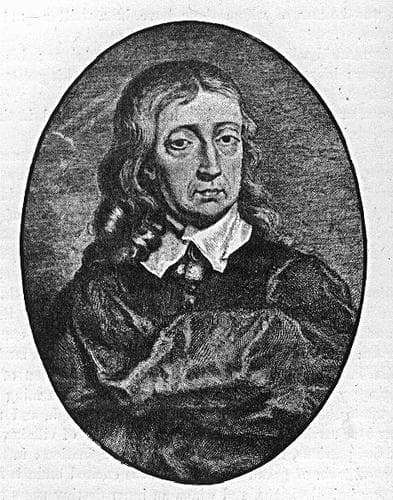
John Milton

John Milton was an English poet and intellectual. His 1667 epic poem Paradise Lost, written in blank verse and including over ten chapters, was written in a time of immense religious flux and political upheaval. It addressed the fall of man, including the temptation of Adam and Eve by the fallen angel Satan and God's expulsion of them from the Garden of Eden. Paradise Lost elevated Milton's reputation as one of history's greatest poets. He also served as a civil servant for the Commonwealth of England under its Council of State and later under Oliver Cromwell.