“I knew everything, and I knew nothing. I was a child. I was a grown-up.”
— Paddy reflecting on his understanding and confusion about the world around him.

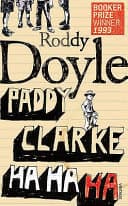
Roddy Doyle (2009)
Genre
Fiction
Reading Time
300 min
Key Themes
See below
Sign in to track this book
In 1968 Dublin, ten-year-old Paddy Clarke navigates the rowdy world of boyhood games and classroom antics as his family slowly falls apart.
Ten-year-old Paddy Clarke, along with his best friend Kevin and the other boys of Barrytown, spends his days playing games, engaging in petty rivalries, and committing minor acts of mischief. Their world is the streets, the fields, and the local shops, where they play cowboys and Indians, chase each other, and devise plans for fun. Paddy, with his quick wit and leadership, often organizes these adventures, even if they sometimes involve bullying younger children or teasing girls. Their innocent brutality and boundless energy shield them from the adult world. They operate with a strict, unwritten code, where loyalty and a good joke are paramount, and any perceived weakness is quickly exploited.
School for Paddy and his friends is less about learning and more about enduring. Lessons are often boring, punctuated by the thrill of a good prank or a whispered conversation. Paddy, while intelligent, struggles with the rigid structure and often gets in trouble for talking or not paying attention. He and Kevin devise ways to pass notes, make fun of their teachers, and disrupt class without getting caught. The teachers, particularly Mr. O'Connell, are often the targets of their youthful disdain and clever schemes. Despite the distractions, Paddy is aware of school's importance, even if he doesn't always apply himself, and he observes the dynamics between his peers and the classroom hierarchy.
At home, the atmosphere slowly begins to change. Paddy's parents, initially a loving and stable presence, start to show signs of strain. The arguments are not overt at first, but Paddy notices the silences, the hushed tones, and the way his mother, Helen, becomes withdrawn, while his father, Hugh, grows more irritable and absent. He tries to make sense of these shifts, often misinterpreting adult interactions through his child's lens, but a sense of unease begins to permeate his once secure family life. He observes his younger brother, Francis, less affected by the subtle changes, which only highlights Paddy's growing awareness of the underlying tension.
As the tension at home escalates, Paddy's frustration and confusion find an outlet in bullying his younger brother, Francis. He teases Francis relentlessly, invents cruel games, and often physically abuses him, all while maintaining an outward appearance of sibling rivalry. These acts are not pure malice but a desperate attempt to exert control in a world that feels increasingly out of his grasp. Francis, being younger and more vulnerable, becomes an easy target for Paddy's displaced anger and anxiety. Paddy's internal monologue reveals a complex mix of guilt, justification, and a perverse satisfaction in his power over Francis, even as he knows it's wrong.
The simmering conflict at home eventually boils over, culminating in Hugh Clarke's sudden departure. He simply leaves one day, without a clear explanation to the children, leaving Helen devastated and Paddy and Francis bewildered. This event marks a turning point, shattering Paddy's perception of his family as an unbreakable unit. His father's absence is a gaping wound, leaving Paddy grappling with feelings of abandonment, confusion, and a desperate hope for his return. The household is plunged into a new, stark reality, devoid of the familiar presence and income of his father, forcing Helen to take on all responsibilities and leaving Paddy to try and understand what has happened.
After Hugh's departure, Helen struggles to cope. Paddy observes her grief, her weariness, and her attempts to maintain normalcy for her sons. He becomes aware of the financial difficulties and the emotional toll on his mother. While he still engages in childhood games, his perception of the world is colored by this new reality. He tries, in his own childish way, to protect his mother and to understand her pain, even though he often feels helpless. He notices her smoking more, her silences, and the way she tries to put on a brave face, further deepening his understanding of adult suffering.
The weight of his family's troubles begins to isolate Paddy from his friends. His once carefree games and boisterous adventures lose their appeal as he becomes preoccupied with his parents' separation. He finds it harder to engage, to laugh, and to pretend. His friends, still in their innocent world, do not fully understand the changes in him, and a rift begins to form. The shared childhood experiences that once bonded them start to feel distant and irrelevant to Paddy's internal struggles, marking a subtle but significant loss of his childhood innocence and a growing sense of loneliness.
Driven by a desperate need for understanding and a desire to control the uncontrollable, Paddy begins to actively seek answers about his father's departure. He eavesdrops on adult conversations, pieces together fragments of overheard gossip, and tries to make sense of the complex adult world that has intruded upon his childhood. He internalizes the narrative of his parents' separation, often blaming himself or imagining scenarios where he could have prevented it. He clings to memories of his father, both good and bad, as he tries to reconstruct a coherent picture of his family's past and present, all while struggling with the emotional burden of uncertainty.
After a period of absence, Hugh Clarke unexpectedly returns home. This event brings a fleeting sense of hope and relief to Paddy and Francis, and a cautious optimism to Helen. Paddy observes the tentative attempts at reconciliation between his parents, clinging to the idea that their family might be whole again. The atmosphere in the house lightens, albeit briefly, as they navigate the awkwardness and the underlying pain. Paddy, ever the observer, watches his parents carefully, trying to discern if this return signifies a permanent change or merely a temporary reprieve from their fractured reality, highlighting his desire for stability.
The hope for a lasting reconciliation is short-lived. Hugh Clarke eventually leaves again, this time with a sense of finality. This second departure is more definitive, crushing any remaining illusions Paddy held about his parents reuniting. It forces him to confront the permanence of their separation and the irreversible change in his family structure. The 'ha ha ha' of his childhood games and carefree existence gives way to a deeper, more somber understanding of loss and adult pain. Paddy, though still a child, is now marked by this experience, forced to mature beyond his years and accept a new, more somber reality.
After his father's final departure, Paddy slowly begins the difficult process of maturation and acceptance. His preoccupation with his parents' separation gradually gives way to a more nuanced understanding of his family's new configuration. He still grieves, but he also starts to adapt. The boisterous, often cruel, games of his childhood fade, replaced by a quiet introspection. He learns to live with the absence, to support his mother in small ways, and to navigate his relationship with Francis with less aggression. This period marks his transition from childhood innocence to a more complex, aware stage of youth, shaped by loss and resilience.
The Protagonist
Paddy evolves from a carefree, somewhat cruel boy into a more reflective and empathetic individual, marked by the loss of his innocence.
The Supporting
Hugh's arc is one of increasing detachment and eventual abandonment, leading to the disintegration of his family.
The Supporting
Helen transforms from a stable homemaker to a resilient, though deeply wounded, single mother, adapting to immense hardship.
The Supporting
Francis remains largely static in his innocence, serving as a catalyst for Paddy's developing empathy.
The Supporting
Kevin's arc is largely static, representing the unchanging world of childhood that Paddy eventually outgrows.
The Supporting
Mr. O'Connell remains a static figure of authority, a constant in Paddy's changing world.
The Mentioned
Gerard's role is largely static, representing the broader peer group.
The Mentioned
O'Connell's role is static, serving as a foil for Paddy's group.
This theme charts Paddy's painful transition from carefree childhood to an awareness of adult suffering and life's complexities. His world, initially defined by games and simple pleasures, is altered by his parents' separation. The 'ha ha ha' of his youthful laughter gradually gives way to a deeper, more somber understanding of the world. This is evident as his bullying of Francis becomes an outlet for his own pain, and his inability to fully engage in games with Kevin highlights his internal shift.
“I was ten. I was Paddy Clarke. I was a great lad. And then I wasn't.”
The novel is narrated entirely from Paddy's ten-year-old perspective, offering a fragmented, often humorous, but ultimately limited understanding of adult events. He misinterprets conversations, observes details without grasping their full significance, and fills gaps with his imagination. This unreliable narration shows the gap between a child's perception and adult reality, making the reader piece together the deeper truths of the family's disintegration. His observations of his parents' arguments, often through closed doors, exemplify this limited but potent viewpoint.
“They were talking about something important, I knew that. Something that wasn't for me to hear. So I listened harder.”
The core of the novel explores the slow, painful unraveling of the Clarke family unit due to marital discord and the father's abandonment. The narrative details the emotional toll this takes on each family member, particularly Paddy. It shows how the breakdown of the primary caregivers' relationship creates a ripple effect, impacting the children's emotional well-being, their sense of security, and their understanding of the world. The shift from a boisterous, stable home to one filled with silence, tension, and eventually, absence, is central to Paddy's journey.
“My da was gone. That was the main thing. The main big thing.”
Doyle portrays the often brutal and unsentimental world of young boys. Paddy and his friends engage in bullying, teasing, and petty violence, particularly towards younger children and girls. This theme highlights the darker side of childhood innocence, showing how children learn to exert power, establish hierarchies, and cope with their own anxieties through aggression. Paddy's relentless torment of Francis, often a mirror of his own internal pain, is a prime example of this complex dynamic. It also examines the unspoken codes and loyalties within a childhood gang.
“We were good at being mean. We were experts.”
Before the family crisis, Paddy's world is dominated by elaborate games and imaginative play – cowboys and Indians, wars, and adventures. These games provide an escape, a way for the boys to process their world and exert control. As his home life deteriorates, Paddy's ability to engage in these games diminishes, signifying his loss of innocence and the crushing weight of reality. The contrast between his imaginary world and the harshness of his actual life shows the protective function of play, which eventually fails him.
“We were good at making up stories. Better than the teachers. Better than anyone.”
The entire story is told through the eyes and voice of ten-year-old Paddy Clarke.
This device immerses the reader directly into Paddy's mind, allowing for an authentic and often humorous portrayal of childhood. However, it also creates an unreliable narrator, as Paddy's understanding of adult events is limited and often misinterpreted. The reader must piece together the full picture of the family's disintegration from Paddy's fragmented observations and innocent misreadings, making the impact of the tragedy more poignant and deeply felt. His unique voice, full of slang and childish logic, defines the novel's tone.
Paddy's thoughts, observations, and memories flow in a non-linear, associative manner.
The narrative style mirrors the natural thought process of a child, jumping between present events, past memories, and imaginative tangents. This non-linear structure creates a sense of immediacy and authenticity, reflecting how a child's mind processes information and experiences. It allows Doyle to weave together seemingly disparate details that, when viewed through Paddy's lens, contribute to the overall portrait of his developing understanding and emotional turmoil. The lack of formal chapter breaks further enhances this continuous flow.
Certain phrases, questions, and observations are repeated throughout the narrative.
Paddy often repeats key phrases, questions, or observations, such as 'Ha ha ha' or wondering if he was 'a good lad' or 'a bold boy.' This repetition serves multiple purposes: it emphasizes Paddy's childlike processing of information, his attempts to make sense of the world, and his internal anxieties. As the story progresses and his world darkens, the repetitions take on new, more poignant meanings, highlighting his growing distress and the erosion of his innocence. It acts as a subtle emotional barometer for Paddy's state of mind.
Paddy's innocent observations subtly hint at the impending family breakdown.
Though Paddy doesn't understand their full meaning, his observations of his parents' hushed conversations, his mother's silences, and his father's irritability serve as subtle foreshadowing. These seemingly innocuous details, presented through a child's limited perspective, build a growing sense of unease and tension, preparing the reader for the inevitable disintegration of the family. The reader, with an adult's understanding, can interpret these signs long before Paddy comprehends their true significance, creating dramatic irony.
“I knew everything, and I knew nothing. I was a child. I was a grown-up.”
— Paddy reflecting on his understanding and confusion about the world around him.
“Mammy and Daddy were like two different planets, they were so far apart.”
— Paddy observing the growing distance and tension between his parents.
“Sometimes I wished I was invisible. Like a ghost. Just float around and watch things, but nobody could see me.”
— Paddy's desire to escape the reality of his family's problems and observe from a distance.
“It was like a secret, a big, heavy, horrible secret that was always there, even when nobody was talking about it.”
— Paddy's perception of the unspoken tension and impending breakup of his parents.
“We were all in the same house, but we weren't a family anymore. We were just people living in the same house.”
— Paddy's feeling of the disintegration of his family unit.
“I hated them. I hated them all. For making me feel like this. For making everything horrible.”
— Paddy's anger and frustration at his parents and the situation they've created.
“Paddy Clarke ha ha ha. That's what they said. They didn't know anything.”
— Paddy reacting to the jeering of other children, highlighting their ignorance of his inner turmoil.
“The past was like a big, dark room, and I was in it, looking for something I couldn't find.”
— Paddy trying to make sense of past events and changes within his family.
“I wished I could turn back time. Go back to when everything was normal. Before.”
— Paddy's longing for the past when his family was intact and happy.
“He was gone. That was it. He was just gone. Like a puff of smoke.”
— Paddy's stark realization and simple understanding of his father's departure.
“Nobody told you anything. You just had to guess. And guessing was hard.”
— Paddy's frustration with adults' lack of communication regarding sensitive family matters.
“I didn't cry. I didn't want to cry. Crying was for babies. And girls.”
— Paddy suppressing his emotions, adhering to a perceived masculine ideal.
“The house was quiet. Too quiet. Like a dead house.”
— Paddy experiencing the oppressive silence after his father's absence.
“It wasn't fair. Nothing was fair. Not anymore.”
— Paddy's simple but profound expression of injustice and disillusionment.
Ready to see how well you understood this book? Take our interactive quiz with 10 questions.

Roddy Doyle is an Irish novelist, dramatist and screenwriter. He is the author of eleven novels for adults, eight books for children, seven plays and screenplays, and dozens of short stories. Several of his books have been made into films, beginning with The Commitments in 1991. Doyle's work is set primarily in Ireland, especially working-class Dublin, and is notable for its heavy use of dialogue written in slang and Irish English dialect. Doyle was awarded the Booker Prize in 1993 for his novel Paddy Clarke Ha Ha Ha.

Ashley Antoinette
4.6

Mark McDonald
4.4
Luo Guanzhong
4.4
Mia McKenzie
4.3
Dorothy Parker
4.3
Joaquim Maria Machado de Assis
4.3
James Thurber
4.2

Terry Kay
4.2