“The only rock in the world that is not a continent is Africa.”
— Early observation about the perception of Africa.

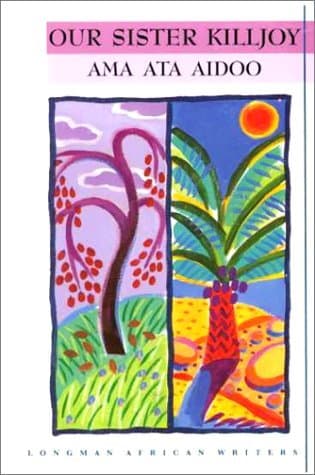
Ama Ata Aidoo (1977)
Genre
Fiction
Reading Time
120 min
Key Themes
See below
Sign in to track this book
Sissie, a Ghanaian student in Europe, navigates Western cultures, grappling with identity, belonging, and post-colonial life.
Sissie, a young, intelligent Ghanaian woman, leaves her home to study in Germany. She is initially overwhelmed by the foreign landscape and Europe's cold, impersonal feel. Her journey includes a sense of displacement and a sharp observation of cultural differences between Africa and the West. She thinks about why other Africans come to Europe, noting ambition, disappointment, and a desire for material things. Sissie's thoughts show her critical view of both perceived European superiority and an inferiority complex among some fellow Africans.
In Germany, Sissie meets Marija, a kind and somewhat lonely German woman. Marija, drawn to Sissie's unique background and warmth, invites Sissie into her home. Their relationship develops into a brief, intense, and somewhat undefined closeness, marked by shared meals, quiet company, and unspoken understandings. Sissie observes Marija's life, noting her struggles with loneliness and societal expectations. This meeting challenges Sissie's ideas about European women and highlights the universal human need for connection, regardless of culture. However, Sissie eventually sees the basic differences between them, and the relationship, though moving, is temporary.
Sissie travels to the Swiss Alps, a landscape that inspires awe and a sense of distance. She observes the beautiful nature but also the European tourists who seem more interested in taking pictures than truly experiencing the place. This experience leads Sissie to think about beauty, materialism, and how cultures interact with their surroundings. She contrasts what she sees as artificial in European tourism with the more natural, connected relationship with nature she links to her African homeland. Her thoughts become more philosophical, questioning Western values and priorities.
Sissie receives a letter from her family in Ghana, a strong reminder of her origins and responsibilities. The letter brings homesickness and a fresh awareness of the cultural expectations and community ties that define her. It also quietly highlights the sacrifices made for her education abroad and her community's hopes for her return. This communication from home sharply contrasts with the individualistic and often isolating experience of living in Europe, causing Sissie to re-evaluate her purpose and place.
Sissie moves to London and meets a group of Ghanaian men who have lived in Europe for a long time. These men, whom she sarcastically calls 'been-to's,' have largely adopted European manners, values, and lifestyles, often losing their African identity. She observes their shallow behavior, their pursuit of wealth, and their condescending attitude toward those who have not 'made it' in the West. Sissie strongly criticizes their assimilation, seeing it as a betrayal of their heritage and a sign of internalized colonialism. Their interactions show the complex challenges of keeping cultural identity in a foreign country.
Sissie's observations expand to a wider criticism of the African elite who, after studying abroad, often return home only to continue the very systems of exploitation they supposedly went to Europe to learn to overcome. She sees them as disconnected from the struggles of ordinary Africans, more interested in keeping their privileged status and imitating Western lifestyles than in truly helping their nations develop. This criticism is sharp and direct, reflecting Aidoo's broader concern with post-colonial African leadership and the lasting effects of colonial thinking.
Throughout her journey, Sissie grapples with Europe's 'broken promise.' Many Africans come to the continent with high hopes for education, personal growth, and a better life, only to face racism, economic hardship, and cultural alienation. Sissie observes the disappointment of many of her peers, some of whom are stuck in despair or forced to compromise their values to survive. She questions the true worth of an education that seems to separate individuals from their communities and often fails to provide the promised opportunities.
Despite the challenges and her critical observations, Sissie feels a clear pull to return to Ghana. This return is not from defeat, but from a renewed sense of purpose and a desire to help her homeland. She understands that real change and development must come from within Africa, and that her experiences abroad, though often difficult, have sharpened her understanding and resolve. The story moves toward her inevitable return, filled with a sense of responsibility and a determination to use her knowledge for her people.
Sissie consciously and strongly rejects many Western values she has met, especially those related to individualism, materialism, and a perceived cultural superiority. She criticizes the colonial mindset that still influences interactions between Africa and Europe. Her experiences strengthen her commitment to her African identity and worldview, reinforcing her belief in community values, a deeper connection to land, and an alternative path to progress not dictated by Western models. This rejection is not blind nationalism but a reasoned and passionate affirmation of her cultural roots.
The story ends with Sissie's return to Ghana. While the immediate aftermath of her return is not fully detailed, the implication is that she comes back with a clearer understanding of herself, her people, and her nation's challenges. Her journey through Europe has been a test, sharpening her critical view and strengthening her resolve. She is ready to engage with the complexities of post-colonial Ghana, not as an uncritical admirer of the West, but as a 'killjoy' — someone who sees through superficialities and is committed to truth and real progress for her community.
The Protagonist
Sissie begins as an observer, grappling with cultural displacement, and evolves into a more self-assured critic, solidifying her African identity and purpose to return and contribute to her homeland.
The Supporting
Marija's character remains largely static, serving as a foil for Sissie's observations on European life and relationships.
The Antagonistic/Supporting (collective)
As a collective, their static nature highlights the entrenched issues of post-colonial identity and the challenges of cultural authenticity.
The Narrator/Protagonist's alter ego
This voice consistently sharpens its critique and understanding of the world, growing in conviction and clarity.
The Mentioned/Collective Supporting
Their collective experiences illustrate the diverse and often difficult paths of Africans abroad, showcasing various forms of adaptation and struggle.
The novel clearly explores the cultural clash between African and European societies, seen through Sissie's eyes. She constantly compares the community values of Ghana with the individualism and materialism of the West. This theme appears in her observations of European customs, the differences in social interactions, and her strong criticism of Africans who adopt Western values, like the 'Been-To's' in London. Sissie's journey is about affirming her African identity amid foreign pressures, showing the struggle to stay true to oneself while dealing with global influences.
“But what have they done with it, these European women? They have poured it all into their bodies, into their clothes, into their hair. And then, when they have finished, they have nothing left.”
A main theme is the disappointment with the promises of post-colonial independence and the West's continued economic and cultural power. Sissie critically examines colonialism's legacy, especially how it still shapes African hopes and self-perception. She observes that many Africans, including the educated elite, are still seeking validation from Europe, often at the cost of their own cultural integrity and national development. This disappointment extends to the unfulfilled expectations of European education and the challenges African students face abroad, where they often encounter racism and alienation instead of promised opportunities.
“We are just like the ones who went before us, only our chains are invisible.”
Aidoo explores feminist themes through Sissie's viewpoint, criticizing both traditional African and Western gender roles. Sissie observes the limits placed on women in both societies. In Europe, she notes Marija's loneliness and societal expectations, and in Africa, she implicitly reflects on the expectations for educated women. The novel subtly challenges patriarchal norms by featuring a strong, independent female main character who is intellectually and emotionally self-sufficient. Sissie's critical gaze includes how men, especially the 'Been-To's,' often continue gender inequalities, even while claiming modernity.
“Somehow, it was always the women who were doing the waiting.”
The novel deals with the responsibility and challenges faced by educated Africans, particularly those who have studied abroad. Sissie shows the dilemma of the intellectual who sees flaws in both African and Western societies. She criticizes the 'Been-To's' for their superficial assimilation and lack of commitment to their homeland, while also acknowledging the pressures they face. The book suggests that the true role of the educated African is not to simply copy the West, but to critically engage with global knowledge and use it to genuinely serve and develop their own communities, even if it means being a 'killjoy' who challenges comfortable illusions.
“To be a true African intellectual was to be a killjoy, to stand outside the general gladness and point to the bones in the meat.”
The story is told through Sissie's highly introspective and critical internal monologue.
The novel largely employs a first-person stream of consciousness narration, allowing readers direct access to Sissie's thoughts, observations, and philosophical musings. This device blurs the line between dialogue and internal reflection, creating an intimate and immersive experience. It enables Ama Ata Aidoo to present Sissie's sharp critiques of colonialism, cultural assimilation, and gender roles with immediate impact and raw honesty. The fragmented, poetic nature of the prose further emphasizes Sissie's complex inner world and the constant flow of her analytical mind, making her a highly reliable, albeit subjective, lens through which to view the world.
The narrative frequently shifts into direct addresses, sometimes like letters, to an unnamed 'you' or to the reader.
While primarily stream of consciousness, the novel frequently shifts into an epistolary style or direct address, often speaking to an implied 'you' or directly to the reader. This device creates a sense of immediacy and intimacy, inviting the reader to become a confidante or a participant in Sissie's observations and arguments. It also allows for rhetorical questions and passionate pleas, intensifying the emotional impact of Sissie's critique. This direct address reinforces the idea of Sissie as a 'killjoy' who is actively engaging with and challenging her audience, refusing passive acceptance of the status quo.
Europe represents materialism and alienation, while Africa symbolizes authenticity and communal values.
The novel heavily relies on the symbolism of Europe and Africa. Europe, particularly Germany and London, symbolizes a world of material wealth, individualism, coldness, and cultural alienation, often associated with a colonial mindset. Africa, specifically Ghana, represents warmth, communal values, authenticity, and a sense of belonging, despite its own post-colonial challenges. These geographical entities are not merely settings but embody contrasting ideologies and ways of life. Sissie's journey between them is a symbolic quest for understanding, identity, and the potential for a truly decolonized future.
Sissie embodies the archetype of the 'killjoy,' someone who exposes uncomfortable truths and challenges complacency.
Sissie herself functions as a literary device, embodying the 'killjoy' archetype. This refers to a character who refuses to accept superficial pleasantries or convenient lies, instead pointing out uncomfortable truths and challenging the status quo. Sissie's sharp observations and unsparing critiques of both European society and assimilated Africans make her a 'killjoy' in the sense that she disrupts complacent narratives and forces a deeper, often uncomfortable, examination of power dynamics, cultural betrayal, and genuine progress. This device highlights the author's intent to provoke thought and stimulate critical engagement rather than offer easy answers.
“The only rock in the world that is not a continent is Africa.”
— Early observation about the perception of Africa.
“When you are in Rome, do as the Romans do. But when you are in Europe, do as the Europeans do. And when you are in Africa, do as the Africans do.”
— A reflection on cultural adaptation and identity.
“It is not enough to be African; one must be a good African.”
— A thought on the responsibilities of being African.
“The mind of the African is not a tabula rasa.”
— Challenging the notion of African intellectual emptiness.
“What is wrong with our men? Are they afraid of women who think?”
— A rhetorical question about gender dynamics and intellectual women.
“To be educated is to be a stranger in one's own land.”
— Reflecting on the alienation experienced by educated Africans.
“Love, like rain, does not choose the grass on which it falls.”
— A poetic observation on the indiscriminate nature of love.
“The greatest tragedy of our time is that we have become so used to the idea of tragedy.”
— A commentary on the normalization of suffering and misfortune.
“How can one live in a world where everyone is a victim?”
— A question about the pervasive sense of victimhood.
“We are all walking on the edge of a precipice, and we don't even know it.”
— A metaphor for the precariousness of life and human ignorance.
“There are times when silence is the only language that can communicate the depth of one's feelings.”
— A reflection on the power and expressiveness of silence.
“Our ancestors were never afraid of the unknown. They embraced it.”
— Contrasting ancestral bravery with contemporary apprehension.
“The future is a foreign country; they do things differently there.”
— A twist on a famous quote, emphasizing the unpredictability of the future.
“A woman's place is wherever she wants to be.”
— A statement on female autonomy and breaking traditional roles.
Ready to see how well you understood this book? Take our interactive quiz with 10 questions.
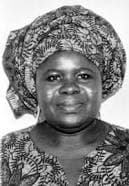
Ama Ata Aidoo is a Ghanaian novelist, poet, and playwright celebrated for her contributions to African literature. Her seminal novel, "Our Sister Killjoy," is a landmark work of post-colonial fiction, exploring themes of identity and cultural displacement. Aidoo's writing is characterized by its sharp social commentary and innovative use of language.

Ashley Antoinette
4.6

Mark McDonald
4.4
Luo Guanzhong
4.4

Mia McKenzie
4.3

Dorothy Parker
4.3

Joaquim Maria Machado de Assis
4.3

James Thurber
4.2

Terry Kay
4.2