“The only way to avoid the shame of being born is to die immediately.”
— A reflection on existence and the immediate desire for oblivion.

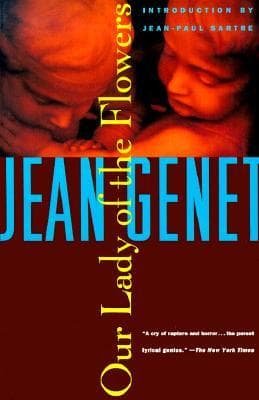
Genre
Fiction
Reading Time
240 min
Key Themes
See below
Sign in to track this book
From a prison cell, Jean Genet writes a lush, defiant story of memory and desire, turning his past into a sacred tale of pimps, murderers, and drag queens.
The novel starts with the narrator, Jean Genet (often seen as the character Divine), in a prison cell, surrounded by pictures of murderers. He begins to imagine a young man named Our Lady of the Flowers (Notre-Dame des Fleurs), a beautiful adolescent murderer. This imagining helps him escape his harsh prison reality. Divine, a drag queen, becomes the main character through whom Genet explores his past and current desires. He describes Divine's poor apartment in Montmartre, Paris, where Divine lives in poverty, works as a prostitute, and has elaborate fantasies, often hallucinating or dreaming vivid scenes of love and crime. Divine's life mixes the ordinary with the mythical, filled with extraordinary people from the Parisian underworld.
Divine's world grows with the arrival of Darling Daintyfoot (Mignon-les-petits-pieds), a charming, manipulative young pimp and thief. Darling, recently out of reform school, moves into Divine's small apartment. Their relationship has tension, desire, and mutual exploitation. Divine is very much in love with Darling, who represents a dangerous, young masculinity that Divine both wants and resents. Darling uses Divine for a place to stay and money, often leaving for days to commit theft and other crimes with his friends. Their living together shows Divine's masochistic side and his desire for connection, even with someone who treats him badly.
Our Lady of the Flowers (Notre-Dame des Fleurs) first exists only in Divine's imagination as an ideal, angelic murderer. He is a beautiful, almost otherworldly boy who commits a brutal crime, becoming an object of horror and adoration for Divine. As the story goes on, Our Lady appears in Divine's real-world narrative. He becomes one of Darling Daintyfoot's young accomplices. His presence adds to the dynamics within Divine's group, showing the dangerous appeal of youth and violence. Divine's obsession with Our Lady grows, mixing with his desires for Darling and his general interest in crime and beauty.
Divine's life involves working as a male prostitute, moving through the streets and hidden parts of Montmartre. His relationships are often about transactions, driven by a need to survive and complex emotions. He has tender moments with Darling Daintyfoot, but Darling's unfaithfulness and cruelty always overshadow these. Divine's prostitution is not just a way to make money; it is part of his identity, his understanding of love, and his acceptance of his marginalized status. He is with various men, but his deepest emotional ties are still with Darling and the idealized image of Our Lady, despite the pain they cause.
Darling Daintyfoot and Our Lady of the Flowers, with other young men like Gorgui, form a small gang involved in small thefts and hustling. Their criminal acts are shown with a mix of romance and harsh realism. These acts are often impulsive, done out of need or for thrills, leading to frequent encounters with the police. The narrator describes their lives on the edge of society, their defiance, and the results of their actions. These criminal acts make them outcasts and objects of Genet's interest, showing a raw, untamed masculinity that Divine finds both scary and appealing.
The story ends with Our Lady of the Flowers' trial for murder. This event changes Our Lady from a living youth into a mythic figure, a saint of crime. The trial is described with a sense of drama and sad grandeur. Despite the grim reality of the charges, Divine (and the narrator) sees Our Lady's conviction not as a loss, but as a kind of spiritual elevation. Our Lady's acceptance of his fate and his imprisonment make him sacred in Divine's imagination, showing the ultimate beauty in wrongdoing and suffering.
After Our Lady's conviction and imprisonment, Divine's life becomes sadder. He continues to work as a prostitute, but the absence of his loved ones and the harshness of his life weigh on his spirit. His fantasies become more elaborate and dark, often about death, martyrdom, and finding meaning through suffering. Divine imagines his own death, his body becoming an object of worship, like how he idolizes Our Lady. This time shows Divine's deeper self-reflection and his acceptance of his own marginalized life, finding beauty in decay and despair.
Throughout the story, the author's voice, separate but linked to Divine's view, often stops the plot to give philosophical thoughts. These thoughts look at beauty in degradation, the sacredness of evil, and the idea of 'sainthood' for criminals and outcasts. Genet questions common morality. He suggests that real beauty and holiness can be found in acts society calls repulsive. He explores how identity can change, the power of fantasy, and how life is like a play. These philosophical breaks are central to the novel's meaning, turning the raw, explicit plot into a work of deep literary and ethical thought.
The novel ends with a clear statement of Genet's main idea: the criminal becoming sacred. By reimagining reality, Genet turns his small-time thieves, murderers, and prostitutes into figures of sacred beauty and tragic greatness. Our Lady of the Flowers, especially, becomes a symbolic martyr. His crime and punishment are changed into a deeply spiritual act. The narrator's final thoughts reinforce the idea that these marginalized people, living lives of transgression, have a unique grace and a deeper understanding of life than those who follow society's rules. Their suffering and defiance become a way to a strange kind of sainthood.
The Protagonist
Divine descends further into his rich, often morbid, fantasy life, finding a perverse form of spiritual transcendence in his suffering and the criminal 'sainthood' of others.
The Central Figure/Object of Desire
From an imagined ideal, he becomes a real-world criminal, whose conviction transforms him into a mythic saint of crime and suffering in Divine's eyes.
The Supporting/Object of Desire
He remains largely static in his role as a charming but exploitative figure, serving as a catalyst for Divine's emotional turmoil.
The Supporting
She provides a stable, grounding presence for Divine, her arc reflecting the endurance of those in the underworld.
The Supporting
He remains a figure of raw criminality, embodying the violent undercurrents of the world Divine inhabits.
The Supporting
As a deceased figure, his 'arc' is fixed as an inspiring image of criminal sainthood.
The Supporting
Like Mimosa I, his 'arc' is as an immutable symbol of Genet's philosophical stance.
The Authorial Voice/Implied Character
His arc is primarily intellectual and imaginative, as he constructs and refines his philosophy through the narrative.
Genet redefines morality. He shows criminals, prostitutes, and outcasts as beautiful and even holy. Through Divine's love for Our Lady of the Flowers and the narrator's thoughts, acts of murder, theft, and prostitution become a form of spiritual transcendence. The novel suggests that true sainthood is found not in following societal rules, but in defiant wrongdoing, suffering, and embracing one's marginalized identity. This idea is central to the novel's challenge to common ethics, seen in the worship of Our Lady after his conviction.
“For the first time I was aware of the sacred nature of evil. It was a kind of holy oil that anointed the most vile acts, making them beautiful.”
Divine's life is largely built through elaborate fantasy. It helps him escape his poor reality. He creates an identity as a beautiful, suffering drag queen, and he makes up and adds to the figures of Darling and Our Lady in his mind. The narrator also uses writing from prison to create himself and control his world. This theme explores how people, especially those on the edge of society, use imagination and role-playing to form their identities, find meaning, and act freely in a world that tries to define and limit them. Divine's change through his inner world is key.
“I am writing this book to invent myself, to create myself, to become the person I am. I must be beautiful, and a criminal.”
Genet consistently finds beauty in what society calls ugly or degraded. Divine's poverty, his aging body, his apartment's squalor, and the brutal lives of the criminals are all given a strange beauty. The novel makes the reader see the beauty in what is torn, soiled, and broken. This theme is clear in the narrator's detailed descriptions of Divine's looks and surroundings, and his adoration of Our Lady's criminal acts. It suggests that real beauty is beyond common ideals, often found in the rawest and most transgressive parts of human experience.
“His beauty was not the kind that is seen in the light of day, but a secret, nocturnal beauty, born of shadows and crime.”
Love and desire in the novel are complex. They often mix with pain, betrayal, and masochism. Divine's deep love for Darling Daintyfoot includes his willingness to put up with Darling's cruelty and unfaithfulness. He finds a strange pleasure in suffering for love, seeing it as a way to purity or a deeper connection. This theme explores the darker, more transgressive sides of human desire, where vulnerability and exploitation are part of affection. The relationships are rarely equal, showing Divine's longing for an ideal love that often escapes him in reality, only to be found in his fantasies.
“To love him was to suffer, and I loved him with all the suffering of my soul.”
The novel shows the power of storytelling. Genet, as the narrator, purposefully builds a mythic world from his prison cell, turning his memories, desires, and observations into a grand story. He often stops the plot to comment on writing, creating characters, and changing reality. This theme shows how stories can shape how we see things, redefine morality, and make marginalized figures last forever. By creating the 'myth' of Our Lady, Genet makes sure his characters go beyond their ordinary, criminal lives to become important figures.
“I write to escape my cell, to escape myself. I write to create a world where my heroes are saints.”
The narrator frequently comments on the act of writing and the construction of the narrative.
Genet's novel is highly metafictional, with the narrator (often explicitly identified as Genet himself) frequently interrupting the story to address the reader, reflect on the creative process, or comment on the nature of his characters. This device breaks the fourth wall, reminding the reader that they are consuming a constructed text. It allows Genet to explore his philosophical ideas directly, to manipulate the narrative at will, and to highlight the artificiality of storytelling, emphasizing that the 'truth' of his characters is often more imaginative than factual, blurring the lines between author, narrator, and character.
The plot shifts between past, present, and fantasy, mirroring Divine's internal world.
The novel eschews a conventional linear plot, instead employing a fluid, stream-of-consciousness style. The narrative jumps between Divine's present experiences, his memories of the past, and his elaborate fantasies. This structure reflects the chaotic, subjective nature of Divine's inner world and the narrator's own imaginative process in prison. It creates a dreamlike, almost hallucinatory atmosphere, where time and reality are malleable, allowing Genet to weave together disparate elements and explore themes without being bound by traditional plot progression. This mirrors the fluidity of identity and morality central to the book.
Flowers, particularly 'Our Lady of the Flowers,' symbolize beauty, fragility, and paradoxical growth in degradation.
The recurring motif of flowers, most prominently in the name 'Our Lady of the Flowers,' carries significant symbolic weight. Flowers typically represent beauty, purity, and ephemeral life. However, in Genet's context, they are often associated with decay, corruption, and the beauty found in degradation. Our Lady, despite his violent acts, is named after a flower, suggesting a paradoxical innocence or a natural, organic beauty that can grow even in the most squalid or criminal environments. The flower becomes a symbol of the novel's central theme: finding beauty and holiness where it is least expected, flourishing defiantly against conventional morality.
Traditional religious language and symbols are inverted to sacralize criminals and outcasts.
Genet heavily employs religious imagery, language, and concepts (sainthood, martyrdom, grace, divine love) but consistently inverts their traditional meanings. Criminals are referred to as 'saints,' their suffering as 'passion,' and their acts as 'sacred.' This device serves to blaspheme conventional religion while simultaneously creating a new, profane theology where the marginalized and condemned are venerated. By using this inverted religious lexicon, Genet challenges the reader's moral framework, forcing them to confront the possibility of holiness in what society deems evil, thereby elevating his characters to a mythic, spiritual plane.
The narrator's physical confinement directly fuels his boundless imaginative freedom.
The prison cell is not merely a setting but a crucial plot device. It is the catalyst for the entire narrative, forcing the narrator (Genet) to retreat into his mind and construct the elaborate world of Divine, Darling, and Our Lady. The physical confinement paradoxically leads to immense imaginative freedom, allowing him to create a universe where he has total control and where his desires and philosophical inquiries can be fully explored. The stark contrast between the external reality of the cell and the rich internal world it generates underscores the power of the human imagination to transcend harsh circumstances and redefine existence.
“The only way to avoid the shame of being born is to die immediately.”
— A reflection on existence and the immediate desire for oblivion.
“Beauty is merely the first degree of horror.”
— A characteristic Genet paradox linking seemingly opposite concepts.
“One must earn one's solitude.”
— A statement on the effort and perhaps suffering required to achieve true isolation.
“Saints are only good for being canonized.”
— A cynical view on the ultimate utility and fate of those deemed 'saints'.
“I sing of the criminal, the pederast, the traitor, and the thief.”
— A declaration of the novel's subject matter and Genet's focus on marginalized figures.
“The most beautiful gesture in the world is the gesture of giving.”
— Despite the harshness, there are moments of unexpected tenderness and generosity.
“To betray oneself is the most beautiful of all betrayals.”
— A profound statement on self-discovery through the rejection of one's assigned identity or past.
“My freedom consists in my power to imagine.”
— The narrator finds liberation and agency within the confines of his prison cell through his vivid imagination.
“What is called evil, is simply a way of living.”
— A redefinition of morality, challenging conventional notions of good and evil.
“Love is an act of creation.”
— A more tender and constructive view of love amidst the often destructive relationships depicted.
“Each man dreams of the woman who will save him.”
— A rare moment of heterosexual fantasy or a universal longing for salvation, even within a queer context.
“The only way to penetrate the sacred is to profane it.”
— Genet's consistent theme of subverting and challenging established norms and institutions.
“My destiny is to be alone, and to be alone is to be free.”
— A reaffirmation of the narrator's acceptance of solitude as a path to personal liberation.
“The elegance of crime is its indifference to morality.”
— A statement appreciating the aesthetic of crime for its defiance of societal constraints.
Ready to see how well you understood this book? Take our interactive quiz with 10 questions.
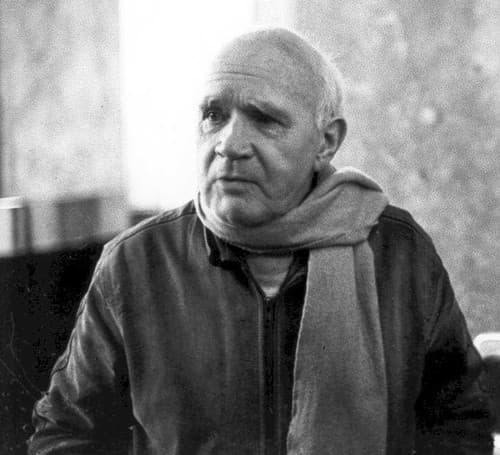
Biography coming soon.

Ashley Antoinette
4.6

Mark McDonald
4.4
Luo Guanzhong
4.4

Mia McKenzie
4.3
Dorothy Parker
4.3

Joaquim Maria Machado de Assis
4.3

James Thurber
4.2

Terry Kay
4.2