“Though I do hate him as I do hell-pains, Yet for necessity of present life, I must show out a flag and sign of love, Which is indeed but sign.”
— Iago reveals his true feelings about Othello to Roderigo.

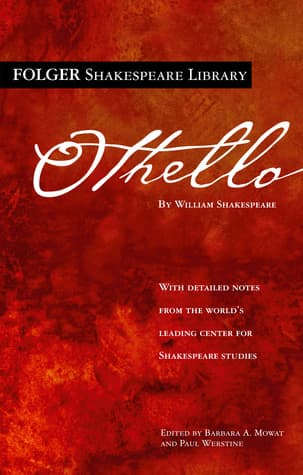
William Shakespeare (2003)
Genre
Fiction
Reading Time
150 min
Key Themes
See below
Sign in to track this book
A respected general's love for his wife turns into murderous jealousy, fueled by a vengeful ensign's lies, leading to a tragic end.
The play starts in Venice. Iago, Othello's ensign, dislikes Othello for promoting Cassio instead of him. He uses Roderigo, a rich man who loves Desdemona, to help him. They wake Desdemona's father, Senator Brabantio, to tell him his daughter secretly married Othello, a general. Brabantio is angry and accuses Othello of using magic to win Desdemona. Othello calmly defends their love before the Duke and senators, and Desdemona confirms she chose to marry Othello.
Despite Brabantio's anger, the Duke approves Othello's marriage to Desdemona. News arrives that the Turkish fleet is going to Cyprus, and Othello must defend the island. Desdemona insists on going with him. Iago tells Roderigo he can still win Desdemona if he follows them to Cyprus, promising help. Alone, Iago reveals his deeper hatred for Othello, fueled by rumors that Othello slept with his wife, Emilia, and his desire for revenge. He plans to turn Othello against Cassio and Desdemona.
In Cyprus, a storm destroys the Turkish fleet, removing the threat. Othello celebrates, leaving Cassio in charge of the watch. Iago uses this chance to get Cassio drunk and provoke Roderigo into a fight with him. Cassio, drunk, wounds Montano, the former governor of Cyprus. Othello, upset by the fight, removes Cassio from his position. Iago then advises Cassio to ask Desdemona to speak to Othello for his job back, knowing this will help his plan.
Cassio follows Iago's advice and repeatedly asks Desdemona to talk to Othello for him. Iago arranges for Othello to see Cassio leaving Desdemona. Then, Iago subtly questions Desdemona's loyalty. He uses vague hints and questions, never directly accusing Desdemona but letting Othello's imagination and doubts grow. Othello, who trusted Desdemona at first, starts to feel uneasy. Desdemona's continued requests for Cassio's job back, though innocent, feed Iago's story.
Desdemona drops a valuable handkerchief, Othello's first gift to her. Emilia, Iago's wife and Desdemona's attendant, finds it and gives it to Iago when he asks. Iago then puts the handkerchief in Cassio's room. When Othello demands 'proof' of Desdemona's disloyalty, Iago invents a story about Cassio talking in his sleep about Desdemona and claiming to have seen Cassio use Desdemona's handkerchief. Othello, filled with jealousy, now believes Desdemona betrayed him and vows revenge against her and Cassio.
Othello's behavior becomes erratic and violent. He asks Desdemona about the handkerchief, accusing her of lying when she says she doesn't know where it is. Desdemona, confused and hurt, insists she is innocent. When Lodovico, an envoy from Venice, arrives with orders for Othello to return and Cassio to take his place, Othello publicly hits Desdemona, shocking everyone. Iago continues to manipulate the situation, convincing Lodovico that Othello is unstable. Othello decides to kill Desdemona, planning to strangle her in their bed.
Iago convinces Roderigo to ambush and kill Cassio, promising him Desdemona. In the fight, Roderigo wounds Cassio, but Cassio, unarmed, wounds Roderigo. Iago then steps in, pretending to help Cassio, but secretly stabs Roderigo to silence him. Iago also wounds Cassio's leg to make it seem like Roderigo attacked him too. When Lodovico and Gratiano arrive, Iago acts innocent and blames Roderigo and Bianca, Cassio's mistress.
Othello goes into Desdemona's bedroom, convinced she is guilty. Despite her pleas and claims of innocence, he strangles her. As she dies, Emilia enters and finds the scene. Desdemona, with her last breath, tries to protect Othello, saying she killed herself. Emilia, however, quickly understands what happened and, full of grief, exposes Iago's evil, revealing his lies about the handkerchief and his entire plan. She directly tells Othello the truth.
Emilia bravely exposes Iago's lies, explaining how he made the handkerchief disappear and manipulated Othello. Othello, realizing his mistake, is filled with regret. Iago, to stop Emilia from revealing more, stabs and kills his own wife. Montano and Gratiano, who have arrived, disarm Othello. Letters found on Roderigo's body confirm Iago's plot, including his plan for Roderigo to kill Cassio and his earlier actions.
Overwhelmed by his error and the murder of his innocent wife, Othello gives a final speech, admitting his foolishness and deep regret. He then uses a hidden dagger to kill himself, falling onto Desdemona's body. Iago, refusing to explain his reasons, is arrested for torture and punishment. Cassio is made the new governor of Cyprus, and Lodovico, horrified by the events, prepares to return to Venice with the news.
The Protagonist
Othello transforms from a noble, self-assured general into a jealous, murderous tyrant, ultimately realizing his tragic error and taking his own life in remorse.
The Protagonist
Desdemona remains consistently virtuous and loving, becoming a tragic symbol of innocence destroyed by unfounded jealousy.
The Antagonist
Iago remains a static villain, his malicious nature consistently driving the plot without any moral transformation or regret.
The Supporting
Cassio falls from grace due to Iago's plot, struggles to regain his honor, and ultimately becomes governor of Cyprus, surviving the tragedy.
The Supporting
Emilia transforms from a seemingly complicit wife into a heroic truth-teller, sacrificing her life to expose Iago's villainy.
The Supporting
Roderigo remains a static, foolish character, manipulated by Iago until his convenient murder.
The Supporting
Brabantio experiences initial fury and sorrow over Desdemona's marriage, dying of a broken heart before the play's tragic climax.
The Mentioned
Bianca remains a minor character whose jealousy and love for Cassio inadvertently contribute to Iago's machinations.
Jealousy causes the entire tragedy. Iago's professional jealousy of Cassio and his baseless suspicion that Othello slept with Emilia drive his revenge. More importantly, Othello's jealousy, expertly fueled by Iago, changes him from a noble general into a killer. This theme is clear in Othello's torment when Iago plants doubts, leading to his demands for 'proof' and violent acts against Desdemona. The 'green-eyed monster' consumes Othello, making him blind to Desdemona's innocence and leading to her death.
“O, beware, my lord, of jealousy! It is the green-eyed monster which doth mock the meat it feeds on.”
Iago is a master of manipulation and deception. He uses psychological tactics, half-truths, and lies to exploit the weaknesses of everyone around him. He plays on Othello's insecurities, Roderigo's infatuation, and Cassio's good nature. His ability to seem 'honest' while planning ruin is central to the plot. The deception with the handkerchief is a key example, where a simple object becomes damning 'proof' of disloyalty. This theme shows how easily trust can be broken and how skilled deceivers can twist perceptions.
“I am not what I am.”
This theme helps explain the play's tragedy. Iago constantly presents himself as 'honest Iago,' a loyal friend, but he is a malevolent deceiver. Othello, fooled by Iago's cleverness and his own doubts, does not see Desdemona's innocence. Instead, he sees her as a 'whore' based on false evidence. The play shows how easily appearances can be misleading, causing terrible misunderstandings. The contrast between Othello's public nobility and his private, jealous rage also shows this theme, proving how easily a man can be undone when he cannot tell truth from lies.
“And what's he then that says I play the villain, when this advice is free I give and honest?”
Othello's identity as a Moor in Venetian society is an important underlying theme. Despite his respected military role, he is often seen as an 'outsider,' a view Iago uses. Brabantio's initial accusations of witchcraft and Othello's own insecurities about being 'other' make him more likely to believe Iago's suggestions that Desdemona, a white Venetian woman, would naturally seek a partner more 'like her.' This theme explores the prejudices of the time and how Othello's race, though not the direct cause of the tragedy, increases his isolation and makes him feel insecure about his place and Desdemona's love.
“Her father loved me, oft invited me; Still questioned me the story of my life from year to year, the battles, sieges, fortunes that I have passed.”
The play starts with a passionate, unusual love story between Othello and Desdemona, challenging social norms. Their marriage initially seems like a strong bond based on mutual respect and fascination. However, Iago's actions show how quickly love can be ruined by suspicion and jealousy. The play explores how fragile trust is in a marriage and how easily it can be shattered by outside forces and inner doubts. Desdemona's unwavering, almost naive love contrasts sharply with Othello's violent, possessive jealousy, showing the destructive power when love is poisoned by mistrust.
“I do perceive here a divided duty. To you I am bound for life and education; My life and education both do learn me how to respect you; you are the lord of duty; I am hitherto your daughter. But here's my husband.”
Iago's direct addresses to the audience, revealing his true motives and plans.
Iago frequently uses soliloquies to directly address the audience, revealing his innermost thoughts, malicious intentions, and detailed plans. This device creates dramatic irony, as the audience is privy to Iago's villainy while the other characters remain oblivious. It allows the audience to understand the psychological mechanisms behind his manipulation and heightens the tension as they watch his schemes unfold. Without these soliloquies, Iago's character would be far less complex and his motivations more ambiguous, but they firmly establish him as a conscious and deliberate orchestrator of evil.
The audience's knowledge of Iago's villainy, unknown to the characters.
Dramatic irony is a pervasive element, primarily driven by Iago's soliloquies and asides. The audience is constantly aware of Iago's true nature and his malevolent schemes, while characters like Othello, Cassio, and Roderigo repeatedly refer to him as 'honest Iago.' This creates immense tension and pathos, as the audience watches the characters fall deeper into Iago's traps, powerless to intervene. This device emphasizes the tragic inevitability of the plot and highlights the devastating consequences of misplaced trust and deception.
A seemingly innocuous object that becomes a powerful symbol and tool of manipulation.
The handkerchief, Othello's first gift to Desdemona and a family heirloom, serves as a crucial symbol and plot device. It represents Othello's love and Desdemona's fidelity. When Iago manipulates its disappearance and plants it with Cassio, it becomes the 'ocular proof' Othello demands, transforming into a symbol of Desdemona's supposed infidelity. Its significance is entirely constructed by Iago's lies, but Othello's belief in its power to confirm betrayal drives him to murder. This object demonstrates how a seemingly insignificant item can be imbued with immense symbolic weight and used for devastating manipulative effect.
Characters' inability to correctly interpret events and dialogue, fueled by Iago.
Much of the tragedy stems from profound misunderstandings and miscommunications. Iago deliberately engineers situations where Othello misinterprets innocent interactions (like Cassio talking to Desdemona or Bianca having the handkerchief). Othello's inability to directly confront Desdemona with his accusations in a way that allows her to fully explain, and her innocent attempts to advocate for Cassio, are all examples. This device highlights how easily trust can erode when communication breaks down, especially when a malevolent force like Iago is actively distorting reality and exploiting every ambiguous moment.
“Though I do hate him as I do hell-pains, Yet for necessity of present life, I must show out a flag and sign of love, Which is indeed but sign.”
— Iago reveals his true feelings about Othello to Roderigo.
“She loved me for the dangers I had passed, And I loved her that she did pity them.”
— Othello explains to the Duke how Desdemona came to love him.
“Reputation, reputation, reputation! O, I have lost my reputation! I have lost the immortal part of myself, and what remains is bestial.”
— Cassio laments his disgrace after being manipulated by Iago into a drunken brawl.
“O, beware, my lord, of jealousy; It is the green-eyed monster which doth mock The meat it feeds on.”
— Iago plants the first seeds of doubt in Othello's mind about Desdemona's fidelity.
“Who steals my purse steals trash; 'tis something, nothing; 'Twas mine, 'tis his, and has been slave to thousands; But he that filches from me my good name Robs me of that which not enriches him And makes me poor indeed.”
— Iago, ironically, gives a speech about the importance of a good name.
“But jealous souls will not be answered so; They are not ever jealous for the cause, But jealous for they're jealous. 'Tis a monster Begot upon itself, born on itself.”
— Emilia discusses the nature of jealousy with Desdemona.
“Put out the light, and then put out the light.”
— Othello contemplates killing Desdemona, referring both to the candle and her life.
“I will wear my heart upon my sleeve For daws to peck at: I am not what I am.”
— Iago tells Roderigo that he will not openly show his true intentions.
“Demand me nothing. What you know, you know. From this time forth I never will speak word.”
— Iago's final refusal to explain his motives after his villainy is exposed.
“When we have our senses, we have reason to cool our raging motions, our carnal stings, our unbitted lusts.”
— Iago advises Roderigo to use reason to control his passions.
“Nor poppy nor mandragora, Nor all the drowsy syrups of the world, Shall ever medicine thee to that sweet sleep Which thou owedst yesterday.”
— Iago tells Othello that he will never again have peace of mind after being poisoned by jealousy.
“A guiltless death I die.”
— Desdemona's final words, claiming her innocence as she dies.
“An honorable murderer, if you will; For naught I did in hate, but all in honor.”
— Othello attempts to justify his actions to Lodovico after killing Desdemona.
“Then must you speak Of one that loved not wisely but too well.”
— Othello's final speech, reflecting on his own tragic flaw.
“I am glad I have found this napkin; This was her first remembrance from the Moor. My wayward husband hath a hundred times Wooed me to steal it.”
— Emilia finds Desdemona's handkerchief, setting in motion a crucial plot point.
Ready to see how well you understood this book? Take our interactive quiz with 10 questions.
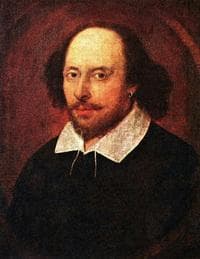
William Shakespeare was an English playwright, poet and actor. He is widely regarded as the greatest writer in the English language and the world's pre-eminent dramatist. He is often called England's national poet and the "Bard of Avon". His extant works, including collaborations, consist of some 39 plays, 154 sonnets, three long narrative poems, and a few other verses, some of uncertain authorship. His plays have been translated into every major living language and are performed more often than those of any other playwright. Shakespeare remains arguably the most influential writer in the English language, and his works continue to be studied and reinterpreted.

Ashley Antoinette
4.6

Mark McDonald
4.4
Luo Guanzhong
4.4

Mia McKenzie
4.3

Dorothy Parker
4.3
Joaquim Maria Machado de Assis
4.3
James Thurber
4.2

Terry Kay
4.2