“It’s just that you don’t quite believe it, do you? That it’s really going to happen.”
— Peter Holmes discussing the impending doom with Mary.

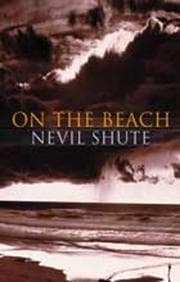
Nevil Shute (1957)
Genre
Science Fiction
Reading Time
296 min
Key Themes
See below
Sign in to track this book
After nuclear war, humanity's last survivors in Australia hold onto routine and slim hopes as a US submarine crosses a dead ocean on a futile search for a phantom signal of life.
The novel opens in Melbourne, Australia, months after a brief, devastating nuclear World War III annihilated the Northern Hemisphere. Southern Australia remains untouched by radiation for now, but a north-northwesterly wind slowly pushes the deadly fallout cloud southward. Commander Dwight Towers, a U.S. Navy submarine captain whose family in Connecticut is presumed dead, is assigned to the Royal Australian Navy. He meets Moira Davidson, a young Australian woman struggling with the dread of their impending doom. Despite the grim circumstances, life continues with a semblance of normalcy, shadowed by the inevitable. Scientists, like Professor Jorgensen, track radiation levels, providing increasingly bleak forecasts.
Amidst the routine of awaiting the end, a faint, intermittent Morse code signal is detected near Seattle, Washington. This inexplicable transmission sparks a desperate hope among the dwindling global community. The Australian government, with scientific support, authorizes an exploratory mission. Commander Towers, with his U.S. submarine USS Scorpion, leads this perilous voyage north to investigate the signal. The mission is dangerous, as the Northern Hemisphere is lethally radioactive, but the slim possibility of other survivors drives the undertaking.
The USS Scorpion begins its journey, passing through the Pacific to Alaskan waters, then down the North American coast. The crew observes the desolate, silent ruins of once-thriving cities like San Francisco and Seattle, devoid of human or animal life. They find no signs of the signal's sender, only abandoned structures and the pervasive silence of a dead world. Commander Towers adheres to his duty, maintaining strict discipline and emotional distance, often reliving memories of his family as if they were still alive. Radiation levels become increasingly severe as they approach northern latitudes, forcing the submarine to remain submerged.
Near Seattle, the Scorpion's crew discovers the Morse code source: a Coke bottle caught in a window blind, repeatedly pulling a telegraph key in the wind. There are no survivors. The realization that their journey was based on false hope is crushing. The crew, especially young Ensign Holmes, struggles with the profound disappointment. Commander Towers maintains his stoic demeanor, but the futility of their mission deepens the despair. The submarine then visits other Northern Hemisphere locations, including Britain, confirming the complete eradication of life.
The USS Scorpion returns to Melbourne, bringing definitive confirmation that no human life remains in the Northern Hemisphere. This news extinguishes any lingering hope among the Australian survivors. The scientific community, led by Professor Jorgensen, continues to monitor the advancing radiation cloud, providing updated, increasingly dire predictions for its arrival in Australia. The remaining time is now clearly defined, and individuals begin to grapple with how they will spend their final months, weeks, and days. Moira Davidson, who had harbored a flicker of hope for the mission, is deeply affected by the devastating news, further cementing her bond with Dwight.
With the timeline for their demise clearer, the Australian population adjusts to its fate. Some, like Moira, find solace and meaning in their remaining time, often through relationships and simple pleasures. Others, like Peter Holmes and his wife Mary, focus on their young daughter, Jennifer, trying to create as many happy memories as possible. Various characters pursue long-held dreams, such as race car driver Julian Osborne, who organizes a final Grand Prix. The government begins distributing suicide pills for a peaceful end, acknowledging the lack of a future. Moira and Dwight grow closer, finding comfort in each other's company.
Julian Osborne, a passionate motor racing enthusiast, organizes a final Australian Grand Prix. This event becomes a poignant symbol of humanity's resilience and defiance in the face of absolute extinction. Many of the remaining citizens attend, seeking a final thrill and a shared experience before the end. Dwight Towers, despite his detachment, attends and even participates, finding a temporary distraction from his personal grief. The race is a spectacle of speed and adrenaline, a brief return to normal life, but it is underpinned by the knowledge that it is the last of its kind.
As the radiation cloud finally reaches Australia, the first cases of radiation sickness appear in Melbourne. These are initially subtle, then become more severe, affecting individuals with increasing frequency. The symptoms are debilitating and irreversible, signaling that the end is truly at hand. The government's plan for a humane exit becomes more prominent. Peter Holmes and Mary struggle with the decision of when and how to administer the suicide pills to themselves and their daughter, Jennifer, as Mary descends into denial and emotional distress, unable to fully accept their fate and Jennifer's impending death.
With radiation levels rising to lethal concentrations, individuals make their final arrangements and say their goodbyes. Dwight and Moira share their last moments, a bittersweet acknowledgment of their bond and the impossibility of a future. Dwight, ever the loyal husband, returns to his submarine, intending to die at his post, maintaining the illusion that his family is waiting for him. Peter Holmes and Mary face the excruciating decision regarding Jennifer, with Peter ultimately taking on the burden of ending their lives together, as Mary struggles with the unbearable reality.
The narrative concludes as radiation levels become universally fatal. Peter Holmes administers the pills to Mary and Jennifer, then to himself, ensuring a peaceful end for his family. Julian Osborne, after his final Grand Prix, returns to his car and dies by his own hand. Moira Davidson, having found peace and love with Dwight, takes her pill. Commander Towers, aboard the USS Scorpion, ensures his crew has taken their pills before he takes his own, dying in his bunk, still clutching a photograph of his wife and children. The world falls silent, signaling the complete extinction of humanity.
The Protagonist
Dwight initially clings to a delusion of his family's survival but gradually opens up to Moira, finding solace and a last human connection before ultimately choosing to die at his post, honoring his imagined duty.
The Protagonist/Supporting
Moira evolves from a somewhat aimless young woman to one who finds purpose and love in her final months, accepting her fate with a quiet dignity.
The Supporting
Peter shoulders the immense responsibility of his family's fate, ultimately making the heartbreaking decision to end their lives peacefully.
The Supporting
Mary descends into denial about her family's fate, particularly Jennifer's, before ultimately succumbing to the reality and accepting Peter's difficult decision.
The Supporting
Julian uses his passion for racing as a final act of life and defiance before accepting his end.
The Supporting
Professor Jorgensen remains steadfast in his scientific duty, meticulously tracking the radiation until the very end, embodying the objective truth of their demise.
The Mentioned
Experiences the crushing disappointment of the false signal, representing the dashed hopes of the crew.
The Mentioned
Her impending death forces her parents to make an unimaginable choice.
The central theme is humanity's collective confrontation with its certain extinction. Characters grapple with the inevitability of death, not just as individuals, but as a species. The narrative explores various coping mechanisms: denial (Mary Holmes), stoic duty (Dwight Towers), hedonism (initially Moira), scientific pragmatism (Professor Jorgensen), and finding meaning in final acts (Julian Osborne). Ultimately, most characters find acceptance, choosing a peaceful, self-determined end rather than a prolonged, agonizing death from radiation sickness. The government's distribution of suicide pills exemplifies this collective resignation and the desire for a dignified end.
“It was going to be all right. They would have a few more months of ordinary life, and then they would die without pain.”
Despite the grim circumstances, the novel highlights the enduring human need for love, companionship, and connection. The relationship between Dwight and Moira is central, as they find solace and a bond in their final months, offering each other comfort and understanding. Similarly, Peter and Mary's love for each other and their daughter drives their agonizing decisions. Even fleeting connections, like the camaraderie at the Grand Prix, demonstrate humanity's inherent desire for shared experience and empathy, showing that even as the world dies, the capacity for love persists.
“He knew then that he loved her, and that he would love her for the few months that were left to them.”
The entire premise of the novel is the devastating consequence of a nuclear World War III, a conflict that seemingly started from a small misunderstanding and escalated to global annihilation. The specific causes of the war are deliberately vague, emphasizing its senselessness and futility. The characters are not fighting for survival, but awaiting their predetermined end, a direct result of humanity's own folly. The 'false hope' signal from Seattle, revealed to be a random mechanical accident, further underscores the tragic absurdity and the ultimate loneliness of humanity's self-inflicted demise.
“There was no one left. Nobody at all. The last of them had gone.”
Many characters grapple with their sense of duty versus their personal desires or the natural human instinct for survival. Dwight Towers exemplifies this, maintaining military discipline and the illusion of returning to his family, even as he develops feelings for Moira. Peter Holmes's duty as a father forces him to make the ultimate sacrifice for his family's peace. Even Julian Osborne's final Grand Prix can be seen as a duty to his passion. This theme explores how individuals define purpose and meaning when conventional duties become obsolete, and personal desires conflict with the overwhelming reality of extinction.
“He said to her, 'I have a job to do, Moira. I've got to take this ship back to America. My wife and kids are there.'”
A relentless, invisible antagonist representing humanity's inescapable fate.
The radiation cloud acts as the primary antagonist, a silent, invisible, and unstoppable force that slowly but surely encroaches upon the last vestiges of human life. It serves as a constant, ticking clock, driving the plot and forcing the characters to confront their mortality. Its scientific predictability, meticulously tracked by Professor Jorgensen, strips away any illusion of escape, creating a profound sense of fatalism. This device externalizes the consequences of nuclear war and provides a tangible, yet intangible, threat that binds all characters in a shared, tragic destiny.
A false hope that propels the story and deepens the subsequent despair.
The mysterious Morse code signal from Seattle is a crucial plot device. It serves as the catalyst for the USS Scorpion's voyage, providing a brief, desperate glimmer of hope for other survivors. Its eventual revelation as an accidental, inanimate source intensifies the sense of global loneliness and futility. This 'false hope' not only drives significant plot action but also functions as a thematic device, highlighting the profound isolation of the last survivors and crushing any lingering illusions that humanity might somehow endure elsewhere.
A pragmatic solution to an unthinkable end, symbolizing agency in the face of annihilation.
The government-issued suicide pills are a powerful and chilling plot device. They represent a pragmatic, humane solution to the inevitable agonizing death by radiation sickness. Their availability provides characters with a final measure of agency and control over their own demise, allowing for a peaceful exit. This device forces characters, particularly Peter and Mary, to confront unthinkable moral and emotional decisions, highlighting the profound ethical dilemmas posed by a global catastrophe and underscoring the theme of acceptance over prolonged suffering.
A psychological coping mechanism that reveals character and deepens tragedy.
Commander Dwight Towers' unwavering belief that his American family is still alive and awaiting his return is a significant psychological plot device. It serves as his primary coping mechanism, allowing him to maintain his sanity and sense of duty in an otherwise hopeless world. This delusion defines his character, explaining his emotional distance and his resistance to fully embracing a future with Moira. It makes his eventual, quiet death on the submarine, still clinging to their photograph, all the more poignant and tragic, underscoring the depth of his loss and his ultimate inability to let go.
“It’s just that you don’t quite believe it, do you? That it’s really going to happen.”
— Peter Holmes discussing the impending doom with Mary.
“There isn't going to be any help. We've got to face it alone.”
— Julian Osborne explaining the global situation to the others.
“If people are going to be living in discomfort they don’t want to be told about it. They want to be distracted from it.”
— Discussing public morale and media during the final days.
“We’re not going to be able to do anything about it. We’re just going to sit here and wait.”
— Dwight Towers' grim assessment of their situation.
“It’s a silly thing to worry about, when the world’s coming to an end. But I do.”
— Mary Holmes expressing a small, personal concern amidst the larger catastrophe.
“There was no point in waiting for the end. The end was here.”
— Reflecting on the futility of hope for a different outcome.
“It was a lovely world once, wasn’t it?”
— A character reminiscing about the pre-war world.
“We've had our lives. We've lived them. We've had our fun.”
— Dwight Towers trying to find peace with his impending death.
“The trouble with you, Mary, is that you’re living in a dream world.”
— Peter gently confronting Mary about her denial.
“Nobody wants to be the last one, do they?”
— A somber reflection on the desire for companionship even in the end.
“It's not as if we're all going to be wiped out by some terrible disease. It's just... nothing.”
— A character trying to articulate the nature of death by radiation.
“We’ve had our share of happiness, haven’t we? And that’s a lot more than most people get.”
— Mary finding a measure of contentment in her final days.
“This is the way the world ends, not with a bang but a whimper.”
— While not a direct quote from the book, the sentiment of T.S. Eliot's poem is heavily evoked and discussed by characters in relation to the slow, quiet end.
Ready to see how well you understood this book? Take our interactive quiz with 10 questions.
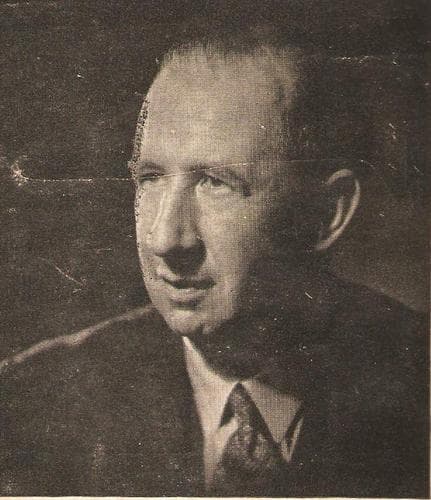
Nevil Shute Norway was an English novelist and aeronautical engineer who spent his later years in Australia. He used his full name in his engineering career and Nevil Shute as his pen name, in order to protect his engineering career from inferences by his employers (Vickers) or from fellow engineers that he was '"not a serious person" or from potentially adverse publicity in connection with his novels, which included On the Beach and A Town Like Alice.